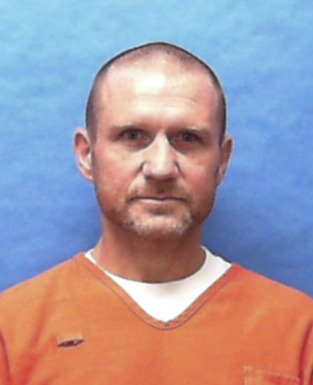
Dwight Thomas Eaglin: The Fighting Irishman Killer
Overview
Dwight Thomas Eaglin is a former professional boxer convicted of three brutal murders in Florida between 1998 and 2003. Known in the ring as "Tommy 'The Fighting Irishman' Eaglin," he was a state welterweight champion with a promising career before his life unraveled into extreme violence. In 1998, he murdered a man who stumbled upon him committing a car burglary. Already serving a life sentence for that crime, Eaglin orchestrated a deadly prison escape attempt in 2003, during which he murdered a female corrections officer and a fellow inmate. His subsequent legal battles have been complex, involving multiple death sentences and resentencing trials due to evolving state laws on capital punishment.
Early Life and Background
Dwight Thomas Eaglin was born on December 23, 1975, in Clearwater, Florida. His childhood was marked by severe dysfunction and abuse. Eaglin's mother abandoned him at a young age, and his father was reportedly violent, once breaking his son's leg. During a 2012 court hearing, Eaglin's brother, Kenneth, testified through tears about the physical, emotional, and sexual abuse they endured at their father's hands, describing a childhood of being shuffled between caregivers and rarely supervised.
Despite this traumatic upbringing, Eaglin found a path forward in boxing after moving to St. Petersburg, Florida. He turned professional and achieved considerable success, becoming Florida's welterweight champion by early 1998. He was known for his potential in the sport, but his trajectory was violently derailed by his criminal actions.
The Murder of John Frederick Nichols
On the night of February 27, 1998, Eaglin's boxing career effectively ended in the parking lot of the Temptations topless bar in Pinellas Park. John Frederick Nichols, 27, had just finished a shift at a fast-food restaurant and pulled his truck into the lot. There, he encountered Eaglin, who was trying to remove a CD changer from a Geo Tracker he had stolen earlier.
Prosecutors believe Nichols may have initially offered to help Eaglin before realizing the vehicle was stolen and attempting to leave to call the police. To prevent being caught, Eaglin, instead of using his fists, pulled a knife and attacked the unarmed Nichols with savage force. He stabbed him 13 times, with wounds to his chest and neck, one of which severed his spine. As he fled the scene in the stolen car, Eaglin ran over Nichols's body. An employee taking out the trash discovered Nichols's body at 1:15 a.m.
Prison Murders and Escape Attempt
Following a tip, police arrested Eaglin on March 7, 1998. On January 10, 2001, a jury found him guilty of first-degree murder. The judge, calling the crime the "most senseless and brutal" he had presided over in 16 years, sentenced Eaglin to life in prison without the possibility of parole.
Eaglin was sent to the Charlotte Correctional Institution in Punta Gorda. There, he and two other inmates, Stephen Vincent Smith and Michael Jones, began plotting an escape. The men were part of a work crew renovating inmate dormitories. Their plan involved using tools and a makeshift ladder. Inmate Charles Fuston reportedly destroyed one of their tools a month before the escape, earning Eaglin's enmity.
On the evening of June 11, 2003, the trio put their deadly plan into motion. They were supervised by 38-year-old Corrections Officer Darla Kay Lathrem. Eaglin first attacked Fuston with a sledgehammer, locking him in a cell. Smith and Jones then lured Officer Lathrem to a mop closet under the pretense of needing a key. As she searched for it, Eaglin struck her twice in the head with the sledgehammer, killing her. Her body was left in the closet.
The escape attempt quickly failed. The inmates' ladder collapsed against a perimeter fence, triggering an alarm. Guards responding to the alarm found Eaglin between the perimeter fences, Smith on the ladder, and Jones nearby. Officer Lathrem's body was discovered, and Charles Fuston was found with catastrophic head injuries. Fuston died in a hospital two days later, on June 13, 2003.
The Victims
- John Frederick Nichols, 27 — Murdered on February 27, 1998, in Pinellas Park. An Army veteran who had served in the Gulf War, Nichols was studying to be a lab technician at St. Petersburg Junior College and ran his own lawn care business. He was brutally killed after inadvertently discovering Eaglin committing a car burglary.
- Darla Kay Lathrem, 38 — Murdered on June 11, 2003, in Punta Gorda. A dedicated corrections officer, she was supervising an inmate work crew when she was ambushed and murdered. She was the first female corrections officer to be killed in the line of duty in Florida. Her family remembered her as someone who believed in the justice system and was a great aunt.
- Charles Fuston, 36 — Died on June 13, 2003, from injuries sustained in the prison attack. Though an inmate serving a 30-year sentence, his family and a prison minister remembered him as a hero who died trying to protect Officer Lathrem from her attackers. The prison warden reportedly told Fuston's sister that he was a victim who was "trying to help one of ours."
Investigation and Accomplices
The investigation into the prison murders was straightforward, as the three perpetrators were caught during the act. Eaglin, Smith, and Jones were all indicted for the first-degree murders of Lathrem and Fuston on December 4, 2003.
Eaglin's accomplices had their own violent histories. Stephen Smith was serving life for a 1990 robbery and murder, while Michael Jones was serving a life sentence for rape since 1988. In separate proceedings, Smith was also convicted of Lathrem's murder and sentenced to death; he died in prison in 2021. Michael Jones pleaded guilty to first-degree murder in exchange for a life sentence and died of natural causes in prison in 2008.
Trial and Sentencing
Eaglin's trial for the prison murders took place in early 2006. On February 24, the jury found him guilty of two counts of first-degree murder. The jury recommended the death penalty for both murders by a vote of 8-4. On March 31, 2006, Circuit Judge William Blackwell formally sentenced Eaglin to death, noting his complete lack of remorse and an attitude that "borderlined on arrogance." Eaglin was reported to have smiled in court before and after the sentence was delivered.
This, however, was not the end of the legal process. Eaglin's death sentence became entangled in years of appeals and changes to Florida's capital punishment laws. Following a 2016 U.S. Supreme Court ruling in *Hurst v. Florida*, which found the state's death penalty sentencing scheme unconstitutional because it did not require a unanimous jury vote, Eaglin's sentence was overturned.
A new penalty-phase trial was granted. This trial began in January 2026. On January 21, a new jury recommended death for a second time. The vote was 11-1 for the murder of Darla Lathrem and a unanimous 12-0 for the murder of Charles Fuston. On June 19, 2026, a judge formally re-sentenced Dwight Eaglin to death.
Aftermath and Legacy
The murder of Darla Lathrem brought intense scrutiny to staffing policies within the Florida prison system, highlighting the danger of a single, lightly armed officer supervising multiple inmates, especially during a night shift. Her death left a lasting impact on her family and the law enforcement community. Her sister, Janet Best, spoke for the family after the 2026 resentencing, expressing gratitude that "justice will finally be served."
Dwight Eaglin remains on death row at Florida State Prison. His case stands as a stark example of escalating violence, from a promising athlete to a convicted murderer who continued to kill even while incarcerated for life. His legal journey also reflects the turbulent and evolving landscape of capital punishment in the United States.