Cecil Henry Floyd: The Multi-State Murder Spree of 1973–1974
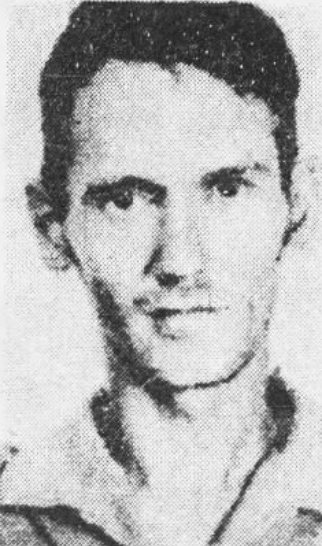
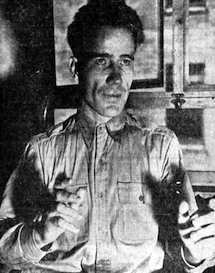
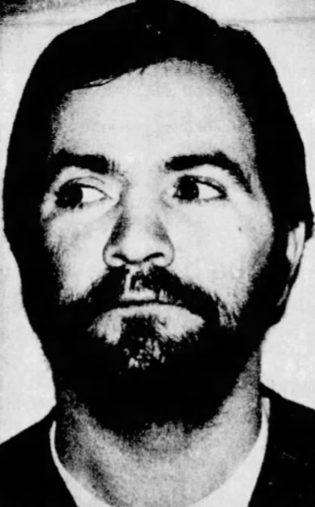
Cecil Henry Floyd was an American serial killer whose crimes stretched across several states during a violent robbery spree in 1973 and 1974. At least six murders were attributed to him in Indiana, Florida, Nebraska, and Kansas. Floyd later claimed that he had killed eleven people, but investigators were never able to verify all of those additional confessions. His known crimes were generally opportunistic: victims were encountered at fairs, homes, motels, gas stations, or while traveling, and several were killed for extremely small amounts of money or easily stolen property.
Confirmed and Attributed Victims
- Henry Michael Maser, 15 — Died July 23, 1973, near Lebanon in Boone County, Indiana. His body was discovered in underbrush six days later, on July 29. Maser had been attending the Boone County Fair before he disappeared. He was shot three times, and Floyd later admitted taking approximately $5 from his wallet.
- Barney M. Rycyk, 56 — Died November 14, 1973, at the Durands Motel in Union Park, Florida. Rycyk, who operated the motel with his brother Stanley, was killed during a robbery involving Floyd and Thomas Mattingly. Contemporary accounts described Rycyk as having been struck repeatedly with a claw hammer. Approximately $20 was taken.
- Karen Chitwood, 17 — Died February 20, 1974, in her apartment in Orlando, Florida. Her husband discovered her bound and gagged inside their home. She had suffered severe head injuries and four stab wounds to the chest. Investigators determined that a small television and clock radio had been stolen.
- Leslie Johnston, 22 — Her recorded date of death is May 11, 1974, the date she disappeared from Orlando, Florida. Her body was discovered approximately one week later in a heavily wooded area. She had been shot three times in the upper body. Floyd later confessed to killing Johnston and gave investigators an account of a struggle involving his handgun.
- Lester Schmidt, 24 — Died July 13, 1974, after being found critically wounded at a Phillips 66 service station near Aurora, Nebraska. Schmidt had been shot three times. He was transported to Aurora Memorial Hospital but died without regaining consciousness. The station's cash register and approximately $500 were taken.
- Dickinson County John Doe — An unidentified man, estimated to have been approximately 25 to 31 years old, whose remains were discovered July 24, 1974, on a dirt road near Upland in Dickinson County, Kansas. His precise date of death has never been established; forensic estimates placed his death roughly ten days to two weeks before the discovery of his remains. He had been shot numerous times with a small-caliber firearm. Floyd admitted killing an unidentified hitchhiker in Kansas and was linked by investigators to this case.
The Murder of Henry Michael Maser
Floyd's first confirmed murder occurred on July 23, 1973, near the Boone County Fair in Lebanon, Indiana. Fifteen-year-old Henry Michael Maser had attended the fair with a friend but became separated from him. Floyd encountered the teenager while traveling with other people in the area. Maser was shot three times and robbed of his wallet, which contained only about five dollars. Floyd abandoned the teenager's body in an area of underbrush.
Maser remained missing for several days before his body was discovered on July 29. The investigation initially produced confusion when another man, a carnival worker connected to an unrelated automobile theft, came under suspicion. He was ultimately cleared. Floyd was not immediately arrested for Maser’s death, allowing his interstate crime spree to continue. After Floyd was eventually captured in 1974, he confessed to the Indiana killing. He was later convicted of Maser's murder and received a life sentence.
The Durands Motel Murder
On November 14, 1973, Floyd and Thomas Mattingly entered the Durands Motel in Union Park, Florida, intending to commit a robbery. The motel was operated by brothers Barney and Stanley Rycyk, who had invested their savings in the business earlier that year. Barney Rycyk was attacked inside the motel and struck repeatedly with a claw hammer. Reports of the investigation described an extraordinarily prolonged attack involving dozens of blows. His body was then placed in the motel's office bathroom.
The killers obtained only a small amount of money. As Floyd and Mattingly prepared to leave, Stanley Rycyk returned from a shopping trip and encountered them. The men attempted to explain their presence by claiming that Barney had been showing them a room, but they suddenly fled when Stanley tried to locate his brother. Stanley subsequently found Barney's body. Before the men escaped, however, he managed to observe their vehicle and remember part of its license-plate information. That information became important to investigators. Mattingly was later convicted for his participation in Rycyk's murder.
The Murder of Karen Chitwood
Seventeen-year-old Karen Chitwood was killed on February 20, 1974, in the Orlando apartment she shared with her husband, James Chitwood. When James returned home, he found his wife on the floor. She had been restrained and gagged. Her skull had been severely injured, and she had been stabbed four times in the chest with a large kitchen knife.
Investigators found no evidence that Karen had been sexually assaulted. Instead, the missing property suggested that robbery was the primary motive. A small General Electric television and a clock radio had been taken from the apartment. Police initially had little physical evidence identifying the killer, and the investigation stalled. Floyd was subsequently connected to the killing as authorities began linking murders and robberies from several states to the same traveling offender.
The Disappearance and Murder of Leslie Johnston
Leslie Johnston was a 22-year-old medical technician student living in the Orlando area. She disappeared on May 11, 1974. Approximately a week later, searchers discovered her body in a heavily wooded location. Johnston had been shot three times in the upper torso.
After his arrest, Floyd admitted responsibility and gave investigators his version of the events. He claimed that he had attempted to restrain Johnston with a ribbon, that she broke free and obtained his pistol, and that a struggle followed. According to Floyd, he recovered the weapon and then shot her. Whatever the precise sequence of the confrontation, Johnston's death became one of the three Florida murders attributed to him.
The Murder of Lester Schmidt
By July 1974, Floyd had traveled west. On July 13, Nebraska State Trooper Paul Harding stopped at a Phillips 66 service station near Aurora, Nebraska. When no attendant appeared, Harding entered the building and discovered 24-year-old employee Lester Schmidt critically injured. Schmidt had suffered three gunshot wounds.
Harding immediately summoned medical assistance, and Schmidt was transported to Aurora Memorial Hospital. He died without regaining consciousness. Investigators discovered that the service station's cash register had been removed and that approximately $500 was missing. Police launched an extensive search, but Floyd was already moving through the region. After his eventual capture, the Nebraska murder became one of the central cases prosecuted against him. In May 1975, Floyd was convicted of Schmidt's murder and sentenced to life imprisonment.
The Unidentified Kansas Victim
On July 24, 1974, decomposed remains belonging to an unidentified man were discovered along a dirt road near Upland in Dickinson County, Kansas. The victim was believed to have been a white male approximately 25 to 31 years old. Forensic examination indicated that he had been dead for roughly ten days to two weeks, meaning an exact date of death could not be established. Numerous small-caliber gunshot wounds were identified as the cause of death.
Floyd later described killing a hitchhiker while traveling through Kansas. According to his account, he picked the man up and eventually stopped along an isolated road while pretending that his vehicle had a tire problem. Floyd asked the passenger to get out and assist him, then shot the man and took money from his wallet. Kansas investigators identified Floyd as the suspect in the unidentified man's murder. The remains were buried in Abilene, Kansas, and were exhumed in October 2016 so that modern forensic testing could be used in another effort to establish the victim's identity.
Kidnapping, Flight, and Capture
Floyd was also responsible for serious crimes in addition to the confirmed murders. On June 30, 1974, he kidnapped 18-year-old Harold Warren McQuinney in Micanopy, Florida. McQuinney survived and managed to escape after being held for approximately a day, reaching authorities in Tennessee. The FBI issued a federal arrest warrant for Floyd on July 17.
Floyd continued moving across state lines and was connected to an armed robbery in Arkansas. On July 24, 1974, the same day the unidentified Kansas victim's remains were discovered, Cecil Floyd and his wife, Lorna, were apprehended in the Lonoke, Arkansas, area. The arrest finally gave detectives from several states an opportunity to compare their cases and question Floyd about the series of murders.
Confessions and Prosecution
While in custody, Floyd admitted responsibility for multiple killings. Investigators eventually associated him with murders in Indiana, Florida, Nebraska, and Kansas. He confessed to the six generally recognized victims and claimed that his true total was eleven murders. Authorities investigated possible additional crimes in several states, but the remaining claimed killings were never conclusively verified.
The complicated interstate nature of the case meant that different jurisdictions pursued Floyd separately. He faced murder charges in Florida, was convicted of Lester Schmidt's murder in Nebraska, and was later convicted for Henry Maser's murder in Indiana. Kansas also brought a murder case concerning the unidentified hitchhiker, although officials ultimately saw little practical purpose in adding another sentence after Floyd had accumulated multiple life terms.
Imprisonment and Death
Floyd spent decades incarcerated at the Indiana State Prison in Michigan City. In 1998, Florida authorities again sought custody of him in connection with the three Florida murders, more than two decades after the killings. By that point, he had already spent most of his adult life behind bars and was serving life sentences connected to his interstate murder spree.
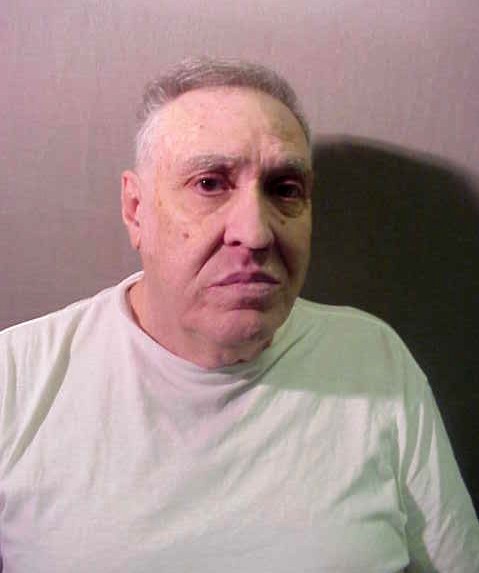
Cecil Henry Floyd remained imprisoned until his death from natural causes on June 17, 2011, in Michigan City, Indiana. Although six victims can be connected to him through confessions, convictions, charges, and law-enforcement investigations, his assertion that he murdered eleven people was never fully proven. The continued anonymity of the Dickinson County John Doe also leaves one part of Floyd's known crime history unresolved decades after the killings ended.