Bobbie Sue Terrell: The Nurse Who Murdered Elderly Patients
Background and Nursing Career
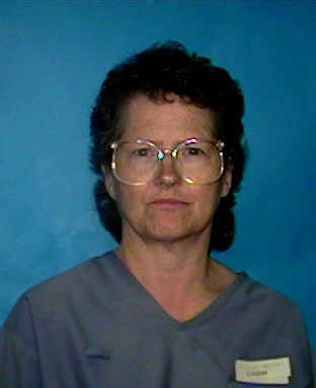
Bobbie Sue Terrell, also known by her former married name Bobbie Sue Dudley, was an American nurse who murdered elderly patients under her care at a Florida nursing home. Born Bobbie Sue Robinson on October 16, 1952, in Woodlawn, Illinois, she grew up in a large family in which several of her brothers suffered from muscular dystrophy. Illness, medical treatment, and caregiving were therefore prominent parts of her childhood.
Terrell trained as a registered nurse and completed her nursing education in Illinois during the 1970s. She married Danny Dudley in 1976, and the couple adopted a son after learning that she could not have biological children. The marriage later ended, and Terrell experienced serious psychological problems that resulted in periods of psychiatric treatment. Despite her history, she continued finding work in medical facilities where she was responsible for vulnerable patients.
After moving to Florida, Terrell obtained a position at the North Horizon Health Center, a small nursing home in St. Petersburg. She worked as a night-shift nurse and supervisor, giving her extensive access to patients, medications, syringes, and medical records. Her position also allowed her to be alone with residents during hours when staffing and supervision were limited.
The Deaths at North Horizon
Terrell began working at North Horizon in October 1984. Within weeks, the facility experienced an extraordinary concentration of patient deaths. Twelve residents reportedly died during a period of approximately two weeks in November 1984. The nursing home contained only about 50 beds, making the sudden number of deaths deeply alarming.
Many of the residents were elderly and had existing medical problems, so individual deaths initially appeared explainable. However, the frequency and timing of the fatalities soon created fear among employees. Several patients deteriorated without a clear medical reason, and many of the emergencies occurred during Terrell’s overnight shifts.
Investigators eventually determined that Terrell had used two principal methods. Some patients were injected with dangerous amounts of insulin, causing their blood-sugar levels to fall catastrophically. Hypoglycemia could produce confusion, seizures, unconsciousness, organ failure, and death while initially resembling a naturally occurring medical crisis. Other patients were strangled, leaving injuries that were more difficult to recognize immediately on elderly bodies.
Terrell sometimes reacted dramatically after a patient died. Coworkers recalled her crying, becoming hysterical, and expressing disbelief over the deaths. These displays initially made her appear emotionally affected by the losses. Investigators later viewed her conduct as part of a pattern in which she created emergencies and then placed herself at the center of the resulting attention.
Confirmed Victims
- Aggie Marsh, 97 – Marsh died in mid-November 1984 at the North Horizon Health Center in St. Petersburg, Florida. Contemporary and later accounts differ by one day on whether her death occurred on November 13 or November 14. Terrell later admitted responsibility for strangling her.
- Leathy McKnight, 85 – McKnight died on November 23, 1984, at North Horizon in St. Petersburg. Terrell killed her by administering a fatal overdose of insulin.
- Stella Bradham, 85 – Bradham became comatose on November 22, 1984, and died on November 26, 1984, in St. Petersburg. Her decline was initially believed to have resulted from a stroke. Terrell later admitted that she had strangled Bradham.
- Mary Rae Carter, 79 – Carter died on November 26, 1984, at the North Horizon Health Center in St. Petersburg. Terrell killed her with a fatal dose of insulin.
The Attempted Murder of Anna Larson
One of Terrell’s patients survived long enough to provide investigators with critical evidence. Anna Larson, a 94-year-old resident who was not diabetic, suddenly went into insulin shock in November 1984. She was rushed to a hospital, where medical personnel determined that an excessive amount of insulin had entered her body.
Because Larson had no medical reason to receive insulin, her collapse strongly suggested deliberate poisoning. Staffing records showed that Terrell had access to Larson when the injection was administered. Larson survived the immediate overdose, although she died approximately two months later from causes that authorities considered unrelated to the attack.
Terrell was ultimately charged with attempting to murder Larson. The surviving patient’s unexplained insulin exposure became one of the strongest pieces of evidence connecting Terrell to the suspicious emergencies at North Horizon.
Discovery of the Pattern
Administrators and employees examined the timing of the deaths and noticed that Terrell was repeatedly present when patients suddenly became critically ill. The deaths had begun soon after she joined the nursing home and stopped after she left. This association prompted detectives to investigate her professional and psychiatric history.
Authorities learned that Terrell had previously experienced significant mental-health problems and had lost or faced restrictions involving her nursing credentials in Illinois. Investigators also found that she had a history of creating or reporting dramatic incidents involving illness and injury.
During a search, police reportedly discovered a handwritten document beneath Terrell’s mattress. The pages contained a list of deceased nursing-home patients identified by bed numbers, along with information concerning the times of their deaths. To investigators, the document suggested that she had maintained a private record of the fatalities.
Authorities exhumed the bodies of several former patients and conducted additional forensic examinations. Detectives believed Terrell may have caused all 12 deaths associated with the nursing home’s sudden mortality spike. However, the age and medical condition of many residents made it difficult to prove homicide in every case. Insulin also breaks down after death, creating serious obstacles for investigators attempting to establish poisoning months or years later.
Arrest and Criminal Charges
Terrell was arrested on March 17, 1986, initially in connection with the attempted murder of Anna Larson. As investigators continued reviewing the nursing-home deaths, she was charged with murdering Aggie Marsh, Leathy McKnight, Stella Bradham, and Mary Rae Carter.
Prosecutors originally pursued first-degree murder charges, exposing Terrell to a possible death sentence or life imprisonment. The case presented practical difficulties, however. Many potential witnesses were elderly, medically incapacitated, or had died. The passage of time also complicated the forensic evidence, particularly in cases involving insulin.
Terrell’s documented psychiatric history created additional uncertainty about how a jury might evaluate her mental condition and criminal responsibility. Prosecutors eventually agreed to reduce the murder counts as part of a negotiated resolution.
Guilty Plea and Sentence
On February 23, 1988, Terrell pleaded guilty to four counts of second-degree murder. She admitted strangling Aggie Marsh and Stella Bradham and administering fatal insulin overdoses to Leathy McKnight and Mary Rae Carter. She displayed little visible emotion during the court proceedings.
A Florida judge sentenced Terrell to 65 years in prison for the four murders. She also received an additional 30-year sentence for the attempted murder of Anna Larson. The negotiated plea ensured that she would spend decades incarcerated while avoiding a trial on first-degree murder charges.
Although Terrell was convicted of killing four patients, investigators continued to believe that she may have been responsible for additional deaths at North Horizon. Twelve residents had died during the short period associated with her overnight shifts, but the evidence was sufficient to prosecute her for only four completed murders and one attempted murder.
Possible Motive
Terrell never provided a clear and consistent explanation for why she killed her patients. Investigators and later commentators proposed that she created medical crises to receive attention, sympathy, and emotional recognition. By causing a patient to collapse and then appearing distressed or becoming involved in the emergency response, she could make herself central to events inside the facility.
Her crimes placed her among the medical murderers sometimes described as “angels of death”—health-care workers who deliberately injure or kill people entrusted to their care. Her victims were elderly residents who depended on nurses for medication, safety, and survival. Their vulnerability allowed the crimes to remain concealed because sudden deterioration could easily be attributed to age or disease.
Some accounts have connected Terrell’s conduct to factitious-disorder behavior and her history of self-inflicted or exaggerated medical problems. However, psychological labels do not fully explain her deliberate decisions to inject and strangle defenseless patients. Whatever emotional needs influenced her behavior, her actions required access, planning, concealment, and repeated violations of her professional responsibilities.
Death in Prison and Legacy
Bobbie Sue Terrell remained imprisoned in Florida for the rest of her life. She died in custody on August 27, 2007, at the age of 54. Her death ended any possibility that she could be questioned further about the other nursing-home residents whose deaths investigators considered suspicious.
The North Horizon case demonstrated how a medically trained offender could exploit the assumption that elderly patients had died naturally. Insulin was especially dangerous as a murder weapon because its symptoms could resemble a stroke, heart failure, or other common medical emergencies. Without the survival and medical testing of Anna Larson, the larger pattern might never have resulted in criminal charges.
Terrell was legally established as the murderer of four patients and the attempted murderer of a fifth. The broader cluster of 12 deaths remains associated with her, but responsibility for the additional fatalities was never conclusively proven in court. Her crimes remain a disturbing example of a caregiver using medical knowledge and institutional trust to prey upon people who were physically unable to protect themselves.