Warren Leslie Forrest: Murders, Attacks, and the Clark County Cold Cases
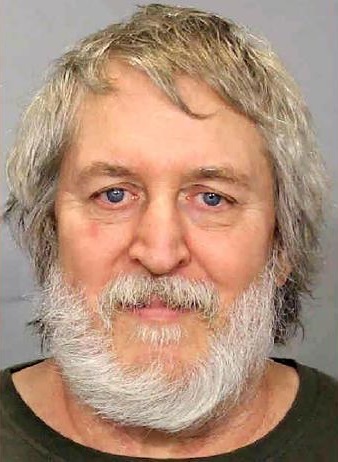
Warren Leslie Forrest is an American convicted murderer and serial killer whose crimes centered on Clark County, Washington, during the early 1970s. Born on June 29, 1949, in Vancouver, Washington, Forrest was an Army veteran and later worked for the Clark County Parks Department. That employment gave him familiarity with isolated parks, wooded roads, and recreation areas around Battle Ground, Camas, Tukes Mountain, Lacamas Lake, and Dole Valley. Investigators eventually noticed that many of the places associated with his known and suspected victims were remote areas with which a parks employee could have been familiar. Forrest has been convicted of murdering two women, Krista Kay Blake and Martha Morrison, and authorities have investigated him in connection with several other disappearances and homicides dating from 1971 through 1974.
Pattern of Abduction and Violence
Forrest frequently used a light-blue Ford van when approaching young women and teenage girls. His known attacks involved gaining access to a victim, driving her to an isolated location, restraining her, and subjecting her to extreme physical and sexual violence. Evidence from the cases also revealed his use of rope or twine and, in at least one attack, an air-powered dart gun. The similarities between the locations, methods, victims, and vehicle eventually caused investigators to examine a number of previously separate disappearances and murders as potentially connected crimes.
One of the clearest examples occurred on July 17, 1974. Fifteen-year-old Norma Jean Countryman was picked up near Ridgefield, Washington, by Forrest in his blue van. Once she was inside, Forrest threatened her with a knife and drove her approximately 13 miles to the Tukes Mountain area near Battle Ground. He assaulted her, restrained her with twine, and left her tied in the woods. Countryman managed to work herself free and escape during the night. She survived and later identified Forrest as the man who had abducted her. The importance of the location became even clearer two years later, when the remains of Krista Kay Blake were discovered only a short distance from the area where Countryman had been restrained.
The October 1974 Attack and Forrest's Arrest
On October 1, 1974, Forrest approached a 20-year-old woman in Portland, Oregon. He reportedly presented himself as someone looking for a woman to pose for photographs and persuaded her to enter his van. The encounter became an abduction. Forrest took her first to the Washington Park area of Portland and later transported her across the state line to the wooded Lacamas Lake area near Camas, Washington. He sexually assaulted her and attacked her with an air-powered dart gun. He also strangled and stabbed her before leaving her in the secluded area, apparently believing she would die.
The woman survived. After regaining consciousness, she eventually reached a road and obtained help. Her description of her attacker, the blue van, and other details provided investigators with a strong lead. Police determined that Forrest owned a vehicle matching her account and arrested him on October 2, 1974. Evidence seized during the investigation, including the dart gun, would become important again more than four decades later in the murder case of Martha Morrison. Forrest was ultimately committed to Western State Hospital after being found not guilty by reason of insanity in proceedings arising from the 1974 attack.
Confirmed and Suspected Victims
The following women and girls have been identified in official investigations as confirmed or suspected victims connected to Forrest. In several cases, medical examiners could not establish an exact date of death. Those cases are listed with verified disappearance and recovery dates rather than treating a disappearance date as a proven date of death.
- Jamie Grissim, 16 — suspected victim. Grissim disappeared on December 7, 1971, after leaving Fort Vancouver High School in Vancouver, Washington. She never returned home. Several months later, her school identification and other personal belongings were discovered along Dole Valley Road in eastern Clark County. Her remains have never been recovered, so an exact date of death has never been established. Investigators believe the location of her possessions and similarities to later cases make her a possible early victim of Forrest.
- Barbara Ann Derry, 18 — suspected victim. Derry was last known to be alive on February 11, 1972. She had connections to Vancouver and Goldendale, Washington, and was known to hitchhike. Her body was discovered on March 29, 1972, at the bottom of a wooden cistern near the Amboy Grist Mill in northern Clark County. Her death was ruled a homicide caused by trauma to the chest; historical investigative records describe a stab wound. Her precise date of death was not established. Her homicide remains unsolved, and Forrest has been investigated as a suspect.
- Diane Sue Gilchrist, 14 — suspected victim. Gilchrist disappeared from Vancouver in late May 1974; official and historical missing-person records vary between May 27 and May 29 for the relevant disappearance period. She was reportedly last seen getting into a van driven by an unidentified man. Gilchrist has never been found, and no verified date of death exists. Clark County investigators consider Forrest a suspect in her disappearance.
- Gloria Nadine Knutson, 19 — suspected victim. Knutson disappeared from the Vancouver area on May 31, 1974. Before she vanished, she reportedly told another person that an unknown man had been stalking her. Her remains were discovered near Lacamas Lake on May 9, 1978, almost four years after she disappeared. The exact date of her death could not be established. Forrest is considered a suspect, but he has never been charged with Knutson's murder.
- Krista Kay Blake, 20 — confirmed victim. Blake disappeared from Vancouver on July 11, 1974. Witness information placed her entering or traveling in a blue van, and Forrest later became the principal suspect. On July 11, 1976, two years after her disappearance, her remains were discovered in a shallow grave on Clark County park property at Tukes Mountain near Battle Ground. She had been restrained with twine. The condition of her remains prevented investigators from fixing an exact medical date of death, although the prosecution established that she was murdered after her July 11, 1974 disappearance. Forrest was convicted of Blake's murder in April 1979 and received a life sentence.
- Carol Platt Valenzuela, 18 — suspected victim. Valenzuela disappeared on August 2, 1974, while reportedly hitchhiking from the Camas area toward Vancouver. On October 12, 1974, her remains were discovered in the Dole Valley area near Rock Creek Bridge in northern Clark County. A second set of female remains was found nearby. The precise date of Valenzuela's death was never established. Her homicide remains an open case, and Clark County investigators have stated that they believe she may also have been a victim of Forrest.
- Martha Morrison, 17 — confirmed victim. Morrison disappeared from Portland, Oregon, around September 1, 1974. Her exact date of death was never determined. On October 12, 1974, skeletal remains were discovered near Carol Valenzuela's remains in Dole Valley, but investigators were unable to identify the second woman at the time. Decades later, advances in DNA testing established that the unidentified remains belonged to Morrison. Investigators subsequently matched Morrison's blood to evidence on an air-powered dart gun that had been seized from Forrest during the original 1974 investigation. Forrest was found guilty of first-degree murder on February 1, 2023, and was sentenced to another life term on February 17, 2023.
The Murder of Krista Kay Blake
Blake's case was the murder that first put Forrest in prison for homicide. Her July 1974 disappearance shared important characteristics with his other known conduct: a young woman, a blue van, a remote Clark County location, and the use of restraints. When Blake's remains were recovered at Tukes Mountain in 1976, investigators discovered that the burial site was extremely close to the location where Norma Jean Countryman had survived Forrest's attack in July 1974. That geographical connection became a major piece of the case against him.
At trial, prosecutors presented evidence about Forrest's van, his movements, the burial area, and the similarities between Blake's death and the attacks survived by other women. Countryman's account demonstrated that Forrest had taken another teenage victim to nearly the same secluded area and restrained her there. Forrest was convicted in April 1979. The Blake conviction kept him imprisoned for decades and provided investigators with preserved evidence that later became crucial to solving another killing.
DNA Solves the Martha Morrison Case
Martha Morrison's case remained unresolved for more than forty years. When two sets of remains were found in Dole Valley on October 12, 1974, one was identified as Carol Valenzuela, but the other woman remained unidentified. DNA technology eventually allowed investigators to identify the second victim as Morrison in 2015. Detectives then compared biological evidence connected to Morrison with evidence that had been preserved from Forrest's 1974 investigation.
A particularly important item was Forrest's air-powered dart gun. Blood associated with Morrison was detected on the weapon, connecting a murder victim who had disappeared in 1974 directly to an object seized from Forrest. Prosecutors argued that there was no innocent explanation for Morrison's blood being present on the weapon. Forrest was charged with her murder decades after the crime, and in February 2023 a Clark County jury found him guilty of first-degree murder after a trial that included testimony about his earlier attacks and the forensic evidence.
Unsolved Cases and Continuing Investigation
Forrest's two murder convictions do not resolve all of the disappearances and killings associated with him. Jamie Grissim, Diane Gilchrist, Barbara Derry, Gloria Knutson, and Carol Valenzuela remain important parts of the Clark County cold-case investigation. The concentration of victims in the same region, Forrest's use of secluded parkland, his blue van, and similarities among his known assaults have kept him under suspicion for decades. Investigators must nevertheless distinguish suspicion from proof: Forrest has not been convicted of those five cases, and several contain major evidentiary gaps caused by the passage of more than half a century.
The investigation has continued into the modern era. Clark County authorities renewed work on the Forrest-related cold cases, applying modern forensic techniques to evidence collected in the 1970s. In late 2025, investigators announced new activity in the Jamie Grissim case after locating and interviewing a long-sought witness. Authorities said the information was consistent with the theory that her remains could be somewhere in the Dole Valley area, and the FBI's Seattle Division was assisting investigators. The renewed work demonstrates why Forrest's case remains significant: two murders have resulted in convictions decades apart, while several other families are still waiting for definitive answers about what happened to their missing or murdered relatives.
Legacy of the Case
Warren Leslie Forrest's crimes form one of the longest-running serial-murder investigations in southwest Washington history. His attacks reveal a repeated pattern of predation involving young women and girls, a recognizable vehicle, restraints, remote wooded locations, and extreme violence. The survival of two victims helped expose him in 1974, while evidence carefully retained by investigators eventually produced another murder conviction nearly fifty years later. Forrest is legally responsible for the murders of Krista Kay Blake and Martha Morrison. Whether he was also responsible for the other Clark County disappearances and homicides attributed to him remains an active historical and forensic question, one investigators continue to pursue through preserved evidence, witness interviews, and modern DNA techniques.