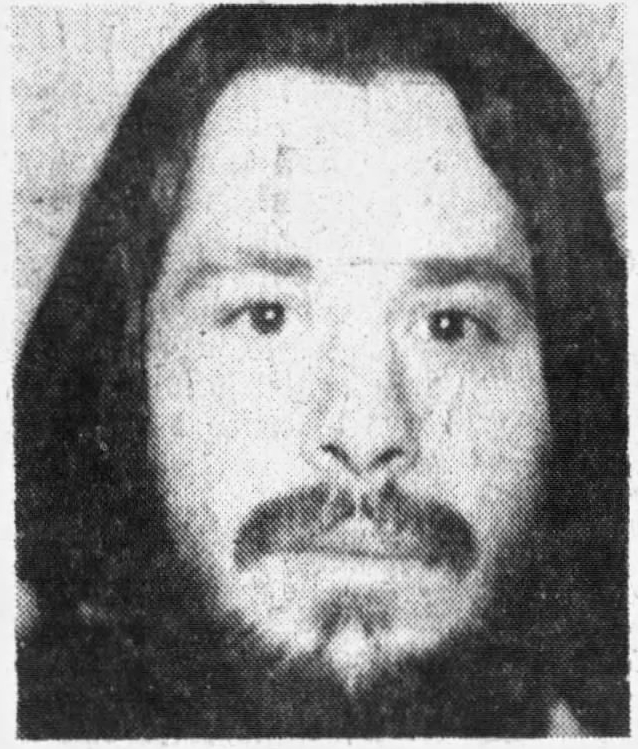
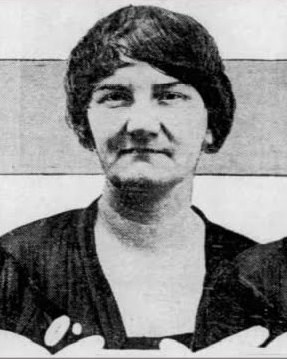
Sean Vincent Gillis: The Baton Rouge Serial Killer
Sean Vincent Gillis is an American serial killer who murdered eight women in Louisiana between March 1994 and February 2004. Most of the killings occurred in or around Baton Rouge, although Gillis transported several victims' bodies into neighboring parishes before abandoning them in isolated locations. His crimes remained largely disconnected for years because his victims differed considerably in age, background, and circumstances, and because their bodies were discovered across several jurisdictions.
Gillis was eventually identified through a combination of DNA evidence, tire-track evidence, and an intensive multi-agency homicide investigation. After his arrest on April 29, 2004, he confessed to additional killings that investigators had not initially connected to him. His statements helped authorities resolve several long-standing homicide investigations.
Gillis ultimately admitted responsibility for the deaths of Ann Bryan, Katherine Ann Hall, Hardee Moseley Schmidt, Joyce Williams, Lillian Robinson, Marilyn Nevils, Johnnie Mae Williams, and Donna Bennett Johnston.
Early Life of Sean Vincent Gillis
Sean Vincent Gillis was born on June 24, 1962, in Baton Rouge, Louisiana. His father left the family when Gillis was young, and Gillis was primarily raised by his mother and grandparents. As an adult, he remained in the Baton Rouge area and held a variety of jobs, including work involving computers.
Before being identified as a serial murderer, Gillis had a comparatively limited criminal history. He had arrests involving offenses such as driving while intoxicated, marijuana possession, trespassing, traffic violations, and contempt of court, but nothing in his public criminal record suggested that he was responsible for a series of murders.
Investigators later learned that Gillis had developed obsessive interests in violent pornography and death. His later statements to police indicated that his fantasies escalated over time and eventually became connected to stalking, sexual violence, murder, and postmortem mutilation.
The Murder of Ann Bryan
Gillis' first confirmed victim was Ann Bryan, an elderly resident of St. James Place, a retirement community on Lee Drive in Baton Rouge.
During the early morning hours of March 21, 1994, Gillis entered Bryan's residence. He later told investigators that he intended to sexually assault her. According to his confession, Bryan began screaming when he approached and touched her. Gillis attacked her with a knife, cutting her throat and repeatedly stabbing her.
Bryan was found dead inside her bedroom. Investigators determined that she had suffered more than 50 stab wounds. The extraordinary violence of the attack made the homicide particularly disturbing, but police had little evidence identifying the killer.
The case remained unsolved for approximately ten years. Following Gillis' arrest in 2004, he confessed to murdering Bryan and supplied investigators with details about the crime that authorities said had never been released publicly.
The Murder of Katherine Ann Hall
Nearly five years passed between Gillis' first known murder and the killing of Katherine Ann Hall.
Hall, 29, was killed on January 4, 1999. Her body was discovered in the Vignes Lake subdivision in southeastern East Baton Rouge Parish, near the Hoo Shoo Too Road area. She had suffered numerous sharp-force injuries.
An autopsy documented multiple wounds inflicted before death as well as additional injuries made after she had died. Gillis later admitted mutilating Hall's body after killing her.
Hall's case eventually became extremely important to the investigation of Gillis because biological evidence recovered in connection with her murder was later compared with Gillis' DNA. After investigators obtained a sample from Gillis in 2004, laboratory testing linked him to Hall's killing.
The Murder of Hardee Moseley Schmidt
Hardee Moseley Schmidt, 52, was a married Baton Rouge woman who disappeared while taking an early morning jog on May 30, 1999.
Gillis later told investigators that he had noticed Schmidt jogging in the south Baton Rouge area weeks before her murder. According to his confession, he repeatedly drove through the neighborhood during early morning hours trying to find her again.
At approximately 5:30 a.m. on Sunday, May 30, Gillis encountered Schmidt jogging on Quail Run Drive. He struck her with his vehicle, knocking her into a ditch. He then got out of the vehicle and used a heavy-duty plastic cable tie or similar device around her neck.
Gillis forced Schmidt into his vehicle and drove her to another location in the Highland Road area, where he sexually assaulted her. Schmidt was killed, and Gillis placed her body in the trunk of his vehicle.
He initially took the body back to his residence. He later transported Schmidt to St. James Parish and dumped her in a bayou near Highway 61.
Her body was recovered on June 1, 1999, two days after she disappeared.
Schmidt's murder remained unsolved until Gillis confessed following his arrest in 2004. Investigators said his description of the killing contained information consistent with evidence collected during the original investigation.
The Murder of Joyce Williams
Joyce Williams, 36, disappeared from Baton Rouge on or about November 12, 1999. She had reportedly last been seen leaving a residence on Oriole Street.
Gillis later admitted that he picked Williams up and subsequently strangled her. He transported her body away from Baton Rouge and left her remains in a wooded area of West Baton Rouge Parish.
On January 22, 2000, hunters encountered human remains in a wooded area on the east bank of the Mississippi River, approximately three miles south of the Plaquemine ferry. Deputies searching the area located additional skeletal remains approximately 700 feet away.
The remains were eventually identified as those of Joyce Williams.
Her murder became one of the cases Gillis formally admitted in court. In 2007, Gillis pleaded guilty to second-degree murder in connection with Williams' death. Court records state that Williams was killed on or about November 12, 1999, by strangulation in West Baton Rouge Parish.
The Murder of Lillian Robinson
Lillian Robinson, 52, disappeared from the Baton Rouge area in January 2000.
An exact date of death has not been conclusively established in publicly available records. Investigators determined that she was killed sometime during January 2000.
On February 10, 2000, a fisherman discovered Robinson's body in the Atchafalaya Basin along Interstate 10 between the Whiskey Bay and Butte La Rose exits, west of Baton Rouge.
Robinson had been strangled. The location where her body was recovered was many miles from Baton Rouge, creating another jurisdictional obstacle for investigators attempting to determine whether several unsolved murders were connected.
After his arrest, Gillis confessed to Robinson's killing. He also admitted abusing and mutilating her body after death.
The Murder of Marilyn Nevils
Marilyn Nevils, 38, was killed on or about October 20, 2000.
Gillis later admitted that he picked Nevils up in Baton Rouge and killed her by strangulation. After her death, he mutilated her body and transported her remains to an isolated location.
Nevils' badly decomposed body was discovered in November 2000 near the Mississippi River levee, approximately one mile south of Ben Hur Road in the Baton Rouge area.
The condition of her remains complicated the original homicide investigation. Years later, Gillis supplied investigators with information about Nevils' death and disposal that connected him to the crime.
The Murder of Johnnie Mae Williams
Johnnie Mae Williams, 45, was someone Gillis had known for years. According to statements Gillis later made to investigators, he had been acquainted with Williams for nearly a decade.
Williams was killed on October 9, 2003.
Gillis picked her up in Baton Rouge and subsequently strangled her. He then subjected her body to extensive postmortem mutilation before transporting it to a remote area.
On October 11, 2003, people riding four-wheelers discovered Williams' body in a wooded area near Pride-Port Hudson Road and Green Franklin Road in northern East Baton Rouge Parish.
Investigators recovered biological evidence associated with Williams' body. DNA evidence later became one of the major pieces of evidence linking Gillis directly to her murder.
After his arrest, Gillis acknowledged killing Williams and described the crime to detectives. Her murder was ultimately included among the cases prosecuted against him.
The Murder of Donna Bennett Johnston
Donna Bennett Johnston, 43, became Gillis' final confirmed victim.
Johnston was murdered on February 26, 2004. Gillis strangled her with a plastic or nylon cable tie and then extensively mutilated her body after death.
Gillis photographed Johnston's body, creating a disturbing photographic record that investigators later recovered from his computer. Police ultimately found dozens of digital photographs associated with the crime.
Johnston's body was abandoned in a drainage canal near Ben Hur Road, just outside the Baton Rouge city limits and south of Louisiana State University.
Her remains were discovered on February 27, 2004.
Although the murder itself resembled some of the unsolved killings being investigated in the region, one of the most important clues was found on the ground near Johnston's body: tire impressions.
Victims of Sean Vincent Gillis
- Ann Bryan, 81: Murdered March 21, 1994, inside her residence at St. James Place retirement community on Lee Drive in Baton Rouge, Louisiana. Bryan was attacked with a knife and suffered more than 50 stab wounds. Gillis later confessed to the murder.
- Katherine Ann Hall, 29: Murdered January 4, 1999. Her body was discovered in the Vignes Lake subdivision near Hoo Shoo Too Road in southeastern East Baton Rouge Parish, Louisiana. She suffered numerous sharp-force injuries, including injuries inflicted after death. DNA evidence later linked Gillis to the crime.
- Hardee Moseley Schmidt, 52: Murdered May 30, 1999, after being abducted while jogging on Quail Run Drive in south Baton Rouge. Gillis struck her with his vehicle, abducted her, sexually assaulted her, and killed her by strangulation. Her body was dumped in a bayou near Highway 61 in St. James Parish and recovered June 1, 1999.
- Joyce Williams, 36: Murdered on or about November 12, 1999, by strangulation in West Baton Rouge Parish. Her skeletal remains were discovered January 22, 2000, in woods near the Mississippi River approximately three miles south of the Plaquemine ferry. Gillis later pleaded guilty to her murder.
- Lillian Robinson, 52: Murdered during January 2000; an exact date of death has not been conclusively established in publicly available records. Her body was recovered February 10, 2000, from the Atchafalaya Basin along Interstate 10 between the Whiskey Bay and Butte La Rose exits. Gillis later confessed to killing her.
- Marilyn Nevils, 38: Murdered on or about October 20, 2000. Gillis strangled her and later disposed of her remains near the Mississippi River levee south of Ben Hur Road in the Baton Rouge area. Her decomposed body was discovered in November 2000.
- Johnnie Mae Williams, 45: Murdered October 9, 2003. Her body was discovered October 11 in a wooded area near Pride-Port Hudson Road and Green Franklin Road in northern East Baton Rouge Parish. DNA evidence linked Gillis to her murder.
- Donna Bennett Johnston, 43: Murdered February 26, 2004, by strangulation. Gillis mutilated and photographed her body before abandoning it in a drainage canal off Ben Hur Road south of Baton Rouge. Her body was discovered February 27, 2004. Evidence from this crime played a major role in identifying Gillis.
Why the Murders Were Difficult to Connect
For years, police did not recognize the eight killings as the work of one offender. There were several reasons.
The victims did not fit a single profile. Gillis' first known victim, Ann Bryan, was an elderly woman attacked inside a retirement community. Hardee Schmidt was abducted while jogging. Several other victims were women Gillis encountered on the streets of Baton Rouge.
The bodies were also scattered across different jurisdictions. Victims were found in East Baton Rouge Parish, West Baton Rouge Parish, St. James Parish, and the Atchafalaya Basin. Different police and sheriff's departments initially handled many of the investigations independently.
Another complication was the presence of other serial murder investigations in the Baton Rouge region. Derrick Todd Lee was murdering women in Louisiana during part of the same period. The existence of multiple killers contributed to confusion as investigators attempted to determine which crimes were connected.
The Investigation That Led to Gillis
The investigation changed dramatically after the murder of Donna Bennett Johnston in February 2004.
Detectives carefully examined the area where Johnston's body was recovered and documented distinctive tire impressions. Investigators determined that the impressions came from a particular brand, model, and type of tire manufactured for only a limited period.
Authorities researched local purchases of the tire and discovered that fewer than approximately 90 transactions involving that particular tire had occurred in the Baton Rouge area during the period investigators were examining.
That process eventually led investigators to a vehicle associated with Sean Vincent Gillis.
Detectives interviewed Gillis and obtained a voluntary DNA sample. The sample was sent for forensic comparison against biological evidence recovered during several homicide investigations.
The results provided the breakthrough investigators needed. Gillis' DNA was linked to evidence associated with Katherine Hall, Johnnie Mae Williams, and Donna Bennett Johnston.
Arrest of Sean Vincent Gillis
Sean Vincent Gillis was arrested during the early morning hours of April 29, 2004, at his Baton Rouge residence.
He was initially accused of murdering Katherine Hall, Johnnie Mae Williams, and Donna Bennett Johnston. The investigation expanded almost immediately.
Once in custody, Gillis began discussing other murders with detectives. He eventually claimed responsibility for eight killings spanning approximately ten years.
His statements gave investigators explanations for several cases that had remained unsolved for years. In the murders of Ann Bryan and Hardee Schmidt, for example, authorities said Gillis supplied details that supported his confessions and corresponded with evidence from the original crime scenes.
The Confessions
Gillis spoke extensively with investigators after his arrest. He described selecting victims, stalking some of them, killing them, transporting their bodies, and returning to thoughts or images of the crimes afterward.
The confessions were important because physical evidence was stronger in some cases than others. Several murders had occurred years earlier, and decomposition or environmental exposure had destroyed potential forensic evidence.
Gillis' statements therefore became particularly significant in the older cases. Investigators compared what he said with unreleased details from crime-scene reports, autopsies, and witness statements.
Legal disputes later developed over the admissibility of portions of his statements because Gillis had invoked his right to counsel during questioning. Even where confession evidence became legally complicated, prosecutors possessed significant independent evidence in several murders, particularly DNA and physical evidence.
Evidence Found After His Arrest
The investigation of Gillis' home and computer revealed additional evidence concerning his crimes.
Investigators found numerous digital photographs connected to Donna Bennett Johnston's murder. The photographs documented Johnston's body after her death and demonstrated that Gillis had photographed the results of his crime before disposing of her remains.
Authorities also learned that Gillis had kept objects and human remains associated with some of his victims. His postmortem behavior became an important aspect of the prosecution's portrayal of his crimes.
Letters written by Gillis after his arrest also became evidence. In correspondence with Tammie Purpera, a friend of Donna Johnston, Gillis discussed several of the murders and acknowledged responsibility for the deaths of Donna Johnston, Johnnie Mae Williams, Lillian Robinson, Marilyn Nevils, Joyce Williams, Hardee Schmidt, Katherine Hall, and Ann Bryan.
The Joyce Williams Guilty Plea
One of the first major convictions against Gillis involved Joyce Williams.
Gillis was indicted in West Baton Rouge Parish for her murder. Court documents state that he killed Williams by strangulation on or about November 12, 1999.
Gillis eventually pleaded guilty to second-degree murder. He was sentenced to life imprisonment at hard labor without the possibility of parole, probation, or suspension of sentence.
The East Baton Rouge Murder Trial
Gillis later faced prosecution in East Baton Rouge Parish for additional murders, including the deaths of Katherine Hall, Johnnie Mae Williams, and Donna Bennett Johnston.
The prosecution presented forensic evidence, including DNA, along with evidence describing the circumstances of the murders and Gillis' postmortem treatment of the victims.
In 2008, Gillis was found guilty of first-degree murder charges. Prosecutors sought the death penalty, but the jury was unable to reach the unanimous decision required to impose a death sentence.
As a result, Gillis received life imprisonment without the possibility of parole.
Sean Vincent Gillis and the Baton Rouge Serial Murder Investigations
The Gillis investigation occurred during an extraordinary period in Louisiana criminal history. Baton Rouge and the surrounding communities were dealing with multiple unsolved murders of women, and law-enforcement agencies were attempting to determine whether the cases were connected.
For a period, much public attention focused on Derrick Todd Lee, another serial killer operating in southern Louisiana. Gillis was responsible for an entirely separate series of murders during overlapping years.
The discovery that more than one serial killer had been active in the same general region demonstrated the danger of assuming that superficially similar murders necessarily had a single offender.
The investigations eventually contributed to increased cooperation between local sheriff's offices, Baton Rouge police, Louisiana State Police, forensic laboratories, prosecutors, and federal agencies.
The Role of DNA Evidence
DNA technology was essential to establishing Gillis' connection to several victims.
Although Gillis confessed to eight murders, investigators did not rely solely upon his statements. Biological evidence recovered from crime scenes associated with Katherine Hall, Johnnie Mae Williams, and Donna Bennett Johnston provided independent forensic links to him.
Once police had focused on Gillis because of the Johnston investigation and tire evidence, they obtained a DNA swab. Laboratory analysts compared his genetic profile with evidence retained from the unsolved murders.
The resulting matches transformed Gillis from a person being investigated because of his vehicle into a suspect scientifically linked to multiple homicides.
The Importance of the Tire Tracks
The tire impressions discovered near Donna Bennett Johnston's body illustrate how an apparently ordinary piece of physical evidence can break open a serial-murder investigation.
Investigators studied the tread design and narrowed it to a particular type of tire that had only been manufactured for a limited time. Purchase information dramatically reduced the number of possible vehicle owners police needed to examine.
That investigative process brought Sean Gillis to the attention of detectives. His DNA then connected him to murders that had previously appeared unrelated.
Without the tire evidence from Johnston's disposal site, Gillis might have remained unidentified for considerably longer.
Pattern of the Crimes
Although the circumstances of Gillis' murders varied, investigators eventually identified recurring elements.
He frequently attacked women when he believed they were isolated or vulnerable. Several victims were strangled. In other cases, particularly Ann Bryan and Katherine Hall, knives or other sharp-force injuries played a prominent role.
Gillis often transported victims or their bodies in his vehicle. He selected secluded disposal sites such as wooded areas, bayous, levees, and drainage canals. Moving bodies outside Baton Rouge also created investigative confusion by placing crimes in different police jurisdictions.
A particularly distinctive feature of Gillis' behavior was his treatment of several victims after death. He mutilated or dismembered bodies, sometimes retained human remains, and in at least one case created photographs of the victim. These actions demonstrated that the crimes continued psychologically for Gillis even after the victim had been killed.
A Decade of Murder
The known timeline of Gillis' crimes extends from March 21, 1994, through February 26, 2004.
One of the most striking features of that timeline is the long gap following the murder of Ann Bryan. Nearly five years passed before Katherine Hall was murdered in January 1999.
The frequency then increased. Katherine Hall, Hardee Schmidt, and Joyce Williams were all killed during 1999. Lillian Robinson and Marilyn Nevils were killed during 2000. Johnnie Mae Williams was killed in 2003, followed by Donna Bennett Johnston in February 2004.
Johnston's murder ultimately provided investigators with the physical evidence that led directly to Gillis.
The Victims Behind the Case
The crimes of Sean Vincent Gillis are often discussed because of their brutality, forensic evidence, and their connection to one of the most unusual periods of serial-murder investigation in Baton Rouge history. At the center of the case, however, were eight individual women whose lives were taken over a ten-year period.
They ranged in age from their twenties to their eighties. Some were attacked in their homes, another while exercising in her neighborhood, and others after encountering Gillis on the streets of Baton Rouge. Their different circumstances were one reason investigators initially struggled to recognize that the same offender was responsible.
The identification and prosecution of Gillis finally connected murders that had left families without answers for years. Confessions resolved some of the oldest cases, while DNA evidence, crime-scene evidence, and traditional detective work established independent links to others.
Where Sean Vincent Gillis Is Today
Sean Vincent Gillis was sentenced to spend the remainder of his life in prison without the possibility of parole. His convictions ensure that he cannot legally return to society.
The Gillis case remains a significant example of how serial murders can remain hidden when victims have different backgrounds, crimes cross jurisdictional boundaries, and multiple violent offenders are operating in the same geographic region.
It is also a case in which forensic science ultimately connected crimes separated by years. A combination of tire impressions, preserved biological evidence, DNA comparison, investigative cooperation, and Gillis' own admissions transformed several seemingly independent unsolved homicides into the documented murder series of Sean Vincent Gillis.