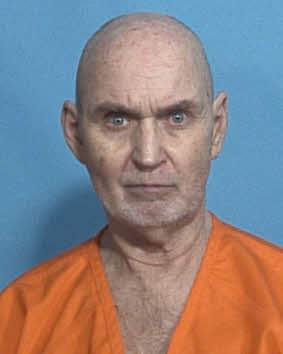
John Arthur Getreu: The Stanford Serial Killer
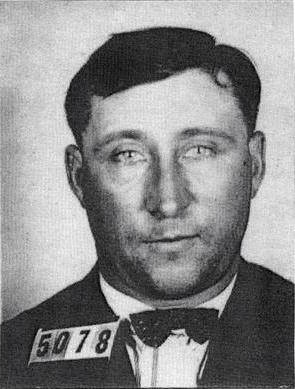
John Arthur Getreu was an American serial killer and sexual predator whose known crimes stretched from West Germany in the early 1960s to the communities surrounding Stanford University in California during the 1970s. For decades, two of his murders remained unsolved. The eventual identification of Getreu as the killer came through preserved DNA evidence and genetic genealogy, demonstrating how evidence collected long before modern DNA testing could later become decisive. Getreu was ultimately held responsible for the murders of three young women: Margaret Williams, Leslie Marie Perlov, and Janet Ann Taylor.
Confirmed Murder Victims
- Margaret L. Williams, 15 — Date of death: June 9, 1963, following an attack that began during the night of June 8. Location: a playing field in the Bad Kreuznach American military community in Bad Kreuznach, West Germany. Williams was the daughter of a U.S. Army chaplain. Getreu raped and violently assaulted her after meeting her at a school dance. She never regained consciousness and died at the scene.
- Leslie Marie Perlov, 21 — Date of death: February 13, 1973. Location: the hills overlooking Stanford University in Santa Clara County, California, in an area near what is now the Stanford Dish. Perlov was last seen leaving work in Palo Alto that afternoon. Her abandoned car was found near an old quarry, and her body was discovered on February 16 beneath an oak tree. She had been strangled with a floral scarf.
- Janet Ann Taylor, 21 — Date of death: March 24, 1974. Location: near Sand Hill Road and Manzanita Way, west of Interstate 280 in the Woodside and Stanford area of San Mateo County, California. Taylor was last seen hitchhiking near Stanford. Her body was discovered beside Sand Hill Road on March 25. She had been beaten and strangled, and investigators determined that the crime was sexually motivated.
The Murder of Margaret Williams in Germany
Getreu's first known murder occurred while he was an 18-year-old student living in West Germany, where his father was stationed with the U.S. military. During the evening of June 8, 1963, Getreu attended a school dance in the Bad Kreuznach American military community. There he met 15-year-old Margaret Williams, whose father was serving as an Army chaplain.
According to evidence from the German investigation that was later described in a California courtroom, Getreu and Williams left the dance together and walked away from populated areas. Williams eventually resisted his sexual advances and wanted to return home. Getreu attacked her in an effort to silence and overpower her. He struck her, restricted her breathing, and raped her after she became unconscious. He later left her on the playing field. Williams did not regain consciousness. Her brother later testified that she was killed on June 9, after the encounter had begun the previous evening.
Getreu was arrested and prosecuted in Germany. On July 13, 1964, he was sentenced to 10 years in prison for an offense translated in later American court proceedings as rape with fatal consequences. The sentence was the maximum applicable punishment under the circumstances. He served approximately six years before being released and returning to the United States in 1969.
Return to California and Further Violence
After returning to the United States, Getreu eventually settled in the San Francisco Bay Area. During the early 1970s he lived near Stanford University and held several jobs, including work connected with Stanford Hospital. He presented an outwardly ordinary life as a husband, father, worker, and youth volunteer. His previous German conviction did not place him into the kind of searchable national law-enforcement databases that would exist decades later.
Getreu also committed sexual violence that did not result in death. In 1975 he entered a plea to a lesser statutory rape charge involving a teenage member of an Explorer Scout troop with which he was associated. Decades later, the woman testified during the Janet Taylor murder trial and described being strangled and threatened during the assault. Her testimony became important because prosecutors argued that it demonstrated behavior similar to the attacks for which Getreu was eventually convicted.
The Murder of Leslie Marie Perlov
Leslie Marie Perlov was a 21-year-old Stanford University graduate who was working in the legal field and hoped to continue her education. At approximately 3:00 p.m. on February 13, 1973, she was last seen at her workplace in Palo Alto. Later that day, her orange 1972 Chevrolet Nova was discovered abandoned at the gate of an old quarry near Old Page Mill Road and Page Mill Road.
For three days, Perlov's whereabouts remained unknown. On February 16, members of a Santa Clara County Sheriff's Office mounted unit searching the hills discovered her body beneath an oak tree west of the abandoned car. A floral scarf had been tightly knotted around her neck and used as a ligature. The medical examiner determined that she had been strangled and ruled her death a homicide. Investigators believed the attack was sexually motivated.
One of the most important pieces of evidence was almost impossible to appreciate fully in 1973. Perlov had fought her attacker, and biological material belonging to an unknown male was preserved with evidence from beneath her fingernails. Investigators could not identify the man at the time, but the evidence survived for more than four decades.
The Murder of Janet Ann Taylor
Thirteen months later, another 21-year-old woman was murdered in the Stanford area. Janet Ann Taylor was a Cañada College student and the youngest daughter of Chuck Taylor, the former Stanford football coach and athletic director. She lived in La Honda and was last seen on March 24, 1974, attempting to hitchhike home after visiting a friend near Stanford.
Getreu murdered Taylor that night. The following morning, March 25, a driver traveling along Sand Hill Road west of Interstate 280 noticed the body of a young woman beside the roadway. Taylor had been beaten and strangled. Her clothing showed signs of a violent struggle. The San Mateo County coroner did not conclude that she had been raped, but investigators found clear indications that the attack had a sexual motive.
The location was significant. Getreu lived in the region and regularly traveled along Sand Hill Road. Evidence presented decades later showed that he was familiar with the area where Taylor was abandoned. Detectives in San Mateo County also quickly noticed similarities between Taylor's murder and Leslie Perlov's killing in neighboring Santa Clara County. Both women were 21, both were associated with the Stanford area, and both had been strangled. Despite those similarities, neither investigation produced enough evidence to identify a killer during the 1970s.
DNA and the Breakthrough in the Cold Cases
The breakthrough began more than 40 years after Perlov's murder. Santa Clara County cold-case detectives reexamined evidence and obtained a male DNA profile connected to the Perlov crime scene. Investigators turned to advanced DNA analysis and genetic genealogy, using genetic relationships in public genealogy data as investigative clues. The process eventually pointed detectives toward John Arthur Getreu.
Investigators then obtained a known DNA sample associated with Getreu and compared it with the profile from the Perlov evidence. In November 2018, the Santa Clara County Crime Laboratory confirmed the match. Getreu, then 74 and living in Hayward, California, was arrested for Perlov's murder on November 20, 2018.
His arrest caused investigators in San Mateo County to look closely at the unsolved Janet Taylor case. Preserved evidence from Taylor's clothing produced a male DNA profile that was also linked to Getreu. On May 16, 2019, authorities formally arrested and charged him with Taylor's murder while he was already in custody for the Perlov case. Nearly half a century after the Stanford-area killings, both investigations finally had the same suspect.
Conviction for the Murder of Janet Taylor
Getreu went to trial in San Mateo County for Taylor's murder in 2021. Prosecutors relied heavily on DNA evidence but also presented evidence concerning his earlier crimes and his history of strangling and sexually assaulting young women. His previous German conviction for the killing of Margaret Williams was discussed in detail, as was testimony from the surviving victim of the 1975 assault.
On September 14, 2021, after an 18-day trial, the jury deliberated for only about an hour before finding Getreu guilty of first-degree murder and infliction of great bodily injury in Taylor's death. On November 5, 2021, a judge sentenced him to life in prison. The conviction ended a murder investigation that had remained unresolved for approximately 47 years.
Guilty Plea in the Leslie Perlov Murder
The prosecution for Leslie Perlov's murder continued in Santa Clara County. Rather than complete another murder trial, Getreu pleaded guilty on January 10, 2023, to murdering Perlov. The admission formally established his responsibility for the second of the two killings commonly known as the Stanford murders.
On April 27, 2023, Getreu received another life sentence for Perlov's murder. Because sentencing laws from the time of the 1973 crime had to be applied, the technical parole provisions differed from those that might apply to a modern murder. In practical terms, however, Getreu remained incarcerated and never returned to freedom.
Death and Legacy of the Investigation
John Arthur Getreu died in California state custody on September 22, 2023, at the age of 79, only months after being sentenced for Leslie Perlov's murder. By the end of his life, he had been legally tied to three murders spanning roughly 11 years and two countries, as well as other sexual violence.
The Getreu cases are especially notable for the enormous gap between the crimes and their resolution. Leslie Perlov was killed in 1973 and Janet Taylor in 1974, yet Getreu was not arrested for either murder until 2018 and 2019. Evidence carefully preserved for decades ultimately provided what investigators in the 1970s could not obtain: a scientific path to the killer. Perlov's resistance during her final struggle left DNA that survived long enough for new technology to identify Getreu, and that discovery helped investigators solve Taylor's murder as well.
The case also illustrates the limitations faced by law enforcement before national databases and modern forensic systems existed. Getreu had already been convicted of a sexually violent killing in Germany before the Stanford murders occurred, but that history did not automatically follow him into searchable American systems. By the time investigators finally connected the crimes, nearly five decades had passed. The eventual convictions provided legal accountability for Margaret Williams, Leslie Perlov, and Janet Taylor, while also preserving their names at the center of a story that otherwise might have focused only on the man who killed them.