John Allen Muhammad and the Beltway Sniper Murders
Background
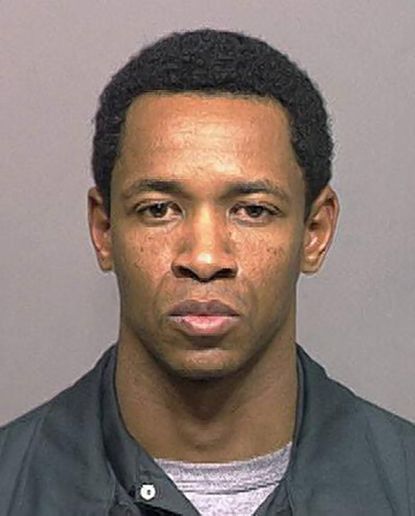
John Allen Muhammad was an American serial and spree killer best known as the older leader of the two-man team responsible for the 2002 Beltway sniper attacks. Working with 17-year-old Lee Boyd Malvo, Muhammad carried out a prolonged series of shootings that crossed several states before reaching its most terrifying stage in Maryland, Virginia, and Washington, D.C. During three weeks in October 2002, the pair murdered 10 people and critically wounded three others in the Washington metropolitan area. Their victims were attacked without warning while performing ordinary activities such as shopping, pumping gasoline, mowing a lawn, cleaning a vehicle, walking through a parking lot, or waiting for transportation.
Muhammad was born John Allen Williams on December 31, 1960, in Baton Rouge, Louisiana. He served for years in the Louisiana Army National Guard and the United States Army, eventually attaining the rank of sergeant. His military record included service during the Gulf War, and he qualified as an expert marksman with the M16 rifle. After leaving the Army in 1994, his personal life became increasingly unstable. He went through a bitter divorce and custody dispute with his former wife, Mildred Muhammad, and at one point took their children across the country without her permission.
Muhammad's Relationship with Lee Boyd Malvo
Muhammad met Lee Boyd Malvo, a Jamaican teenager, in the Caribbean and gradually assumed the role of a father figure in the boy's life. Malvo later described Muhammad as controlling and manipulative. According to evidence presented after their arrests, Muhammad trained the teenager in firearms, physical conditioning, obedience, and methods of avoiding detection. The relationship eventually developed into a criminal partnership in which the pair traveled through the United States, committed robberies, and shot people in several jurisdictions.
The exact division of responsibility for every shooting has remained a complicated issue. Malvo admitted firing many of the shots, while prosecutors argued that Muhammad planned, directed, and controlled the campaign. Under Virginia law, Muhammad could be convicted of capital murder as the organizer of a coordinated terrorist-style killing operation even when prosecutors could not establish that he personally pulled the trigger in every attack.
The Earlier Attacks
Before the October Beltway murders, Muhammad and Malvo were connected to a series of shootings and robberies in other parts of the country. One of the earliest clearly identified victims was Keenya Nicole Cook, who was murdered in Tacoma, Washington. Cook was the niece of a woman who had supported Muhammad's former wife during the couple's custody dispute. Malvo later admitted shooting Cook at the door of her aunt's home.
- Keenya Nicole Cook, 21 — Killed on February 16, 2002, at a residence in Tacoma, Washington. Cook answered the door and was shot in the face. The killing was later connected to Muhammad and Malvo, with Malvo admitting that he fired the fatal shot.
The pair were also associated with additional shootings in states including Arizona, Louisiana, Alabama, and Maryland. Some victims survived, while others were killed. These preliminary attacks helped the offenders practice their methods, obtain money, and continue their movement toward the Washington, D.C., region. One important surviving victim was restaurant owner Paul LaRuffa, who was shot repeatedly and robbed outside his business in Clinton, Maryland, on September 5, 2002. A laptop stolen from LaRuffa was later found in Muhammad's Chevrolet Caprice.
The Beginning of the Beltway Sniper Attacks
The concentrated Beltway shooting campaign began on October 2, 2002. Muhammad and Malvo used a dark blue 1990 Chevrolet Caprice that had been modified into a concealed mobile firing platform. The rear seat area provided access to the trunk, and a small opening had been cut near the license plate. A shooter could lie inside the trunk, aim through the opening, fire a rifle, and remain hidden from witnesses. The vehicle could then leave the area without anyone seeing an armed person standing near the crime scene.
The weapon used in the Beltway murders was a Bushmaster XM-15 .223-caliber semiautomatic rifle fitted with a telescopic sight. The rifle's range and accuracy allowed the killers to attack victims from a distance. Because many of the shots appeared to come from wooded areas or concealed positions, witnesses initially provided conflicting descriptions of suspicious vehicles. Reports involving white vans and box trucks diverted attention away from the blue Caprice during the early stages of the investigation.
The Victims of the October 2002 Beltway Murders
- James D. Martin, 55 — Killed on October 2, 2002, outside a Shoppers Food Warehouse in Wheaton, Maryland. Martin was crossing the parking lot when he was struck by a single rifle bullet. His murder was the first fatal shooting of the concentrated Beltway campaign.
- James L. “Sonny” Buchanan Jr., 39 — Killed on October 3, 2002, near Rockville, Maryland. Buchanan was mowing grass at a commercial property when he was shot. The attack demonstrated that the killers were selecting exposed people engaged in routine activities.
- Premkumar A. Walekar, 54 — Killed on October 3, 2002, at a gasoline station in the Aspen Hill area of Montgomery County, Maryland. Walekar, a taxi driver, was fueling his cab when he was shot.
- Sarah Ramos, 34 — Killed on October 3, 2002, near a post office and retirement community in Silver Spring, Maryland. Ramos was seated on a bench and reading when she was struck by a bullet.
- Lori Ann Lewis-Rivera, 25 — Killed on October 3, 2002, at a Shell gasoline station in Kensington, Maryland. Lewis-Rivera was vacuuming her vehicle when she was shot. She left behind a husband and young daughter.
- Pascal Charlot, 72 — Shot on October 3, 2002, while standing near Georgia Avenue and Kalmia Road in Washington, D.C. Charlot was taken to a hospital but died from his injuries on October 4, 2002.
- Dean Harold Meyers, 53 — Killed on October 9, 2002, at a gasoline station near Manassas in Prince William County, Virginia. Meyers, a civil engineer and Vietnam veteran, was pumping gasoline when he was shot in the head. Muhammad was later convicted of capital murder for organizing and participating in Meyers's killing.
- Kenneth H. Bridges, 53 — Killed on October 11, 2002, at an Exxon station near Fredericksburg in Spotsylvania County, Virginia. Bridges was a businessman and father who was traveling through the area when he stopped for gasoline and was shot.
- Linda Franklin, 47 — Killed on October 14, 2002, outside a Home Depot in the Falls Church area of Fairfax County, Virginia. Franklin, an FBI intelligence analyst, was loading purchases into her vehicle with her husband when she was shot in the head.
- Conrad E. Johnson, 35 — Shot during the early morning of October 22, 2002, while standing on the steps of his commuter bus in Aspen Hill, Maryland. Johnson, a bus driver, died later that morning at a hospital. He was the final person murdered during the Beltway sniper campaign.
Survivors of the Beltway Shootings
Three people were critically wounded but survived the October attacks. On October 4, 43-year-old Caroline Seawell was shot while loading purchases into her vehicle outside a craft store at Spotsylvania Mall in Virginia. On October 7, 13-year-old Iran Brown was shot outside Benjamin Tasker Middle School in Bowie, Maryland. A tarot card left near the school contained the disturbing message, “Call me God.” On October 19, Jeffrey Hopper was shot outside a restaurant in Ashland, Virginia. Evidence left near Hopper's shooting included a lengthy communication demanding $10 million and threatening additional deaths.
The attack on Iran Brown intensified public fear because it proved that children were not safe from the shooters. Schools restricted outdoor activities, police guarded campuses, and parents struggled to decide whether sending their children to class was safe. Gas stations erected tarps to conceal customers, motorists crouched while filling their tanks, and residents moved quickly across parking lots. The killers had transformed ordinary public spaces into locations associated with sudden and unpredictable death.
Fear, Extortion, and the Possible Motive
The killings initially appeared completely random, and randomness was essential to the terror they created. The victims were of different ages, races, occupations, and backgrounds. They were not connected to one another, and the shootings occurred in several separate jurisdictions. Investigators faced enormous pressure because no clear victim profile could identify who might be attacked next.
Messages connected to the shootings eventually revealed an extortion effort. Muhammad and Malvo demanded $10 million and threatened to continue killing if officials failed to follow their instructions. Prosecutors argued that the campaign was intended to terrorize the public and influence the government through violence. Another theory presented by investigators was that Muhammad planned eventually to murder his former wife and conceal her death among a larger pattern of apparently random shootings. Prosecutors discussed that theory, although it was not conclusively established as the sole motive for the entire campaign.
The Investigation
The investigation became one of the largest coordinated manhunts in modern American history. The Montgomery County Police Department led the regional effort with assistance from the FBI, the Bureau of Alcohol, Tobacco, Firearms and Explosives, the Maryland State Police, Virginia authorities, Washington, D.C., police, and numerous local agencies. Hundreds of officers and federal agents examined crime scenes, studied ballistics, interviewed witnesses, analyzed tips, and searched for connections between the attacks.
The breakthrough came partly because the killers themselves referred investigators to an earlier crime. A caller claiming responsibility for the sniper attacks told authorities to examine a September 21, 2002, liquor-store robbery in Montgomery, Alabama. During that crime, store employee Claudine Parker was killed and coworker Kellie Adams was wounded. Investigators recovered a gun magazine bearing Malvo's fingerprint. A search of immigration and arrest records connected Malvo to Muhammad.
Authorities then learned that Muhammad owned a dark blue Chevrolet Caprice with New Jersey license plates. The description was circulated publicly. Shortly before midnight on October 23, 2002, a truck driver spotted the Caprice at the westbound rest area near Myersville, Maryland, along Interstate 70. Police quietly surrounded the vehicle, and tactical officers arrested Muhammad and Malvo without a struggle during the early morning of October 24.
Evidence Found in the Chevrolet Caprice
The interior of the Caprice revealed how carefully the mobile shooting platform had been constructed. Investigators found the Bushmaster .223-caliber rifle used in the Beltway attacks, a scope, a tripod, maps, walkie-talkies, and a digital recorder used in connection with the extortion demands. The rear portion of the car had been altered so that a person could crawl from the passenger compartment into the trunk. The opening near the license plate allowed the rifle to be fired while the shooter remained concealed.
Investigators also recovered Paul LaRuffa's stolen laptop. Records and maps found on the computer helped connect the pair to crime scenes and possible escape routes. Ballistic testing tied the Bushmaster rifle to the Beltway shootings. Malvo's fingerprints were found on the weapon, while biological evidence associated with Muhammad was also recovered. The physical evidence, telephone communications, vehicle modifications, witness accounts, and connections to earlier crimes created a powerful case against both defendants.
Muhammad's Virginia Trial
Muhammad was first prosecuted in Virginia for the murder of Dean Harold Meyers. The trial began in October 2003 and was moved to Virginia Beach because of extensive publicity in the Washington region. Muhammad briefly acted as his own attorney before allowing his court-appointed lawyers to resume control of the defense.
Prosecutors did not need to prove that Muhammad personally fired the bullet that killed Meyers. They portrayed him as the planner and commander of a coordinated killing team. Virginia's terrorism law allowed the prosecution to seek a capital conviction for a murder committed with the intent to terrorize the public or influence government conduct. The state also used its multiple-murder provisions to argue that Meyers's death was one part of a broader series of killings.
On November 17, 2003, a jury convicted Muhammad of capital murder, murder committed as an act of terrorism, conspiracy to commit murder, and the illegal use of a firearm. The jury recommended death, and a judge formally sentenced him to death on March 9, 2004.
Maryland Convictions
Muhammad was later transferred temporarily to Maryland to face charges for six of the murders committed there. In May 2006, a Montgomery County jury convicted him of six counts of first-degree murder relating to the deaths of James Martin, James Buchanan, Premkumar Walekar, Sarah Ramos, Lori Lewis-Rivera, and Conrad Johnson. He received six consecutive sentences of life imprisonment without the possibility of parole.
The Maryland prosecution provided an additional legal record of Muhammad's responsibility for directing the campaign. Although Malvo was believed to have fired many of the shots, Muhammad's control over the vehicle, rifle, planning, movements, and communications made him legally responsible for the murders committed as part of their agreement.
Lee Boyd Malvo's Role
Malvo was tried separately and convicted of capital murder for the killing of Linda Franklin. Because Malvo was 17 during the attacks, the United States Supreme Court's later ruling against executing juvenile offenders prevented a death sentence from being carried out against him. He received multiple life sentences in Virginia and Maryland.
In later statements, Malvo described Muhammad as a dominating figure who isolated him, trained him, and taught him to view killing as part of a larger mission. Malvo also accepted responsibility for firing shots and participating in the campaign. His age, personal history, and claims of manipulation became major issues in later legal proceedings, but they did not erase the devastating consequences of his actions.
Execution of John Allen Muhammad
Muhammad continued to deny responsibility and pursued appeals challenging his conviction and death sentence. His attorneys argued that he suffered from mental and neurological problems and questioned whether he had been competent to represent himself during part of his trial. State and federal courts rejected his appeals, and the United States Supreme Court declined to stop the execution.
John Allen Muhammad was executed by lethal injection at the Greensville Correctional Center near Jarratt, Virginia, on November 10, 2009. He was 48 years old. He did not make a final statement or publicly acknowledge the suffering caused by the murders.
Legacy of the Crimes
The Beltway sniper attacks remain among the most frightening episodes of coordinated public violence in the United States. Muhammad and Malvo did not attack a single building or gathering. Instead, they spread violence across an entire metropolitan region, striking at different times and locations while remaining hidden inside an ordinary-looking car. Their method made every parking lot, gasoline station, school entrance, and roadside business seem potentially dangerous.
The case also demonstrated the difficulties created when connected crimes cross numerous local and state boundaries. The eventual arrests depended on cooperation among police departments, federal agencies, forensic laboratories, transportation authorities, and members of the public. Fingerprint evidence from Alabama, records from Washington state, ballistic evidence from the Washington metropolitan area, and a citizen's observation at a Maryland rest stop all contributed to ending the attacks.
Behind the well-known name “Beltway sniper” were individual victims whose lives were taken while they were engaged in ordinary routines. James Martin was walking through a parking lot. Sonny Buchanan was working outdoors. Premkumar Walekar was fueling his taxi. Sarah Ramos was reading. Lori Lewis-Rivera was cleaning her vehicle. Pascal Charlot was standing on a city street. Dean Meyers and Kenneth Bridges were purchasing gasoline. Linda Franklin was shopping with her husband. Conrad Johnson was beginning his workday. Their deaths, and the injuries suffered by the survivors, remain the central human tragedy of Muhammad's calculated campaign of murder and terror.