The Golden Years Murders: Richmond's Unsolved Serial Murder Mystery
Overview
The Golden Years Murders were a series of killings involving older women in Richmond, Virginia, and the surrounding Richmond area between 1990 and 1996. Although the crimes have often been described as the work of a serial killer, investigators never conclusively established that one person committed every murder. The possibility that several offenders were responsible has remained an important part of the mystery.
At least thirteen women eventually became associated with the investigation. Most were elderly, many lived alone, and several were attacked inside their own homes. The victims ranged in age from 55 to 89. The apparent vulnerability of the women, combined with repeated killings inside private residences, created intense fear among older residents of Richmond.
The murders also appeared to occur in two distinct groups. The first six commonly listed victims were Black women killed between July 1990 and May 1992, with stabbing reported as the method of death. After a lengthy gap, additional killings occurred from 1994 through 1996. Those later victims were white women, and strangulation or asphyxiation was associated with several of the cases.
This difference in victim characteristics, timing and method has raised a question that has never been completely resolved: were all of the women victims of one evolving offender, or were investigators looking at several unrelated murderers whose crimes happened to share disturbing similarities?
Operation Golden Years
As the number of murdered older women increased, Richmond authorities began examining the cases together. The investigation became known as Operation Golden Years, a name that eventually became associated with the murders themselves.
The task facing investigators was exceptionally difficult. Richmond was experiencing a high level of violent crime during this period, and police had numerous homicides to investigate. At the same time, the Golden Years cases involved victims whose deaths appeared to contain enough similarities to suggest that at least some of them could be connected.
Investigators examined crime scenes, interviewed neighbors and relatives, compared methods of entry and searched for connections among the women. They also attempted to determine whether the victims had used the same stores, restaurants, transportation services, repair workers or neighborhood businesses.
The crimes were especially frightening because many of the attacks apparently occurred where the victims should have been safest: inside their homes.
The Victims
The following thirteen women have been associated with the Golden Years investigation. Dates below reflect the recorded dates of death used in case records. In several cases, contemporary newspaper reports gave a later date on which a victim's body was discovered, so the date of discovery was not necessarily the same as the estimated or recorded date of death.
- Mabel Venable, 89 - July 1, 1990 - Richmond, Virginia. Venable is generally regarded as the first victim in the Golden Years series. She was an elderly Black woman killed in Richmond. Her death became particularly significant after additional older women were murdered under circumstances investigators believed might be related. She was reportedly stabbed to death.
- Eva Jones, 80 - October 2, 1990 - Richmond, Virginia. Jones was killed approximately three months after Mabel Venable. She was an 80-year-old Black woman and was reportedly found stabbed to death in her Richmond residence. The killing strengthened concerns that elderly women living in the city might be facing a common threat.
- Mary Miller Coffee, 61 - October 3, 1990 - Richmond, Virginia. Coffee was killed only one day after Eva Jones. She was a 61-year-old Black woman who was found murdered in her home. She had suffered a fatal stab wound. The occurrence of two killings on consecutive days was particularly alarming and later became one of the important features investigators considered when reviewing the early group of murders.
- Robinette Mickleberry, 61 - May 6, 1991 - Richmond, Virginia. Mickleberry was a 61-year-old Black woman who was found murdered in her Richmond home. She was stabbed to death. Her killing occurred months after the October 1990 murders but shared characteristics with the earlier attacks on older women.
- Pearl Gash, 85 - December 17, 1991 - Richmond, Virginia. Gash was among the oldest victims associated with the investigation. The 85-year-old Black woman was killed in Richmond and was reportedly stabbed. Her death extended the suspected pattern into the closing weeks of 1991.
- Martha Bolden, 81 - May 21, 1992 - Richmond, Virginia. Bolden was an 81-year-old Black woman and is generally listed as the sixth victim in the first phase of the Golden Years murders. She was reportedly stabbed to death. Her killing was followed by a lengthy interruption in the recognized series.
- Phyllis G. Harris, 59 - August 16, 1994 - Richmond, Virginia. Harris was 59 years old and was the first commonly recognized victim after the approximately two-year break in the series. Unlike the first six victims, the later group consisted of white women and was associated primarily with strangulation rather than stabbing. This dramatic change has contributed to doubts that a single offender committed every Golden Years murder.
- Inez J. Childress, 82 - September 14, 1994 - Highland Springs, Henrico County, Virginia. Childress lived in the Richmond metropolitan area outside the city itself. Her body was discovered on September 17, 1994, in a water-filled bathtub in her home in Highland Springs. Her recorded date of death is September 14. Investigators examined her case for possible connections with the Richmond killings. Reports indicated that strangulation and drowning were involved in her death.
- Lucille G. Boyd, 75 - January 1, 1996 - Richmond, Virginia. Boyd was killed at the beginning of 1996. She lived in Richmond's West End and was found in the bathtub of her home. Contemporary reporting described her death as involving strangulation or drowning. Her killing became one of the cases later attributed to Leslie Leon Burchart after he confessed to several Golden Years murders.
- Gertrude Gardner, 77 - February 2, 1996 - South Richmond, Virginia. Gardner was a 77-year-old woman whose case became part of the Golden Years investigation. Her body was found on the kitchen floor of her South Richmond home. Some contemporary reporting stated that she was discovered on February 22, while case records list February 2 as her date of death. Her murder was investigated alongside the other killings of older Richmond women.
- Mamie Harris Verlander, 84 - March 28, 1996 - Richmond, Virginia. Verlander was found murdered in her home on March 28. She lived on Augusta Avenue in Richmond. Her death became particularly important because the continuing killings helped intensify the organized police investigation that became known as Operation Golden Years. Burchart would later claim responsibility for her murder.
- Elizabeth Seibert, 69 - April 23, 1996 - Richmond, Virginia. Seibert lived alone in a third-floor apartment in Richmond's West End. She was found murdered on April 23. Her residence was located only several blocks from the area where Lucille Boyd had lived. Seibert's killing occurred during the most frightening period of the investigation, when several older women had been killed within only a few months. Burchart later confessed to killing her.
- Jane E. Foster, 55 - April 24, 1996 - Monument Avenue, Richmond, Virginia. Foster was the youngest woman associated with the Golden Years series. Her employer became concerned after she failed to report for work, and a security guard was sent to her Monument Avenue residence, where she was found murdered. Contemporary reporting indicates that Foster was discovered late on April 23, while case records commonly give April 24 as her recorded date of death. She was reportedly strangled. Burchart later claimed responsibility for her murder.
A Disturbing Change in the Murders
One of the most unusual aspects of the Golden Years cases is the apparent division between the early and later killings.
The first six recognized victims were Black women killed between 1990 and 1992. They were reportedly stabbed. Then the killings appeared to stop.
More than two years later, the suspected series resumed. The later victims were white women, and strangulation became the dominant method associated with their deaths.
Serial offenders can change methods, select different victims and alter their behavior over time. However, the sharp differences in the Richmond cases have always left open the possibility that authorities combined murders committed by different offenders.
The geographic pattern was also imperfect. Many of the later murders were concentrated in Richmond's West End, while other crimes occurred elsewhere in Richmond or, in the case of Inez Childress, in neighboring Henrico County.
Fear in Richmond
By 1996, the murders had created widespread anxiety, particularly among elderly residents and women living alone. Everyday routines changed. Doors that residents once casually left unlocked were secured. Some homeowners installed additional deadbolts, alarms and peepholes. Others purchased watchdogs or began asking relatives and neighbors to check on them regularly.
Community groups organized neighborhood patrols. Residents were encouraged to pay attention to unfamiliar people, vehicles and unusual activity. Organizations that delivered meals or provided services to elderly residents also faced new difficulties because frightened residents sometimes refused to open their doors even for legitimate volunteers.
The murders therefore affected far more people than the immediate families of the victims. They altered the sense of security throughout parts of Richmond.
Questions About the Investigation
The investigation was complicated by disagreements over which murders actually belonged to the series. At various times, seventeen murdered women were reportedly examined as potential Golden Years victims. Several were later removed from consideration after their individual murders were solved or investigators established that different offenders were responsible.
The remaining group became the core collection of cases associated with Operation Golden Years.
Authorities were cautious about publicly declaring that Richmond had a serial killer. Similarities existed, but investigators did not have proof that every crime was committed by the same person.
The investigation also generated controversy over whether the murders of the first Black victims received the same level of attention as the later killings of white women. Black community leaders and representatives of the NAACP raised concerns about possible disparities in investigative attention. Those allegations became another controversial element of the Golden Years story.
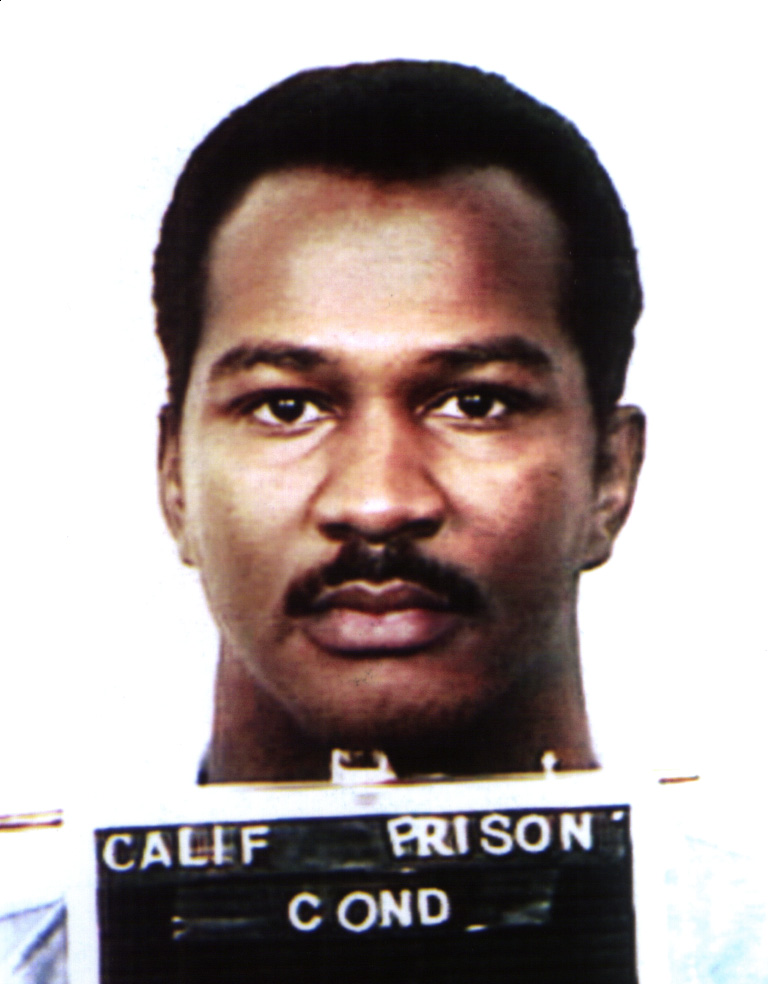
Leslie Leon Burchart
One of the most important suspects to emerge in connection with the Golden Years murders was Leslie Leon Burchart.
Burchart was born August 3, 1949, in Richmond. During the 1990s he spent periods homeless and had numerous encounters with law enforcement. He also had a documented history of severe mental illness and had been diagnosed with schizophrenia.
His connection to homicide investigations did not initially involve the elderly women.
After his arrest in July 1996, Burchart began talking to investigators about several violent crimes. He confessed to killing three men in Richmond and described other assaults. Those admissions demonstrated that authorities were dealing with an offender capable of extreme violence.
Among the murders attributed to Burchart outside the Golden Years cases were those of homeless or economically vulnerable men in Richmond during the mid-1990s. He was convicted in connection with those crimes and received an extremely lengthy prison sentence.
Burchart's Golden Years Confessions
Several years after his imprisonment, Burchart made a far more startling claim. He told investigators that he had murdered four women associated with the Golden Years investigation:
- Lucille G. Boyd
- Mamie Harris Verlander
- Elizabeth Seibert
- Jane E. Foster
Investigators reportedly believed that parts of Burchart's statements demonstrated knowledge of circumstances that had not been widely released to the public. He provided descriptions of the killings and claimed familiarity with places frequented by some of the women.
His statements therefore appeared, at least initially, to provide the breakthrough investigators had been seeking.
In May 2000, Burchart pleaded guilty in connection with the four women's murders. He received multiple additional life sentences, along with a sentence connected to burglary. Legally, those guilty pleas represented a resolution of the specific cases to which he admitted responsibility.
They did not, however, completely resolve the historical controversy.
Why Burchart's Confessions Remain Controversial
Serious questions have persisted about whether Burchart actually committed all four Golden Years murders to which he confessed.
One problem was the absence of publicly established forensic evidence conclusively placing him at each crime scene. His mental condition also complicated evaluation of his statements. Burchart had a history of schizophrenia and psychiatric treatment, making investigators and later observers question how reliably some of his statements could be interpreted.
Most importantly, Burchart eventually recanted his Golden Years confessions and claimed that he had not committed the murders.
His guilty pleas cannot simply be ignored, but neither can the unusual circumstances surrounding the case. The result is a situation in which some of the Golden Years murders were legally attributed to Burchart while researchers and investigators have continued debating whether those conclusions accurately identified the actual killer.
The Earlier Murders Remained Unexplained
Even accepting Burchart's responsibility for the four 1996 killings would not explain the entire series.
Mabel Venable, Eva Jones, Mary Coffee, Robinette Mickleberry, Pearl Gash and Martha Bolden were killed years before the murders Burchart confessed to committing.
Those early murders also involved a different apparent method. The six women were Black and reportedly stabbed to death, while the later Golden Years cases generally involved white women who were strangled.
No confession by Burchart satisfactorily accounted for the entire early group.
This leaves one of the central possibilities in the case: the Golden Years murders may never have represented the work of one serial killer at all.
One Killer or Several?
There are several plausible interpretations of the evidence.
One possibility is that a single offender committed many or all of the murders and deliberately changed methods. A killer could have switched from stabbing to strangulation, changed the racial profile of victims or become more selective about location.
A second possibility is that one offender committed the first series of murders and another committed the later killings.
A third possibility is that several unrelated murders of elderly women were combined because their similarities appeared more significant during a period of intense public fear.
The substantial gap between May 1992 and August 1994 is particularly important. Serial killers sometimes stop temporarily because of incarceration, relocation, illness, changes in personal circumstances or deliberate attempts to avoid detection. But a long interruption can also indicate that investigators are examining crimes committed by different people.
The Importance of the Victims' Homes
A recurring characteristic of the Golden Years cases was that many of the victims were attacked inside their residences.
This created several investigative possibilities. The killer might have been someone the women voluntarily admitted into their homes. The offender might have posed as a repair worker, delivery person, salesperson or other legitimate visitor. Alternatively, the killer might have entered through an unlocked door or gained access by burglary.
Because many of the women lived alone, there were often no direct witnesses to describe the offender's arrival or departure.
The homes themselves therefore became crucial crime scenes. Investigators had to determine whether anything had been stolen, whether doors or windows had been forced, whether the victim appeared to have known the person who entered and whether physical evidence connected multiple scenes.
The Last Months of the Series
The opening months of 1996 represented the most intense period associated with the Golden Years investigation.
Lucille Boyd died on January 1.
Gertrude Gardner was killed in February.
Mamie Verlander was murdered on March 28.
Elizabeth Seibert and Jane Foster were killed or discovered within approximately a day of one another in late April.
For Richmond residents, the concentration of murders made it appear that an offender might be accelerating. Several victims lived within the same general West End neighborhoods. The idea that someone could repeatedly enter women's homes and kill them without being identified created a profound sense of vulnerability.
The Death of Leslie Burchart
Burchart remained incarcerated after his convictions. His health later deteriorated because of serious cardiovascular problems.
He was transferred to Lonesome Pine Hospital in Big Stone Gap, Virginia, in late July 2002. He died there on August 1, 2002, two days before his 53rd birthday.
His death eliminated any possibility of future interrogation or trial testimony that might have clarified inconsistencies surrounding the Golden Years cases.
Later Claims and Additional Possible Victims
The controversy did not end with Burchart's death.
Years later, retired investigators publicly discussed their belief that he might have been responsible for additional deaths. Two names mentioned in connection with those claims were Rachel Henshaw, 81, and William R. Merrill, 47, who both died in June 1996.
Richmond authorities disputed suggestions that those deaths represented additional Burchart murders. Police said subsequent examination showed that Henshaw had died from natural causes and Merrill from alcohol poisoning rather than homicide.
For that reason, they should not be counted as established Golden Years murder victims.
A Case Defined by Uncertainty
The Golden Years investigation remains unusual because almost every major conclusion carries a qualification.
There was unquestionably a disturbing number of older women murdered in Richmond during the period.
There were unquestionably similarities among a number of the crimes.
There were also substantial differences.
One convicted murderer confessed to four of the killings and entered guilty pleas, but his statements later became controversial and he recanted responsibility.
The first wave of murders remained largely unexplained, and no single suspect has ever convincingly accounted for all thirteen women.
Why the Case Still Matters
The Golden Years Murders remain important not simply because of the possibility that an unidentified serial killer operated in Richmond, but because of what the case demonstrates about investigating patterns of homicide.
When several victims share characteristics, investigators must determine whether those similarities are evidence of one offender or coincidence. Linking unrelated murders can send an investigation in the wrong direction. Failing to recognize genuine connections can allow a serial offender to continue killing.
The Richmond cases presented both dangers.
The victims were frequently older women, many living alone. Several were attacked in their homes. Yet the differences in race, geography, murder method and timing complicate any simple theory.
The Unanswered Questions
Decades after the killings, several questions continue to surround the Golden Years murders.
- Did one offender murder all thirteen women?
- Were the six stabbing murders from 1990 through 1992 committed by the same person?
- Did the murders beginning in 1994 represent the return of the original killer or the appearance of another offender?
- Why did the apparent method change from stabbing to strangulation?
- Was Leslie Burchart truly responsible for all four murders to which he pleaded guilty?
- Did Burchart possess genuine crime-scene knowledge, or could some of the information have reached him through other means?
- Were additional Richmond homicides incorrectly associated with the series?
- Were some genuine Golden Years victims never recognized as part of the pattern?
- Could surviving physical evidence eventually permit modern forensic testing to identify an offender?
Remembering the Women
The mystery surrounding the Golden Years murders can easily cause attention to shift toward theories, suspects and the possibility of a serial killer. At the center of the case, however, were thirteen women whose lives ended violently.
Mabel Venable was 89 years old.
Eva Jones was 80.
Mary Coffee and Robinette Mickleberry were each 61.
Pearl Gash was 85.
Martha Bolden was 81.
Phyllis Harris was 59.
Inez Childress was 82.
Lucille Boyd was 75.
Gertrude Gardner was 77.
Mamie Verlander was 84.
Elizabeth Seibert was 69.
Jane Foster was 55.
Their murders transformed ordinary Richmond homes and neighborhoods into crime scenes and left families without definitive answers about why their relatives had been targeted.
Legacy of the Golden Years Murders
The Golden Years Murders occupy an unusual place in American serial murder history. They are frequently described as a serial-killer case, yet the identity of a single killer responsible for the entire series has never been established.
The case instead represents a collection of homicides connected by similarities, investigative theories and years of uncertainty.
Leslie Burchart remains the person most strongly associated with the later murders because of his confessions and guilty pleas involving Boyd, Verlander, Seibert and Foster. Nevertheless, his recantation, mental-health history and questions surrounding the corroboration of his statements have prevented the larger mystery from disappearing.
Even if Burchart committed those four murders, the deaths of the other women still demand explanation.
The most troubling possibility is therefore also one of the simplest: Richmond may have faced more than one predator during the years remembered as the Golden Years murders.
Conclusion
From the murder of 89-year-old Mabel Venable on July 1, 1990, through the death of 55-year-old Jane Foster in April 1996, the Golden Years cases created nearly six years of fear and uncertainty in the Richmond area.
Thirteen women became associated with the suspected series. Some were stabbed. Others were strangled or asphyxiated. Most were older women, and many were attacked in or around the homes where they lived.
Investigators developed suspects, created a specialized task force and eventually obtained extraordinary confessions from an already convicted murderer. Yet no explanation has convincingly accounted for every victim.
The Golden Years Murders therefore remain less a story about a conclusively identified serial killer than an enduring Richmond homicide mystery: thirteen women, several possible patterns, controversial confessions and the unanswered question of how many killers were actually responsible.