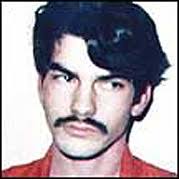
Dorothy Williams: The Chicago Strangler
Overview
Dorothy Williams was a serial killer who preyed on the elderly in Chicago's South Side between 1987 and 1989. Driven by a long-standing and severe addiction to heroin and cocaine, Williams gained entry into the homes of vulnerable seniors, robbing them to get money for drugs. In at least three of these encounters, the robberies escalated to brutal murders. Her victims were two men and one woman, ranging in age from 64 to 97, who she either strangled or stabbed to death. Williams was arrested in 1989 after being identified by a witness. She confessed to the three murders and was convicted. Initially sentenced to death, she became a notable figure in the debate over capital punishment when her sentence was commuted to life without parole in a blanket clemency by Illinois Governor George Ryan in 2003. She died in prison in 2020.
Early Life and Background
Dorothy Williams was born in Illinois on December 12, 1954. Her childhood and early life were marked by instability. According to testimony from her mother, Annie Pearl Williams, during her sentencing hearing, Williams's father was largely absent from her life, his contact limited to letters. He passed away about four years before her 1991 trial. Williams was reportedly close to an older sister who died in January 1987, the same year her murder spree began.
Williams became pregnant at the age of 15 and had two children, a daughter and a son. The father of her daughter was killed in 1978, and her son's father provided no support to the family. Despite these challenges, her daughter testified that Williams had raised them well.
By her own admission, Williams began using heroin and cocaine at the age of fourteen. This addiction would come to dominate her life and serve as the primary motive for her future crimes. Her criminal record began long before the murders. In May 1973, she was arrested for creating a public disturbance and subsequently kicked a police officer repeatedly in the face and chest. In October of that same year, she assaulted a woman by striking her in the mouth with a wooden milk crate, knocking out two of her teeth. In March 1975, she was convicted of possession and delivery of marijuana and sentenced to 18 months of probation. These early encounters with the law foreshadowed the escalating violence that would later define her.
The Murders
The series of murders began on December 5, 1987. Williams targeted 79-year-old Lonnie Laws in his Chicago apartment. After robbing him, she strangled him to death with his own belt and also suffocated him. His apartment was found ransacked. For a year, the murder remained unsolved, an isolated act of violence against a vulnerable citizen.
Almost exactly a year later, on December 6, 1988, Williams struck again. Her victim was 64-year-old Caesar Zuell. Police were called to an apartment building for the elderly, where they discovered Zuell’s decomposed body. An autopsy revealed he had been stabbed three times in the chest, with the wounds lacerating his lungs. At this crime scene, investigators were able to lift fingerprints, providing a crucial piece of evidence, though it did not immediately lead to a suspect.
The final and most publicized murder occurred on July 25, 1989. Williams targeted 97-year-old Mary Harris, who lived in a Chicago Housing Authority (CHA) building for seniors. Williams gained entry to Harris's apartment, where she brutally beat the elderly woman before strangling her with her own headscarf. The motive was again robbery; Williams stole a stereo system that Harris's daughter had recently purchased for her. A witness later saw Williams, dressed in a white nurse's uniform, carrying a large box from the building around the time of the murder.
The Victims
Dorothy Williams's confirmed victims were all elderly and lived alone, making them easy targets for her predatory attacks.
- Lonnie Laws, 79 — Murdered on December 5, 1987, in his Chicago apartment. He was robbed and brutally strangled, a life ended in a violent home invasion.
- Caesar Zuell, 64 — Discovered stabbed to death on December 6, 1988. His body was found after he had been deceased for some time, indicating the isolation in which he lived.
- Mary Harris, 97 — Strangled in her apartment in a CHA senior living facility on July 25, 1989. She had lived a long life and was beloved by her daughter, only to have it violently taken for a stereo to be sold for drug money.
In addition to these murders, prosecutors asserted that Williams had robbed at least four other elderly individuals between 1986 and 1989: Frederick Adamson, Clyde Simmons, Martha Foster, and Jasper Irving. Adamson reported that he had been robbed by Williams on three separate occasions.
Investigation and Capture
For nearly two years, the murders of Lonnie Laws and Caesar Zuell were not publicly linked, and police had few leads. The turning point came with the murder of Mary Harris in July 1989. The high-profile nature of the crime, involving a 97-year-old woman in a CHA building, brought increased attention.
A resident of Mary Harris's building, a man named Mr. Carmichael, proved to be the key witness. He had seen Williams in the building around the time of the murder carrying a large box. On September 6, 1989, more than a month after the murder, Carmichael spotted Williams near the apartment building again. She had altered her appearance, dyeing her hair red and wearing glasses, but he recognized her immediately.
Carmichael excitedly pointed her out to a plainclothes Chicago police officer, Betty Woods, who was assigned to senior citizens' services. He told the officer what he had witnessed on the night of the murder. Officer Woods approached Williams, who gave a false name, "Deborah Williams." Despite the deception, Officer Woods took her to the police station for questioning.
Once in custody, the case against Dorothy Williams quickly solidified. Her fingerprints matched those found at the scene of Caesar Zuell's murder. Detectives also recovered the stereo stolen from Mary Harris's apartment at Williams's home. Faced with this overwhelming evidence, Williams gave three court-reported confessions. On September 7, 1989, she confessed to strangling Mary Harris to steal her stereo to sell for drugs. She subsequently confessed to the murders of Lonnie Laws and Caesar Zuell as well.
Trial and Sentence
Dorothy Williams was first tried for the murder and robbery of 97-year-old Mary Harris. The evidence presented by the state was overwhelming, including her detailed confession, the discovery of the stolen stereo in her apartment, and the witness testimony placing her at the scene. In March 1991, a Cook County jury found her guilty.
On April 18, 1991, Judge Shelvin Singer sentenced Dorothy Williams, then 36, to death by lethal injection, making her the second woman on Illinois's death row at the time. During the sentencing hearing, prosecutors detailed her violent history and argued she was a "reverse Robin Hood who steals from those who have nothing and uses it for her own selfish interests."
Following her death sentence, on September 4, 1991, Williams pleaded guilty to the murders of Lonnie Laws and Caesar Zuell. For these two murders, she received two concurrent sentences of natural life in prison. She also pleaded guilty to the robbery of another elderly man and received a seven-year sentence for that crime.
Williams's conviction and death sentence were unanimously affirmed by the Illinois Supreme Court in 1994. However, her legal journey was not over. Her case became part of a larger, state-wide re-examination of capital punishment in Illinois.
Aftermath and Legacy
Dorothy Williams remained on death row for over a decade. During this time, serious questions arose about the fairness and reliability of the death penalty system in Illinois, following the exoneration of 13 death row inmates. This led then-Governor George Ryan, a Republican who had previously supported capital punishment, to declare a moratorium on all executions in 2000.
After a comprehensive review by a state commission, Governor Ryan concluded the system was "arbitrary, capricious, and therefore immoral." On January 11, 2003, in a historic and controversial act just before leaving office, he commuted the death sentences of all 167 inmates on Illinois's death row to life imprisonment. Dorothy Williams was among them. Her sentence was officially changed to life in prison without the possibility of parole. The decision was met with both praise from anti-death penalty advocates and anguish from many victims' families and prosecutors.
Dorothy Williams spent the remainder of her life in the Illinois Department of Corrections system, serving her sentence at the Dwight Correctional Center and later the Logan Correctional Center. On December 19, 2020, one week after her 66th birthday, she died of natural causes at Decatur Memorial Hospital.
Her case remains a chilling example of how drug addiction can fuel extreme violence and highlights the vulnerability of the elderly in urban communities. Furthermore, her sentence commutation made her an unwilling participant in the broader national debate on capital punishment, a legacy that extends far beyond her brutal crimes on Chicago's South Side.