Linda Laura Hazzard: The “Starvation Doctor”
Background and Medical Claims
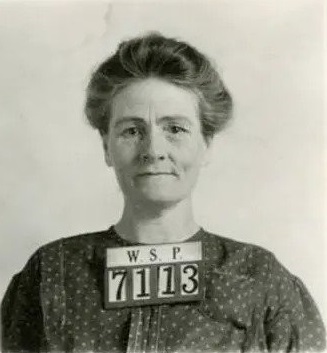
Linda Laura Hazzard was an American fasting practitioner whose treatments caused the deaths of numerous patients during the early twentieth century. Born Linda Laura Burfield on December 18, 1867, in Carver County, Minnesota, she had limited formal medical education and never earned a conventional medical degree. Nevertheless, a loophole in Washington State law allowed her to obtain a medical license as an alternative practitioner. She presented herself as a doctor and became widely known as a “fasting specialist.”
Hazzard taught that nearly every illness was caused by eating too much. She claimed that extended fasting would allow the digestive system to rest and remove poisons from the body. Her patients were often given no solid food for several weeks. Some received only one or two small cups of thin tomato, asparagus or vegetable broth each day. As they became weak and dangerously underweight, Hazzard continued the fast rather than restoring normal nutrition.
Her Treatment Methods
Food deprivation was only one part of Hazzard’s treatment. Patients were subjected to daily enemas that could continue for hours. They were ordered to take long walks even when they were barely able to stand. Hazzard also performed forceful abdominal massages that witnesses described as painful pounding or striking. Hot baths and other exhausting procedures were used on people already suffering from severe malnutrition.
Many patients became skeletal, confused and physically helpless. Some were moved from Seattle apartments to Hazzard’s property near Olalla, Washington, after they had become too weak to resist or seek assistance. Local residents called the property “Starvation Heights.” Hazzard officially referred to her establishment as the Institute of Natural Therapeutics or Wilderness Heights.
Money, Property and Control
Hazzard’s conduct involved more than dangerous medical treatment. Several dying patients signed checks, wills, guardianship agreements or powers of attorney that benefited Linda Hazzard or her husband, Samuel Hazzard. Prosecutors later described this pattern as “financial starvation.” By controlling weakened patients and their legal affairs, the Hazzards obtained money, jewelry, clothing and authority over estates.
Hazzard insisted that starvation never killed a patient. When someone died, she blamed an existing disease, a damaged organ or medical treatment received years earlier. In some cases, she performed or supervised the examination of the body herself. This allowed her to report causes of death other than starvation.
Known and Suspected Victims
The exact number of people who died under Hazzard’s supervision remains uncertain. Washington State archival records identify at least fourteen deaths connected to her care in Washington between 1907 and 1925. She was criminally convicted only in connection with the death of Claire Williamson. Some other patients may have had serious illnesses, and Eugene Stanley Wakelin died from a gunshot wound rather than starvation. The following victims are listed with death dates or years supported by historical records:
- Lenora J. Wilcox — 1907, Washington: Wilcox was one of the earliest recorded patients to die while receiving Hazzard’s fasting treatment in Washington. Surviving accounts provide limited details about the precise location and day of her death.
- Daisy Maud Haglund — February 8, 1908, Seattle area, Washington: Haglund died after undergoing a fast lasting approximately fifty days. She was the mother of Ivar Haglund, who later founded the well-known Ivar’s seafood restaurants. Hazzard maintained that an underlying disease caused Daisy’s death, while critics pointed to the prolonged lack of food.
- Blanche B. Tindall — 1909, Washington: Tindall died while under Hazzard’s supervision. Detailed surviving accounts of her treatment and exact place of death are limited, but Washington archival records include her among the patients known to have died in Hazzard’s care.
- Viola Heaton — 1909, Washington: Heaton was another patient whose death was associated with Hazzard’s fasting practice. The exact day and specific location of her death are not consistently recorded in available historical summaries.
- Eugene Stanley Wakelin — 1909, Hazzard property near Olalla, Washington: Wakelin was discovered dead from a gunshot wound on property connected to Hazzard. His death was reported as a suicide, although questions remained because Hazzard had obtained authority over his estate. He was not proven to have died from starvation.
- Lydia Maude Whitney — 1910, Washington: Whitney died during a period in which Hazzard was treating patients with prolonged fasting. Archival lists identify her as a patient who died under Hazzard’s direct care, although the exact day and location are not clearly established.
- Earl Edward Erdman — March 28, 1910, Seattle General Hospital, Seattle, Washington: Erdman was a civil engineer employed by the City of Seattle. He kept a diary describing his steadily reduced food intake while following Hazzard’s instructions. As his condition worsened, he became extremely weak and was taken to Seattle General Hospital. He died there on March 28, 1910, before a planned blood transfusion could save him.
- Frank Stuart Southard — 1911, Washington: Southard was a prominent attorney who reportedly lost a severe amount of weight during a fast lasting several weeks. He developed serious physical complications but returned to Hazzard’s care and resumed fasting. He died later in 1911.
- Edward S. Harrison — 1911, Washington: Harrison was a publisher associated with Hazzard’s writings, including her work promoting fasting. He eventually became one of the patients recorded as dying under her supervision.
- John Ivan Flux — 1911, Washington: Flux was a British patient who had traveled to the United States with plans to purchase a ranch. Under Hazzard’s treatment, he endured prolonged fasting, large enemas and forced exercise. He died after approximately fifty-three days of treatment, reportedly with only a small amount of money remaining from the funds he had brought to America.
- Lewis Ellsworth Rader — May 1911, Washington: Rader was a former Washington legislator, writer and publisher. He underwent Hazzard’s fasting treatment at the Outlook Hotel in Seattle. Health officials attempted to intervene as he visibly wasted away, but he refused to leave her care. He died in May 1911 after being moved to another location. Hazzard obtained control of property connected to him, including land near Olalla.
- Claire Williamson — May 19, 1911, Olalla, Kitsap County, Washington: Claire was a wealthy British heiress who entered treatment with her older sister, Dora Williamson. The sisters initially stayed in a Seattle apartment and were given only small servings of broth while enduring enemas, forced walks and painful massages. On April 22, 1911, both women were transported to Hazzard’s home near Olalla because they were too weak to walk. Claire died on May 19, weighing less than fifty pounds. Her death became the basis of the criminal case against Hazzard.
- Ida Julia Anderson — 1913, Washington: Anderson died while receiving treatment connected to Hazzard’s fasting practice. Her death occurred after Hazzard’s conviction but before Hazzard entered the state penitentiary in December 1913.
- Mary T. Bailey — 1913, Washington: Bailey is included in Washington archival records as another patient who died under Hazzard’s care during 1913. The precise day and location are not clearly established in commonly available records.
- Leonard Ritter — 1925, Olalla area, Washington: Ritter died after Hazzard returned to Washington and resumed supervising fasts at her new institution, which she called the School of Health. Because her medical license had been revoked, Hazzard referred to the people staying there as “students” rather than patients.
The Williamson Sisters
Claire and Evelyn Dorothea “Dora” Williamson were wealthy English sisters who encountered Hazzard’s writings while visiting Victoria, British Columbia. They secretly arranged to undergo her fasting cure because their relatives disapproved of their interest in unconventional medicine. Neither sister was suffering from a condition that normally required such extreme treatment.
They began treatment in Seattle in February 1911. Their daily food was reduced to roughly two cups of broth. They were given lengthy enemas, harsh massages and compulsory exercise. Within weeks, both women had lost a dangerous amount of weight. By the time they were taken to Olalla, they were transported on stretchers.
Claire died on May 19, 1911. Hazzard claimed that Claire’s organs had been damaged by drugs given to her during childhood and denied that starvation was responsible. Before Claire’s death, documents had been prepared that gave Hazzard influence over her estate. Hazzard was also appointed Dora’s guardian after declaring the surviving sister mentally incompetent. Samuel Hazzard obtained Dora’s power of attorney.
When Margaret Conway, the sisters’ former nurse, arrived from Australia, she found Claire dead and Dora weighing approximately fifty pounds. Conway also discovered that the Hazzards had taken control of the sisters’ possessions and financial affairs. Hazzard demanded payment of large medical bills before allowing Dora to leave.
Dora was eventually rescued through the efforts of her uncle and Lucien Agassiz, the British vice consul in Tacoma. She survived, later returned to England and died on January 2, 1945. Her testimony and the investigation into Claire’s death exposed the conditions at Starvation Heights.
Arrest, Trial and Conviction
Linda Hazzard was arrested in Kitsap County on August 15, 1911, and charged with first-degree murder in Claire Williamson’s death. Her trial began in Port Orchard in January 1912. Nurses, servants, physicians and other witnesses described Claire’s emaciated condition, the lack of food and the painful treatments imposed on the sisters.
Prosecutors argued that Hazzard had deliberately weakened Claire while gaining control of her money and property. The defense claimed that Claire had willingly participated in the fast and had died from an existing disease. Hazzard portrayed herself as the victim of prejudice against alternative medicine and successful women.
The jury rejected the murder charge but found Hazzard guilty of manslaughter. On February 7, 1912, she was sentenced to serve between two and twenty years at the Washington State Penitentiary in Walla Walla. After an unsuccessful appeal, she entered prison in December 1913. She served approximately two years and was pardoned by Washington Governor Ernest Lister in 1916 on the condition that she leave the United States.
Later Life and Death
Hazzard and her husband moved to New Zealand, where she continued promoting fasting and worked as an osteopathic practitioner. She returned to Olalla in 1920 and opened the School of Health. Although she could no longer legally practice medicine, she continued supervising prolonged fasts. The main building burned in 1935.
In 1938, Hazzard became ill and attempted to treat herself with the same fasting method she had imposed on her patients. Her condition deteriorated, and she died on June 24, 1938, in Olalla, Washington. She was seventy years old.
Historical Significance
Linda Hazzard is commonly described as one of the earliest known female serial killers in Washington State, although the legal record is more limited: she was convicted of manslaughter for one death, and the other fatalities were never individually prosecuted as murders. Her case demonstrates how medical authority, isolation, financial manipulation and a patient’s trust can be combined in a dangerous pattern of abuse.
Hazzard’s victims often approached her voluntarily, believing that fasting would restore their health. Once they became weak, however, they were increasingly dependent on her and less able to leave. Her control over food, communication, transportation and legal documents allowed a supposed medical retreat to become a place of suffering, exploitation and death.