David Gail Meirhofer: Montana Serial Killer and the Birth of FBI Criminal Profiling
Overview
David Gail Meirhofer was an American serial killer who confessed to murdering four people in rural Montana between 1967 and 1974. Three of his confirmed victims were children. His crimes remained disconnected for years because they occurred under very different circumstances: one death appeared to be an accidental shooting, another child was attacked at a crowded Boy Scout gathering, a young girl vanished from her family’s tent, and a 19-year-old woman disappeared from Meirhofer’s hometown.
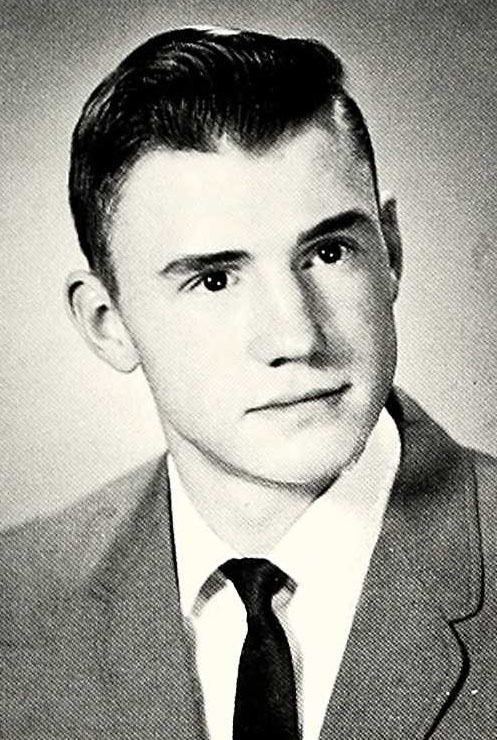
Meirhofer was born on June 8, 1949, in Bozeman, Montana, and grew up in the nearby town of Manhattan. He graduated from Manhattan High School in 1967 and later served in the United States Marine Corps, including service in Vietnam as a communications specialist. After returning to Montana, he worked as a self-employed handyman, carpenter and telephone installer. His knowledge of communications equipment later became an important clue in the investigation of Susan Jaeger’s abduction.
The pursuit of Meirhofer became historically important because the FBI used an early form of psychological offender profiling to identify the characteristics of the unknown criminal. Investigators predicted that the offender would be a local white man in his twenties, socially isolated, familiar with the area and experienced with telephone equipment or military communications. Meirhofer closely matched that description.
Confirmed Victims
- Bernard Louis Poelman, age 13 — March 19, 1967 — Nixon Bridge near Manhattan, Montana: Bernard was playing with a friend on a bridge over the Gallatin River when he suddenly clutched his side, reportedly said that he had been shot and fell into the water. His body was recovered from the river near Logan after an extended search. Authorities initially considered the shooting accidental, possibly caused by a stray bullet or ricochet. Years later, Meirhofer confessed that he had deliberately shot Bernard.
- Michael Edward Raney, age 12 — May 7, 1968 — Missouri Headwaters State Park near Three Forks, Montana: Michael was attending an outdoor Boy Scout gathering with approximately 200 other scouts when he was attacked and killed during the night. The large number of people at the campsite made the crime especially disturbing, because the killer entered the area without attracting attention. Meirhofer later confessed to killing Michael, although published accounts have differed regarding the precise manner of the attack.
- Susan Marie “Susie” Jaeger, age 7 — June 25, 1973 — Missouri Headwaters State Park near Three Forks, Montana: Susan was abducted from her family’s tent during the night while they were on a camping trip. Meirhofer later admitted that he killed her shortly after taking her. He said that Susan fought against him and that he stabbed her. He subsequently dismembered and burned her remains before scattering the fragments at an abandoned ranch outside Three Forks.
- Sandra Mae “Sandy” Dykman Smallegan, age 19 — February 10, 1974 — Manhattan, Montana: Sandra disappeared after spending the evening in Manhattan. Meirhofer knew her and had reportedly attempted to pursue a relationship with her. He later confessed that he abducted Sandra after she rejected him, bound and gagged her, and caused her death by suffocation. He dismembered and burned her body, leaving fragments of her remains at the same abandoned ranch where Susan Jaeger’s remains were discovered.
The Death of Bernard Poelman
Meirhofer’s first confirmed murder occurred on March 19, 1967, shortly after he had graduated from high school. Thirteen-year-old Bernard Poelman was on the Nixon Bridge north of Manhattan with a friend when he was struck by a bullet. Bernard fell into the swift Gallatin River, and his body was not immediately recovered.
The circumstances created considerable uncertainty. There appeared to be no obvious reason for anyone to target Bernard, and investigators considered the possibility that hunters or target shooters had accidentally fired the fatal shot. With no identified gunman and little physical evidence, the death was treated as a tragic and unexplained shooting rather than the work of a developing serial killer.
Only after Meirhofer was arrested in 1974 did authorities learn that Bernard’s death had allegedly been intentional. During negotiations conducted through his attorney, Meirhofer confessed to shooting the boy. The admission transformed what had been regarded as a possible accident into the earliest known murder in his series.
The Murder of Michael Raney
On May 7, 1968, 12-year-old Michael Raney attended a Boy Scout event at Missouri Headwaters State Park. Although hundreds of scouts were gathered in the park, someone entered Michael’s camping area during the night and attacked him. The crime demonstrated that the killer was willing to approach a crowded campsite and select a vulnerable child despite the risk of being seen.
The killing remained unsolved for more than six years. No clear connection was initially made between Michael’s death and Bernard Poelman’s shooting. Meirhofer was not publicly identified as Michael’s killer until his confession in September 1974. According to accounts of his interrogation, Meirhofer made a disturbing statement suggesting that he had gone looking for a young child to attack.
The Raney murder later appeared particularly significant because it took place in the same park where Susan Jaeger would be abducted five years later. Meirhofer’s familiarity with the park, its campsites and its surrounding roads may have allowed him to move through the area without appearing suspicious.
The Abduction of Susan Jaeger
During the night of June 25, 1973, the Jaeger family was camping at Missouri Headwaters State Park. Seven-year-old Susan Jaeger was sleeping in a tent with members of her family when someone silently cut through the tent and carried her away. By morning, Susan had vanished, and a massive search began across the surrounding countryside.
Three days after the abduction, a man telephoned an FBI office in Denver and claimed that he had Susan. He demanded $25,000. On July 2, another call was made to Gallatin County authorities, this time demanding $50,000. The caller supplied private details about Susan’s appearance, including an unusual fingernail, demonstrating that he possessed information known only to the family and investigators.
The ransom demands did not produce Susan’s return. Although authorities attempted to arrange a controlled payment, the caller never appeared to collect the money. He continued to contact the family, using the name “Travis” and exploiting their uncertainty. His calls suggested that emotional control and the suffering of Susan’s relatives had become important parts of the crime.
On September 24, 1973, the caller spoke with Susan’s older brother. Investigators recorded the conversation and traced the call to Cheyenne, Wyoming, but they were initially unable to identify the man. Evidence later showed that Meirhofer had been in Cheyenne on the day of the call.
The Discovery at the Lockhart Ranch
In February 1974, approximately 1,200 burned bone fragments were discovered at the abandoned Lockhart ranch near Three Forks. Forensic examination indicated that the fragments represented two people: a girl approximately six to eight years old and a young woman approximately 18 to 20 years old.
The younger victim was consistent with Susan Jaeger, although investigators did not yet possess enough evidence to charge anyone with her death. The discovery of remains from a second victim also suggested that Susan’s abductor had killed before or had continued killing after taking her.
Meirhofer had performed work at the ranch and knew the property. This connection later became one of several details linking him to both Susan and Sandra Smallegan. According to his confession, he used the secluded location to burn and dispose of their bodies.
The Murder of Sandra Smallegan
Sandra Dykman Smallegan disappeared from Manhattan on February 10, 1974. The 19-year-old woman knew Meirhofer, and accounts of the investigation indicated that he had shown a romantic or sexual interest in her. Sandra did not want the relationship he desired.
Meirhofer later confessed that he abducted Sandra, restrained her and placed a gag over her mouth. He claimed that she suffocated while bound and gagged. After her death, he dismembered her body and attempted to destroy the evidence by burning it. Portions of her remains were left at the Lockhart ranch with Susan’s remains.
The disappearance occurred only days before the burned bone fragments were found. At the time of that discovery, however, investigators had not yet established the identity of either victim or connected Meirhofer conclusively to the site.
The Call That Exposed the Killer
On June 25, 1974, exactly one year after Susan’s abduction, the man calling himself Travis telephoned the Jaeger family again. He spoke to Susan’s mother, Marietta Jaeger, for approximately an hour. Rather than reacting only with anger, Marietta kept him talking and attempted to understand his personality. During the conversation, the caller provided information confirming his responsibility for Susan’s disappearance and indicated that she would not be coming home.
Investigators traced the call to telephone equipment near the home of a Three Forks resident who had not placed it. Examination of the line revealed that someone had installed equipment that allowed the caller to use another person’s telephone connection. The technical sophistication of the arrangement suggested that the offender possessed communications experience.
The FBI developed a behavioral profile describing the suspected kidnapper as a local man approximately 25 to 30 years old who was socially isolated and familiar with telecommunications, electronics or military communications. Meirhofer, then 25, was a local handyman, a former Marine communications specialist and a man familiar with the locations connected to the crimes.
Identification and Arrest
Meirhofer was questioned in August 1974. He denied abducting Susan and agreed to undergo a polygraph examination and questioning under sodium pentothal, a drug then sometimes described as a truth serum. The results were not considered sufficient to hold him, and he was released.
Recordings of Meirhofer’s voice were played for Susan’s family. They believed that he was the man who had made the telephone calls. Marietta Jaeger confronted him and publicly pressed him to admit what he had done.
On September 24, the caller contacted the Jaeger family again. Marietta addressed him as David during the conversation. FBI agents monitoring the call compared it with Meirhofer’s recorded voice and concluded that he was the caller. He was arrested on September 25, 1974.
Searches of Meirhofer’s home, workshop and vehicle produced deeply incriminating evidence. Investigators found bloodstained women’s clothing, signs that blood had been cleaned from certain areas and human remains, including a hand and fingers that had been preserved in a refrigerator or freezer. The evidence destroyed Meirhofer’s ability to continue presenting himself as an uninvolved local resident.
Confession to Four Murders
On September 29, 1974, Meirhofer confessed to abducting and killing Susan Jaeger and Sandra Smallegan. He described taking Susan from the tent, killing her and disposing of her body. He also acknowledged abducting Sandra after she rejected him and causing her death while she was restrained.
Through an arrangement involving his attorney and prosecutors, Meirhofer admitted responsibility for two additional deaths: the 1967 shooting of Bernard Poelman and the 1968 killing of Michael Raney. These confessions gave authorities four confirmed victims spanning more than seven years.
Investigators suspected that Meirhofer might have committed other murders, particularly because of the long gaps between his known crimes and his willingness to travel. However, no additional victims were conclusively attributed to him. Some Montana crimes once considered possible Meirhofer cases were later connected to other killers.
Death in Custody
Only hours after confessing, Meirhofer was found hanging in his cell at the Gallatin County Jail in Bozeman. He had used a towel to take his own life on September 29, 1974. Because jail personnel had not been fully informed about the seriousness of the accusations and confessions, he had not been placed under suicide watch.
His death prevented a criminal trial and denied the victims’ families the opportunity to hear the complete evidence presented in court. It also left many questions unanswered, including his precise motives, whether all aspects of his confessions were truthful and whether he had killed anyone else.
Historical Significance
The Meirhofer investigation became a landmark in the development of modern criminal profiling. The FBI’s behavioral assessment did not by itself prove his guilt, but it helped investigators narrow their focus to a person with a particular age, background, personality and technical skill set. Meirhofer matched the profile with remarkable accuracy.
The case demonstrated how offenders could reveal themselves through their choices, communications and interactions with victims’ families. Meirhofer’s repeated telephone calls, intended to manipulate and torment the Jaegers, ultimately supplied investigators with the behavioral and technical evidence needed to identify him.
David Gail Meirhofer died at the age of 25, leaving behind four confirmed victims and several families permanently affected by his crimes. His suicide ended the immediate investigation, but the methods developed during the pursuit of Susan Jaeger’s abductor influenced the future work of the FBI’s Behavioral Science Unit and the broader use of psychological profiling in serial murder investigations.