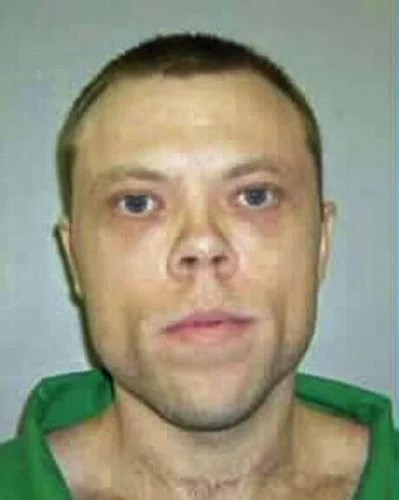
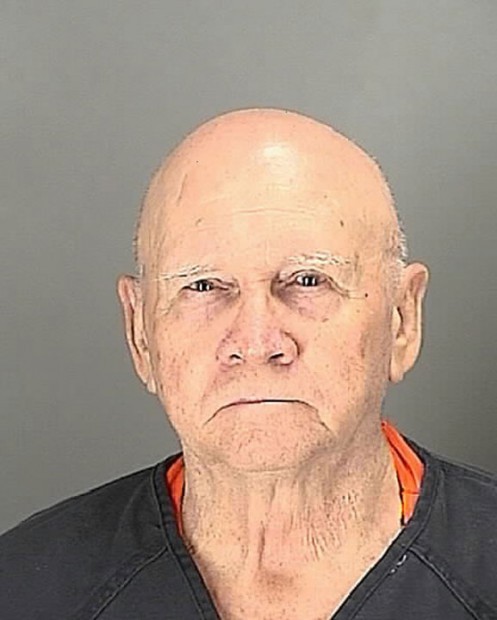
Jeffrey Brian Motts: The Volunteer for Execution
Overview
Jeffrey Brian Motts was an American killer whose crimes spanned a decade, beginning with the robbery and murder of two elderly relatives in 1995 and culminating in the murder of a fellow inmate in 2005. Already serving two life sentences, Motts received a death sentence for his third murder. In a notable move, he waived all his appeals and volunteered for execution, stating he was guilty, deserved to die, and was ready to accept his punishment. He was executed by lethal injection in South Carolina in 2011, becoming the last person to be executed in the state for over a decade.
Early Life and Background
Jeffrey Brian Motts was born on May 5, 1975, in South Carolina. Accounts from his trial for his third murder revealed a troubled youth. A social worker testified that Motts suffered from severe migraine headaches throughout his childhood and began intentionally cutting himself as a teenager. He also struggled with anxiety and depression. Before the age of 16, he developed a severe addiction to crack cocaine, stealing to support a daily habit that cost between $500 and $600. In his final statement before his execution, Motts alluded to this dark turn in his life, stating, "I want to warn kids of the dangers of drugs. I was the child everyone wanted their children around until I got on drugs."
The Murders of Etta Osteen and Clyde Camby
On April 3, 1995, a 19-year-old Motts broke into the Pacolet, South Carolina, home of his great-aunt, 73-year-old Etta Louise Osteen, and her 79-year-old brother-in-law, Clyde Lloyd Camby. His motive was to steal money to buy crack cocaine. Inside the house, he tied up Camby and shot him at close range in the cheek, killing him. Camby was later found with his pockets turned inside out.
Motts also tied up his great-aunt, Etta Osteen. Despite her legs being bound, she attempted to escape. As she tried to flee, Motts shot her in the back, inflicting a fatal wound. The brutal double homicide, driven by a desperate need for drug money, marked the beginning of Motts's violent criminal history.
First Trial and Life Sentences
Following his arrest for the murders of his relatives, Jeffrey Motts was charged with two counts of murder and armed robbery. In March 1997, prosecutors announced their intention to seek the death penalty. Before that trial began, Motts was convicted on separate, unrelated charges of forgery and resisting arrest, for which he received a 16-year prison sentence.
On October 18, 1997, a Spartanburg County jury found Motts guilty of the murders of Clyde Camby and Etta Osteen. During the sentencing phase, the prosecution argued for the death penalty, emphasizing the brutality of the crime and the robbery motive. However, the jury ultimately recommended life in prison for each murder. The judge formally sentenced Motts to two consecutive life sentences, in addition to a 25-year sentence for the armed robbery conviction.
The Murder of Charles Martin
Ten years into his life sentences, Motts committed his third and final murder. On December 8, 2005, while incarcerated at Perry Correctional Institution in Pelzer, South Carolina, Motts killed his cellmate, 26-year-old Charles "Chuck" Douglas Martin. The two men had a history of conflict over a stolen radio and accusations of being a "snitch." Both inmates had reportedly asked prison officials to be separated, but they were placed in the same cell in November 2005.
In the early morning hours, an argument erupted. Motts flew into a rage, knocked Martin unconscious, and bound him with a torn bedsheet. When Martin regained consciousness and begged for his life, Motts strangled him for several minutes until he was dead. Afterward, Motts calmly ate his breakfast and smoked a cigarette. He then dragged Martin's body into a common area, kicked him in the head, and announced, "this is what snitches get." He immediately confessed to prison guards.
The Victims
- Etta Louise Osteen, 73 — Murdered on April 3, 1995, in her Pacolet home. She was the great-aunt of her killer and was shot in the back as she bravely tried to escape after being tied up.
- Clyde Lloyd Camby, 79 — Murdered on April 3, 1995, alongside Etta Osteen, his sister-in-law. He was tied up and shot in the cheek during the robbery of his home.
- Charles "Chuck" Douglas Martin, 26 — Murdered on December 8, 2005, at Perry Correctional Institution. Originally from Tennessee, he was serving a five-year sentence for assault and trespassing and was just weeks away from his scheduled parole release when he was strangled by his cellmate.
Investigation and Second Trial
The investigation into Charles Martin's death was straightforward, as Motts confessed immediately. He told investigators he didn't want to waste the state's money on a trial, as he was already serving two life sentences and a third wouldn't make a difference. Despite this, he did go to trial, later explaining he did so only because he didn't want his parents to think he was giving up.
A Greenville County grand jury indicted Motts for murder in July 2006. Because Motts had prior murder convictions, the state sought the death penalty. At his trial in December 2007, his confession was presented as key evidence. The prosecutor described the crime as a "virtual copy" of his first two murders, where he tied up vulnerable people and killed them. The jury found him guilty. During the penalty phase, they found the statutory aggravating circumstance of a prior murder conviction and recommended a sentence of death.
Waiving Appeals and Execution
Soon after being sentenced to death, Jeffrey Motts began writing to the South Carolina Supreme Court, expressing his desire to waive all his appeals and be executed. In a letter to the Chief Justice, he wrote, "I'm guilty of a horrible crime. I was found guilty, the jury thought I deserved death, the judge agreed, and I also agree. I accept responsibility for my actions and I'm ready to accept my punishment."
The court ordered a competency hearing to ensure his decision was knowing and voluntary. His push to die wavered only briefly when it was suggested he might be a kidney donor for his ailing sister, but after they were found not to be a match, he reaffirmed his wish to be executed. On March 21, 2011, the South Carolina Supreme Court ruled that Motts was mentally competent to waive his appeals and affirmed his death sentence. His execution was scheduled for May 6, 2011.
On the day of his execution, the day after his 36th birthday, Motts was put to death by lethal injection at the Broad River Correctional Institution in Columbia. For his last meal, he requested pizza, fried fish, popcorn shrimp, cherry cheesecake, and sweet iced tea. In a final statement read by his lawyer, he wished his mother and grandmother a happy Mother's Day, asked them to remember the good times, and stated, "I am finally free and at peace in heaven." He also apologized to his victims' families and warned children about the dangers of drug use. He was pronounced dead at 6:17 p.m.
Aftermath and Legacy
Jeffrey Motts was the 43rd person executed in South Carolina since the resumption of capital punishment in 1976. His execution was the first in the state to use the sedative pentobarbital as part of the lethal injection cocktail, a change necessitated by a nationwide shortage of the previously used drug.
Following Motts's death, South Carolina entered an unofficial moratorium on executions that lasted for 13 years, primarily due to the state's inability to procure the necessary lethal injection drugs. This long pause made Motts a significant figure in the state's history of capital punishment, representing the end of an era of regular executions. The state did not carry out another execution until September 2024.