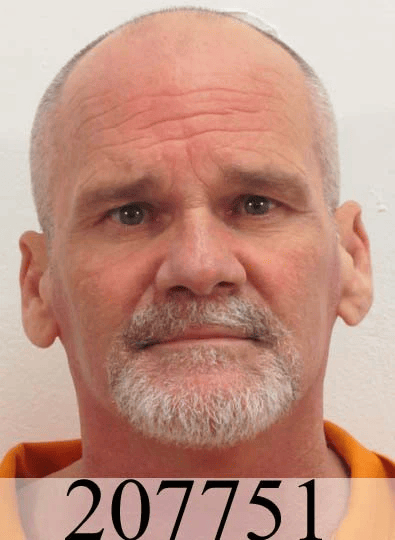
Eddie Lee Mosley: The Fort Lauderdale Serial Killer
Important Legal Distinction
Eddie Lee Mosley was never convicted of murdering anyone. Therefore, there are no victims who can accurately be classified as “confirmed by conviction.” Mosley was indicted for the murders of Emma Cook and Teresa Giles after confessing to the crimes, but he was declared incompetent to stand trial. Those charges never resulted in convictions.
For accuracy, Mosley’s victims should be divided into three categories: murders strongly established through DNA evidence or his own confessions, murders attributed to him through substantial investigative evidence, and suspected murders for which the available evidence was not conclusive.
Victims Confirmed by Murder Conviction
- None: Mosley was never tried to completion or convicted of murder. His severe intellectual disability left him legally incompetent to stand trial, and he remained confined in Florida institutions rather than serving a murder sentence.
Murders Strongly Established by DNA Evidence or Confession
Although these cases did not produce murder convictions, authorities obtained unusually strong evidence connecting Mosley to the following victims. The evidence included DNA matches, biological evidence and confessions containing information about the crimes.
- Vetta Turner, 34 — July 9, 1973, Fort Lauderdale, Florida: Turner was sexually assaulted and murdered in northwest Fort Lauderdale. DNA testing performed many years afterward connected Mosley to biological evidence from her case. Her death is the earliest dated murder that has been forensically attributed to him.
- Sonja Yvette Marion, 13 — July 27, 1979, Fort Lauderdale, Florida: Sonja’s body was discovered in a shed on the grounds of Dillard High School. She had been sexually assaulted and strangled. Jerry Frank Townsend was wrongfully convicted after falsely confessing to her murder. Later DNA testing excluded Townsend and linked Mosley to the crime.
- Terri Jean Cummings, 21 — August 7, 1979, Fort Lauderdale, Florida: Cummings was found sexually assaulted and murdered in an abandoned building near Dillard High School. Townsend was also wrongfully convicted in connection with her death. DNA evidence eventually excluded Townsend and identified Mosley as the person connected to the biological evidence.
- Emma Cook, 54 — December 24, 1983, Fort Lauderdale, Florida: Cook was sexually assaulted and suffocated shortly after Mosley was released from custody. During questioning in 1987, Mosley confessed to killing her. He was indicted for first-degree murder, but the case never reached a verdict because he was declared incompetent to stand trial.
- Loretta Young Brown, 29 — November 26, 1984, Fort Lauderdale, Florida: Brown was sexually assaulted and murdered in northwest Fort Lauderdale. DNA testing later connected Mosley to biological evidence recovered during the investigation, providing a strong forensic link to her death.
- Teresa Giles, 22 — December 18, 1984, Fort Lauderdale, Florida: Giles was sexually assaulted and murdered less than one month after Brown’s death. Mosley confessed to killing Giles during his 1987 interrogation and was indicted for her murder. He was never tried because of the ruling that he was incompetent.
- Shandra Whitehead, 8 — April 15, 1985, Fort Lauderdale, Florida: Shandra was sexually assaulted and murdered inside her family’s home. Frank Lee Smith was wrongfully convicted and sentenced to death. Smith died in prison on January 30, 2000, before DNA testing cleared him. The biological evidence instead pointed to Mosley, making this one of the strongest forensic connections in the entire series.
Victims Attributed to Mosley Through Other Evidence
Investigators and later reviews attributed several additional murders to Mosley based on the locations, timing, methods of attack, witness information, his movements and other investigative findings. These cases should not be described as proven by a murder conviction, and the strength of the publicly documented evidence varies from case to case.
- Eula Joiner, 34 — September 8, 1973, Fort Lauderdale, Florida: Joiner was found sexually assaulted and strangled in a vacant lot near her home. She is often identified in accounts of Mosley’s crimes as his first recognized victim. However, Vetta Turner’s recorded death on July 9, 1973, occurred earlier. Joiner should be included among the early victims attributed to Mosley, but she was not the subject of a murder conviction against him.
- Naomi Gamble, 15 — 1973, Broward County, Florida: Gamble’s murder was among the crimes to which Jerry Frank Townsend falsely confessed. Authorities later associated her death with Mosley while reviewing the cases used to convict Townsend. Mosley was reportedly charged or sought in connection with the killing, but the case did not produce a completed trial or conviction.
- Susan Boynton, 21 — December 24, 1979, Broward County, Florida: Boynton was murdered several months after Townsend had been arrested. Her death was later included among the series of killings attributed to Mosley through investigative evidence. Publicly available accounts do not establish that Mosley was convicted or conclusively identified through a publicly reported DNA match in her case.
- Arnette Tukes, 19 — February 22, 1980, Broward County, Florida: Tukes was sexually assaulted and strangled after Townsend had already been taken into custody. Her family and investigators regarded Mosley as the person responsible, but the case did not result in a murder conviction against him.
- Cynthia Maxwell — March 10, 1980, Broward County, Florida: Maxwell was murdered during the concentrated series of attacks that followed Mosley’s release and return to the Fort Lauderdale area. Her death has been included in investigative accounts of Mosley’s suspected murder series, but no completed prosecution established his guilt.
- Geraldine Barfield, 35 — December 19, 1983, Fort Lauderdale, Florida: Barfield’s body was found in a field beside the Immanuel Church of God in Christ near Sunland Park. She had been sexually assaulted and suffocated. The murder occurred only days after Mosley’s release and close to his familiar territory. Investigators attributed the killing to him, but he was never convicted of it.
- Santrail Lowe, 24 — February 24, 1987, Fort Lauderdale, Florida: Lowe was sexually assaulted and strangled shortly before Mosley’s permanent confinement. Her murder closely resembled other attacks associated with him, and investigators considered him a major suspect. The available evidence did not produce a conviction or a publicly established conclusive DNA identification.
Other Suspected Victims
Several additional women and girls were investigated as possible Mosley victims, but the evidence was too uncertain to classify their murders as conclusively connected to him. These cases should remain separate from those supported by DNA evidence or confession.
- Ida Eagles — 1980, Polk County, Florida: Eagles disappeared while Mosley was staying in the Lakeland area. Her skeletal remains were later recovered. Mosley was investigated because of his presence in the area and the timing of the disappearance, but the publicly documented evidence did not conclusively prove that he killed her.
- Letha Mae Williams — 1980, Polk County, Florida: Williams also disappeared while Mosley was living near Lakeland. Her remains were later found in the region. Investigators suspected Mosley, but no murder conviction or publicly established conclusive forensic match resulted.
- Gloria Irving, 16 — 1980, Broward County, Florida: Irving was investigated as a possible victim during reviews of Mosley’s suspected crimes. Some accounts indicate that biological evidence did not conclusively match Mosley, leaving the identity of her killer unresolved.
- Other unidentified or incompletely documented victims: Mosley was suspected in additional murders and disappearances involving women and girls in Broward and Polk counties. Because names, dates and forensic findings are not consistently documented, those cases should not be presented as confirmed murders committed by him.
Why Mosley Was Never Convicted of Murder
Mosley had been identified by numerous sexual-assault survivors as early as 1973. He was committed to a state hospital after being found not guilty by reason of insanity in sexual-assault proceedings. He was later released, arrested again and repeatedly evaluated because of his severe intellectual and psychiatric impairments.
On May 17, 1987, Mosley was taken into custody and questioned about the Fort Lauderdale murders. Investigators confronted him with victim information and crime-scene locations. He confessed to killing Emma Cook and Teresa Giles and was indicted on two counts of first-degree murder.
Psychological testing placed Mosley’s intellectual functioning at an extremely low level. Evaluators concluded that he could not adequately understand the legal proceedings or assist his attorneys. In October 1987, he was declared incompetent to stand trial and committed to a state institution.
The later discovery of DNA evidence did not change the competency requirement. Even after forensic testing connected Mosley to additional victims, prosecutors could not lawfully try him while he remained unable to understand the proceedings. Consequently, the strongest murder cases against him ended without verdicts.
Wrongful Conviction of Jerry Frank Townsend
Jerry Frank Townsend was intellectually disabled and highly vulnerable to suggestion. After his arrest in 1979, detectives questioned him about numerous sexual assaults and murders. He confessed to crimes containing facts that conflicted with the physical evidence and circumstances of the deaths.
Townsend was convicted of six murders and spent approximately 22 years in prison. DNA testing later excluded him from evidence in the murders of Sonja Marion and Terri Cummings and linked Mosley to those crimes. The results demonstrated that Townsend’s confessions were unreliable, and his convictions were vacated. He was released in June 2001.
Townsend’s wrongful imprisonment created the false appearance that the Fort Lauderdale murder series had been solved. Mosley remained free during portions of the following years, when additional women and children were assaulted and killed.
Wrongful Conviction of Frank Lee Smith
Frank Lee Smith was convicted of murdering eight-year-old Shandra Whitehead largely on the basis of a mistaken identification. Smith maintained that he was innocent but was sentenced to death in 1986.
Smith spent approximately 14 years on Florida’s death row and died from cancer on January 30, 2000. DNA testing completed after his death excluded him as the source of the biological evidence and pointed to Mosley. Smith was therefore cleared only after dying in prison for a murder he did not commit.
The Scope of Mosley’s Crimes
Authorities generally regarded Mosley as responsible for at least eight murders and suspected him in numerous others. The exact number remains uncertain because the cases occurred before modern DNA testing, evidence was not preserved in every investigation and Mosley never participated in a completed murder trial.
The most accurate description is not that Mosley had a list of victims confirmed by conviction. Instead, he had victims strongly connected to him through DNA evidence or confession, additional victims attributed to him through substantial investigative evidence and other possible victims whose cases remain unresolved.
Death and Legacy
Mosley remained in Florida’s institutional system for the rest of his life. He died on May 28, 2020, at the age of 73, after contracting COVID-19. His death eliminated any remaining possibility that he could regain competency and face trial.
The case left two different forms of unresolved injustice. Numerous families never saw Mosley convicted for the deaths of their loved ones, while Townsend and Smith were punished for murders they did not commit. DNA evidence eventually corrected parts of the official record, but it could not restore the years lost or provide a completed prosecution.
For that reason, Mosley’s victims must be described with careful legal language. No murder was confirmed by a conviction against him. Several were strongly established through forensic evidence or confession, while the remainder were attributed or suspected cases with varying degrees of supporting evidence.