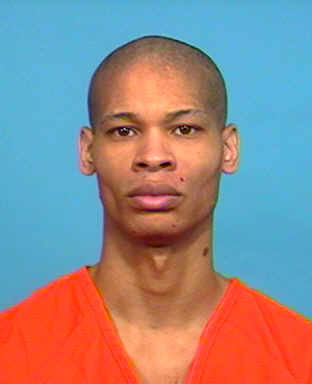
Jessie Lee Cooks and the Zebra Murders
Overview
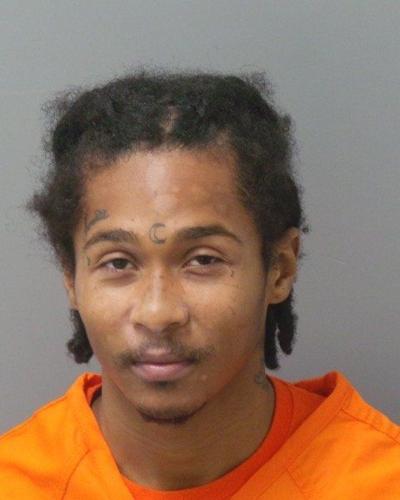
Jessie Lee Cooks was one of four men convicted in connection with the notorious "Zebra" murder case that terrorized San Francisco during 1973 and 1974. The principal defendants were Cooks, Larry Craig Green, Manuel Moore, and J.C.X. Simon. Their prosecution grew out of a series of apparently random attacks in which victims were abducted, shot, beaten, or stabbed. The San Francisco Police Department called its massive investigation "Operation Zebra," a name derived from the police radio channel assigned to the case.
Cooks occupies a somewhat unusual place in the history of the Zebra murders. He was unquestionably responsible for violent crimes during the opening days of the series and was convicted of the murder of Quita Hague. He also admitted shooting Frances Rose and pleaded guilty to her first-degree murder. However, Cooks was arrested immediately after Rose's murder on October 30, 1973, and remained incarcerated while most of the later Zebra killings occurred. The California Court of Appeal specifically noted that Cooks was not charged with or convicted of the individual crimes committed by his alleged coconspirators after October 30. His connection to the larger series came through his conviction for conspiracy to commit murder.
The Beginning of the Violence
According to testimony presented during the Zebra trial, Cooks became associated with Anthony Harris and several of the other men who would later figure prominently in the investigation. Harris testified that Cooks possessed firearms and a machete and had spoken about going out to kill people. Prosecutors used this testimony, together with Cooks's later crimes and statements, to establish that he had become part of a conspiracy centered on the indiscriminate killing of white victims. The defense disputed significant portions of Harris's testimony, but the jury ultimately found sufficient evidence to convict Cooks of conspiracy.
The first major attack legally connected to Cooks occurred on October 20, 1973. Earlier that evening, Cooks, Green, and Harris encountered three children and attempted to lure or force them into their vehicle. The children escaped. Later that night, Richard and Quita Hague were walking in San Francisco when they were confronted, forced at gunpoint into a Dodge van, bound, robbed, and driven to an isolated industrial area.
The Murder of Quita Hague
Richard and Quita Hague were subjected to an extraordinarily violent attack. Richard was beaten severely and ultimately left for dead. He survived and was discovered at approximately 11:00 p.m. near 25th and Minnesota Streets, staggering from the darkness with his hands tied behind his back and extensive injuries to his head, neck, and face.
Police searching the surrounding area discovered 28-year-old Quita Hague lying face down on a railroad track with her hands bound behind her. She had suffered a devastating wound to her neck. Evidence presented at trial showed that her wedding ring had been taken and was eventually recovered by investigators. Testimony differed over which participant delivered the fatal wounds, but under California law Cooks could be held responsible as a principal, aider and abettor, or participant in the conspiracy. A jury ultimately convicted Cooks and Green of the charges involving Quita Hague, including her first-degree murder.
The Kidnapping of Linda Enger
Only three days later, on October 23, 1973, Cooks confronted 27-year-old Linda Lou Enger as she walked toward her apartment near Waller and Laguna Streets. He grabbed her and held a .22-caliber pistol against her neck. Cooks forced Enger to accompany him through several locations and repeatedly threatened to kill her.
During the ordeal, Enger testified that Cooks spoke about violence and told her that people would be killed indiscriminately. She managed to keep him talking for an extended period and ultimately survived. After approximately two hours, Cooks accompanied her back toward her apartment and left. Enger reported what had happened to police. The episode became important evidence at the later conspiracy trial because prosecutors argued that Cooks's statements demonstrated his state of mind immediately before the next murder.
The Murder of Frances Rose
On October 30, 1973, Cooks committed the crime that immediately ended his freedom. At approximately 9:05 p.m., 28-year-old Frances Rose was sitting in her Ford Mustang at the University of California Extension, 55 Laguna Street in San Francisco. Rose was shot four times with a .22-caliber semiautomatic pistol.
A nearby witness supplied police with a description of the fleeing gunman. Within minutes, officers encountered Cooks about five or six blocks from the scene. He matched the description and was carrying a loaded .22-caliber pistol. Police also recovered additional .22-caliber ammunition from him. During questioning, Cooks admitted shooting Rose, although he gave police an explanation involving an argument and an alleged racial insult. In December 1973, Cooks pleaded guilty to Frances Rose's first-degree murder and was sentenced to state prison.
The Zebra Murders Continue
Cooks's arrest did not end the violence. Beginning in November 1973 and continuing into April 1974, San Francisco experienced a succession of shootings in which victims were attacked on sidewalks, near their homes, at businesses, and while going about ordinary activities. Firearms evidence linked numerous attacks, particularly through .32-caliber weapons used repeatedly in different shootings.
Because Cooks had been incarcerated since October 30, he could not have physically carried out the later attacks. The appellate court expressly acknowledged this fact. Prosecutors nevertheless argued that his earlier conduct formed part of an ongoing conspiracy that continued after his arrest. Evidence of the later murders was therefore introduced to establish the existence, purpose, and continuing operation of the conspiracy, rather than to prove that Cooks himself pulled the trigger in those crimes.
Victims Associated With Cooks and the Zebra Murder Case
The following list separates Cooks's legal responsibility from physical participation. Quita Hague and Frances Rose were murder cases in which Cooks himself was convicted or pleaded guilty. The remaining deaths were associated with the broader Zebra series and conspiracy and occurred after Cooks had already been arrested.
- Quita Hague, 28 — October 20, 1973 — San Francisco, California: Abducted with her husband while walking in San Francisco. She was bound, robbed, and murdered in an industrial area near 25th and Minnesota Streets. Her body was found on a railroad track. Cooks was convicted of her first-degree murder, kidnapping, and robbery.
- Frances Rose, 28 — October 30, 1973 — 55 Laguna Street, San Francisco, California: Shot and killed inside her Ford Mustang at the University of California Extension. Police arrested Cooks several blocks away carrying a loaded .22-caliber pistol. Cooks admitted shooting Rose and later pleaded guilty to first-degree murder.
- Saleem Erakat, 52 — November 25, 1973 — 452 Larkin Street, San Francisco, California: Found killed in a back room of his grocery store shortly after 11:00 a.m. His hands had been tied behind his back, he had been shot in the head with a .32-caliber pistol, and money and personal property had been taken. This occurred after Cooks's arrest and was presented as part of the broader Zebra conspiracy evidence.
- Paul Dancik, 26 — December 11, 1973 — 300 Haight Street, San Francisco, California: Shot and killed near a public telephone outside an apartment complex. He was struck three times with a .32-caliber pistol. Ballistics connected the weapon to the Erakat murder.
- Marietta DiGirolamo, 31 — December 13, 1973 — Haight and Divisadero Streets, San Francisco, California: Shot three times on the sidewalk. Her purse remained beside her body and nothing appeared to have been taken, reinforcing investigators' belief that robbery was not the motive.
- Ilario Bertuccio, 81 — December 20, 1973 — 2000 block of Bancroft Street, San Francisco, California: Shot four times in the Bayview area. Ballistics connected his killing with several earlier Zebra shootings.
- Neil Moynihan, 19 — December 22, 1973 — Stevenson Alley near 12th and Market Streets, San Francisco, California: Shot three times and killed near the Civic Center Hotel. The same weapon was linked through ballistics to several earlier murders.
- Mildred Hosler, 50 — December 22, 1973 — Stevenson Alley near Gough and McCoppin Streets, San Francisco, California: Killed only minutes after Moynihan and approximately four blocks away. She was shot repeatedly, and firearms examination connected both attacks to the same .32-caliber weapon.
- Unidentified man, known as "John Doe 169" — body discovered December 24, 1973 — Ocean Beach, San Francisco, California: The remains of a white male estimated to have been approximately 25 to 30 years old were found inside a plastic bag at Ocean Beach. Court records show that investigators linked the disposal of the remains to information provided by Anthony Harris concerning members of the group. The victim's identity was unknown during the Zebra prosecution.
- Tana Smith, 25 — January 28, 1974 — Geary and Divisadero Streets, San Francisco, California: Shot twice in the back shortly before 8:00 p.m. and died a short time later. Trial evidence identified J.C.X. Simon as the gunman.
- Vincent Wollin, 69 — January 28, 1974 — Scott Street between McAllister and Fulton Streets, San Francisco, California: Shot and killed on the sidewalk at approximately 7:55 p.m. Nothing was taken from him.
- John Bambic, 80 — January 28, 1974 — near 9th and Howard Streets, San Francisco, California: Shot twice in the back shortly after 9:00 p.m. Witnesses observed a man fleeing toward a black Cadillac.
- Jane Holly, 45 — January 28, 1974 — 1440 Silver Avenue near Brussels Street, San Francisco, California: Shot inside a laundromat at approximately 9:45 p.m. Witness Lonnie Green identified Manuel Moore as the gunman.
- Thomas Rainwater, 19 — April 1, 1974 — Geary Street near Webster Street, San Francisco, California: Rainwater and Linda Story were walking to a market when a gunman turned and opened fire. Rainwater was killed and Story survived after being shot. Ballistics connected the weapon to the January 28 attacks.
- Nelson Shields, 23 — April 16, 1974 — 231 Vernon Street, San Francisco, California: Shot three times in the back while standing at the rear of his station wagon at approximately 9:30 p.m. The weapon was linked to the January and April Zebra shootings. His death triggered an intensified police manhunt.
Survivors of the Violence
The Zebra case also involved a number of people who survived attacks. Richard Hague survived the October 20 abduction and assault in which his wife was murdered. Future San Francisco mayor Art Agnos survived being shot on December 13, 1973. Teresa DeMartini survived a December 20 shooting. Roxanne McMillian was shot after Jane Holly's murder on January 28, 1974. Linda Story survived the April 1 attack that killed Thomas Rainwater, and teenagers Ward Anderson and Terry White survived being shot at a bus stop at Hayes and Fillmore Streets on April 14. These survivors and eyewitnesses provided investigators with descriptions, identifications, and other evidence that became important during the lengthy prosecution.
Operation Zebra and the Investigation
As the attacks accumulated, San Francisco police concluded that they were confronting more than a series of unrelated street crimes. Investigators compared bullets and shell casings, interviewed survivors, assembled descriptions of suspects and vehicles, and eventually devoted extraordinary manpower to the investigation. The operation became known throughout the city as Operation Zebra.
By April 1974, the City of San Francisco was offering a $30,000 reward for information leading to the arrest and conviction of those responsible. Police released composite drawings, and on April 22 Anthony Harris contacted authorities. Over a series of interviews, Harris supplied information about the defendants, the earlier attacks, vehicles, weapons, and alleged conversations between members of the group. His statements became central to the prosecution, although defense attorneys vigorously challenged his credibility and motives.
On May 1, 1974, police arrested Green, Moore, Simon, and other suspects. Cooks was already imprisoned for the Frances Rose murder. A San Francisco grand jury subsequently indicted Cooks, Green, Moore, and Simon for conspiracy to commit murder. Cooks and Green additionally faced the kidnapping, robbery, and murder charges stemming from the attack on Richard and Quita Hague.
Trial and Conviction
The Zebra trial began in March 1975 and became an exceptionally long proceeding. In March 1976, after approximately a year of testimony and evidence, the jury deliberated for about 18 hours before finding the defendants guilty of the charges against them. Cooks was convicted of conspiracy to commit murder as well as the crimes involving Richard and Quita Hague. His earlier guilty plea for the murder of Frances Rose remained a separate conviction.
The prosecution relied on surviving witnesses, firearms evidence, physical evidence, Cooks's own statements, and the testimony of Anthony Harris. On appeal, Cooks and his codefendants attacked numerous aspects of the case, including Harris's credibility and the admission of evidence concerning crimes committed after Cooks had been jailed. The California Court of Appeal nevertheless concluded that sufficient evidence supported Cooks's participation in the conspiracy before his October 30 arrest and affirmed his convictions.
Cooks's Role Compared With the Other Zebra Killers
It is important to distinguish Cooks's documented actions from the crimes physically committed by the other defendants. Cooks was directly involved in the October 20 attack on the Hagues and was convicted of Quita Hague's murder. He personally admitted shooting Frances Rose ten days later. His arrest that night meant that he could not have been the gunman in the November 1973 through April 1974 killings.
For that reason, describing every Zebra victim simply as a person personally murdered by Jessie Cooks would be inaccurate. Cooks's historical classification as one of the Zebra killers rests on the two murders legally connected directly to him, his other violent conduct, and his conviction for participation in the larger murder conspiracy. The later killings were committed while he was incarcerated and were attributed through evidence to other participants in the conspiracy.
Imprisonment and Death
Cooks received a life sentence under California's then-existing sentencing laws. California correctional records state that on March 29, 1976, he was sentenced in San Francisco County to life imprisonment with the possibility of parole for first-degree murder, kidnapping, and first-degree robbery. He remained incarcerated for the remainder of his life.
On June 30, 2021, Jessie Lee Cooks, then 76 years old, was found unresponsive in his bed in the hospice unit at California Medical Facility in Vacaville. He was pronounced dead that night. By that point, two of his Zebra codefendants, J.C.X. Simon and Manuel Moore, had also died in prison.
Legacy of the Zebra Case
The Zebra murders remain one of the most disturbing chapters in San Francisco's criminal history. The randomness of the attacks made them especially frightening: people were shot while walking down the street, waiting for transportation, doing laundry, standing beside their cars, or simply traveling through their neighborhoods. Investigators eventually connected a succession of apparently isolated crimes through ballistics, witness testimony, vehicles, and the relationships among the suspects.
Jessie Lee Cooks was an important figure in the beginning of that violence. His participation in the Hague attack, his threats against Linda Enger, and his admitted murder of Frances Rose occurred within only ten days. His arrest on October 30, 1973, physically removed him from the streets, but prosecutors successfully proved that his earlier actions were part of the larger conspiracy that became known as the Zebra murders. His convictions survived appeal, and he spent the remaining decades of his life in California prisons.