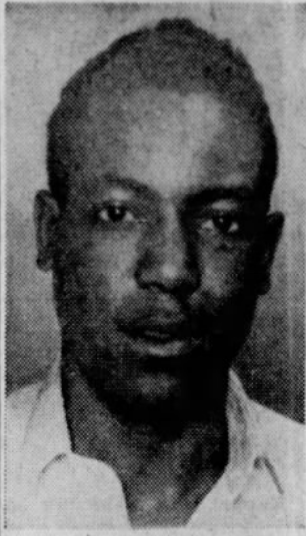
Lee Roy Hargrave Jr.: The Suspected "Lidocaine Killer"
Lee Roy Hargrave Jr. was a nurse's aide at Petersburg General Hospital in Petersburg, Virginia, who became the center of a disturbing investigation into a series of unexpected patient deaths during the summer of 1974. Hargrave was ultimately convicted of only one murder, so he is more accurately described as a suspected serial killer rather than a legally confirmed serial killer. Authorities nevertheless charged him with five additional murders after tests reportedly showed lethal concentrations of the heart drug lidocaine in other patients who had died while he was working.
The Unusual Deaths at Petersburg General Hospital
In 1974, Hargrave was a young nurse's aide working in the coronary care unit at Petersburg General Hospital. He had previously hoped to become a physician and had attended college, but he left school and returned to hospital work. By the spring of 1974, he was working the overnight shift, generally from 11:00 p.m. until 7:00 a.m.
During May and June 1974, hospital administrators became concerned about an unusual rise in deaths among patients in the coronary unit. A number of patients who appeared to be recovering suddenly suffered cardiac emergencies during the night. Hospital personnel reviewed the deaths and noticed that Hargrave had been working during an unusually large number of them. He had also reportedly been the employee who discovered or called attention to many of the emergencies.
The pattern became particularly alarming in June. Patients who were not expected to die suddenly went into severe medical distress. Because these were hospital patients with heart problems, an unexpected cardiac arrest could initially appear to have resulted from natural disease. That made the suspected method especially difficult to recognize immediately.
Lidocaine as the Suspected Murder Weapon
The investigation eventually focused on lidocaine. Although lidocaine is commonly known as a local anesthetic, it also has medical uses involving abnormal heart rhythms. In sufficiently excessive quantities, however, it can produce severe toxicity, including seizures, dangerous changes in heart rhythm, circulatory collapse, and death.
Investigators concluded that certain patients had received lidocaine even though the drug had not been prescribed for them. This was critical because lidocaine was available in the coronary care area for legitimate emergency treatment. Someone working inside the hospital could therefore have access to a substance capable of producing a medical crisis that might initially resemble complications of heart disease.
Josephine L. Thomas
The death that led directly to Hargrave's prosecution was that of Josephine L. Thomas, a 73-year-old retired schoolteacher. Thomas was a patient in the hospital's coronary unit and was reportedly considered to be recovering rather than approaching death. During the early morning of June 30, 1974, her condition suddenly deteriorated.
Thomas suffered a violent medical reaction and died. Tests subsequently detected a lethal quantity of lidocaine in her body even though the medication had not been prescribed for her. Prosecutors argued that Hargrave had access to the drug and had an opportunity to administer it while working in the unit.
Witness testimony also placed Hargrave near Thomas shortly before her collapse. The prosecution developed a circumstantial case based on his presence, access to medication, suspicious behavior surrounding other patients, and the toxicological evidence obtained after Thomas died.
Other Patients Investigated
After Thomas's death raised the possibility of deliberate poisoning, authorities began examining other unexplained deaths at the hospital. Bodies were exhumed so that investigators could perform additional toxicological testing. Hargrave was eventually charged with the murders of five other patients whose deaths investigators associated with lethal doses of lidocaine. He was never brought to trial for those five deaths, and therefore they should not be described as murders legally proven against him.
- Josephine L. Thomas, 73 — Died June 30, 1974, at Petersburg General Hospital in Petersburg, Virginia. Toxicological testing found a lethal quantity of lidocaine that had not been prescribed to her. Hargrave was convicted of her murder.
- Thomas Wesley Wray, 85 — Died June 29, 1974, at Petersburg General Hospital in Petersburg, Virginia. His body was later exhumed, and investigators reported finding an overdose of lidocaine. Hargrave was charged with Wray's murder but was never tried on that charge.
- Martha Avery, 84 — Died June 25, 1974, at Petersburg General Hospital in Petersburg, Virginia. Her death became one of the additional lidocaine cases for which Hargrave was charged, but he was never tried for her death.
- John E. Harris, 64 — Died during June 1974 at Petersburg General Hospital in Petersburg, Virginia. Published accounts conflict over the precise day of his death, so a specific day is not included here. Hargrave was charged in connection with Harris's death but was never tried for it.
- Robert Wyche — Died during June 1974 at Petersburg General Hospital in Petersburg, Virginia. Available reliable accounts identify Wyche as one of the patients whose death produced an additional murder charge against Hargrave, but a sufficiently verified exact date of death is not available here.
- Leonard Hudson Sr. — Died during June 1974 at Petersburg General Hospital in Petersburg, Virginia. Hudson was another patient whose death resulted in an additional murder charge against Hargrave. A sufficiently verified exact date of death is not available here.
The Investigation and Arrest
Following the suspicious deaths, hospital officials worked with medical authorities and the Petersburg Commonwealth's Attorney. Thomas's death provided investigators with their strongest initial evidence. Hargrave was arrested and charged with her murder in August 1974. As the investigation expanded, authorities ordered additional exhumations and toxicological examinations.
The prosecution's theory was that Hargrave secretly administered excessive amounts of lidocaine to vulnerable patients during the overnight shift. Investigators emphasized the repeated presence of Hargrave when patients suddenly deteriorated and the fact that he appeared unusually often in connection with emergency "code blue" situations.
Two surviving patients also gave important testimony concerning Hargrave's conduct. They described incidents in which he approached them and appeared to inject an unidentified substance into their intravenous equipment. Both reportedly experienced medical problems afterward. Their testimony was introduced during Hargrave's trial as evidence of similar suspicious conduct.
Trial and Conviction
Hargrave went on trial in Petersburg in May 1975 for the murder of Josephine Thomas. The Commonwealth presented medical evidence, toxicological findings, testimony from hospital employees, and evidence concerning Hargrave's access to lidocaine. Prosecutors argued that Thomas had been deliberately injected with a fatal dose of the drug and that Hargrave was responsible.
Hargrave denied responsibility. Nevertheless, the jury found him guilty of first-degree murder. In May 1975 he received a sentence of life imprisonment. Later court proceedings upheld the conviction, including a federal decision describing the case as one in which Hargrave had been found to have injected an elderly hospital patient with a fatal dose of lidocaine.
The Five Additional Murder Charges
The Thomas conviction did not resolve the other suspicious deaths. Authorities had charged Hargrave with five additional first-degree murders involving Harris, Avery, Wray, Wyche, and Hudson. Investigators believed toxicological evidence connected those patients to lethal lidocaine exposure. Contemporary reporting specifically confirmed that both Thomas, who died June 30, and Wray, who died June 29, were found to have died after lidocaine overdoses.
Hargrave was never tried on the five remaining murder charges. As a result, only Josephine Thomas's death produced a murder conviction. Later accounts have suggested that Hargrave may have been connected to considerably more suspicious patient deaths because of the unusually high mortality rate during periods when he was working, but those suspicions never resulted in additional convictions. It would therefore be inaccurate to present every unexplained hospital death from that period as a proven Hargrave victim.
A Suspected Medical Serial Killer
The case has often been discussed as an example of an alleged medical or healthcare serial killer: a caregiver suspected of exploiting access to vulnerable patients and medical drugs. Hargrave's alleged method was particularly difficult to detect because his suspected victims were already hospitalized for serious conditions, and a sudden heart-related emergency might not initially appear criminal.
The evidence surrounding the six named patients was much stronger than the general statistical suspicion surrounding other deaths. Historical accounts describe a dramatic cluster of unexpected coronary-unit deaths during Hargrave's overnight shifts and report that investigators associated him with a striking number of emergency calls. Those circumstances generated suspicion that the true number of victims could have been higher, although no court established such a victim count.
Prison and Release
Hargrave spent approximately 35 years in prison for the murder of Josephine Thomas. Virginia's parole laws at the time of his conviction eventually allowed him to become eligible for release. He was granted parole in 2009 and released at the end of that year. His release attracted renewed attention to the old Petersburg hospital case because the five additional murder charges had never resulted in trials.
Legacy of the Case
Lee Roy Hargrave Jr. remains associated with one of Virginia's most disturbing hospital homicide investigations. The proven portion of the case is narrow but significant: he was convicted of murdering Josephine L. Thomas by administering a fatal dose of lidocaine while working as a nurse's aide. Five additional patients were named in murder charges, but those accusations were never tested by separate trials.
For that reason, Hargrave's history requires an important distinction. He was a convicted murderer and was suspected by authorities of killing multiple additional hospital patients, but only one killing was established by a criminal conviction. The unexplained concentration of deaths, the exhumations, the toxicological evidence, and the additional charges nevertheless caused investigators and later writers to regard him as a suspected serial killer whose full number of victims may never be known.