Thomas Henry McMonigle: Murder, Deception, and the Disappearance of Thora Chamberlain
Background and Criminal History
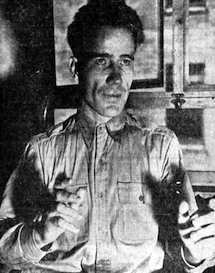
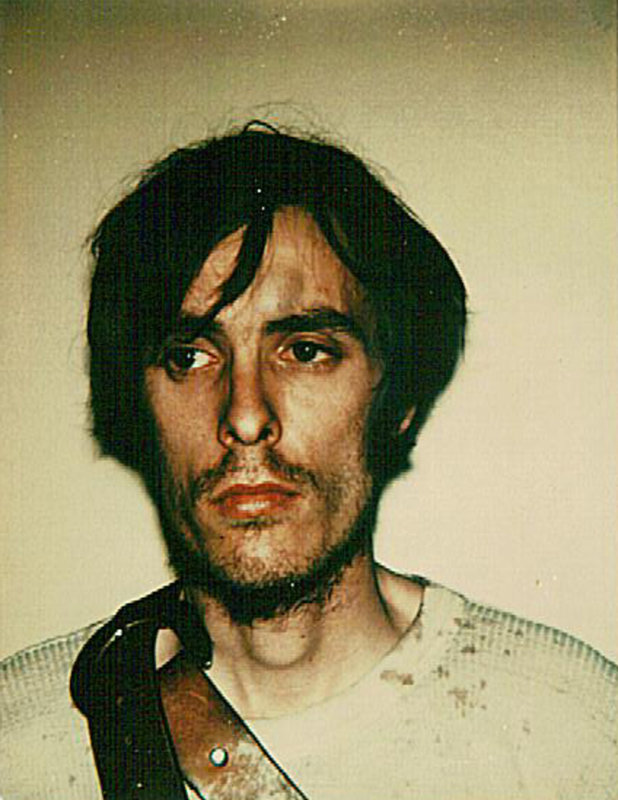
Thomas Henry McMonigle was born on May 28, 1914, near Covell, Illinois. He later moved to California and lived in San Mateo with his wife. By the time he became the focus of one of California’s most widely publicized missing-child investigations, McMonigle already had a troubling criminal history dating back to his teenage years. His record included assaultive behavior and an offense involving an attempt to sexually attack a girl. He had also reportedly been accused of assaulting a young girl near Hillsborough, California, although the girl’s parents declined to pursue the case because they feared the public attention that a prosecution might bring.
McMonigle worked at different times as a laborer and bus driver. To people who encountered him casually, he could appear ordinary, but investigators eventually uncovered a pattern of deception, predatory conduct, and violence. He was known to invent stories, impersonate others, and change his explanations whenever evidence contradicted him. These traits became especially apparent after the November 1945 disappearance of 14-year-old Thora Afton Chamberlain.
The Abduction of Thora Afton Chamberlain
On November 2, 1945, Thora Chamberlain finished her classes at Campbell High School in Campbell, California. She planned to attend a football game and was seen walking with classmates near Winchester Boulevard. A man driving a blue Plymouth approached the group and began speaking with Thora. He was dressed in what appeared to be a United States Navy uniform decorated with military medals.
The driver claimed that he was searching for a girl willing to babysit his sister’s children that afternoon. The offer appeared believable, particularly because of the uniform and the respectable image it created. After speaking with him for several minutes, Thora entered the automobile. Her classmates watched the vehicle leave, unaware that they were witnessing the final confirmed sighting of her.
Thora never arrived at a babysitting job, never attended the football game, and never returned home. Her disappearance immediately led to an extensive search. Witnesses provided descriptions of the driver, his clothing, and his car. Investigators soon began focusing on McMonigle, whose vehicle and appearance were consistent with the information supplied by Thora’s classmates.
McMonigle’s Flight and Arrest
McMonigle left California shortly after Thora disappeared and traveled to his father’s home in Illinois. His sudden departure increased investigators’ suspicions. On December 6, 1945, while returning to the San Francisco area aboard a bus, he swallowed an overdose of sleeping pills in an apparent suicide attempt. He was taken to a hospital and survived.
After his release from medical care, FBI agents arrested him in connection with Thora’s disappearance. Several of her classmates identified McMonigle as the man they had seen speaking with her on November 2. Investigators also learned that he had never served in the Navy. The uniform and medals he had worn were discovered to have come from a footlocker stolen from an actual serviceman. The stolen property was later recovered from the garage at McMonigle’s San Mateo residence.
The impersonation was a crucial part of his method. By wearing a military uniform shortly after the end of World War II, McMonigle created the appearance of trustworthiness and authority. He then used the fabricated babysitting opportunity to persuade a teenage girl to enter his car voluntarily.
Conflicting Confessions and Physical Evidence
During questioning, McMonigle gave numerous contradictory accounts of what happened to Thora. At different times, he said that he shot her, stabbed her, strangled her, or caused her death accidentally. He claimed in one account that she fell from his moving automobile. In another, he said that a gun discharged accidentally while she was inside the car. He occasionally denied killing her at all.
Despite the changing stories, investigators discovered physical evidence that supported important portions of his statements. A bullet hole was found inside one of the doors of McMonigle’s car. He said that he had removed the bullet and buried it beneath a particular tree in his yard. Agents searched the location and recovered the bullet, which was determined to have been fired from his .32-caliber Colt revolver.
McMonigle also admitted that blood had stained the padding and upholstery inside his car. He said that he tore out the material and buried it in a drainage ditch near his workplace. Investigators dug at the location he described and found the missing car material. It was stained with human blood, providing further evidence that a violent assault had occurred inside the vehicle.
The Search for Thora’s Body
One of McMonigle’s most frequently repeated claims was that he took Thora’s body to Devil’s Slide, a steep and dangerous coastal cliff overlooking the Pacific Ocean near Half Moon Bay in San Mateo County. He said that he threw her body from the cliff into the water below. Police searched the rugged coastline but were unable to locate her remains.
Searchers did, however, find two pairs of socks lodged in separate crevices along the cliff. Thora had been wearing overlapping red and blue socks when she disappeared, and her parents identified the recovered clothing as hers. Investigators believed the force of the ocean may have carried her body away from the shoreline.
McMonigle offered other locations when searches failed to produce a body. He claimed that Thora had been killed along the coast near Pescadero, and he later suggested that her remains had been buried in or near a dump north of Broadway in Burlingame. His repeated changes forced officers to conduct time-consuming searches while providing him opportunities to delay his execution and maintain public attention.
Investigators also excavated a construction area where McMonigle had worked around the time of Thora’s disappearance. Buried beneath concrete blocks and dirt, they found Thora’s shoes, schoolbooks, papers, zippered binder, and cowbell. The cowbell was associated with a school activity and had been among the possessions she carried on the day she vanished. The discovery demonstrated that McMonigle had taken and concealed her belongings.
The Murder of Dorothy Rose Jones
After his conviction in Thora’s case, McMonigle confessed to another killing. He told authorities that he had murdered 23-year-old Dorothy Rose Jones, who is also identified in some records by her married surname, Woods. Dorothy was a San Francisco woman who disappeared during October 1945, only a short time before Thora’s abduction.
McMonigle claimed that he strangled Dorothy and disposed of her remains near Devil’s Slide. He directed investigators to a location along the coast, where skeletal remains were recovered in 1946. The discovery was accepted as the recovery of Dorothy’s body and provided her family with an answer about what had happened to her.
McMonigle was never prosecuted for Dorothy’s murder. Authorities already had a death sentence against him for killing Thora, and an additional trial was considered unnecessary. Nevertheless, his confession and his ability to guide investigators to Dorothy’s remains caused authorities to regard her as another victim.
Known and Reported Victims
- Dorothy Rose Jones, also identified as Dorothy Rose Woods — Age 23. Murdered during October 1945; the exact day of her death has not been reliably established. She disappeared from San Francisco, California. McMonigle confessed that he strangled her and left her remains near Devil’s Slide in San Mateo County. Skeletal remains were recovered from the area in 1946.
- Thora Afton Chamberlain — Age 14. Abducted and presumed murdered on November 2, 1945, after leaving Campbell High School in Campbell, California. Evidence connected McMonigle’s automobile and revolver to her disappearance. Her clothing and school possessions were recovered from locations associated with him, but her body has never been found.
Claims of Additional Murders
McMonigle occasionally claimed that he had killed as many as eleven people. These claims were never substantiated, and no reliable list of nine additional victims was established. His habit of changing stories made it extremely difficult for investigators to determine whether he possessed genuine knowledge of other crimes or was attempting to manipulate authorities.
Because he was convicted of Thora’s murder and confessed to Dorothy’s killing, he has frequently been described as a serial killer. However, only those two deaths have been credibly connected to him. His broader claim of eleven murders remains unverified and should not be treated as a confirmed victim count.
Trial and Conviction
McMonigle was prosecuted for Thora Chamberlain’s murder even though her body had not been recovered. At the time, obtaining a murder conviction without a body was unusual and presented prosecutors with a significant challenge. The case depended on witness identifications, McMonigle’s statements, the stolen Navy uniform, the bloodstained automobile material, the bullet fired from his revolver, and the recovery of Thora’s clothing and school possessions.
Prosecutors argued that McMonigle lured Thora into his car intending to sexually assault her. They believed he killed her when she resisted and later attempted to eliminate the evidence by stripping material from his automobile, burying her belongings, and throwing her body from Devil’s Slide.
The evidence persuaded the jury. After deliberating for approximately 38 minutes, jurors found McMonigle guilty of murder. He was sentenced to death in California’s gas chamber. The California Supreme Court affirmed his conviction in February 1947, and his later attempts to overturn the verdict were unsuccessful.
Manipulation From Death Row
While confined at San Quentin State Prison, McMonigle continued to offer new stories about Thora’s remains. He produced maps and promised to guide police to burial locations, causing authorities to postpone his execution while they investigated his claims. None of those efforts resulted in the recovery of Thora’s body.
His behavior appeared calculated to prolong his life and maintain control over investigators. Whenever one search failed, he supplied another explanation or location. On the eve of his execution, he again drew maps suggesting that Thora had been buried near Burlingame. Police considered the directions too vague to support another delay, particularly because construction had altered much of the area.
McMonigle also contacted Dr. Robert E. Cornish, a scientist known for experiments involving attempts to revive animals after death. McMonigle reportedly offered his body for an experiment intended to determine whether a person could be restored to life after execution. California authorities rejected the proposal.
Execution and Final Denial
Thomas Henry McMonigle was executed in the gas chamber at San Quentin State Prison on February 20, 1948. He was 33 years old. Shortly before his death, he withdrew his earlier confessions and declared that he was innocent of involvement in Thora’s disappearance. The final denial was consistent with his long pattern of contradictory statements and did not overcome the physical and circumstantial evidence presented at his trial.
Thora Chamberlain’s remains have never been recovered. A child’s skull discovered in South San Francisco several months after McMonigle’s execution was examined, but dental evidence showed that it did not belong to her. Decades of searches and speculation failed to establish exactly where McMonigle left her body.
Legacy of the Case
The prosecution of Thomas Henry McMonigle became an important example of a murder conviction obtained without the recovery of the victim’s body. The case demonstrated how witness testimony, forensic evidence, recovered possessions, and a suspect’s own statements could collectively establish that a murder had occurred.
McMonigle’s crimes also showed how easily symbols of authority could be used to create false trust. His stolen Navy uniform helped him approach Thora without immediately alarming her or her classmates. Once she entered his car, the respectable identity he had constructed concealed the violent intentions of a man with an established history of predatory behavior.
Although McMonigle claimed responsibility for numerous killings, the evidence most strongly connects him to Dorothy Rose Jones and Thora Afton Chamberlain. Dorothy’s remains were recovered after his confession, while Thora’s disappearance remains physically unresolved. Her belongings, the blood evidence, the bullet from McMonigle’s weapon, and the testimony of her classmates led to his conviction, but her family was never able to recover her body or give her a traditional burial.