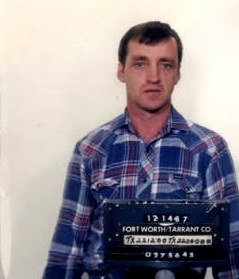
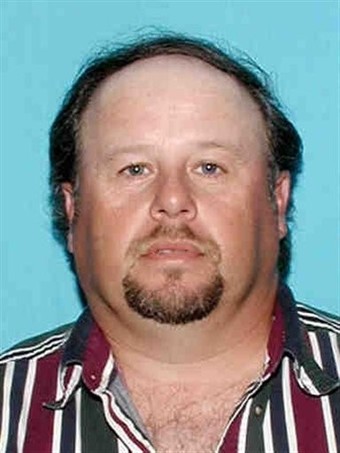
Harold W. Meade: The West Rock Park Murders and Connecticut’s Unsolved Child Killings
Overview
Harold W. Meade III was an American murderer who was convicted of killing three vulnerable young people in New Haven, Connecticut, in 1970. He later became a suspect in several additional bludgeoning deaths, including the unsolved murders of four young girls and a woman killed more than two decades later. Although Meade was never legally classified as a serial killer through additional convictions, investigators and crime writers have repeatedly described him as a suspected serial killer because of the number of cases associated with him and the similarities among the attacks.
The three murders for which Meade was convicted occurred during a single brutal attack in West Rock Park. The victims were residents of the New Haven Regional Center and had intellectual or developmental disabilities. They were taken to a secluded area and repeatedly struck in the head with a large, hard object. Two died at the scene, while the third survived for more than two weeks before dying from his injuries. The extreme violence of the crime, combined with Meade’s suspected connections to other rock-bludgeoning murders, caused investigators to examine his movements throughout southern Connecticut.
Background and Employment
Meade was raised in Connecticut, where his father operated a gas station in Bethany. As an adult, Meade held several jobs that allowed him to travel through different communities. He worked at various times as a truck driver, milkman, gas station attendant and ice cream vendor. Some investigators later considered his employment important because it may have given him familiarity with neighborhoods where children disappeared.
Meade married and had children. To people who encountered him casually, he did not necessarily appear unusual or threatening. However, investigators examining unsolved homicides began noticing that he had lived, worked or traveled near several locations connected to murdered girls. Witness accounts also placed men resembling him near certain victims shortly before their disappearances.
The West Rock Park Attack
On August 12, 1970, 15-year-old Sandra Hedler, 23-year-old Donna Schlitter and 20-year-old William White were attacked in or near a tunnel at West Rock Park in New Haven. All three were residents of the nearby New Haven Regional Center. They had reportedly gone to the park together when they encountered Meade.
The victims were struck repeatedly in the head with a heavy object described in court records as a hard object and in later accounts as a rock or boulder. Sandra Hedler and Donna Schlitter were killed during the assault. Their bodies were concealed behind a ventilation structure inside a park tunnel.
William White was discovered alive in a wooded area near the tunnel. He had suffered catastrophic head injuries but remained alive long enough to be taken to St. Raphael’s Hospital. Despite medical treatment, White died on August 29, 1970, seventeen days after the attack.
The crime scene suggested that the three young people had been deliberately isolated and overpowered. The victims’ disabilities made them particularly vulnerable, and the violence appeared to have been inflicted at close range. Investigators began interviewing people who had been in the park and searching for vehicles seen in the area.
Confirmed Victims
- Sandra Hedler, 15: Murdered on August 12, 1970, at West Rock Park in New Haven, Connecticut. She was bludgeoned and her body was found concealed near a ventilation shaft inside a park tunnel.
- Donna Schlitter, 23: Murdered on August 12, 1970, at West Rock Park in New Haven, Connecticut. She was beaten to death and found with Sandra Hedler near the tunnel’s ventilation structure.
- William White, 20: Attacked on August 12, 1970, at West Rock Park in New Haven, Connecticut. He was discovered alive in nearby woods and taken to St. Raphael’s Hospital, where he died from his injuries on August 29, 1970.
The Investigation and Arrest
Witnesses reported seeing a late-model blue automobile near West Rock Park around the time of the murders. Police examined hundreds of vehicles matching the description. One of the cars investigated belonged to Harold Meade.
As detectives continued gathering evidence, Meade emerged as their leading suspect. He was arrested on December 11, 1970, nearly four months after the attack. He initially denied responsibility, but the case eventually moved toward a negotiated resolution rather than a full murder trial.
On March 8, 1971, Meade was indicted on three counts of first-degree murder. The indictments alleged that he had deliberately and repeatedly struck the victims in the head with a hard object. In April 1972, he pleaded guilty to three counts of second-degree murder. On April 27, 1972, he was sentenced to life imprisonment with the possibility of parole.
The Murder of Diane Toney
One of the earliest child murders later associated with Meade was the death of 11-year-old Diane Toney. Diane disappeared on May 18, 1969, while attending the annual Freddy Fixer Parade in New Haven. She had been wearing a green dress decorated with white polka dots.
Nearly four months later, on September 13, 1969, Diane’s remains were found in Meshomasic State Forest. Evidence indicated that she had been bludgeoned with a rock. The killing remained unsolved, but Meade eventually became a suspect.
Years later, an inmate reportedly told an attorney that Meade had confessed to killing Diane. Meade allegedly made a remark suggesting that investigators would never be able to connect him to the crime unless they recovered a particular item of the child’s clothing. The reported statement generated suspicion but did not result in charges.
The Murder of Mary Katherine Mount
Ten-year-old Mary Katherine Mount disappeared from Kiwanis Park near her home in New Canaan on May 27, 1969. She had been playing outside when she vanished in daylight. Her disappearance led to an extensive search of the surrounding area.
On June 18, 1969, two teenage fishermen found Mary’s body in Wilton near a reservoir. She had been bludgeoned and subjected to additional injuries. Her murder became one of the most notorious unsolved crimes in the New Canaan area.
Investigators later learned that one of Meade’s milk-delivery routes may have taken him through New Canaan, potentially giving him knowledge of the community. During questioning, police reportedly asked Meade whether he had killed Mary. Rather than providing a direct denial, he was said to have answered that he could not remember. Meade was never charged, and Mary’s murder officially remained unsolved.
The Murder of Dawn Cave
Fourteen-year-old Dawn Cave disappeared from her home in Bethany on May 29, 1969, after an argument with a sibling. Her body was found the following day in a field in New Haven County. She had been placed in a shallow or makeshift grave surrounded by stones.
A woman living near the field reportedly saw a man resembling Meade take a girl behind a stone wall. According to the account, the man later emerged with blood on his hands and drove away. Meade’s family also had a connection to the area because his father’s gas station was located only a few miles from where Dawn was killed.
A state trooper later claimed that Meade admitted killing Dawn while speaking with him in prison. Meade denied responsibility when the allegation became known. No prosecution followed, and the case remained officially unresolved.
The Murder of Jennifer Noon
Five-year-old Jennifer Noon disappeared in New Haven on September 29, 1970. She had left school and was walking home for lunch when she vanished. The disappearance occurred only weeks after the West Rock Park attack and before Meade’s arrest.
Eight days later, Jennifer’s body was found in a wooded area near Evergreen Avenue in Hamden. She had been beaten to death with a rock. A witness reportedly recalled seeing Jennifer enter a car driven by a man resembling Meade.
The similarity between Jennifer’s injuries and the confirmed West Rock Park murders drew investigators’ attention. Both crimes involved vulnerable victims, severe head trauma and the use of a rock or similarly heavy object. Despite the circumstantial evidence, authorities did not charge Meade with Jennifer’s murder.
Suspected Child Victims
- Diane Toney, 11: Disappeared on May 18, 1969, from the Freddy Fixer Parade in New Haven, Connecticut. Her remains were found on September 13, 1969, in Meshomasic State Forest. She had been bludgeoned with a rock.
- Mary Katherine Mount, 10: Abducted from Kiwanis Park in New Canaan, Connecticut, on May 27, 1969. Her body was found near a reservoir in Wilton on June 18, 1969. Investigators determined that she had been bludgeoned.
- Dawn Cave, 14: Disappeared from Bethany, Connecticut, on May 29, 1969. Her body was discovered in a field the following day, May 30, 1969. A witness reportedly saw a man resembling Meade with a girl near the location.
- Jennifer Noon, 5: Disappeared while walking home from school in New Haven on September 29, 1970. Her body was found eight days later, on October 7, 1970, in a wooded section of Hamden. She had been beaten with a rock.
The Plea Agreement and Uncharged Murders
Questions have long surrounded the legal agreement that resolved the West Rock Park case. Under the arrangement described in later reports, Meade’s guilty pleas protected him from prosecution for other murders he might admit committing. The agreement allowed the state to secure convictions and life sentences for the three known killings, but it also complicated future attempts to charge him in other cases.
Authorities continued to regard him as a suspect in the deaths of Diane Toney, Mary Mount, Dawn Cave and Jennifer Noon. However, the available evidence was largely circumstantial. Witness descriptions, work routes, geographic connections and alleged jailhouse statements created suspicion, but none of those elements produced a separate conviction.
The Murder of Linda Rayner
On June 26, 1992, 43-year-old Linda Rayner was killed in a secluded section of Hammonasset Beach State Park in Madison, Connecticut. She was bludgeoned with a rock, a method strikingly similar to the confirmed West Rock Park murders and the unsolved child killings associated with Meade.
Meade was still serving his life sentence, but Connecticut’s prison system had permitted him to participate in an extensive furlough program. He and his second wife were reportedly staying in a rented cabin at Hammonasset Beach while celebrating their wedding anniversary on the day Rayner was killed.
A storm and high tide affected the crime scene before investigators could preserve much of the physical evidence. No usable DNA evidence conclusively identified the killer. Although Meade was strongly suspected because of his presence and the method of attack, he denied killing Rayner and was never charged.
Following the murder, prison officials removed Meade from the furlough program and increased his security classification. Rayner’s killing remained unsolved despite a substantial reward for information leading to an arrest.
Additional Suspected Victim
- Linda Rayner, 43: Murdered on June 26, 1992, in a remote area of Hammonasset Beach State Park in Madison, Connecticut. She was bludgeoned with a rock while Meade was reportedly visiting the park through a prison furlough program. He was suspected but never charged.
Life in Prison and Furlough Controversy
While incarcerated, Meade developed a reputation among some prison employees as a cooperative and productive inmate. He worked as a prison photographer and participated in outdoor maintenance assignments. Guards and counselors reportedly wrote favorable recommendations describing his work habits and conduct.
Between 1985 and 1993, Meade was granted approximately 184 one-day furloughs and 68 weekend furloughs. During this period, he met and married his second wife. The number of unsupervised or lightly supervised outings became highly controversial after Linda Rayner was murdered at a state park where Meade was staying.
The furlough arrangement demonstrated the sharp contrast between Meade’s institutional behavior and the brutality of his convictions. Although he was serving life sentences for killing three defenseless people, officials had gradually allowed him significant access to the community.
Death and Unanswered Questions
Harold W. Meade died from an illness on December 9, 2007, while incarcerated at a Connecticut prison facility. He never publicly provided a complete, verified confession to the additional murders attributed to him.
His death ended any realistic possibility of prosecuting him in the unresolved cases. The murders of Diane Toney, Mary Katherine Mount, Dawn Cave, Jennifer Noon and Linda Rayner remained legally unsolved. Meade’s alleged statements and his connections to the crime locations continue to form an important part of their investigative histories, but suspicion alone never established his guilt beyond a reasonable doubt.
Legacy of the Case
Meade’s confirmed crimes are often categorized as a mass murder because the three West Rock Park victims were attacked during the same event. His suspected involvement in separate killings committed over many years, however, has led to his description as a suspected serial killer.
The case remains disturbing not only because of the violence inflicted upon the victims, but also because of the uncertainty surrounding the other deaths. Several children disappeared from public or familiar places and were later found bludgeoned in isolated areas. Witnesses, geographic links and the repeated use of rocks as weapons pointed investigators toward Meade, yet the evidence was never sufficient to produce additional convictions.
Harold Meade was conclusively responsible for the murders of Sandra Hedler, Donna Schlitter and William White. The remaining cases must be described as suspected connections rather than proven crimes. For the families of the uncharged victims, his death left behind the same questions that had persisted for decades: whether Meade had claimed additional lives and whether the full extent of his violence would ever be known.