Arthur Gary Bishop: Utah Serial Killer
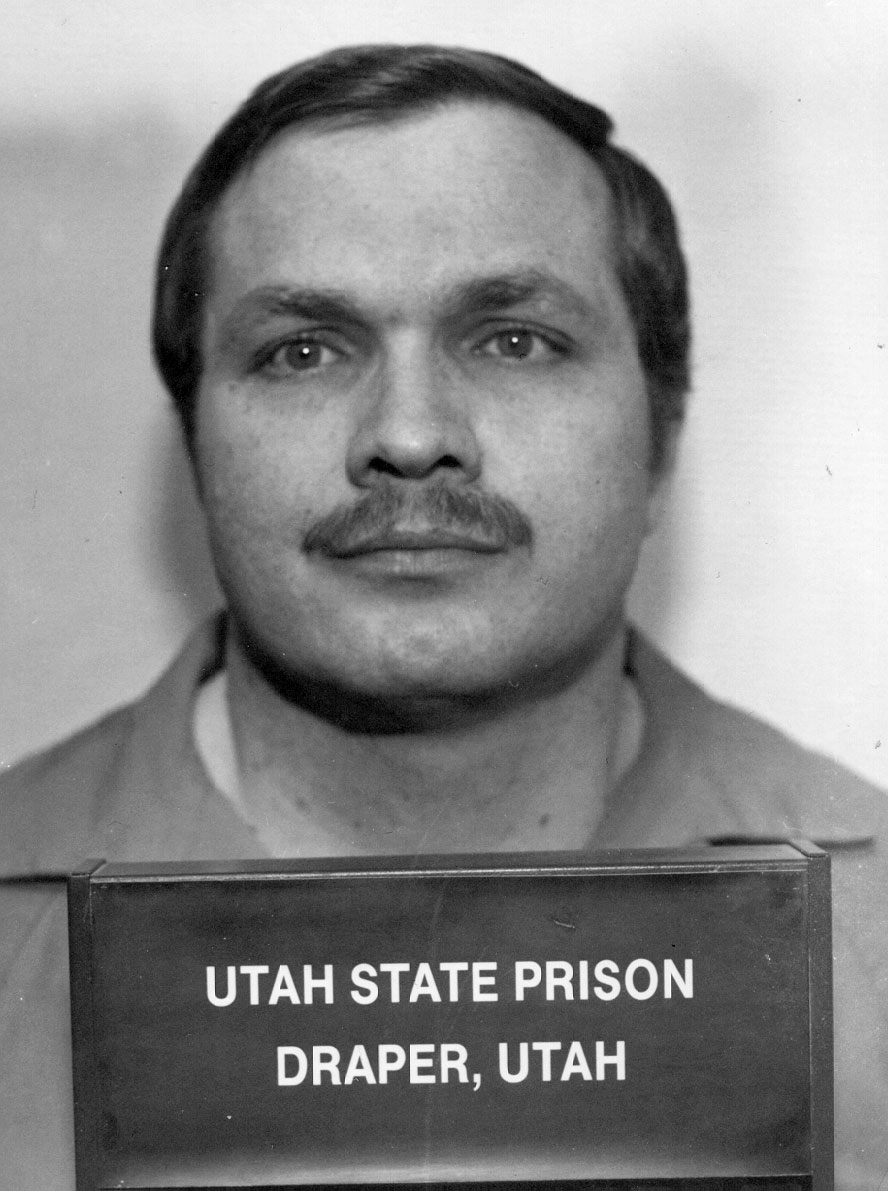
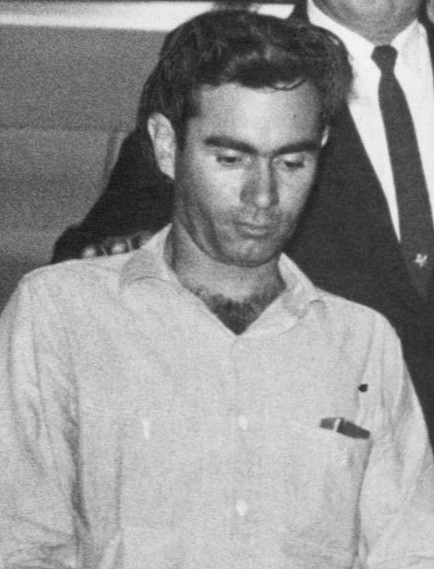
Arthur Gary Bishop was an American serial killer and child sex offender who murdered five boys in Utah between 1979 and 1983. Operating primarily in the Salt Lake City area and frequently using the alias Roger W. Downs, Bishop was able to remain hidden while children disappeared from apartment complexes, stores, neighborhoods and parks. His victims ranged from four to thirteen years old. The investigation finally collapsed around him in July 1983, when detectives questioning him about the disappearance of his final victim uncovered his true identity and obtained a confession to all five murders.
Bishop's crimes were particularly disturbing because he often presented himself as a friendly and trustworthy adult. He cultivated relationships with boys, offered gifts and activities, and placed himself in situations where parents and children could view him as a harmless companion. After his arrest, investigators discovered that the five murders represented only part of his criminal behavior. Numerous boys had been sexually abused or exploited by Bishop but survived.
Early Life and Criminal Background
Arthur Gary Bishop was born on September 29, 1952, in Hinckley, Utah. He grew up in a religious family, became an Eagle Scout and was considered a capable student. As a young man he served as a missionary in the Philippines for the Church of Jesus Christ of Latter-day Saints. To people who knew him during his youth, there was little indication that he would eventually become one of Utah's most notorious murderers.
By the late 1970s, however, Bishop's life had begun to unravel. He worked as a bookkeeper and was arrested for embezzlement in 1978. He received a suspended sentence but violated the conditions imposed upon him and eventually began living under false names, most notably Roger W. Downs. He also used the name Lynn Jones.
Bishop sought opportunities that allowed him to spend time around boys. He became associated with the Big Brothers program and cultivated relationships with children by offering attention, gifts, recreational activities and outings. His outward friendliness concealed an escalating pattern of sexual abuse. By 1979, Bishop had also separated from the religious life in which he had been raised.
The Murder of Alonzo Daniels
Four-year-old Alonzo Daniels became Bishop's first known murder victim in October 1979. Alonzo was playing near his family's Salt Lake City apartment when Bishop, who lived nearby under the name Roger Downs, lured him into his apartment by offering him candy.
Bishop later confessed that after he began molesting Alonzo, the child became upset and threatened to tell his mother. Fearful that the boy would expose him, Bishop attacked him and ultimately drowned him in a bathtub. Bishop concealed Alonzo's body in a container, transported it into the Cedar Valley area near Cedar Fort, Utah, and buried him in a shallow grave.
Contemporary police reporting and the Utah Supreme Court record place Alonzo's disappearance and murder on October 16, 1979. Some later secondary accounts give October 14, 1979, but the October 16 date is supported by contemporary reporting surrounding the recovery of the victims and the official appellate record.
The Murder of Claude Kimley "Kim" Petersen
Eleven-year-old Claude Kimley "Kim" Petersen was Bishop's second known murder victim. Bishop encountered Kim through another boy at a Salt Lake-area roller-skating rink on November 8, 1980. Kim was interested in selling a pair of roller skates, and Bishop used the proposed purchase as a way of gaining access to him.
The following day, November 9, Kim left home with the skates, expecting to complete the sale. Bishop eventually persuaded him to accompany him into the Cedar Valley area under the pretense of going rabbit hunting. Once they were isolated, Bishop shot Kim with a .38-caliber revolver. Bishop later buried him in a shallow grave close to where he had buried Alonzo Daniels.
November 8 is sometimes listed as Kim's murder date because that was the day he first encountered Bishop at the skating rink. However, the detailed chronology and cemetery records place Kim's death on November 9, 1980.
The Murder of Danny Davis
On October 20, 1981, four-year-old Danny Davis disappeared while shopping with his grandfather at a supermarket in Salt Lake County. The disappearance generated an enormous search. Police, volunteers and federal authorities became involved, but no trace of Danny could be located at the time.
Bishop later admitted that he had seen Danny at the store and lured him away. Bishop lived only a short distance from the supermarket and brought Danny back to his residence. According to Bishop's confession, the child eventually became frightened and began crying. Concerned that someone would hear him, Bishop covered Danny's nose and mouth and suffocated him.
Bishop concealed Danny's remains until he could transport them into the Cedar Valley region. He then buried the boy near the graves of Alonzo Daniels and Kim Petersen. Danny remained missing until Bishop finally led investigators to the burial area in July 1983.
The Murder of Troy Ward
Almost two years passed before Bishop killed again. On June 22, 1983, six-year-old Troy Ward disappeared in Salt Lake City. The date was Troy's sixth birthday. Bishop, still living as Roger Downs, encountered Troy and brought the child to his residence.
Bishop later described restraining Troy in his basement during an attempted sexual assault. When Troy became frightened and began crying, Bishop attacked him with a rubber mallet, killing him. Instead of returning to the desert burial site he had used for his previous victims, Bishop placed Troy's body in Big Cottonwood Creek in the mountains southeast of Salt Lake City.
Troy's disappearance intensified public concern about missing children in the Salt Lake area. At that point, however, authorities still did not know that the earlier disappearances and Troy's case were connected to the same offender.
The Murder of Graeme Cunningham
Thirteen-year-old Graeme Cunningham became Bishop's fifth and final known murder victim on July 14, 1983. Unlike some of Bishop's younger victims, Graeme knew the man he believed was Roger Downs. Bishop had established relationships with boys in Graeme's social circle and was planning a trip to California with another teenager shortly after Graeme disappeared.
Bishop persuaded Graeme to accompany him to his residence and convinced the teenager to pose for photographs. Bishop later said that he became afraid Graeme might reveal what had happened. He struck the boy in the head with a hammer and drowned him in a bathtub. Bishop then disposed of Graeme's body in Big Cottonwood Creek, the same general area where he had left Troy Ward.
Graeme's disappearance proved to be the event that finally exposed Bishop. Investigators learned that Graeme had been in contact with Roger Downs shortly before he vanished and began examining Downs' relationships with other boys.
Confirmed Victims
- Alonzo Daniels, age 4 — October 16, 1979 — Salt Lake City, Utah. Lured from the apartment complex where his family lived and murdered inside Bishop's nearby apartment. His remains were buried in the Cedar Valley/Cedar Fort area. Some later accounts list October 14, but contemporary reporting and the Utah Supreme Court record identify October 16.
- Claude Kimley "Kim" Petersen, age 11 — November 9, 1980 — Salt Lake City/Cedar Valley, Utah. Bishop met Kim at a roller-skating rink on November 8 and arranged to meet him concerning the sale of his skates. Bishop took him to the Cedar Valley area the following day, killed him and buried him near Alonzo Daniels. November 8 is sometimes listed in summaries, but the detailed chronology places the murder on November 9.
- Danny Davis, age 4 — October 20, 1981 — Salt Lake County, Utah. Abducted from a supermarket while shopping with his grandfather, taken to Bishop's nearby residence and suffocated. His remains were buried in the Cedar Valley area near the graves of Daniels and Petersen.
- Troy Ward, age 6 — June 22, 1983 — Salt Lake City, Utah. Abducted on his sixth birthday, taken to Bishop's residence and killed after being restrained. His body was disposed of in Big Cottonwood Creek southeast of Salt Lake City.
- Graeme Cunningham, age 13 — July 14, 1983 — Salt Lake City, Utah. Lured to Bishop's residence, assaulted and killed. Bishop disposed of his body in Big Cottonwood Creek, near the location where Troy Ward's body was later recovered.
The Investigation and Bishop's Arrest
Police investigating Graeme Cunningham's disappearance began focusing on the man known as Roger Downs. Detectives discovered that Downs had lived at several addresses connected geographically to earlier child disappearances and that he had cultivated unusually close relationships with young boys. Investigators also learned that Roger Downs was not his real name.
On July 24, 1983, police questioned Bishop about Graeme. Another boy who knew Bishop provided investigators with information about Bishop's behavior, including his practice of photographing boys. Detectives eventually established that Roger Downs was actually Arthur Gary Bishop, a man already wanted for violating the terms of his earlier probation.
During the investigation Bishop accompanied officers to his residence, where police recovered a revolver and hundreds of photographs of boys, including sexually exploitative images. Once back at the police station, the interrogation changed dramatically. Bishop confessed to the abductions and murders of Alonzo Daniels, Kim Petersen, Danny Davis, Troy Ward and Graeme Cunningham.
His confession did more than identify the killer. Bishop agreed to show detectives where he had hidden the victims. He directed authorities to the Cedar Fort and Cedar Valley area, where the remains of Daniels, Petersen and Davis were recovered from shallow graves. He also directed investigators to Big Cottonwood Creek, where the bodies of Ward and Cunningham were located.
The Extent of Bishop's Abuse
The murder investigation revealed a much larger history of sexual abuse. Investigators identified numerous boys Bishop had photographed, molested or otherwise exploited. Bishop himself suggested that the true number of children he had abused was substantially higher than the number police had initially identified.
Although Bishop admitted extensive abuse, only five murders were proven and attributed to him. There is no established evidence that additional homicide victims should be added to his confirmed victim count. His known murder total therefore remains five.
Trial and Conviction
Bishop's trial began on February 27, 1984. Prosecutors presented his confession, physical evidence and testimony concerning his relationships with children. Bishop did not seriously dispute that he had committed the killings. His defense instead introduced psychological evidence and sought to explain the mental and emotional forces surrounding his crimes.
On March 19, 1984, Bishop was found guilty of five counts of first-degree murder, five counts of aggravated kidnapping and one count of aggravated sexual abuse of a child. The jury returned death sentences for each of the murder convictions. Additional prison sentences were imposed for the kidnapping and sexual-abuse convictions.
Bishop later attributed much of his deterioration to his obsessive consumption of child pornography and claimed that it contributed to increasingly violent fantasies. Those explanations did not alter his legal responsibility. His confession demonstrated that he understood that his actions were criminal and that he repeatedly killed children in an effort to prevent discovery of his sexual offenses.
Death Row and Execution
Bishop's convictions and death sentences were reviewed by the Utah Supreme Court and upheld in February 1988. Rather than continue fighting his execution indefinitely, Bishop eventually ordered his attorneys to stop pursuing further appeals and stated that he believed he deserved punishment for what he had done.
Arthur Gary Bishop was executed by lethal injection at the Utah State Prison at Point of the Mountain in Draper, Utah, shortly after midnight on June 10, 1988. He was 35 years old. Before his execution, Bishop expressed remorse and asked that apologies be conveyed to the families of his victims.
Legacy of the Case
The Arthur Gary Bishop case became one of the most infamous serial murder investigations in Utah history. For nearly four years, five families endured disappearances that initially appeared unrelated. The victims had vanished under different circumstances and from different locations, making it difficult for investigators to recognize the common offender until the final weeks of the case.
The discovery that Bishop had deliberately cultivated access to children also demonstrated the importance of examining an offender's broader pattern of grooming and abuse. His history showed that the five murders did not occur in isolation. They emerged from years of predatory behavior, manipulation and sexual exploitation that escalated into homicide when Bishop believed a child might expose him.
Behind the notoriety surrounding Arthur Gary Bishop remain the five children whose deaths defined the case: Alonzo Daniels, Kim Petersen, Danny Davis, Troy Ward and Graeme Cunningham. Their disappearances brought together police agencies, searchers, volunteers and families across the Salt Lake area, and the recovery of their remains in July 1983 finally ended years of uncertainty about what had happened to them.