Pearl Jackson and the Birmingham Axe Murders
Overview
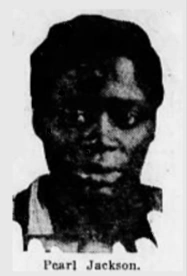
Pearl Jackson was an Alabama murder defendant associated with the notorious Birmingham axe-murder panic of the early 1920s. Jackson and his spouse, Odell Jackson, were accused of belonging to a loosely organized group that newspapers and law-enforcement officials called the “Alabama Axe Syndicate.” The alleged syndicate was blamed for a succession of nighttime robberies and violent attacks in and around Birmingham, Alabama.
Historical accounts frequently describe Pearl Jackson as a serial killer. That description requires qualification, however. Jackson was convicted of one murder, and surviving reports do not establish that he personally committed every axe killing attributed to the alleged syndicate. Investigators claimed that members of the group were responsible for numerous attacks, but the reliability of the confessions, the accuracy of the victim totals and the identities of the individual attackers remain disputed.
Birmingham’s Axe-Murder Panic
During the early 1920s, Birmingham experienced a frightening series of attacks involving axes, hatchets and other blunt instruments. Victims were commonly assaulted at night, sometimes while sleeping and sometimes during apparent robberies. Small business owners, laborers, immigrants, Black residents, white residents and interracial couples were among those targeted during the broader crime wave.
Contemporary reports offered conflicting totals. Some stated that approximately 24 people were killed in 44 axe attacks. Other accounts placed the number of deaths at 26 and reported that another 21 people were seriously injured. These figures described the complete Birmingham series and should not be interpreted as a verified personal victim count for Pearl Jackson.
The attacks created widespread fear because they appeared sudden, brutal and difficult to predict. Birmingham residents armed themselves, merchants strengthened their doors and windows, and police faced intense public pressure to identify the perpetrators. Rumors circulated that the killings were connected to organized crime, robbery gangs, personal disputes or efforts to control illegal liquor operations during Prohibition.
The Alleged Alabama Axe Syndicate
Investigators eventually argued that the murders were not the work of one wandering killer. Instead, they claimed that a group of offenders committed robberies and assaults under the direction of an organized criminal syndicate. Pearl Jackson, Odell Jackson, Peyton Johnson and several other suspects were linked to the alleged organization.
According to reports surrounding the investigation, robbery was considered the group’s principal motive. Some accounts claimed that members selected the person who would carry out an attack by drawing straws. Authorities alleged that the syndicate targeted people believed to have money, entered homes or businesses at night and used axes because the weapons were quiet, easily obtained and capable of inflicting fatal injuries.
The term “syndicate” may have exaggerated the group’s organization. The available evidence does not clearly demonstrate that every Birmingham axe attack was connected or that all suspects participated in a single coordinated conspiracy. Police nevertheless presented the arrests as the solution to a large portion of the city’s unsolved violence.
The Murder of Robert Turper
The killing most directly connected to Pearl Jackson was the murder of Robert Turper. Turper was a white man killed in Birmingham on January 6, 1923. Historical reports state that the attack was committed as part of a robbery plan.
Mary Frances Sanders became an important witness against Pearl and Odell Jackson. Sanders reportedly said that the Jacksons planned to rob a white man on the night Turper was killed. Her statement placed them within the preparations for the crime and became a central part of the prosecution’s case.
Surviving summaries do not provide a complete and consistent description of the exact location where Turper was attacked. They identify the crime as occurring in Birmingham, Alabama, and connect it to the wider series of axe assaults that terrorized the city.
Verified Victim Information
- Robert Turper — January 6, 1923 — Birmingham, Alabama: Turper was murdered during an apparent robbery. Pearl and Odell Jackson were implicated through the statement of Mary Frances Sanders, who said that they had planned to rob a white man that night. Pearl Jackson was convicted in connection with Turper’s death.
Robert Turper is the only named victim whose death date can be stated with reasonable confidence as part of Pearl Jackson’s individual case. Although investigators attributed additional fatal attacks to members of the alleged syndicate, surviving accounts do not reliably identify which specific killings were personally committed, planned or assisted by Pearl Jackson.
Mary Frances Sanders and the Investigation
The investigation reportedly gained momentum after a confrontation involving Mary Frances Sanders and Pearl Jackson at a county penal farm. During an argument, Sanders threatened to reveal information about Pearl and Odell Jackson’s involvement in the axe crimes. Officers who learned of the exchange questioned her further.
Sanders then supplied information about the Turper murder and the alleged criminal activities of the Jacksons. Her account gave investigators a narrative connecting the couple to robbery planning and to the broader group blamed for the axe attacks.
The prosecution depended heavily on witness statements and confessions rather than on the forms of forensic evidence available to modern investigators. There was no DNA testing, computerized fingerprint comparison or reliable method of connecting a particular axe to a particular wound. As a result, the authorities’ conclusions depended on whether jurors believed the witnesses and the accused persons’ statements.
The Use of “Truth Serum”
One of the most controversial elements of the case was the reported use of a drug described as “truth serum.” Five suspects associated with the investigation were allegedly questioned after being given a substance intended to lower resistance and encourage truthful answers. Historical discussions commonly identify the drug as scopolamine or a similar preparation.
Officials claimed that the suspects made incriminating statements while under the drug’s influence and repeated or confirmed portions of those statements after its effects had diminished. Prosecutors treated the confessions as evidence that the alleged syndicate was responsible for numerous attacks.
Such a procedure would not be regarded as a dependable method of determining truth. Sedative drugs can produce confusion, suggestibility, impaired judgment and inaccurate memories. A person under their influence may provide information that is false, exaggerated or shaped by the interviewer’s questions.
The use of the drug therefore casts lasting doubt on broad claims that the arrests solved dozens of crimes. It does not by itself prove that Pearl Jackson was innocent of the Turper murder, but it makes unsupported confessions to additional killings especially difficult to accept as verified fact.
Arrest and Prosecution
Pearl and Odell Jackson were arrested during the authorities’ campaign against the alleged syndicate in 1924. Prosecutors portrayed them as participants in an organized robbery-and-murder operation responsible for a substantial portion of Birmingham’s axe violence.
The Jacksons were tried for murder and convicted. Their case attracted significant attention because they were a married couple facing execution together. Newspapers reported that they would become the first husband and wife in Alabama history to be executed on the same gallows.
The proceedings occurred during an era of severe racial inequality in Alabama’s criminal-justice system. Pearl and Odell Jackson were Black defendants accused of killing a white victim. They faced an all-powerful state prosecution in a legal environment where Black defendants frequently encountered discriminatory policing, segregated juries and limited access to effective legal representation.
Death Sentences
Following their convictions, Pearl and Odell Jackson were sentenced to death by hanging. Their execution was initially scheduled for June 19, 1925. Officials reportedly prepared a gallows capable of carrying out both sentences.
The executions were postponed more than once. A later date was set for August 7, 1925. On August 6, the day before the scheduled hanging, Alabama Governor William W. Brandon commuted the Jacksons’ death sentences to life imprisonment.
The commutation spared the couple from execution but did not overturn their convictions. Pearl Jackson remained a prisoner after the death sentence was reduced. Publicly available summaries provide little dependable information about his later years, and his exact date of death is not clearly established. He is known to have remained alive beyond 1926.
Questions About the Number of Victims
Pearl Jackson is sometimes credited with eight or more victims. That figure appears to come from reports that arrested members of the alleged syndicate confessed to eight fatal assaults or were connected collectively to multiple killings. It is not a verified list of eight people personally murdered by Jackson.
Authorities also suggested that the syndicate might have committed all or most of Birmingham’s 44 axe attacks. Contemporary officials claimed that these attacks caused approximately 24 deaths, while other reports gave a total of 26. The differences demonstrate the uncertainty surrounding the historical record.
No dependable victim-by-victim accounting has established that Pearl Jackson killed 24 or 26 people. The larger totals belong to the complete Birmingham axe-murder series, which may have included unrelated domestic killings, robberies and attacks committed by different offenders.
Possible Motives
Robbery was the principal motive alleged by prosecutors. Attackers were believed to target victims who carried cash, operated small businesses or kept money inside their homes. Axes and hatchets could be obtained without attracting attention and used without the loud report of a firearm.
Other theories connected some attacks to Birmingham’s illegal liquor trade. Prohibition created profitable underground markets, and violent groups competed over alcohol distribution, gambling and protection payments. Some residents believed that organized criminals used the axe murders to frighten rivals or remove people who refused to cooperate.
There were also claims that Italian organized-crime figures were responsible for at least part of the violence. These theories were never conclusively proved. The axe attacks may have resulted from several motives and several groups rather than a single syndicate operating under one leader.
Historical and Racial Context
The Jackson case unfolded in the segregated South during the Jim Crow era. News reports routinely described Black suspects with openly racist terminology, and public officials often presented confessions as conclusive without carefully examining how they had been obtained.
The racial climate is important when assessing the allegations. Black suspects could be subjected to coercive questioning, threats and pressure to confess. Courts frequently provided limited protection against abusive investigative methods. At the same time, Black victims of the broader axe-murder series generally received less detailed and less sympathetic newspaper coverage than white victims.
These conditions do not establish that every accusation against Pearl Jackson was false. They do require caution when repeating police claims as proven history. Statements made under questionable circumstances, unsupported syndicate theories and inconsistent victim totals should be distinguished from the facts established by the murder conviction.
Was Pearl Jackson a Serial Killer?
Under the modern definition, a serial killer murders multiple people in separate events. Pearl Jackson is often included in serial-killer databases because authorities associated him with a series of killings and claimed that the alleged syndicate committed numerous fatal attacks.
However, the surviving evidence clearly identifies only one named murder victim in Jackson’s individual prosecution: Robert Turper. Other killings were attributed collectively to the syndicate without a reliable explanation of Pearl Jackson’s personal role in each crime.
It is therefore more accurate to describe Jackson as a convicted murderer and an alleged participant in the Birmingham axe-murder series. Calling him a confirmed serial killer without qualification gives greater certainty to the historical record than the available evidence supports.
Legacy of the Case
The Birmingham axe murders remain one of Alabama’s most disturbing and confusing historical crime waves. The attacks terrified the city, produced sensational headlines and encouraged authorities to claim that a single criminal organization was responsible for dozens of assaults.
Pearl and Odell Jackson became the best-known defendants connected to the case because of their joint conviction and narrowly avoided execution. Their prosecution also became an early and troubling example of law enforcement using a supposed truth-inducing drug during a murder investigation.
The case illustrates the danger of merging numerous crimes into one story without sufficient evidence. It also demonstrates how racial prejudice, sensational reporting, public fear and unreliable interrogation techniques can shape the historical reputation of accused offenders.
Pearl Jackson’s confirmed legal history is serious: he was convicted of participating in the January 6, 1923 murder of Robert Turper and sentenced to death before receiving a commutation to life imprisonment. Claims that he personally murdered many additional victims remain allegations rather than fully verified conclusions.