Bruce Ivins and the 2001 Amerithrax Attacks
Overview
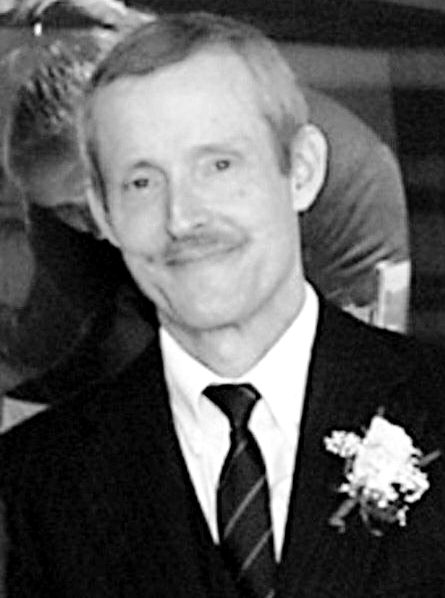
Bruce Edwards Ivins was an American microbiologist and biodefense researcher who worked at the United States Army Medical Research Institute of Infectious Diseases, known as USAMRIID, at Fort Detrick in Frederick, Maryland. He became the central suspect in the 2001 anthrax letter attacks, a series of bioterrorism mailings that killed five people, sickened seventeen others, contaminated postal facilities and government buildings, and spread fear across the United States only weeks after the September 11 terrorist attacks.
Ivins was never tried or convicted. Federal prosecutors were preparing to seek an indictment against him when he died by suicide on July 29, 2008. In 2010, the Department of Justice, the FBI, and the U.S. Postal Inspection Service formally closed the Amerithrax investigation and stated that the evidence showed Ivins acted alone. Because he died before trial, the case remains controversial to some researchers, journalists, and observers, but the official federal conclusion identified him as the person responsible for the mailings.
The Anthrax Letters
The attacks were carried out through letters containing powdered Bacillus anthracis spores, the bacterium that causes anthrax. The letters were mailed in two waves in September and October 2001. The first wave was directed at media organizations, and the second wave was directed at two United States senators. The letters were designed to look political and terroristic, with handwritten messages invoking death, fear, America, Israel, and Allah. This wording initially led investigators to consider whether the attacks were connected to foreign terrorism, but the investigation later focused on a domestic source with access to laboratory anthrax.
The first known mailing occurred between the evening of September 17, 2001, and noon on September 18, 2001. These letters were postmarked September 18, 2001, in Trenton, New Jersey, and were sent to Tom Brokaw at NBC News and to the editor of the New York Post in New York City. Investigators also believed that an anthrax-contaminated mailing likely reached the American Media, Inc. building in Boca Raton, Florida, although no envelope from that location was recovered.
The second known mailing occurred between October 6, 2001, and October 9, 2001. These letters were postmarked October 9, 2001, in Trenton, New Jersey, and were addressed to Senator Tom Daschle and Senator Patrick Leahy at their Washington, D.C. offices. The Daschle letter was opened in the Hart Senate Office Building on October 15, 2001. The Leahy letter was discovered and recovered on November 16, 2001.
Victims Who Died
- Robert Stevens — Age 63. He was a photo editor at American Media, Inc. in Boca Raton, Florida. He was diagnosed after becoming severely ill with inhalational anthrax and died on October 5, 2001, in Boca Raton, Florida. His case was the first death publicly connected to the attacks.
- Thomas L. Morris Jr. — Age 55. He was a postal worker at the Brentwood postal facility in Washington, D.C. He died from inhalational anthrax on October 21, 2001. His death showed that postal employees who handled contaminated mail could be exposed even without opening the letters.
- Joseph P. Curseen Jr. — Age 47. He was also a postal worker at the Brentwood postal facility in Washington, D.C. He died from inhalational anthrax on October 22, 2001, one day after Thomas Morris. His death intensified public concern about contamination inside the postal system.
- Kathy T. Nguyen — Age 61. She was a hospital employee in New York City. She died from inhalational anthrax on October 31, 2001. Her exact route of exposure was never clearly established, but investigators considered contaminated mail a likely possibility.
- Ottilie Lundgren — Age 94. She lived in Oxford, Connecticut. She died from inhalational anthrax on November 21, 2001. Investigators believed her infection was likely caused by cross-contaminated mail, meaning ordinary mail may have picked up spores after passing through contaminated postal equipment or facilities.
Other Victims and Exposures
In total, at least twenty-two people contracted anthrax during the attacks. Eleven suffered inhalational anthrax, the most dangerous form, caused by breathing in spores. Eleven others suffered cutaneous anthrax, which occurs when spores enter through the skin. Five of the inhalational cases were fatal. Thousands of people were evaluated, treated, or placed on preventive antibiotics because they may have been exposed to contaminated mail, contaminated buildings, or contaminated postal equipment.
The attacks did not affect only the intended recipients. The letters contaminated mailrooms, postal processing centers, media offices, and congressional buildings. Thirty-five postal facilities and commercial mailrooms were contaminated. Anthrax was also detected in buildings on Capitol Hill. The Brentwood postal facility in Washington, D.C., and the Trenton processing and distribution center in Hamilton, New Jersey, were both closed because of contamination. More than 1.8 million letters, packages, magazines, catalogs, and other pieces of mail were quarantined at those facilities.
Locations Connected to the Attacks
- Trenton, New Jersey — The anthrax letters were postmarked from the Trenton area, making it a major focus of the investigation.
- Princeton, New Jersey — Investigators later found anthrax spores in a mailbox near Nassau Street, and authorities believed the letters were mailed from that area.
- Boca Raton, Florida — American Media, Inc. was contaminated, and Robert Stevens, who worked there, became the first known fatal victim.
- New York City, New York — Media organizations, including NBC News and the New York Post, were targeted. Several cases were connected to media workplaces or contaminated mail in the city.
- Washington, D.C. — The letters to Senators Daschle and Leahy passed through postal facilities and reached Capitol Hill. The Brentwood postal facility became heavily contaminated, and two postal workers died.
- Hamilton, New Jersey — The Trenton postal processing and distribution center located in Hamilton was contaminated and closed for decontamination.
- Oxford, Connecticut — Ottilie Lundgren died there after what investigators believed was exposure through cross-contaminated mail.
Why Investigators Focused on Bruce Ivins
The Amerithrax investigation became one of the largest and most complex criminal investigations in American history. Investigators conducted thousands of interviews, collected thousands of environmental samples, reviewed laboratory records, examined the envelopes and letters, and developed new scientific methods to compare the anthrax in the letters with known laboratory samples.
Federal investigators eventually traced the parent material of the attack spores to a flask known as RMR-1029. That flask was created and maintained by Bruce Ivins at USAMRIID. Ivins had long experience working with anthrax, including the Ames strain, which was the same strain found in the attack letters and in the bodies of the five deceased victims. Investigators concluded that Ivins had access, expertise, and opportunity.
The government also focused on Ivins because of his unexplained late-night laboratory work around the periods before the mailings, his control over the relevant anthrax material, his behavior during the investigation, and statements and actions prosecutors interpreted as signs of consciousness of guilt. Investigators said he performed unauthorized environmental sampling in his work area, decontaminated areas without properly reporting his activities, submitted questionable samples to the FBI anthrax repository, and later discarded a book about codes that investigators believed was relevant to the hidden patterns they saw in the letters.
The Nature of the Crimes
The Amerithrax attacks were not conventional murders committed face to face. They were biological attacks carried out through the mail system. The victims were not only the intended public figures and media organizations named on the envelopes. The people who died included office workers, postal employees, a hospital employee, and an elderly woman who appears to have been exposed indirectly. The mailings turned ordinary envelopes into lethal delivery devices and made postal workers, newsroom employees, government staff, and private citizens vulnerable without warning.
The most disturbing feature of the crimes was their indirectness. The person who mailed the letters did not need to see the victims, know them personally, or be present when they became ill. Once the spores entered the postal stream, contamination spread along the route of the mail. High-speed sorting machines could disturb spores inside or outside envelopes, creating danger for workers and for other mail. This meant the attacks reached people who were never named as targets and who had no reason to believe they were in danger.
Impact and Aftermath
The attacks caused national panic during an already traumatic period in American history. They forced evacuations, shutdowns, quarantines, mass antibiotic distribution, and expensive decontamination efforts. The Hart Senate Office Building was closed. Postal facilities were shut down for long periods. The Brentwood facility in Washington, D.C., did not reopen until December 22, 2003, and the Trenton facility in Hamilton, New Jersey, did not reopen until March 14, 2005.
The case also changed how law enforcement, public health agencies, laboratories, and postal officials responded to biological threats. Before the attacks, many doctors had little practical experience identifying anthrax. Early cutaneous cases were mistaken for spider bites or ordinary skin infections. After the first confirmed cases, public health warnings, laboratory testing, environmental sampling, and preventive antibiotic programs expanded rapidly.
Bruce Ivins' Death and the Closure of the Case
By 2008, investigators had narrowed their focus to Ivins. Federal authorities were preparing to seek an indictment on charges related to the use of a weapon of mass destruction and the anthrax murders. Before charges were filed, Ivins took an overdose of medication on or about July 26, 2008. He died on July 29, 2008.
Because Ivins died before indictment and trial, the public never saw the evidence tested in court. The Department of Justice formally closed the investigation in 2010, stating that Ivins alone mailed the anthrax letters. Some critics have continued to question whether the case against him would have been strong enough to prove beyond a reasonable doubt, but the official conclusion remains that Bruce Ivins was responsible for the 2001 anthrax attacks.
Legacy
The Bruce Ivins case remains one of the most unusual and consequential criminal cases in modern American history. It combined murder, terrorism, microbiology, forensic science, postal investigation, public health response, and national security. Five people died: Robert Stevens, Thomas Morris Jr., Joseph Curseen Jr., Kathy Nguyen, and Ottilie Lundgren. Seventeen others became ill. Thousands feared exposure. Major government and postal facilities were contaminated. The attacks showed how a biological agent sent through ordinary mail could create a national crisis and kill people far beyond the original targets.