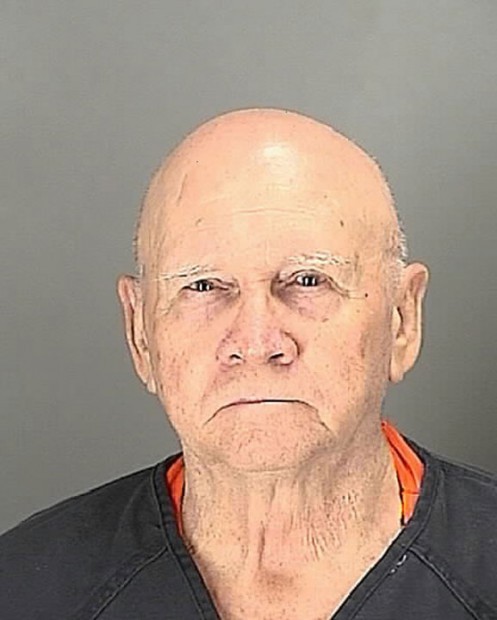
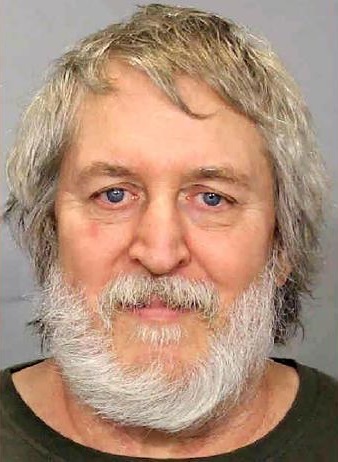
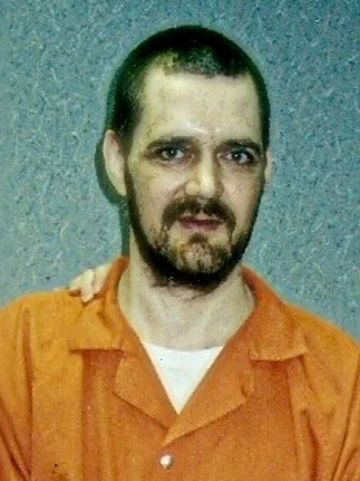
Roy Allan Melanson: The Crimes of a Traveling Serial Killer
Overview
Roy Allan Melanson was an American serial killer, rapist, burglar, con artist and drifter whose violent criminal history extended across several states and several decades. Born on February 13, 1937, in Breaux Bridge, Louisiana, Melanson repeatedly moved between communities, used false stories to gain trust and preyed upon women whenever an opportunity presented itself. His transient lifestyle made it difficult for investigators in different jurisdictions to recognize that some of their unsolved crimes might have been connected to the same man.
Melanson was conclusively linked to the murders of three women: Anita Fagiani Andrews in California, Michele Cecile Wallace in Colorado and Charlotte Lily Sauerwin in Louisiana. He was convicted of murdering Andrews and Wallace, while DNA evidence identified him as the perpetrator in Sauerwin’s murder after authorities reopened her cold case. He was also considered the leading suspect in the disappearance and presumed murder of Pauline Lorraine Klumpp in Texas. Investigators examined other unsolved cases because of Melanson’s extensive travels, history of sexual violence and repeated presence near women who disappeared or were murdered.
Early Criminal History
Long before Melanson was identified as a serial killer, he had accumulated a serious criminal record involving burglary, theft and sexual assault. He was arrested as early as the 1950s and later served prison time in Texas for rape. His repeated incarcerations did not end his violent behavior. Whenever he was released, he returned to drifting, manipulating people and committing new crimes.
Melanson often presented himself as friendly, knowledgeable and helpful. He reportedly claimed experience in occupations such as ranch work, construction and land development, depending on what would make him appear useful or trustworthy. This ability to create convincing stories became one of his most dangerous weapons. Several women associated with his cases encountered him in ordinary public places or accepted his offer of assistance without realizing that he had a long history of predatory violence.
Confirmed and Suspected Victims
- Anita Fagiani Andrews, 51 — July 10, 1974 — Napa, California: Andrews was attacked and murdered inside Fagiani’s Cocktail Lounge, the family-owned bar she operated in downtown Napa. Her body was discovered on the morning of July 11, 1974. DNA evidence later connected Melanson to the crime, and he was convicted of her murder in 2011.
- Michele Cecile Wallace, 25 — August 30, 1974 — Gunnison County, Colorado: Wallace disappeared after giving Melanson a ride while traveling near Gunnison. Her remains were recovered in a remote mountainous area on August 8, 1992. Melanson was convicted of her murder in 1993.
- Charlotte Lily Sauerwin, 24 — August 5–6, 1988 — Walker, Louisiana: Sauerwin was last seen alive at a laundromat on August 5, 1988, speaking with a man later identified as Melanson. Her body was discovered near the laundromat on August 6. DNA evidence eventually established Melanson as her killer.
- Pauline Lorraine Klumpp, 51 — Disappeared July 2, 1988 — Port Arthur and Port Acres, Texas: Klumpp was last seen leaving with Melanson after asking for assistance with an air conditioner and a television. Her body has never been found, and no date of death has been legally established. Authorities considered Melanson the principal suspect in her disappearance and presumed murder.
The Murder of Anita Fagiani Andrews
Anita Fagiani Andrews was a 51-year-old mother who worked at Napa State Hospital and also helped operate Fagiani’s Cocktail Lounge, a bar established by her family. On the night of July 10, 1974, she was tending the bar as closing time approached. A stranger remained inside the establishment after most of the other customers had left. Investigators later concluded that the stranger was Roy Melanson.
The following morning, Andrews’ sister entered the bar and found Anita’s body on the floor. Andrews had been sexually assaulted and subjected to an exceptionally violent attack. She had been stabbed repeatedly with a screwdriver, and her throat had been cut. Her Cadillac Eldorado was missing, indicating that the killer had taken the vehicle after the murder.
The crime scene contained several potentially important pieces of evidence, including fingerprints and a cigarette butt. However, forensic technology available in 1974 could not identify the killer. The murder remained unsolved for more than three decades, causing Andrews’ family to live without a definitive answer as investigators preserved the remaining evidence.
After Melanson’s DNA was collected while he was imprisoned in Colorado, forensic analysts compared his genetic profile with biological material preserved from the Napa crime scene. The evidence connected him to Andrews’ sexual assault and murder. Melanson was transported to California and placed on trial in 2011. Prosecutors explained how he had entered the bar, waited until Andrews was isolated and then attacked her before stealing her car.
In September 2011, a jury convicted Melanson of first-degree murder. He received another life sentence, finally resolving a homicide that had remained open for approximately 37 years. The conviction demonstrated how evidence carefully preserved from an old crime scene could identify a killer decades later.
The Disappearance and Murder of Michele Cecile Wallace
Michele Cecile Wallace was a 25-year-old photographer and outdoor enthusiast who traveled through Colorado with her dog and photography equipment. On August 30, 1974, Wallace encountered Melanson and another man after their vehicle experienced mechanical trouble near Gunnison. She agreed to give them a ride. After the second man was dropped off at a bar, Wallace drove away with Melanson. She was never seen alive again.
When Wallace failed to return from her planned trip, her family reported her missing on September 3, 1974. Searchers examined the Gunnison and Crested Butte areas but were unable to locate her or her vehicle. Melanson soon emerged as a person of interest because he had been the last known person traveling with her.
Investigators learned that Melanson possessed Wallace’s belongings after she vanished. Items connected to her, including identification, camping equipment and a camera, were traced to him. He had sold or pawned some of her property. He was also associated with Wallace’s missing vehicle, providing powerful circumstantial evidence that he had taken control of her possessions after her death.
The case remained unresolved for years because Wallace’s body had not been found. During the early 1990s, Gunnison County investigators renewed their examination of the evidence. Hair recovered during the investigation was compared with samples associated with Wallace, helping authorities narrow the area where they believed her remains had been abandoned.
On August 8, 1992, searchers discovered Wallace’s skeletal remains off a remote mountain road. The condition of the remains prevented investigators from determining a precise cause of death, but the location of the body and the evidence involving her property supported the prosecution’s contention that Melanson had killed her shortly after she gave him a ride.
Melanson was tried in Colorado in 1993. Prosecutors argued that he intended to sexually assault Wallace and killed her when she resisted. They presented testimony about the final ride, his possession of her property and the recovery of her remains. He was convicted of first-degree murder and sentenced to life imprisonment on September 1, 1993.
The Disappearance of Pauline Lorraine Klumpp
Pauline Lorraine Klumpp disappeared from the Port Arthur area of Texas on July 2, 1988. At the time, she owned a rental property in Port Acres that was occupied by people associated with Melanson. Klumpp reportedly needed assistance with an air-conditioning problem and also planned to retrieve or transport a television. Melanson offered to help her.
Witnesses placed Klumpp and Melanson together shortly before she vanished. She did not return home, and her family could not contact her. When her husband returned from an out-of-town job, he found circumstances suggesting that she had left unexpectedly. A pot of food had reportedly remained on the stove for an extended period, indicating that she had intended to return but never did.
Klumpp’s automobile was located several days later behind a grocery store. The television was still inside, but Klumpp was missing. No confirmed sighting of her occurred after July 2, and her remains have never been recovered. Because a body was not found, investigators could not establish a cause or exact date of death.
Melanson became the leading suspect because he was among the last people known to have been with Klumpp, had a history of sexual violence and was later connected to other murders. Her disappearance occurred only weeks before the murder of Charlotte Sauerwin in neighboring Louisiana. Despite the suspicions surrounding Melanson, he was never prosecuted in Klumpp’s case, and her disappearance remains officially unresolved.
The Murder of Charlotte Lily Sauerwin
Charlotte Lily Sauerwin was a 24-year-old woman living in Walker, Louisiana. She was engaged to Vincent LeJeune, and the couple hoped to obtain land and build a home together. On August 5, 1988, Sauerwin went to a laundromat in Walker. While there, she spoke about her plans and the financial difficulties involved in purchasing land.
Melanson overheard the conversation and approached Sauerwin with a convincing story. He claimed to be involved in land development and suggested that he could offer her an affordable property. His apparent friendliness and detailed promises allowed him to gain her attention without immediately causing suspicion.
After the other patrons left the laundromat, Sauerwin was sexually assaulted and murdered. She was strangled, and her throat was cut. Her body was dragged from the laundromat area and left near a shed. It was discovered on August 6, 1988. Money was missing, causing the case to be investigated as both a robbery and a homicide.
Witnesses remembered seeing Sauerwin talking with an unfamiliar man. Investigators developed a description, but the killer was not identified at the time. The case remained unsolved for more than 20 years until detectives revisited the physical evidence and used modern DNA testing.
The genetic profile recovered from Sauerwin’s case matched Roy Melanson. Investigators also discovered that he had been in the Walker area when the murder occurred. The DNA evidence, his location and his method of approaching women through deception established him as Sauerwin’s killer. Because Melanson was already serving life sentences, prosecutors did not complete a separate murder trial before his death.
Capture and the Use of Forensic Evidence
Melanson was arrested in Kentucky in January 1992 on burglary and other charges. By then, investigators in Colorado had renewed their efforts to solve Michele Wallace’s disappearance. The property Melanson had possessed after Wallace vanished, along with witness testimony and the eventual discovery of her remains, provided the foundation for his Colorado murder prosecution.
His 1993 conviction removed him from society, but it did not immediately reveal the full extent of his crimes. Years later, laws requiring convicted offenders to provide DNA samples allowed investigators to enter Melanson’s genetic profile into law-enforcement databases. Cold-case detectives in California and Louisiana were then able to compare his DNA with biological evidence preserved from old murder scenes.
The resulting matches identified Melanson as the man who murdered Anita Andrews and Charlotte Sauerwin. These findings transformed him from a convicted murderer in one state into a recognized interstate serial killer. Investigators in other jurisdictions subsequently reviewed unsolved murders, sexual assaults and disappearances that occurred in places where Melanson had lived or traveled.
Modus Operandi and Pattern of Violence
Melanson did not rely on one rigid method of approaching his victims. Instead, he adapted his story to the situation. He accepted a ride from Michele Wallace, apparently offered assistance to Pauline Klumpp and presented himself as a land developer to Charlotte Sauerwin. In each instance, he used ordinary conversation and an appearance of helpfulness to place himself near a woman who had no immediate reason to recognize him as a threat.
Sexual violence was a central feature of his criminal behavior. Andrews and Sauerwin were sexually assaulted before they were murdered, and prosecutors believed that Wallace was killed during an attempted sexual attack. Melanson’s earlier rape convictions further demonstrated that his murders were part of a much longer pattern of predatory conduct.
He also stole property from his victims. Andrews’ Cadillac disappeared after her murder, Wallace’s car and personal possessions came into his control, and money was apparently taken during the Sauerwin crime. These thefts served both practical and opportunistic purposes, allowing Melanson to obtain transportation and money while distancing himself from the crime scenes.
Imprisonment and Death
After his Colorado conviction, Melanson remained incarcerated and repeatedly attempted to obtain release. His later California conviction added another life sentence and made the possibility of freedom increasingly remote. He continued to deny responsibility and did not provide investigators with a complete account of his movements or crimes.
Roy Allan Melanson died on May 22, 2020, at the Colorado Territorial Correctional Facility in Cañon City, Colorado. He was 83 years old and remained imprisoned at the time of his death. His death prevented authorities from questioning or prosecuting him further in cases such as the disappearance of Pauline Klumpp.
Unanswered Questions and Legacy
The known cases reveal a killer who was active across widely separated states and capable of avoiding detection for many years. His criminal record, frequent travel and ability to assume different identities or occupations have led investigators and researchers to suspect that he may have committed additional assaults and murders that were never connected to him.
Melanson was conclusively tied to three murdered women, but only two of those cases resulted in murder convictions. Pauline Klumpp remains missing, and her family never received the certainty that could have come from locating her remains or obtaining a confession. Other unsolved crimes from communities Melanson visited may never be definitively attributed to him because evidence was lost, degraded or never collected.
The investigations into Roy Allan Melanson demonstrate the importance of preserving physical evidence and sharing information between jurisdictions. Anita Andrews and Charlotte Sauerwin were murdered decades before DNA technology could identify their attacker, yet evidence saved from their crime scenes ultimately exposed him. Although Melanson avoided responsibility for much of his life, forensic science eventually established that the apparently unrelated murders of women in California, Colorado and Louisiana were connected to the same traveling predator.