Israel Keyes: The Calculated Crimes of a Traveling Serial Killer
Overview
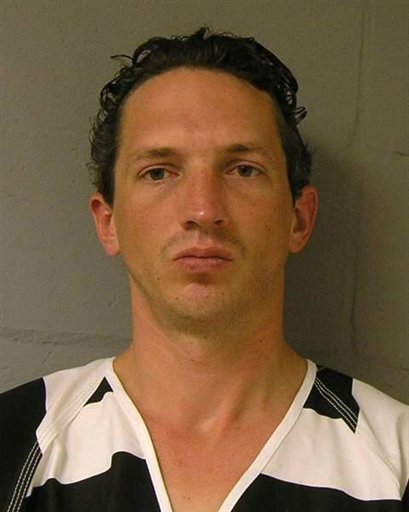
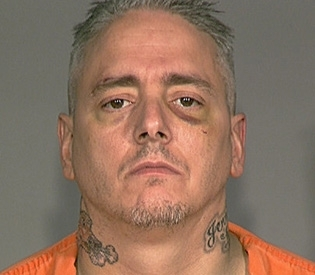
Israel Keyes was an American serial killer, kidnapper, bank robber, burglar, and arsonist whose crimes stretched across the United States. Born on January 7, 1978, Keyes carefully concealed his violent activities behind the appearance of an ordinary working life. He served in the United States Army, worked as a construction contractor, maintained relationships, and raised a daughter while secretly traveling thousands of miles to search for victims.
Unlike many serial killers who operated in one city or targeted people within a recognizable group, Keyes deliberately selected strangers in locations far from his home. Investigators found that he traveled by airplane, rented vehicles, crossed state lines, and sometimes drove hundreds of miles before committing a crime. He claimed that he began killing during the early 2000s and told investigators that his victims included both men and women of different ages.
Keyes admitted killing Samantha Koenig in Alaska and Bill and Lorraine Currier in Vermont. The FBI believed that he was responsible for approximately eleven murders, although most of his suspected victims have never been conclusively identified. His death in federal custody on December 2, 2012, prevented investigators from obtaining complete confessions or locating the remains of several possible victims.
Planning and Murder Kits
One of the most disturbing features of Keyes's crimes was the amount of preparation involved. He assembled containers that investigators described as murder kits or caches. These kits could contain firearms, ammunition, knives, rope, tape, plastic ties, shovels, chemicals, money, and other materials useful for kidnapping, killing, and disposing of a body.
Keyes buried or concealed these containers in isolated locations, sometimes years before returning to use them. This allowed him to travel without carrying suspicious equipment through airports or leaving an obvious trail of purchases immediately before a crime. Investigators recovered caches connected to him in New York and Alaska, while Keyes claimed that other containers had been hidden elsewhere in the country.
He attempted to separate his movements from his crimes by purchasing airline tickets, renting vehicles, and then driving long distances away from his arrival point. He also avoided choosing victims with whom he had a personal connection. According to the account he gave investigators, he often searched parks, campgrounds, boat launches, cemeteries, remote roads, and trailheads for vulnerable strangers.
Confirmed Victims
- William “Bill” Currier, age 49 — June 8, 2011 — Essex, Vermont: Keyes selected the Currier residence after observing the property and concluding that the couple lived without children. During the early morning hours, he entered their home while carrying a firearm and restraints. He forced Bill and Lorraine Currier into their own vehicle and drove them to an abandoned farmhouse in Essex. Bill attempted to resist and was shot to death. Keyes later confessed to the murder and provided investigators with information about the crime scene.
- Lorraine Currier, age 55 — June 8, 2011 — Essex, Vermont: Lorraine was abducted from her home with her husband and taken to the abandoned farmhouse. Keyes restrained and sexually assaulted her before strangling her. He left both victims inside the building, which was later demolished. Investigators searched a Vermont landfill because material from the demolished house had been transported there, but the Curriers’ remains were never recovered.
- Samantha Koenig, age 18 — February 2, 2012 — Anchorage, Alaska: Keyes abducted Koenig from the Common Grounds coffee stand on Tudor Road shortly before closing on February 1, 2012. Armed with a gun, he forced her from the kiosk and took her to a shed on his property. Federal charges stated that he intentionally killed her early the following morning. Keyes then left Alaska on a previously planned trip and returned several weeks later. He attempted to create the appearance that Koenig was still alive by photographing her body with a recent newspaper and demanding ransom money. Her remains were recovered from Matanuska Lake on April 2, 2012.
The Murders of Bill and Lorraine Currier
Keyes later described the Currier murders in lengthy interviews with investigators. He had flown from Anchorage to Chicago on June 2, 2011, rented a vehicle, and driven east. Years earlier, he had hidden a murder kit near Blake Falls Reservoir in New York. After retrieving equipment from the cache, he traveled through Vermont and began searching for a suitable target.
During the night of June 7 and the early morning of June 8, he noticed the Curriers’ home in Essex. He later said the house appeared to have an attached garage and no signs that children were living there. After cutting the telephone line, he entered the residence and confronted the sleeping couple. He bound them, placed them in their vehicle, and transported them to an abandoned farmhouse that he had previously noticed.
Inside the farmhouse, Bill Currier broke free or attempted to fight back. Keyes shot him several times. Lorraine was taken to another area of the building, where Keyes sexually assaulted and strangled her. He concealed their bodies in the basement before leaving. The farmhouse was demolished before investigators connected Keyes to the case, and its debris was taken to a landfill. Despite an extensive search involving federal, state, and local authorities, the Curriers’ remains were not found.
Keyes discarded weapons associated with the crime in Blake Falls Reservoir. Information supplied during his confession allowed the FBI to recover firearms and locate the nearby cache. His detailed knowledge of the Curriers’ house, vehicle, abduction, and the abandoned property convinced authorities that his confession was genuine.
The Abduction and Murder of Samantha Koenig
On the evening of February 1, 2012, Samantha Koenig was working alone at the Common Grounds coffee kiosk in Anchorage. Keyes approached the stand shortly before closing and ordered a drink. He then displayed a firearm, entered the kiosk, turned off the lights, and demanded money. He forced Koenig outside and across the road to his pickup truck.
Keyes took her debit card and obtained its personal identification number. He also stole a debit card connected to an account shared by Koenig and her boyfriend. He transported Koenig to his Anchorage property, where he confined her inside a shed. According to the federal indictment, he killed her early on February 2.
Keyes had already planned to leave Alaska for a family trip. He placed Koenig’s body in a concealed area of the shed and flew to New Orleans, where he departed on a cruise. After returning to Alaska, he removed her body from its hiding place. He applied makeup, arranged her hair, and sewed her eyes open before taking a photograph designed to make her appear alive. A recent newspaper was placed in the image as false proof that she remained a living hostage.
Using Koenig’s telephone, Keyes sent ransom instructions to her family. Money was deposited into the account linked to the stolen debit card. Keyes then dismembered Koenig’s body and placed her remains in Matanuska Lake near Palmer, Alaska. As he traveled through the southwestern United States, he withdrew ransom money from automated teller machines in Alaska, New Mexico, Arizona, and Texas.
The withdrawals created a trail that investigators could follow. Surveillance photographs showed a masked individual using Koenig’s card, while transaction records revealed the direction of travel. On March 13, 2012, Texas Highway Patrol officers stopped Keyes near Lufkin, Texas. Authorities found Koenig’s debit card and other evidence in his possession. He was arrested and transported back to Alaska.
The Unidentified East Coast Victim
Keyes admitted that on April 9, 2009, he abducted a woman somewhere on the East Coast and transported her across state lines into New York. He said that he killed the woman and buried her near Tupper Lake in the Adirondack region. He refused to provide investigators with the victim’s name, and her remains have never been recovered.
The FBI investigated the possibility that this victim was Debra Feldman, a woman from Hackensack, New Jersey, who disappeared on April 8, 2009. Feldman was 48 years old when she was last seen. Keyes was traveling in the northeastern United States at the time, and the date of the murder he described closely followed her disappearance.
Investigators also learned that Keyes had searched for information about Feldman on his computer. When detectives showed him photographs of missing people, he reportedly reacted differently to Feldman’s picture and declined to discuss her. The FBI publicly identified her as a possible victim, but Keyes never confessed to killing her. Her disappearance remains unresolved, and April 9, 2009, cannot be treated as a conclusively established date of death.
- Debra Feldman, age 48 — last seen April 8, 2009 — Hackensack, New Jersey: Investigators believe she may have been the unidentified East Coast woman whom Keyes claimed to have abducted and murdered on April 9, 2009. Her body has not been recovered, and her connection to Keyes has not been conclusively proven.
Other Suspected Murders
Keyes told investigators that he had committed murders in fewer than ten states and that the total number of victims was fewer than twelve. The FBI ultimately stated that investigators believed he was responsible for approximately eleven homicides. Only the Curriers and Samantha Koenig were conclusively identified as his victims.
He claimed that one unidentified victim’s body had been recovered but that the death had been mistakenly classified as an accident. Keyes said he had arranged or moved the body so that investigators would not immediately recognize the death as a homicide. He never supplied enough information for authorities to determine which accidental-death case he was describing.
Keyes also discussed an earlier killing in Washington State. He claimed that he abducted a person from a remote area, took the victim onto a boat, and disposed of the body in deep water. Investigators examined his movements and boating activities in Washington, but no victim was conclusively identified.
Some of his trips remain especially important to investigators. During various periods between 2001 and 2012, he traveled through Washington, Oregon, California, Arizona, Utah, Wyoming, Texas, Louisiana, New York, Vermont, New Jersey, Maine, and other states. He also visited Canada, Mexico, Belize, and Egypt. Investigators could not determine whether every trip involved criminal activity.
Keyes acknowledged searching for victims during trips to remote recreation areas. He described leaving Alaska with the intention of committing murder and sometimes abandoning a plan when circumstances changed. Because he selected strangers and frequently operated far from his home, many of his possible crimes may never have been connected to one another.
Robberies, Burglaries, and Arson
Murder was only one part of Keyes’s criminal activity. He confessed to burglarizing homes, robbing banks, stealing firearms, and setting buildings on fire. These crimes sometimes supplied money and weapons for future travel. They also gave him opportunities to practice surveillance, forced entry, and escape techniques.
On April 10, 2009, one day after the unidentified East Coast murder he described, Keyes robbed a Community Bank branch in Tupper Lake, New York. The robbery occurred close to the area where he claimed to have buried the unidentified woman. He fled and continued traveling through the Northeast.
On February 16, 2012, shortly after returning from his cruise but before returning to Alaska, Keyes set fire to a house in Aledo, Texas. Later that morning, he robbed the National Bank of Texas in Azle. He then continued traveling before eventually returning to Alaska and beginning the ransom scheme involving Samantha Koenig.
Interrogations and Confessions
Following his arrest, Keyes began speaking with investigators in exchange for the possibility that his case would be handled privately and that any execution would occur quickly. He was intensely concerned about publicity and did not want his daughter to be permanently associated with his crimes.
His cooperation was inconsistent. At times, he provided precise descriptions that allowed investigators to verify crimes and recover evidence. At other times, he withheld names, altered details, or refused to discuss certain victims. He appeared to enjoy controlling how much investigators knew and became increasingly frustrated when information about the case appeared in the news.
Keyes described himself as methodical, but his final crime was less carefully separated from his personal life. By kidnapping Koenig in Anchorage, using her debit card, demanding ransom, and repeatedly withdrawing money, he created numerous pieces of evidence. His decision to operate near his own home ultimately led to his identification and arrest.
Death in Custody
Israel Keyes was held at the Anchorage Correctional Complex while awaiting trial on federal charges related to Samantha Koenig’s kidnapping and murder. During the night of December 1 and the early morning of December 2, 2012, he killed himself in his cell by cutting his wrist and using bedding to strangle himself. He was found dead on December 2.
A handwritten statement was discovered beneath his body. The writing contained violent imagery but did not identify additional victims or reveal the locations of missing remains. His suicide ended the interrogations before investigators could obtain a complete account of his crimes.
Authorities later examined drawings associated with Keyes that included eleven skulls. Investigators considered the possibility that the skulls represented his claimed victim total, although the drawings did not provide enough information to identify anyone. The FBI continued comparing his travel records, financial transactions, rental vehicles, telephone activity, and computer searches with unsolved disappearances and homicides around the country.
Unanswered Questions
The full number of people murdered by Israel Keyes remains unknown. Three victims have been conclusively identified, one missing woman has been publicly discussed as a probable or possible victim, and several others remain completely unidentified. Keyes’s use of distant locations, buried equipment, cash transactions, rental cars, and randomly chosen victims made his crimes unusually difficult to connect.
His case demonstrated how a killer could exploit gaps between local jurisdictions. A disappearance in one state, a bank robbery in another, an abandoned vehicle elsewhere, and a body hidden hundreds of miles away might initially appear unrelated. Only after Keyes’s arrest were investigators able to compare his nationwide movements and recognize the possibility of a much broader series of crimes.
Although Keyes attempted to portray himself as nearly impossible to detect, his capture resulted from identifiable mistakes. The use of Samantha Koenig’s debit card created a traceable path, and the evidence found during his arrest connected him directly to her kidnapping. His final crime exposed the hidden life he had maintained for years.
Israel Keyes died without revealing the names of most of the people he claimed to have killed. For the families of unidentified or missing victims, the unanswered questions remain particularly painful. Investigators established beyond reasonable doubt that he murdered Bill Currier, Lorraine Currier, and Samantha Koenig, but the identities and burial locations of his other suspected victims remain among the most troubling unresolved elements of the case.