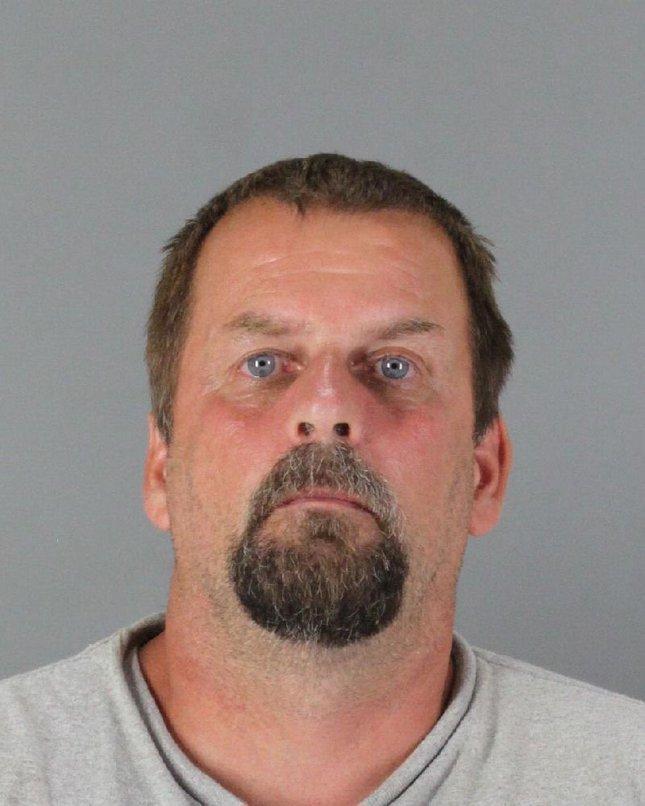
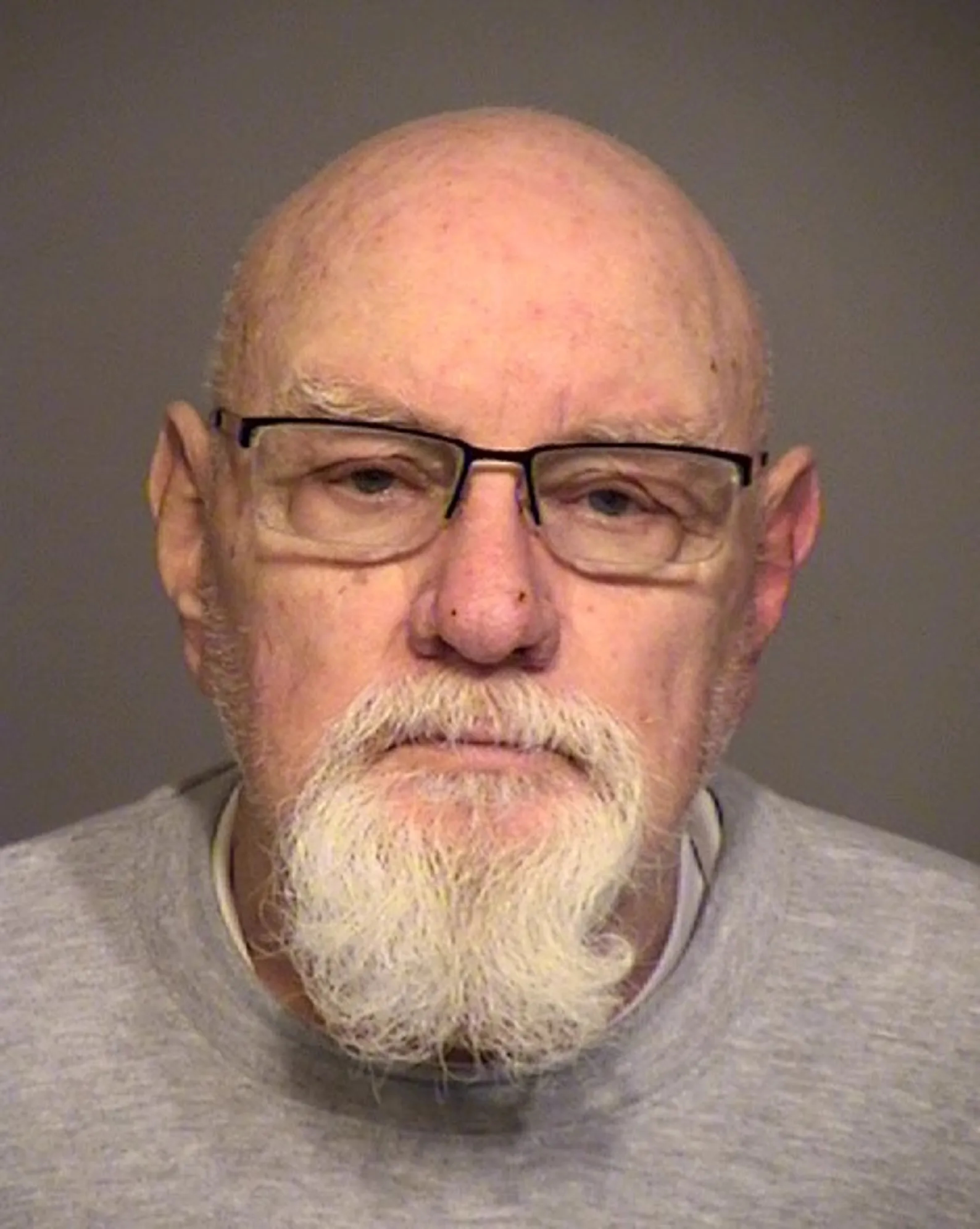
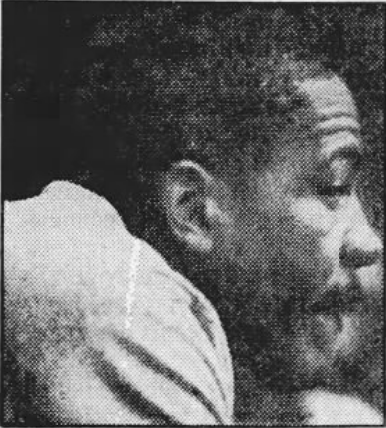
John William Kelley: The Redwood Predator
Overview
For over a quarter of a century, two separate and terrifyingly random acts of violence haunted communities at opposite ends of Northern California. In 1986, a teenage girl was found discarded on a remote roadside south of San Francisco. Less than two years later, a young married couple on a camping trip was found murdered in their van near the Oregon border. The cases shared no apparent connection and both quickly went cold, leaving families devastated and investigators without answers. The killer, John William Kelley, was hiding in plain sight. He was a local man, a husband, and later a convicted sex offender who continued to live an outwardly normal life. It was not until 2012, through the power of forensic science and a cold case grant, that a DNA match finally unmasked the predator. Kelley's arrest and subsequent confession linked the two dormant cases, revealing a serial killer who preyed on the vulnerable in moments of quiet solitude.
Early Life and Criminal History
John William Kelley was born on March 9, 1963, in Placerville, California. Details about his childhood and upbringing have not been widely publicized. His documented criminal history began when he was in his early twenties. In September 1986, Kelley was convicted in Santa Clara County of statutory rape. The conviction resulted in a minor sentence of 90 days in county jail and three years of probation. At the time, he was married and living in the small, wooded community of Ben Lomond in the Santa Cruz Mountains, the very town where he would commit his first known murder just three months after his conviction.
Kelley's predatory behavior did not end there. Years later, in May 1995, while living in Eureka, he was arrested for the forcible rape of an acquaintance. He was convicted of this violent felony and sentenced to a six-year term in state prison. As a result of this conviction, Kelley was mandated to register as a sex offender for the rest of his life and, crucially, was required to provide a DNA sample for inclusion in California's law enforcement database. After serving his sentence, he was released and eventually settled back in his hometown of Placerville. Despite being a registered offender, he was not linked to any other crimes until the cold case investigation broke open his past.
The Murder of Annette Thur
Annette Kulovitz, who used her stepfather's surname Thur, was a 17-year-old girl navigating a difficult period in her life in the fall of 1986. Her parents had recently moved to Indiana, and she had a history of running away, but she was trying to build a life for herself in Ben Lomond, where she lived with her boyfriend's family. Friends described her as smart and friendly.
On the night of December 6, 1986, Annette attended a party in Boulder Creek, a neighboring town. In the early hours of the following morning, she left the party and began hitchhiking the few miles back to Ben Lomond. It was a common practice in the small mountain communities at the time. John William Kelley, then 23 years old, was the person who stopped to pick her up.
Instead of taking her home, Kelley drove Annette to his own residence in Ben Lomond. There, he brutally raped, sodomized, and strangled her to death. After murdering her, Kelley needed to dispose of her body. He drove north, out of the Santa Cruz Mountains and into San Mateo County. He chose a desolate, winding stretch of Skyline Boulevard, a scenic road popular with tourists. He pulled over and threw her body down a steep, wooded embankment.
Just hours later, a tourist stopped at a vista point along the road to take in the view and spotted what he thought was a mannequin. It was Annette's body. The San Mateo County Sheriff's Office launched a homicide investigation, but it was quickly hampered. An initial theory suggested she might have died from a drug overdose, which clouded the early stages of the inquiry. Without any witnesses, suspects, or a clear understanding of the crime, Annette Thur's murder case went cold, leaving her family and the community with no answers for decades.
The Murders of Douglas and Rozina Anderson
Twenty months after killing Annette Thur, Kelley's predatory violence resurfaced more than 300 miles to the north. Douglas Neal Anderson, 26, and his wife, Rozina Anne Anderson, 31, were a married couple from Lake Oswego, Oregon, a suburb of Portland. In August 1988, they embarked on a camping trip, traveling south into California in their 1974 Dodge van. Their journey took them to the majestic Jedediah Smith Redwoods State Park, a serene and popular destination near Crescent City in Del Norte County.
On the night of August 14, 1988, the Andersons were parked for the night within the park's boundaries. Kelley, who was in the area, came across their van. In an act of unprovoked aggression, he began banging on the vehicle, demanding they come out. When the couple opened the doors, Kelley confronted them with a .22-caliber firearm.
The events that followed were horrific. Kelley forced Douglas Anderson to strip naked before shooting him three times, killing him. He then turned his attention to Rozina. He forced her to undress, raped her, and then shot her to death. Kelley fled the scene, leaving the couple's bodies inside their van. Their pet, a black cocker spaniel, was found tied to the vehicle's bumper.
For eight days, the van sat unnoticed. On August 22, a tourist was drawn to the vehicle by the dog and a strong, foul odor. The authorities were called, and the bodies of Douglas and Rozina Anderson were discovered. The Del Norte County Sheriff's Office determined that robbery was not the motive, as valuables were left behind. The attack appeared to be random and sexually motivated. With no witnesses and no forensic leads at the time, the investigation stalled. The shocking double homicide became another cold case, a dark mystery that lingered over the remote redwood coast.
The Victims
- Annette Kulovitz Thur, 17 — December 6, 1986, near Ben Lomond, California. A young woman trying to find her way, her life was violently cut short while she was trying to get home. She was remembered for her intelligence and friendly nature.
- Douglas Neal Anderson, 26 — August 14, 1988, in Jedediah Smith Redwoods State Park, California. A young husband from Oregon, he was on a vacation with his wife to enjoy the natural beauty of the California coast when they were senselessly attacked.
- Rozina Anne Anderson, 31 — August 14, 1988, in Jedediah Smith Redwoods State Park, California. She was murdered alongside her husband during a brutal assault that turned their camping trip into a scene of unimaginable horror.
Investigation and Capture
For more than two decades, the murders of Annette Thur and the Andersons remained unsolved mysteries filed away in cold case cabinets. The critical turning point came in 2012. The San Mateo County Sheriff’s Office, utilizing a federal grant aimed at resolving cold cases with DNA evidence, resubmitted forensic samples that had been collected from Annette Thur’s body in 1986. This time, the evidence was run through the national Combined DNA Index System (CODIS), a database that did not exist at the time of the murder.
The system returned a direct hit. The DNA profile from the crime scene matched that of John William Kelley. His DNA was in the system because of his 1995 conviction for forcible rape. Investigators now had a name.
Detectives tracked Kelley to Placerville, where he was living a quiet life. In August 2012, investigators from San Mateo and Santa Cruz counties went to his home to interview him. After the interview, they arrested the 49-year-old Kelley for the kidnapping, rape, and murder of Annette Thur.
While Kelley was in custody in San Mateo County awaiting trial, investigators from the Del Norte County District Attorney's Office traveled to question him about the still-unsolved 1988 murders of Douglas and Rozina Anderson. During the interview, Kelley made a full confession to the double homicide. He provided investigators with chillingly accurate details about the crime scene and the sequence of events—facts that had never been released to the public and that only the killer could have known. His confession was reportedly part of an agreement to remove the death penalty as a possible sentence for the Anderson murders.
Trial and Sentence
John William Kelley's journey through the justice system began in San Mateo County. He was charged with first-degree murder with the special circumstances of committing the murder during the acts of kidnapping, forcible rape, and forcible sodomy. As his trial was scheduled to begin on July 1, 2015, Kelley made a last-minute decision to change his plea. He pleaded "no contest" to the first-degree murder of Annette Thur and admitted to the special circumstances. This plea is the legal equivalent of a guilty plea.
On December 11, 2015, nearly 29 years to the day after he killed Annette, Kelley was formally sentenced in San Mateo County Superior Court. He received a sentence of life in prison without the possibility of parole.
Following this conviction, Kelley was extradited to Del Norte County to face justice for the murders of Douglas and Rozina Anderson. In January 2016, he was sentenced for those crimes. He received two additional and consecutive sentences of life in prison without the possibility of parole, one for each victim. During the sentencing, the judge condemned Kelley's actions, calling them "horrific, brutal, and shocking." Kelley is currently serving his three life sentences at the California Correctional Institution in Tehachapi.
Aftermath and Legacy
The capture and conviction of John William Kelley brought a long-overdue resolution to the families of Annette Thur, Douglas Anderson, and Rozina Anderson. For decades, they lived with the pain of not knowing who had taken their loved ones from them or if justice would ever be served. The case is a testament to the relentless work of cold-case detectives and the transformative power of DNA technology. Without the CODIS database, Kelley might never have been identified as the killer.
His case also serves as a chilling reminder of how violent predators can blend into society. Kelley was married at the time of his first murder and lived for years among neighbors who had no idea of the violence he was capable of. Even after being convicted and registered as a sex offender for a separate crime, his connection to the three murders remained hidden. The resolution of these cases underscores the importance of preserving evidence and the hope that even after decades of silence, the truth can finally be brought to light.