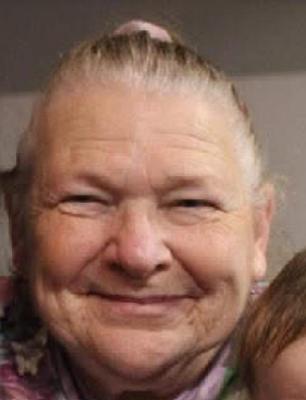
Annette Kulovitz Thur was a bright and friendly 17-year-old finding her way in the world. Known to use her stepfather's last name, Thur, she was living with her boyfriend's family in the small community of Ben Lomond, California, nestled in the Santa Cruz Mountains. Though intelligent, she had a history of running away and chose to remain in California when her parents relocated to Indiana for a lower cost of living.
Her life, full of teenage complexities and future possibilities, was violently extinguished in the early morning hours of December 6, 1986.
On that Saturday, Annette had attended a party in the nearby town of Boulder Creek. Needing a ride home after midnight, she decided to hitchhike, a common practice in the area at the time. It was a decision that placed her in the path of 23-year-old John William Kelley, a married man who had recently settled in Ben Lomond. He picked her up, but instead of taking her home, he drove her to his own residence. There, he raped, sodomized, and strangled the teenager to death. To conceal his crime, Kelley drove her body to a remote spot along Skyline Boulevard in San Mateo County and dumped her on an embankment.
Hours later, a tourist admiring the scenery discovered Annette's body. The initial investigation was hampered by a misleading theory; police first suspected she might have died from a drug overdose and that her friends had panicked and abandoned her body. Though this was quickly ruled out, investigators had no viable suspects, and with limited evidence, the case grew cold. For more than two decades, Annette’s murder remained a painful, unanswered question for her family and the community, a chilling local mystery with no resolution in sight.
The break in the case came 26 years later, a result of advancements in forensic science. In 2012, cold-case investigators with the San Mateo County Sheriff's Office received federal funds to re-examine evidence. They submitted DNA recovered from the crime scene to the national CODIS database. The result was a direct match to John William Kelley, whose DNA was on file from a 1995 forcible rape conviction in Eureka, for which he served six years in prison and was required to register as a sex offender. In fact, just three months before killing Annette, Kelley had been convicted of statutory rape in Santa Clara County and served 90 days in jail.
Detectives located Kelley, then living in Placerville, California, and arrested him in August 2012. Faced with the irrefutable DNA evidence, Kelley’s path to justice was swift. In July 2015, as his trial was set to begin, he entered a no-contest plea to first-degree murder with the special circumstances of committing the murder during a forcible rape and forcible sodomy. He was sentenced to life in prison without the possibility of parole for the murder of Annette Thur.
While incarcerated, Kelley made a startling confession. He admitted to two other unsolved murders, providing investigators with details only the killer could have known. In August 1988, he had murdered Douglas and Rozina Anderson, a young couple camping in Jedediah Smith Redwoods State Park. Kelley shot Douglas, then raped and shot Rozina. For these crimes, he received two additional life sentences without parole. John William Kelley, a serial killer who had evaded justice for decades, is now imprisoned at the California Correctional Institution in Tehachapi, where he will spend the rest of his life.