Unknown: The Zodiac Killer
Overview
The Zodiac Killer is the pseudonym of an unidentified serial killer who terrorized Northern California in the late 1960s. He is confirmed to have murdered five people and attacked two others who survived in Benicia, Vallejo, Napa County, and San Francisco between December 1968 and October 1969. The killer's moniker originated from a series of taunting letters and cards he sent to regional newspapers, which he often signed with a cross-circle symbol. In these communications, which continued until 1974, he claimed responsibility for as many as 37 murders, a number that has never been substantiated.
The case is infamous for the killer's brazen interaction with the media and law enforcement, including four complex ciphers he sent with his letters, two of which remain unsolved. He targeted young couples in secluded areas and a lone cab driver in a wealthy urban neighborhood, using both a gun and a knife. Despite an intense investigation that has spanned more than five decades and considered over 2,500 potential suspects, the Zodiac's identity remains one of the most enduring mysteries in American criminal history. The case remains officially open in multiple jurisdictions.
First Murders: Lake Herman Road
The Zodiac's reign of terror began on the night of December 20, 1968, on a remote, dark stretch of Lake Herman Road, a local lovers' lane just inside the city limits of Benicia, California. The victims were high school students David Arthur Faraday, 17, and Betty Lou Jensen, 16. It was their first official date. After visiting a friend, the couple parked Faraday's Rambler station wagon in a gravel turnout around 10:15 p.m.
At approximately 11:10 p.m., another car pulled up beside them. The attacker fired several shots from a .22 caliber pistol into Faraday's car, likely to force the couple out. As they exited through the passenger door, Faraday was shot once in the head at point-blank range. Jensen attempted to flee, but the killer shot her five times in the back. A passing motorist discovered their bodies shortly after and alerted police. Betty Lou Jensen was dead at the scene; David Faraday was pronounced dead on the way to the hospital. The motive was baffling, as there was no evidence of robbery or sexual assault. The Solano County Sheriff's Department led an intensive investigation, but with no witnesses and few clues, the case quickly went cold.
Attack at Blue Rock Springs
Seven months later, the killer struck again. Shortly after midnight on July 5, 1969, Darlene Elizabeth Ferrin, 22, and Michael Renault Mageau, 19, were sitting in Ferrin's car in the parking lot of Blue Rock Springs Park in Vallejo, only a few miles from the first murder scene. Another car pulled into the lot, left, and then returned minutes later, parking behind them. The driver exited, approached the passenger side of Ferrin's car shining a bright light, and opened fire with a 9mm pistol without saying a word.
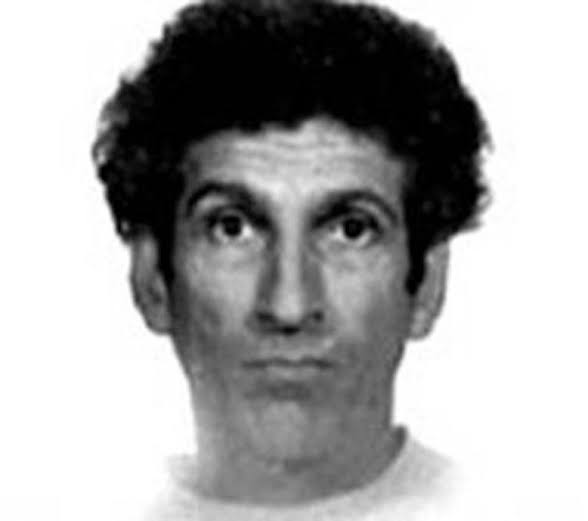
Both Ferrin and Mageau were shot multiple times. After firing five shots, the attacker started to walk away, but when Mageau cried out in pain, the man returned and fired two more shots into each victim before driving off. Darlene Ferrin, a popular local waitress and mother, was pronounced dead on arrival at the hospital. Michael Mageau was critically wounded with shots to his face, neck, and chest, but he survived the attack. He described the attacker as a short, heavyset white male with a large face and curly, light-brown hair.
At 12:40 a.m., about 40 minutes after the shooting, a man called the Vallejo Police Department from a payphone. In a calm, monotone voice, he claimed responsibility for the attack and, for the first time, linked it to the Lake Herman Road murders. "I also killed those kids last year," he told the dispatcher before hanging up.
The "Zodiac" Emerges
On August 1, 1969, the killer escalated his campaign of terror. He mailed nearly identical letters to three Bay Area newspapers: the *Vallejo Times-Herald*, the *San Francisco Chronicle*, and the *San Francisco Examiner*. In these badly-spelled letters, he took credit for the two attacks, providing details that only the killer could have known. Each letter contained one-third of a 408-symbol cryptogram, which he claimed held his identity. He demanded the papers publish the ciphers on their front pages, threatening to go on a "kill rampage" if they refused.
On August 4, another letter arrived at the *Examiner*, beginning with the chilling salutation, "This is the Zodiac speaking." It was the first time the killer used the name that would make him infamous. On August 8, a Salinas schoolteacher, Donald Harden, and his wife, Bettye, solved the 408-symbol cipher. It did not reveal the killer's name. Instead, it was a rambling, misspelled message about the thrill of killing and his belief that his victims would be his slaves in the afterlife. The last eighteen characters have never been deciphered.
Terror at Lake Berryessa
The Zodiac's next attack was his most theatrical and brutal. On the afternoon of September 27, 1969, Pacific Union College students Bryan Calvin Hartnell, 20, and Cecelia Ann Shepard, 22, were picnicking on a secluded peninsula at Lake Berryessa in Napa County. They were approached by a man wearing a bizarre black executioner-style hood with clip-on sunglasses over the eyeholes and a bib on his chest decorated with the cross-circle symbol.
Brandishing a gun, the hooded man claimed to be an escaped convict who needed their car and money to flee to Mexico. He used pre-cut lengths of plastic clothesline to have Shepard tie up Hartnell before he bound her. Hartnell initially believed it was a strange robbery, but the man then drew a long knife and stabbed both of them repeatedly. Hartnell was stabbed six times in the back, and Shepard ten times. The attacker then walked calmly away.
Before leaving, the killer used a black marker to draw his cross-circle symbol on Hartnell's car door, writing the dates of his previous attacks and "Sept 27 69 6:30 by knife" beneath it. At 7:40 p.m., he called the Napa County Sheriff's Office from a payphone, reporting a "double murder" and describing the location and vehicle. A fisherman heard the victims' screams and alerted park rangers. Both were alive but in critical condition. Cecelia Shepard succumbed to her injuries two days later, but Bryan Hartnell survived and provided a detailed account of the terrifying ordeal.
Murder in Presidio Heights
The Zodiac's final confirmed murder occurred two weeks later in a completely different setting. On the night of October 11, 1969, Paul Lee Stine, a 29-year-old cab driver, picked up a passenger in San Francisco's theater district. The fare directed Stine to the upscale neighborhood of Presidio Heights, at the corner of Washington and Cherry Streets. There, at approximately 9:55 p.m., the passenger shot Stine once in the head with a 9mm pistol, took his wallet and keys, and tore a piece from his shirt.
Three teenagers in a house across the street witnessed the aftermath of the shooting. They saw the man wiping down the cab before walking away. They called the police, but a critical error occurred when the dispatcher mistakenly broadcast that the suspect was a Black male. As a result, two patrol officers who passed a heavyset white man walking nearby just minutes after the murder did not stop him. It is widely believed this man was the Zodiac.
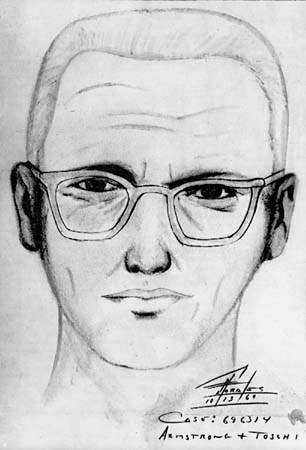
Two days later, the *San Francisco Chronicle* received a letter from the Zodiac claiming responsibility for Stine's murder. Enclosed was the bloody piece of Paul Stine's shirt as proof. In the letter, he mocked the police for failing to catch him and made a new, terrifying threat to attack a school bus and "pick off the kiddies as they come bouncing out." The description from the teenage witnesses led to the creation of the now-famous composite sketch of a bespectacled man with a crew cut.
The Victims
The Zodiac Killer's confirmed attacks left five people dead and two with serious injuries. They were young people with full lives ahead of them, whose futures were stolen in moments of senseless violence.
- David Arthur Faraday, 17 — On December 20, 1968, in Benicia, David, a responsible and well-liked Vallejo High School senior and Eagle Scout, was on his first date with Betty Lou Jensen when he was shot and killed.
- Betty Lou Jensen, 16 — On December 20, 1968, in Benicia, Betty Lou, a popular and talented honor student at Hogan High School, was murdered alongside David Faraday. It was the first date her parents had ever allowed her to go on.
- Darlene Elizabeth Ferrin, 22 — On July 5, 1969, in Vallejo, Darlene was a vibrant wife, mother, and popular waitress who was enjoying an evening out with a friend when she was fatally shot.
- Cecelia Ann Shepard, 22 — On September 29, 1969, in Napa County, Cecelia, a gifted music major at the University of California, Riverside, died from her injuries two days after being brutally stabbed while picnicking at Lake Berryessa.
- Paul Lee Stine, 29 — On October 11, 1969, in San Francisco, Paul was a dedicated cab driver who was working to support himself while studying for a doctorate degree when he was shot and killed by his passenger.
Two men survived the Zodiac's attacks: Michael Mageau, who was shot four times at Blue Rock Springs, and Bryan Hartnell, who was stabbed six times at Lake Berryessa. Their testimony provided law enforcement with the only eyewitness descriptions of the killer.
Investigation and Suspects
The hunt for the Zodiac Killer involved multiple law enforcement agencies, including police departments in Vallejo, San Francisco, and Napa, county sheriff's offices, and the California Department of Justice. The FBI also provided assistance with cryptanalysis and evidence examination. The investigation was hampered by the killer's seemingly random selection of victims, the different jurisdictions, and the lack of forensic technology at the time.
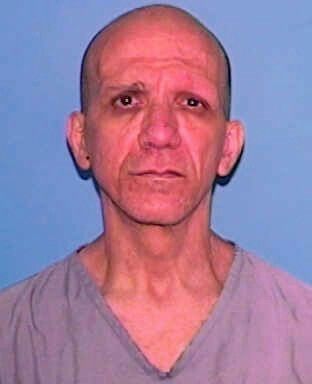
Over the years, thousands of individuals were investigated. The only suspect ever publicly named by law enforcement was Arthur Leigh Allen, a former elementary school teacher and convicted sex offender who died in 1992. Circumstantial evidence against him was compelling: a friend claimed Allen had confessed his desire to kill people and use the name "Zodiac"; he wore a Zodiac-brand watch; and he lived and worked in Vallejo near where some of the crimes occurred. Survivor Michael Mageau also identified Allen from a photo lineup years after the attack. However, physical evidence did not support his guilt. Allen's fingerprints and handwriting did not match the Zodiac's, and a partial DNA profile developed from saliva on a stamp from a Zodiac letter in 2002 did not match Allen's DNA. He was never charged.
Another potential, though highly disputed, victim is Cheri Jo Bates, an 18-year-old college student murdered in Riverside, California, on October 30, 1966, two years before the first confirmed Zodiac attack. Some investigators and journalists noted similarities in the case, and the Zodiac himself seemed to claim responsibility for the murder in a 1971 letter. However, the Riverside Police Department has consistently maintained that Bates was not a Zodiac victim and that a hoaxer admitted to writing some of the letters that attempted to link the cases.
Ciphers and Communications
The Zodiac's letters and ciphers are a defining feature of the case. Between 1969 and 1974, he sent more than 20 communications to newspapers, taunting police and seeking publicity. In addition to the solved 408-symbol cipher, he sent three others. The most famous, a 340-character cipher mailed to the *Chronicle* on November 8, 1969, remained unsolved for 51 years. In December 2020, a team of private citizens—American software engineer David Oranchak, Australian mathematician Sam Blake, and Belgian programmer Jarl Van Eycke—finally cracked it. The message read, in part: "I HOPE YOU ARE HAVING LOTS OF FUN IN TRYING TO CATCH ME... I AM NOT AFRAID OF THE GAS CHAMBER BECAUSE IT WILL SEND ME TO PARADICE ALL THE SOONER BECAUSE I NOW HAVE ENOUGH SLAVES TO WORK FOR ME." Two shorter ciphers remain unsolved.
Aftermath and Legacy
The Zodiac Killer was never caught, and no definitive evidence has ever surfaced to identify him. The San Francisco Police Department marked the case "inactive" in 2004 but reopened it in 2007. It remains an open case for the California Department of Justice and in the jurisdictions of Vallejo, Napa County, and Solano County.
The Zodiac's crimes and his cryptic, taunting persona have had a profound and lasting impact on popular culture. The case has been the subject of numerous books, documentaries, and television shows. It inspired fictional killers in films like 1971's *Dirty Harry* and was the subject of David Fincher's critically acclaimed 2007 film *Zodiac*, which meticulously detailed the investigation. The unsolved nature of the case continues to fuel intense interest from professional investigators and amateur sleuths alike, ensuring that the shadow of the Zodiac Killer lingers over American true crime history.