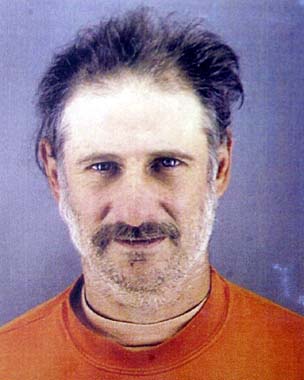
Serial Killer James "Texas Jim" Baker: Poison, Murder, and a Trail of Questionable Confessions
Overview
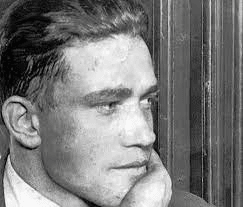
James Baker, better known as "Texas Jim" Baker, was an American murderer and self-described serial killer whose crimes came to national attention after his arrest in Michigan in 1930. Baker claimed that he had murdered numerous men in the United States and overseas, frequently describing poison as his preferred weapon. His sensational confessions made him briefly notorious, but investigators soon discovered that separating fact from fabrication was difficult. Baker exaggerated parts of his past, changed details of his stories, and appeared to enjoy the publicity generated by portraying himself as an exceptionally prolific killer.
Despite the uncertainty surrounding many of his claims, Baker was conclusively responsible for the murder of New York laboratory employee Henry S. Gaw, for which he was convicted. Investigators also developed substantial evidence connecting him to the 1929 shooting deaths of Grand Trunk Railroad Police Sergeant Walter Awe and Detroit taxi driver Otis South. Those three killings form the strongest documented core of Baker's known homicidal activity.
Early Life and Criminal Behavior
Even basic details of Baker's early life are difficult to establish because much of what became publicly known came from Baker himself. He gave conflicting accounts concerning his age, family history, upbringing, and criminal record. He was believed to have been born in Ohio during the first decade of the twentieth century and spent portions of his youth involved in theft, burglary, and other criminal behavior.
Baker eventually traveled extensively and worked aboard ships. His employment at sea later became central to his stories of murder. He claimed that during voyages through Europe, South America, India, and the Philippines he poisoned men he encountered in bars, restaurants, ports, and aboard ships. Some later accounts attempted to corroborate portions of these stories, but many of the supposed victims were never identified by name and the precise dates of their deaths cannot now be reliably established. For that reason, those cases should not be presented with the same certainty as the documented murders in New York and Michigan.
The Murder of Henry S. Gaw
Baker had previously worked at the Guggenheim Brothers Metallurgical Research Laboratory in northern Manhattan. During his employment he gained access to dangerous chemicals, including potassium cyanide. After leaving the laboratory, Baker returned during the night of December 27 into the early morning of December 28, 1928.
Henry S. Gaw, 29, was working at the laboratory that night. Gaw was a laboratory assistant and Navy veteran who had recently moved to New York. Baker later admitted that he entered the facility intending to obtain chemicals. When Gaw encountered him, Baker produced a firearm and took control of the situation.
Baker's later confession described a prolonged effort to poison Gaw with cyanide. According to the evidence and Baker's admissions, Gaw was restrained and forced to ingest cyanide. He died during the early morning of December 28, 1928. Baker then moved the body and attempted to disguise the circumstances surrounding the killing and robbery.
Two truck drivers, Elmer Mayhew and Chester McCauley, arrived at the laboratory while Baker was still there. Baker pretended to have authority at the facility before overpowering and robbing them. He tied the men up but ultimately left them alive. After freeing themselves, the drivers discovered Gaw's body and contacted authorities.
Police quickly focused on Baker because of his previous employment at the laboratory, his familiarity with its chemicals, and descriptions supplied by witnesses. By the end of December 1928, New York authorities were actively searching for him. Baker, however, had already fled the area.
The Murder of Sergeant Walter Awe
After leaving New York, Baker traveled to Michigan. During the early morning hours of January 20, 1929, Grand Trunk Railroad Police Sergeant Walter Awe, 39, was patrolling railroad property in Detroit when he encountered Baker.
A confrontation followed. Baker overpowered Awe and shot the officer with Awe's own service revolver. Sergeant Awe died from his gunshot wounds on January 20, 1929. Baker took the officer's weapon and kept it after the killing.
The revolver later became important evidence. Investigators ultimately connected the weapon found in Baker's possession to the slain railroad officer. Unlike many of Baker's overseas murder stories, the death of Walter Awe was a documented homicide involving physical evidence that supported Baker's involvement.
The Murder of Otis South
Only days after Awe's murder, Baker became involved in another robbery-related killing in the Detroit area. His victim was taxi driver Otis South.
On January 29, 1929, Baker attempted to rob South. The encounter escalated and South was shot and killed. Baker took property belonging to the victim, including a watch. Evidence concerning the stolen property later helped investigators connect Baker to the crime.
Afterward, Baker reportedly spoke about the murders of Awe and South while staying near Farmington, Michigan. A young woman named Eleanor Roy, with whom Baker had developed a relationship, eventually provided investigators with information regarding his statements. She also supplied evidence connected with South, including property or documentation associated with items Baker had taken following the killing.
Documented and Strongly Attributed Victims
- Henry S. Gaw, 29 - Died December 28, 1928, at the Guggenheim Brothers Metallurgical Research Laboratory in northern Manhattan, New York City. Gaw was forced to ingest cyanide during Baker's return to his former workplace. Baker pleaded guilty to second-degree murder for Gaw's death.
- Sergeant Walter Awe, 39 - Died January 20, 1929, in Detroit, Michigan. Awe was a Grand Trunk Railroad Police sergeant who encountered Baker while patrolling railroad property. Baker overpowered him, fatally shot him with his own service revolver, and retained the weapon.
- Otis South - Died January 29, 1929, in the Detroit, Michigan area. South was a taxi driver who was shot during a robbery. Evidence involving property taken from South and Baker's statements helped connect Baker to the homicide.
The Other Murders Baker Claimed
Baker's reputation as an unusually prolific serial killer came largely from statements he made after his arrest. He claimed to have poisoned numerous men during his travels and described killings in Texas, Germany, Venezuela, India, and the Philippines. He also claimed that several sailors died after he placed poison into alcohol while their ship was in South America.
Some contemporary investigators and later writers believed portions of those confessions may have been genuine. Other claims were demonstrably false or could not be verified. Baker was particularly prone to embellishment, and he appeared fascinated by the publicity generated by his descriptions of murder. He sometimes changed the number of people he claimed to have killed and supplied dramatic details that investigators could not independently establish.
One of his stories involved a man he identified as George Honeycutt, whom Baker claimed to have poisoned in Houston during the 1920s. He also described an unidentified German man allegedly poisoned with strychnine, three members of a ship's crew supposedly poisoned in Venezuela, and unidentified men in India and the Philippines. Because reliable exact death dates and complete identities for these alleged victims have not been established, they should be treated as claimed or disputed victims rather than included among Baker's fully documented cases.
Capture in Michigan
Baker eventually found work on a farm near Farmington, Michigan. He apparently believed that living outside Detroit would allow him to escape the attention surrounding the Gaw investigation. Instead, his own behavior contributed to his capture. Baker reportedly bragged about his strength, his criminal history, and his ability to avoid authorities. He even possessed a newspaper clipping containing information concerning the New York murder investigation.
Information about the suspicious farm worker eventually reached law enforcement. New York investigators determined that the man living near Farmington was their fugitive. On February 19, 1930, Baker was arrested.
Once in custody, Baker began talking extensively. Rather than limiting his statements to the Gaw case, he portrayed himself as a roaming poisoner who had killed men throughout the world. His attitude fascinated reporters and alarmed investigators. He appeared unusually eager to discuss homicide and frequently displayed little emotion regarding the suffering of his victims.
Confessions and Questions About His Credibility
Baker's extraordinary willingness to confess created a problem for detectives. Some of his statements contained information that could be checked, while others contradicted known records. Investigators concluded that he was capable both of murder and of elaborate fabrication.
His claims concerning Gaw, Awe, and South were supported by evidence independent of his boasting. His other stories were far more difficult to prove. Baker seemed to understand that every new confession generated another newspaper headline, and the attention appeared to encourage increasingly sensational stories.
As a result, historical estimates of Baker's victim count vary considerably. He was unquestionably convicted of one murder, strongly linked by investigators and evidence to two additional documented homicides, and claimed numerous other killings. It is possible that he killed additional people, particularly during his years traveling aboard ships, but the available record does not justify assigning precise names and death dates to victims whose identities were never securely established.
Trial and Conviction
Baker was returned to New York to face prosecution for Henry Gaw's murder. Prosecutors initially pursued a first-degree murder case that could have resulted in execution. His mental condition, however, became a significant issue. Physicians examining Baker described serious psychological abnormalities, although he was initially regarded as legally responsible for his actions.
On May 20, 1930, while jury selection for his murder trial was underway, Baker withdrew his plea of not guilty and pleaded guilty to second-degree murder in the death of Henry Gaw. The plea eliminated the possibility of an immediate first-degree murder conviction and death sentence.
On May 23, 1930, Baker was sentenced to a term of forty years to life imprisonment. He was sent to Sing Sing prison in New York.
Mental Hospital Commitment
Questions about Baker's mental health continued after sentencing. Examination of an old head injury and additional psychiatric evaluation led authorities to conclude that he was insane. After only a short period at Sing Sing, he was transferred to Dannemora State Hospital for the Criminally Insane in northern New York.
Records place Baker at the Dannemora institution as late as the 1940 United States Census. His ultimate fate is obscure, and reliable public documentation concerning the date and circumstances of his death has not been established.
Legacy
James "Texas Jim" Baker occupies an unusual place in American serial murder history because the mythology surrounding him became considerably larger than the number of murders that can now be documented with certainty. He was a convicted murderer who demonstrated a willingness to kill during robbery and had access to poisons capable of causing rapid death. Evidence also tied him to two additional killings in Michigan.
At the same time, Baker was an unreliable narrator of his own crimes. He wanted attention, exaggerated his past, and supplied investigators and reporters with stories that ranged from plausible to impossible to verify. His claims of a worldwide poisoning spree should therefore be distinguished from the documented deaths of Henry Gaw, Walter Awe, and Otis South.
The murders that can be firmly traced to Baker occurred within a little more than a year: Gaw was killed in New York on December 28, 1928, Awe was killed in Detroit on January 20, 1929, and South was killed in the Detroit area on January 29, 1929. Whatever the true total of his victims, those cases demonstrate that behind Baker's boasting and fabricated stories was a genuinely dangerous killer whose crimes crossed state lines and remained partially obscured by his own relentless attempts to turn murder into notoriety.