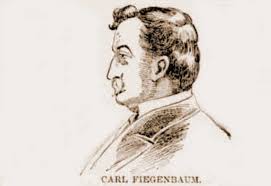
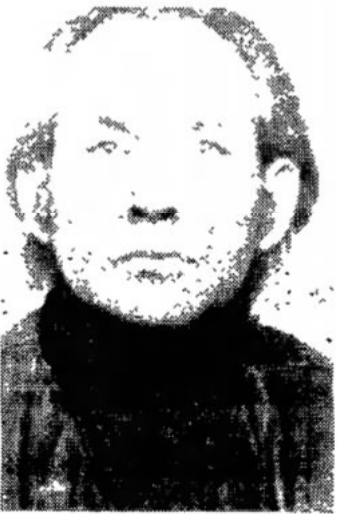
Carl Ferdinand Feigenbaum: Murderer and Suspected Serial Killer
Background
Carl Ferdinand Feigenbaum was a German-born sailor, laborer, and occasional florist who became known for a brutal murder committed in New York City. He was born around 1840 and also used the name Anton Zahn. Much of his early life is uncertain because he traveled frequently, used different names, and left few reliable records. His work as a merchant seaman may have taken him between ports in Europe and the United States.
Feigenbaum is sometimes described as a serial killer, but only one murder was ever proved against him. He was convicted of killing Juliana Hoffman in Manhattan in 1894. After his execution, one of his defense attorneys claimed that Feigenbaum had admitted to violent urges involving women. This statement led later investigators to connect him with several unsolved murders, including the Jack the Ripper killings in London. These additional accusations remain theories rather than established facts.
The Murder of Juliana Hoffman
In August 1894, Feigenbaum rented a room from Juliana Hoffman, a 65-year-old widow who lived with her teenage son, Michael, on East Sixth Street in New York City. Feigenbaum had answered an advertisement for the room and told Hoffman that he expected to begin working as a florist. He had been in the home for only a few days when the attack occurred.
During the night of August 31, 1894, Feigenbaum entered the room where Hoffman was sleeping. Armed with a large knife, he attacked her and cut and stabbed her in the neck. Michael Hoffman awoke after hearing his mother’s screams. When he entered the room, he saw Feigenbaum standing over her with the weapon.
Feigenbaum reportedly moved toward Michael with the knife, forcing the boy to escape through a window and call for help. Police officers arrived quickly and captured Feigenbaum near the building. Juliana Hoffman died from her wounds. Some later accounts listed her death as September 1 because the attack happened close to midnight, but court records identify the fatal stabbing as occurring on the night of August 31, 1894.
Investigators found strong physical and eyewitness evidence against Feigenbaum. Michael had seen the attack, Feigenbaum was arrested immediately afterward, and the murder weapon was connected to him. Feigenbaum offered conflicting explanations and denied that he had intended to kill Hoffman. Prosecutors argued that he had entered her room to rob her and murdered her when she awakened.
Trial and Execution
Feigenbaum was convicted of first-degree murder in New York. His attorneys appealed the verdict, but the New York Court of Appeals allowed the conviction to stand. He was sentenced to death and imprisoned at Sing Sing Prison in Ossining, New York.
Feigenbaum was executed in the electric chair on April 27, 1896. Shortly after the execution, defense attorney William Sanford Lawton publicly stated that he believed his former client had been responsible for other murders. Lawton said Feigenbaum had described an uncontrollable desire to kill and mutilate women. Lawton also suggested that Feigenbaum might have been Jack the Ripper, although the claim was not supported by direct evidence.
Confirmed and Suspected Victims
- Juliana Hoffman — August 31, 1894 — East Sixth Street, Manhattan, New York City: Hoffman, a 65-year-old widow and Feigenbaum’s landlady, was stabbed and cut in the neck while sleeping. Her son witnessed part of the attack and summoned the police. This is the only murder conclusively attributed to Feigenbaum.
- Mary Ann Nichols — August 31, 1888 — Buck’s Row, Whitechapel, London: Nichols was found with her throat cut and her abdomen mutilated. She is considered the first of the five generally accepted Jack the Ripper victims. Feigenbaum’s connection to her death is speculative, and there is no reliable proof that he was in London when she was killed.
- Annie Chapman — September 8, 1888 — 29 Hanbury Street, Spitalfields, London: Chapman was discovered in a backyard with her throat cut and severe abdominal mutilations. Later writers who identified Feigenbaum as a Jack the Ripper suspect included Chapman among his possible victims, but no physical or documentary evidence connects him to the crime.
- Elizabeth Stride — September 30, 1888 — Dutfield’s Yard, Whitechapel, London: Stride died from a deep cut to her throat. Her body was not mutilated in the same manner as several other Ripper victims, possibly because the killer was interrupted. The suggestion that Feigenbaum killed her depends entirely on the disputed theory that he was Jack the Ripper.
- Catherine Eddowes — September 30, 1888 — Mitre Square, City of London: Eddowes was killed less than an hour after Stride. Her throat was cut, her face and abdomen were mutilated, and organs were removed. Some Feigenbaum theories emphasize that Mitre Square was relatively close to London’s docks, but proximity to the docks does not establish that Feigenbaum was present.
- Mary Jane Kelly — November 9, 1888 — Miller’s Court, Spitalfields, London: Kelly was murdered inside her room and extensively mutilated. Her killing was the most destructive of the canonical Jack the Ripper murders. No confirmed travel, employment, or residential record places Feigenbaum at Miller’s Court or elsewhere in London on the date of her death.
- Laura Whittlesay, also known as Lottie or Lotta Morgan — April 10, 1890 — Hurley, Wisconsin: Morgan was found behind Ives’ saloon early on April 11 after apparently being killed during the previous night. She had suffered a fatal head wound, and a bloodstained axe was discovered nearby. Her murder was compared in newspapers with the Whitechapel crimes, but no evidence has been found proving that Feigenbaum was in Hurley.
- Hedwig Nitsche — October 25, 1891 — Holzmarktgasse, Berlin, Germany: Nitsche was found with her throat and abdomen cut after entering a cellar dwelling with an unidentified man. Reports described extensive injuries and stated that the attacker escaped. The murder was compared with the Jack the Ripper killings, but Feigenbaum was never formally identified as the assailant.
- Elizabeth Senior — January 31, 1892 — New Jersey: Senior, described in later accounts as a 73-year-old woman, was reportedly found in her home with her throat cut and several stab wounds. The killer was said to have robbed the property and washed his hands before leaving. The historical documentation surrounding this case is limited, and Feigenbaum’s involvement has never been proved.
Other Murders Attributed to Him
Later researchers proposed that Feigenbaum might have committed murders in Nicaragua, Switzerland, Germany, Wisconsin, New Jersey, and other locations visited by merchant vessels. One often repeated account described the murders and mutilations of several women in Managua, Nicaragua, during 1889. However, later examination of the story found that the original newspaper information was unreliable and may have been false.
A killing in or near Bern, Switzerland, in September 1890 has also been included in some lists of possible Feigenbaum crimes. The victim was described as a young married woman whose body was mutilated. Surviving information is incomplete, and her identity is not consistently reported. For that reason, she cannot responsibly be presented as a confirmed victim of Feigenbaum.
Another disputed case involved Carrie Brown, who was murdered in a New York hotel room on April 24, 1891. Brown’s killing was frequently compared with the Whitechapel murders because her body was cut and mutilated. However, Brown was killed in Manhattan, not Jersey City as some later retellings stated. A man named Ameer Ben Ali was convicted of her murder, although his conviction was later overturned. There is no verified evidence placing Feigenbaum at the hotel, so Brown cannot be reliably listed as one of his victims.
The Jack the Ripper Theory
The theory that Feigenbaum was Jack the Ripper began mainly with the statements made by William Sanford Lawton after Feigenbaum’s execution. Lawton claimed that Feigenbaum had admitted to suffering from a violent compulsion that caused him to want to kill women. Lawton believed that the cruelty of the Hoffman murder resembled the violence of the Whitechapel killings.
Modern supporters of the theory argue that Feigenbaum’s possible career as a merchant sailor could explain why similar murders appeared in different port cities. They suggest that a sailor could arrive in a city, commit a crime, and leave aboard a ship before investigators identified him. They also note that the confirmed Hoffman murder involved a knife and a sudden nighttime attack on a woman.
There are serious weaknesses in this argument. No surviving crew list, immigration document, employment record, witness statement, or police report conclusively places Feigenbaum in Whitechapel during the 1888 murders. The suspected crimes associated with him also differ greatly in method. Some involved knives, one involved an axe, and others were reported as robberies or attacks inside private homes. Similarity in brutality alone is not enough to prove that one person committed all of them.
Historical Assessment
Carl Ferdinand Feigenbaum was unquestionably a murderer, but describing him as a proven serial killer goes beyond the available evidence. His conviction for the murder of Juliana Hoffman was supported by eyewitness testimony and court proceedings. The remaining crimes attributed to him are unsolved cases selected by later writers because of their violence, their locations near ports, or their resemblance to sensational descriptions of the Jack the Ripper murders.
Feigenbaum remains an intriguing suspect because his background was poorly documented, he traveled under different names, and his lawyer described disturbing statements allegedly made in private. Nevertheless, the case against him as a traveling serial killer is circumstantial. His confirmed criminal history consists of one exceptionally brutal murder, while the larger story of an international killer rests on speculation, incomplete records, and disputed newspaper reports.