Kate Bender: The Spiritualist of the Bloody Benders
Overview
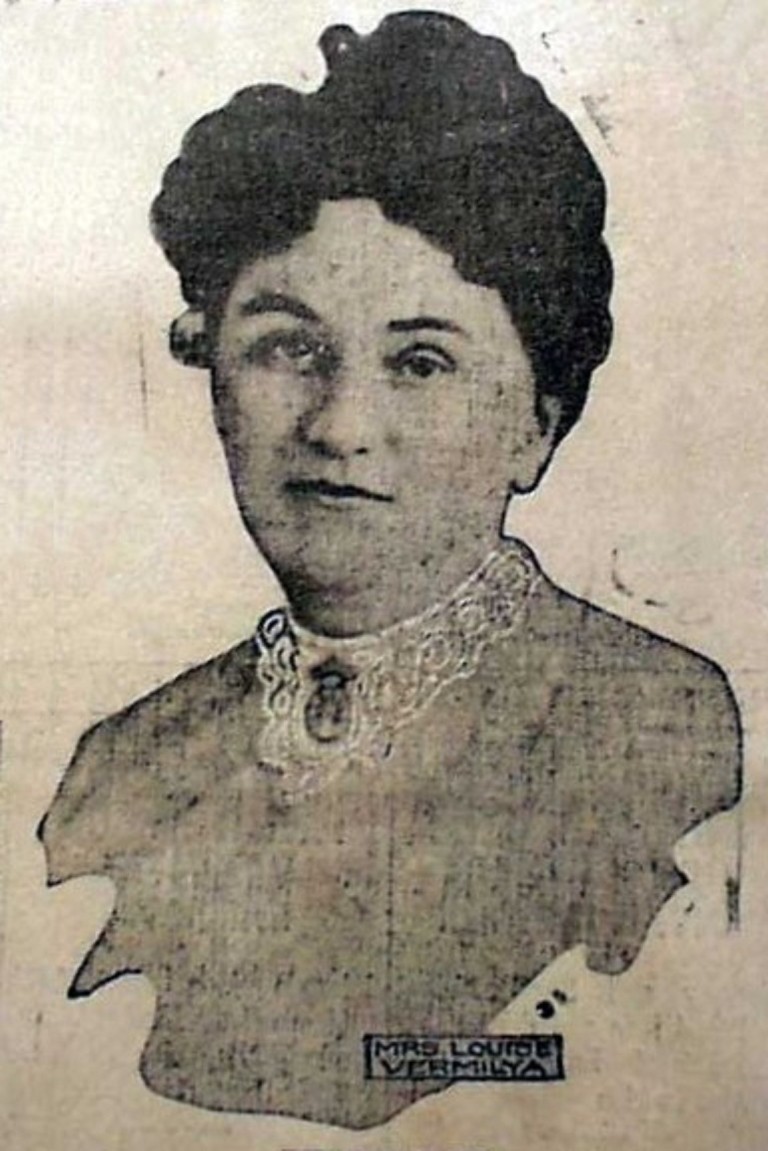
Kate Bender, commonly called Kate Bender Jr. or "Professor Miss Katie Bender," was a member of the notorious family known as the Bloody Benders, one of the earliest groups of serial killers documented on the American frontier. Kate was a young woman of about 23 or 24 when the family's crimes were exposed in 1873. She lived with three other people known as John Bender Sr., Mrs. Bender, and John Bender Jr. on an isolated homestead in Labette County, Kansas, several miles northeast of Cherryvale.
Although they presented themselves as a family, historians have never been able to establish with certainty that all four Benders were actually related. John Bender Jr. was also identified in an official 1873 description as John Gebardt. Kate was described as dark-haired, articulate, confident, and able to speak English fluently. Unlike the more withdrawn older Benders, she deliberately cultivated a public reputation and became the most socially visible member of the household.
The Benders operated a small grocery, eating place, and wayside inn beside a route used by settlers, land seekers, Civil War veterans, merchants, and other travelers moving through southeastern Kansas. Between approximately 1871 and early 1873, an unknown number of people disappeared while passing through the region. When the Bender property was searched in May 1873, investigators discovered multiple bodies and human remains buried around the homestead.
Kate Bender the Spiritualist and Healer
Kate's public persona was unusual even by frontier standards. She advertised herself as "Professor Miss Katie Bender" and claimed to possess supernatural abilities. She offered spiritualist services, promoted herself as a healer, reportedly conducted séances, and claimed that she could communicate with spirits and cure illnesses. Her advertisements promised assistance for conditions including blindness, deafness, and other ailments.
Her reputation brought strangers to the Bender cabin who might otherwise have had no reason to visit the isolated property. Kate also gave lectures on spiritualism and became well known enough that travelers and local residents sought her services. This aspect of her life later became particularly sinister because investigators believed the family's hospitality provided them with a steady supply of potential victims.
Later accounts portray Kate as an important part of the family's method of attracting and distracting travelers. She could converse easily with guests and apparently made the crude Bender establishment appear less threatening. However, because the Benders escaped before they could be arrested and no member of the family was ever tried for the murders, the precise actions of Kate during each individual killing cannot be proven.
The Bender Murder House
The Bender cabin was divided by a large canvas or wagon-cover curtain. The front portion served as the family's store and dining area, while the living quarters were behind the curtain. Beneath the floor was a trapdoor opening into a small cellar or pit. Investigators concluded that these features had been incorporated into the family's system of killing and concealing travelers.
According to the reconstruction developed after the murders were discovered, a traveler invited to eat was encouraged to sit in a particular position with his back toward the dividing curtain. While Kate or another member of the household occupied the guest's attention, one of the Bender men could approach from behind the curtain and strike the victim in the head with a hammer or similar heavy instrument.
The victim's throat was then cut, apparently to ensure death and to allow blood to drain before the body was moved. Bodies could temporarily be placed through the trapdoor into the cellar. Later, usually after darkness, the remains were carried outside and buried in the orchard, garden, or surrounding property. At least one victim was recovered from the Benders' well.
Investigators found several hammers at the property, and damage visible on recovered skulls was consistent with blows from heavy blunt instruments. Most of the adult victims discovered at or associated with the homestead showed the same general pattern of severe head injuries and wounds to the throat. The repetition of these injuries was important evidence that the deaths were not isolated crimes.
Robbery as a Motive
Money and property appear to have been major motives behind the murders. Many people traveling through Kansas at the time carried substantial sums of cash because they intended to buy land, livestock, equipment, or supplies. Banking facilities were limited, and a traveler might carry much of his savings on his person.
Several victims disappeared along with money, horses, wagons, saddles, or other valuable belongings. This led investigators and later historians to conclude that the Benders selected at least some victims because they appeared to have property worth stealing. The isolation of the homestead made the location particularly effective: a lone traveler could vanish without anyone immediately knowing exactly where he had stopped.
Known and Historically Attributed Victims
Records from the 1870s are incomplete, and later accounts do not always agree about names, spellings, ages, or exact dates. For most victims, an exact calendar date of death cannot be established. The dates below therefore use the most specific period that can be supported rather than presenting an unverified day as fact.
- William Baldwin Jones - May 1871, Drum Creek area, Labette County, Kansas: Jones, sometimes identified simply as Mr. Jones, was reportedly a stonemason or traveler carrying money connected with a land claim. His body was discovered in or near Drum Creek with a severe head injury and his throat cut. Because his remains were not found on the Bender property, his murder cannot be conclusively assigned to the family, but the similarity to the later Bender victims caused his death to be associated with them.
- Two unidentified men - February 1872, Labette County, Kansas: Two unidentified male bodies were discovered on the prairie after winter weather cleared. Both reportedly had crushed skulls and wounds to the throat. Like Jones, they were found away from the Bender homestead and should be considered suspected or historically attributed victims rather than conclusively established Bender victims.
- Benjamin "Ben" Brown - 1872, probably late 1872, Bender property near Cherryvale, Kansas: Brown was from Howard County, Kansas. Historical accounts report that he had a large amount of money with him when he disappeared. His remains were among those identified after graves on the Bender property were opened. Contemporary illustrations of the murder scene specifically marked a grave belonging to a victim named Brown.
- W. F. McCrotty - 1872, Bender property near Cherryvale, Kansas: McCrotty, also described as William or Bill McCrotty in later accounts, was a Civil War veteran associated with Company D of the 123rd Illinois Infantry. He disappeared while traveling with money, a wagon, and horses. His body was identified among those recovered from the Bender property. His exact date of death is not documented.
- Henry McKenzie - late 1872, commonly reported as December 1872, Bender property near Cherryvale, Kansas: McKenzie was reportedly traveling from Hamilton County, Indiana, toward Independence, Kansas. He disappeared along with money and a team of horses. His remains were recovered from the Bender property. Contemporary records specifically identified McKenzie's grave at the murder scene.
- Johnny Boyle - late 1872, commonly reported as December 1872, Bender property near Cherryvale, Kansas: Boyle was associated with Howard County, Kansas. He reportedly possessed cash, a valuable saddle, and a horse when he disappeared. Unlike most of the victims buried in the orchard, Boyle's remains were reportedly recovered from the Benders' well. The precise day of his death is unknown.
- George Newton Longcor - winter of 1872, commonly placed in December 1872, Bender property near Cherryvale, Kansas: Longcor's surname was recorded in several forms in nineteenth-century reports, including Longcor, Longcohr, and Loncher. A widower, he left the Independence, Kansas, area with his young daughter while planning to relocate to Iowa. Both disappeared. George's body was later recovered from a grave on the Bender property.
- Mary Ann Longcor - winter of 1872, commonly placed in December 1872, Bender property near Cherryvale, Kansas: Mary Ann was George Longcor's young daughter. Some nineteenth-century reports described her as approximately seven or eight years old, while genealogical evidence and other accounts indicate she was approximately 18 months old. She was found buried with her father. Reports concerning injuries to her body conflict, and the often-repeated claim that she was buried alive was never conclusively established.
- John Geary or John Greary - exact date unknown, Bender property near Cherryvale, Kansas: A victim identified in historical accounts as John Geary or John Greary was among those associated with the Bender property. His exact date of disappearance and death has not been reliably preserved, so assigning him a specific month or day would be speculative.
- Unidentified victims - dates unknown, Bender property near Cherryvale, Kansas: Investigators recovered additional unidentified remains from graves around the property. Contemporary descriptions of the site show graves designated simply as unknown. Human body parts that could not be matched with the identified victims were also reported, leaving open the possibility that additional people were murdered there.
- Dr. William Henry York - approximately March 9, 1873, Bender property near Cherryvale, Kansas: York was a physician from the Independence area and had been searching for George Longcor and his daughter. On March 9, York was traveling through Osage Township and indicated that he intended to stop at the Bender establishment for a meal. The Benders later acknowledged that York had been there. He was never seen alive again. His body was discovered buried on the Bender property on May 6, 1873. Because March 9 was his last documented day alive and the evidence indicated that he was killed at the Bender homestead, his death is generally placed on or about that date.
The Disappearance of Dr. William York
The murder of William York ultimately brought the Benders' operation to an end. York was not an anonymous traveler whose disappearance could easily be overlooked. His family was prominent, and his brothers included Alexander M. York, an attorney, Civil War veteran, and former Kansas state senator.
William York had become concerned about George Longcor and his daughter after they disappeared while traveling north. He investigated their route and eventually traveled through the same area where numerous other travelers had vanished. On his return journey in March 1873, York stopped in Osage Township and announced his intention to eat at the Bender establishment. He subsequently disappeared.
Alexander York organized a search for his brother and questioned residents throughout the region. The investigation eventually reached the Bender cabin. The family admitted that William York had visited but claimed that he had departed safely. Suspicion continued to grow as York's family and local residents investigated the unusual number of disappearances along the road.
The Benders Flee
Residents of Osage Township eventually decided that local farms and homesteads should be searched in an attempt to solve the disappearances. Before a thorough search could be conducted, the Benders vanished. Their cabin was discovered abandoned, their livestock neglected, and the family had taken many of its possessions.
The disappearance immediately increased suspicion. Searchers entered the abandoned cabin and noticed evidence that something terrible had occurred there. Blood was discovered beneath the building and around the cellar area. Investigators then began probing the soil around the garden and orchard for disturbed ground.
The Discovery of the Graves
On May 6, 1873, searchers uncovered the body of Dr. William York in a shallow grave on the Bender property. His identity made it unmistakably clear that the family had lied about what happened after York's visit. Investigators continued digging throughout the property and discovered additional graves.
More bodies were unearthed from the orchard and surrounding ground. Other remains were recovered from the well, and unidentified human remains indicated that the known bodies might not represent the complete number of victims. Contemporary newspaper coverage turned the isolated Kansas homestead into one of the most notorious crime scenes of the nineteenth century.
The exact number of Bender victims remains uncertain. Accounts commonly state that approximately eight to eleven bodies were directly recovered from or immediately around the property, while other remains and earlier murders in the region raised the suspected total. Later claims that the family killed twenty or more people are possible but cannot be verified from the surviving evidence.
Kate Bender's Role in the Murders
Kate became one of the most notorious members of the group because investigators believed she was instrumental in attracting victims and placing them at ease. Her ability to speak fluent English, her spiritualist reputation, and her willingness to socialize with strangers contrasted sharply with the reportedly unfriendly behavior of the older Benders.
Many later descriptions of the murders state that Kate sat with victims at the table and distracted them while one of the men waited behind the curtain with a hammer. Other accounts assign Kate a direct role in cutting victims' throats or disposing of bodies. These details became part of the traditional account of the Bloody Benders, but they were reconstructed after the family had disappeared rather than established during a criminal trial.
What can be stated with greater confidence is that Kate lived at the property throughout the period of the murders, participated in the family's business, attracted strangers through her spiritualist and healing activities, remained with the family as travelers vanished, and fled with the others before the graves were discovered. The scale of the burial ground makes it extremely difficult to accept that any adult member of the household could have been unaware of what was occurring.
The Manhunt
Once the bodies were discovered, authorities issued descriptions of the four Benders and began a widespread search. Alexander York offered a reward for information leading to their capture, and on May 17, 1873, Kansas Governor Thomas A. Osborn offered an additional $2,000 reward for the apprehension of the family.
Investigators traced the Benders to the railroad, but their movements afterward became uncertain. Numerous stories appeared claiming that members of the family had been seen in other states or territories. Some accounts suggested that the older Benders traveled toward St. Louis while Kate and John Jr. headed south or southwest. None of these sightings produced a confirmed arrest.
Did Vigilantes Kill the Benders?
One of the most persistent stories surrounding the case is that a group of vigilantes caught the Benders shortly after their escape, killed them, and secretly disposed of their bodies. Variations of the story circulated for decades, and several individuals claimed to know what happened. No bodies, photographs, weapons, or other definitive evidence were ever produced to prove that such an execution occurred.
Other theories suggested that the Benders successfully escaped Kansas and assumed new identities. Because frontier record keeping was limited and people could travel long distances without identification documents, disappearing permanently was possible. Kate would have been young enough to live for many decades under another name.
The 1889 Arrests
Sixteen years after the murders were exposed, two women living in Michigan were accused of being Mrs. Bender and Kate. The accusations created another wave of publicity, and the women were taken to Kansas. Witnesses attempted to identify them as the fugitives.
The case eventually collapsed when evidence indicated that the women could not have been the Benders. Despite the excitement surrounding the arrests, prosecutors could not establish their identities sufficiently to proceed with a murder case. They were released, and Kate Bender's fate remained unknown.
Uncertain Victim Lists
The Bender case has accumulated numerous legends during more than 150 years of retelling. Some modern victim lists contain additional names, including people whose connection to the Benders cannot be demonstrated from contemporary documentation. Other lists confuse the date a body was discovered with the date the person was actually killed.
Dr. William York provides the clearest example. His remains were found in May 1873, but he had disappeared after traveling through the Bender area in March. Therefore May 1873 should not be treated as his date of death. Likewise, the exact calendar dates of most of the 1872 murders are unknown. Where historical sources provide only a year, winter, or month, assigning a precise day would create a degree of certainty that the surviving evidence does not support.
Legacy
Kate Bender and the Bloody Benders became symbols of the darker side of America's westward expansion. Their crimes exploited conditions unique to the frontier: isolated roads, transient populations, travelers carrying cash, limited communication, and law enforcement agencies separated by enormous distances.
Kate remains particularly memorable because she did not resemble the stereotype of a withdrawn frontier murderer. She actively promoted herself to the public as a healer, medium, lecturer, and spiritualist. The same qualities that allowed her to attract clients may also have helped make strangers comfortable enough to enter the Bender cabin and remain for a meal.
No member of the Bloody Bender group was ever convicted of the killings. Kate was never conclusively located after the family's escape, and her ultimate fate remains one of the enduring mysteries of nineteenth-century American criminal history. What remained behind in Kansas was far less uncertain: a cabin equipped with a cellar and trapdoor, multiple graves, victims who had vanished while traveling the same road, and evidence establishing the Bender homestead as the center of a sustained series of murders and robberies.