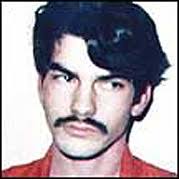
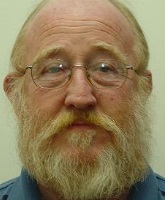
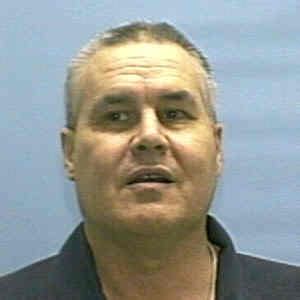
Karl F. Werner: The Santa Clara County Killer
Overview
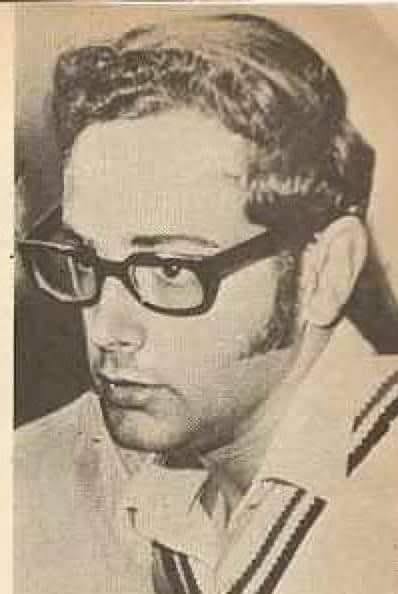
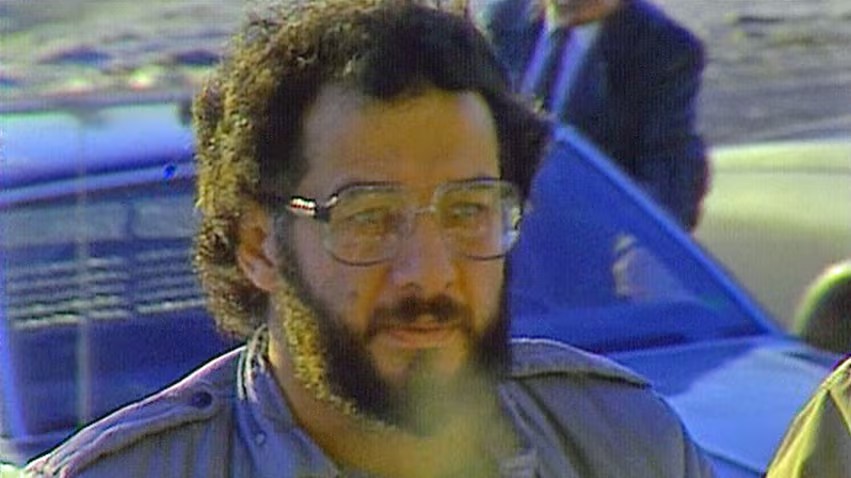
Karl Francis Werner was a serial killer who terrorized the suburban communities of Santa Clara County, California, with a series of shockingly brutal murders between 1969 and 1971. A clean-cut, intelligent high school and college student, Werner’s public persona gave no hint of the violent rage that lay beneath. He murdered three teenage girls—Debra Furlong, Kathie Snoozy, and Kathy Bilek—in two separate attacks characterized by an extreme number of stab wounds, a method authorities described as "frenzied." The first double homicide was so savage and seemingly random that it was briefly attributed to the notorious Zodiac Killer, who was active in Northern California during the same period. Werner was ultimately caught after his third murder, thanks to an observant eyewitness. He confessed to all three killings and was sentenced to life in prison, where he remained until his death in 2015.
Early Life and Background
Karl Francis Werner was born on May 12, 1952, in Marlborough, Massachusetts. His family later relocated to San Jose, California, where they settled in a quiet, middle-class neighborhood. By all outward appearances, Werner was a model young man. He was a good student who graduated from Oak Grove High School in 1970 and subsequently enrolled at San Jose City College, where he was studying to become a certified public accountant. He was known to be bright, particularly in mathematics, and was described by acquaintances as quiet, polite, and hard-working. A girl who briefly dated him recalled him as a normal teenager, not the "weird, skulking guy that we picture as a serial killer."
However, this clean-cut image masked a deeply troubled interior. At around age 15, Werner had undergone a psychiatric evaluation, though the reasons for it are not publicly known. More ominously, before his eventual capture for murder, he had been a suspect in a non-fatal knife assault on a woman. Despite these warning signs, he continued to live an outwardly normal life, attending classes and holding down a part-time job, all while harboring the capacity for extreme violence. He was a classmate of his first two victims at Oak Grove High School, a chilling detail that underscored the proximity of the killer to his community.
The Murders of Debra Furlong and Kathie Snoozy
On the hot Sunday afternoon of August 3, 1969, two best friends, 14-year-old Debra Gaye Furlong and 15-year-old Kathie Reyne Snoozy, left their homes in San Jose's Almaden Valley for a picnic. They walked to a familiar, oak-studded knoll near their neighborhood, a popular spot for local youths. When the girls failed to return home by their 6:00 p.m. curfew, their parents grew concerned. A search was quickly organized, and later that night, their bodies were discovered lying side-by-side on the secluded hilltop.
The crime scene was one of almost unimaginable violence. The girls were fully clothed, and there was no evidence of sexual assault or robbery. The sheer brutality of the attack stunned even seasoned investigators. Kathie Snoozy had been stabbed over 200 times, and Debra Furlong had suffered more than 100 stab wounds. The medical examiner, Dr. John E. Hauser, described the attack as a "frenzied flurry of knife wounds," stating that in his 18 years of practice, he had never seen a case with so many stab wounds. The wounds were concentrated on the victims' upper bodies, backs, and necks. The lack of significant blood at the scene initially led police to believe the girls had been killed elsewhere, though it was later determined the murders occurred on the hill. The motive was completely opaque; the attack seemed to be an explosion of pure, undirected rage. The community was plunged into fear, with parents keeping their children indoors as police hunted for a killer they described as a "maniac."
The Murder of Kathy Bilek
For nearly two years, the double homicide of Furlong and Snoozy remained a cold case, a haunting mystery for Santa Clara County. Then, on Sunday, April 11, 1971, the killer struck again. Eighteen-year-old Kathy Bilek, a recent graduate of Saratoga High School, drove to Villa Montalvo, a scenic park and arts center in the nearby foothills of Saratoga. She parked her car and walked into a wooded area of the park with a book, intending to spend a quiet afternoon reading and birdwatching near a creek.
When she didn't return home that evening, her family reported her missing. The next morning, her father, Charles Bilek, joined Santa Clara County Sheriff's deputies in a search of the park. It was he who made the heartbreaking discovery of his daughter's body in a shallow ravine. The scene was eerily similar to the one from 1969. Kathy Bilek had been stabbed 49 times, with 17 wounds to her back and 32 to her chest and stomach. As with the first two victims, the attack was frenzied and not sexual in nature. The killer had even taken care to avoid stabbing her breasts. The similarities were so striking that investigators immediately labeled it a "carbon-copy killing," certain they were dealing with the same perpetrator responsible for the Furlong and Snoozy murders.
The Victims
- Debra Gaye Furlong, 14 — August 3, 1969, in San Jose. A student at Oak Grove High School, she was spending a summer afternoon picnicking with her best friend when their lives were brutally taken.
- Kathie Reyne Snoozy, 15 — August 3, 1969, in San Jose. A classmate of her killer, she was murdered alongside her friend Debra in an attack that left the community in a state of shock and fear.
- Kathy Bilek, 18 — April 11, 1971, in Saratoga. An avid birdwatcher and reader who had just graduated high school, she was killed while enjoying a peaceful day in a local park.
Investigation and Capture
The murder of Kathy Bilek, while a tragedy, provided investigators with their first significant lead. A maintenance man at Villa Montalvo, George E. Dowhower, told sheriff's deputies that he had seen a young man acting strangely in the park on the day of the murder. Dowhower recognized the individual as someone he had seen in the park before and knew him to be "a little odd." He was able to provide authorities with a name: Karl F. Werner.
Investigators quickly compiled a background check. They discovered that Werner lived in San Jose, had graduated from Oak Grove High School with Furlong and Snoozy, and had previously been a suspect in an unsolved knife assault. The connections were too strong to ignore. On April 29, 1971, armed with a search warrant, detectives from the Santa Clara County Sheriff's Office and the San Jose Police Department converged on the Werner family home. In Karl's bedroom, they found the murder weapon—a distinctive hunting knife with a curved blade and a leather-wrapped handle—hidden away.
Werner was arrested that day and taken in for questioning. Confronted with the evidence, the quiet, clean-cut college student began to talk. He confessed to the murder of Kathy Bilek and then admitted to the 1969 slayings of Debra Furlong and Kathie Snoozy, providing detectives with details only the killer could have known. He was booked into Santa Clara County Jail, and the long-unsolved murders finally had a resolution. The $25,000 reward that had been offered in the Furlong-Snoozy case was later divided among several informants whose tips had helped point police toward Werner.
Zodiac Killer Connection
During the period between the two attacks, the Furlong and Snoozy murders became entangled with the lore of the Zodiac Killer, who was actively terrorizing Northern California. On November 8, 1969, the Zodiac sent a "Dripping Pen" card to the San Francisco Chronicle, which contained the message, "I just want to tell you there is more glory in killing a cop than a cid because a cop can shoot back. I shall no longer announce to anyone when I comitt my murders, they shall look like routine robberies, killings of anger, & a few fake accidents, etc." The following day, a seventh victim was added to a list of the Zodiac's supposed victims in a letter, which many researchers believe was a reference to the San Jose murders. San Francisco police Inspector Dave Toschi, a lead investigator on the Zodiac case, traveled to San Jose to confer with detectives, exploring the possibility that the Zodiac had expanded his hunting grounds. However, once Werner was arrested and confessed, any link was definitively severed. Investigators determined that Werner had been living in Massachusetts during some of the confirmed Zodiac attacks, ruling him out as that infamous killer.
Confession and Legal Proceedings
Following his arrest, Karl Werner provided a chilling, dispassionate account of his crimes. He told investigators that on the day he killed Furlong and Snoozy, he had been driving around feeling an uncontrollable urge to "hurt somebody." He saw the two girls walking, followed them to the hilltop, and attacked them with a knife. He claimed he could not stop stabbing them. His account of the Bilek murder was similar: he had gone to Villa Montalvo, saw the young woman reading alone, and was overcome by the same violent impulse.
After his confession, Werner was charged with three counts of first-degree murder. The court ordered extensive psychiatric evaluations to determine his sanity. A panel of three psychiatrists ultimately concluded that while he was deeply disturbed, he was legally sane and competent to stand trial. He understood the nature of his actions and that they were wrong.
Faced with overwhelming evidence, including his detailed confession and the discovery of the murder weapon, Werner and his defense attorney opted to avoid a trial. On September 2, 1971, in Santa Clara County Superior Court, Karl F. Werner pleaded guilty to all three counts of murder. On September 24, 1971, Judge John S. McInerny sentenced the 19-year-old to life in prison, the maximum penalty allowed at the time, as California's death penalty had been temporarily suspended.
Imprisonment and Death
Karl Werner was sent to the California Medical Facility (CMF) in Vacaville, a state prison designed to provide medical and psychiatric care to inmates. He spent the entirety of his sentence there. By all accounts, he was a quiet and compliant inmate, adapting to the structured life of the institution. He reportedly held a job as a maintenance employee within the prison for many years.
He never again achieved public notoriety and was largely forgotten outside of true-crime circles and the affected communities. After more than four decades of incarceration, Karl Francis Werner died of natural causes on May 5, 2015. He was 62 years old, just one week shy of his 63rd birthday. His death brought a quiet end to a life defined by a brief but horrific explosion of violence that had shattered three families and left a permanent scar on the history of Santa Clara County.