Bruce Everitt Lindahl: The Chicago-Suburb Serial Killer
Overview
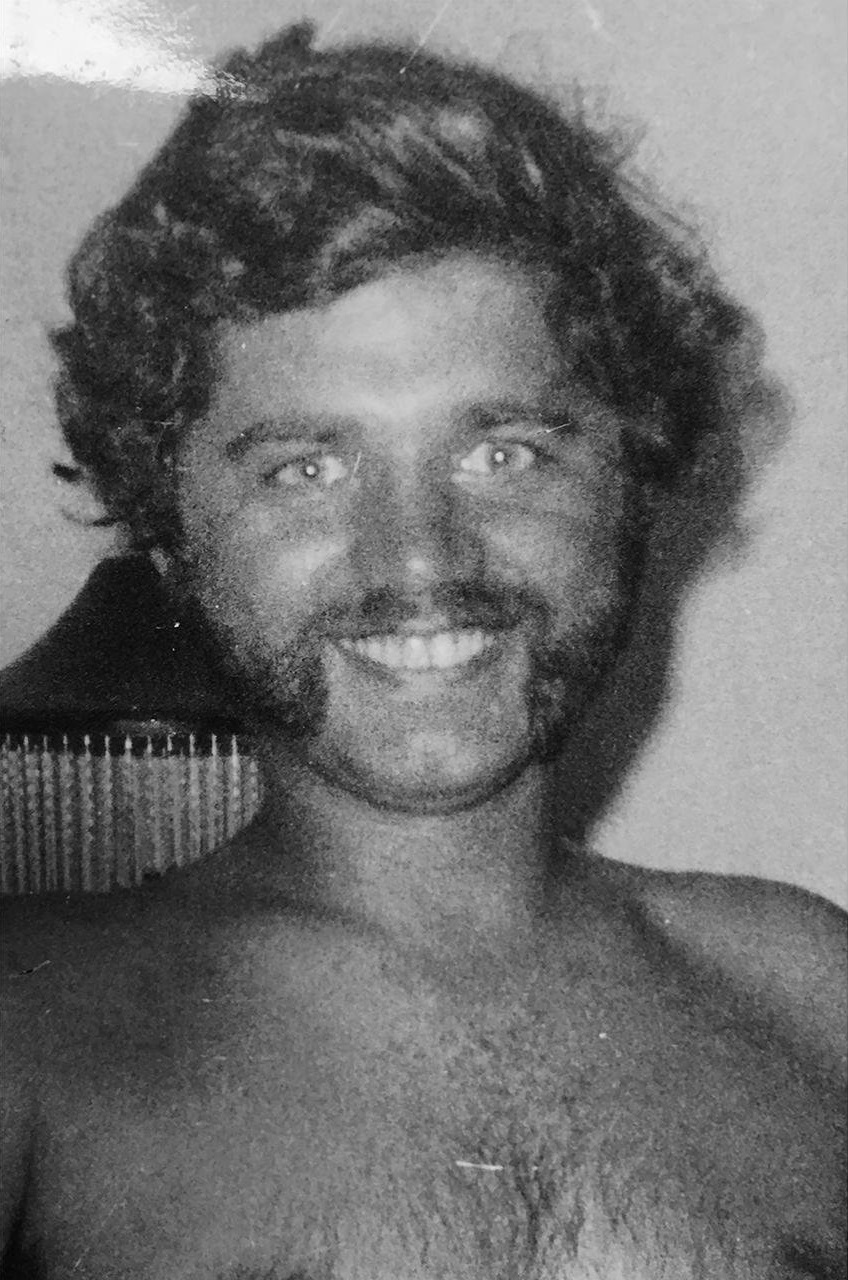
Bruce Everitt Lindahl was an American serial killer, rapist and suspected abductor who preyed on girls and young women in the western suburbs of Chicago during the 1970s and early 1980s. Born on January 29, 1953, Lindahl lived in several DuPage and Kane County communities, including Downers Grove, Lisle, Woodridge and Aurora. He appeared outwardly confident and sociable, but investigators later uncovered evidence of a violent double life involving sexual assaults, drugging, kidnapping, intimidation and murder.
Lindahl was never brought to trial for murder. He died on April 4, 1981, at the age of 28 while killing 18-year-old Charles Robert “Chuck” Huber Jr. inside a Naperville apartment. Police concluded that Lindahl accidentally severed his own femoral artery while repeatedly stabbing Huber. His sudden death ended any immediate opportunity to question him about other missing and murdered women, but it also exposed evidence that caused investigators to reconsider his possible involvement in numerous unsolved crimes.
Decades later, advances in DNA testing and investigative genetic genealogy connected Lindahl conclusively to the murders of Pamela Maurer and Kathy Halle. Authorities have also described him as the principal suspect in the disappearance and homicide of Debra Colliander. Investigators believe his confirmed crimes may represent only part of a much larger pattern. He has been examined as a possible suspect in at least a dozen murders and numerous sexual assaults committed in and around Chicago’s western suburbs between approximately 1974 and 1981.
Confirmed and Strongly Attributed Victims
- Pamela Maurer — January 13, 1976 — Lisle, Illinois: Pamela Maurer was a 16-year-old student from Woodridge who disappeared after leaving a friend’s home on the evening of January 12, 1976. She reportedly intended to walk to a nearby restaurant to purchase a soft drink but never returned. On January 13, a passing motorist noticed her purse near a guardrail at the intersection of College Road and Maple Avenue in Lisle. Pamela’s body was discovered nearby. She had been sexually assaulted and strangled. Evidence preserved from her clothing eventually produced a DNA profile. Investigative genetic genealogy led detectives to Lindahl, whose remains were exhumed in 2019. Direct comparison confirmed that the DNA associated with Pamela’s murder belonged to him. Authorities publicly identified Lindahl as her killer in January 2020.
- Kathy Halle — Presumed killed on or shortly after March 29, 1979 — North Aurora, Illinois: Kathy Halle was 19 years old when she left her residence on Volks Court in North Aurora on March 29, 1979. She was supposed to pick up her sister at the Northgate Shopping Center in Aurora but never arrived. Investigators believe Lindahl abducted her near the parking area of her apartment complex. Kathy’s body was discovered in the Fox River on April 24, 1979. The exact time of her death could not be established, although authorities believe she was killed around the time she disappeared. Evidence taken from her clothing was preserved for decades. Modern testing later produced a male DNA profile that was determined to be trillions of times more likely to have come from Lindahl than from an unrelated person. In October 2024, North Aurora police announced that Lindahl was responsible for Kathy’s murder. Prosecutors stated that, had he still been alive, the evidence would have supported a first-degree murder charge.
- Debra Colliander — Exact date of death unknown; disappeared October 7, 1980 — Aurora and Oswego Township, Illinois: Debra Colliander was approximately 25 years old when Lindahl allegedly abducted her from an Aurora-area shopping center in June 1980. He took her to his apartment, where she said he raped and assaulted her. Debra escaped and called police from a neighboring residence. Lindahl was arrested and charged, but he posted bond and was released while awaiting trial. Debra was expected to become the central witness against him. On October 7, 1980, shortly before the case was scheduled to proceed, she vanished after leaving work. Without her testimony, prosecutors were forced to dismiss the charges. Her remains were discovered in a shallow grave in Oswego Township in April 1982, more than a year after Lindahl’s death. Decomposition prevented examiners from establishing her precise cause or date of death, but the manner of death was classified as homicide. Authorities have long considered Lindahl the leading suspect because of the pending criminal case, the timing of her disappearance and allegations that he attempted to recruit another person to kill her.
- Charles Robert “Chuck” Huber Jr. — April 4, 1981 — Naperville, Illinois: Charles Huber was an 18-year-old high school senior who encountered Lindahl in Naperville on April 4, 1981. The two reportedly spent time bowling before going to an apartment associated with one of Lindahl’s former girlfriends. Inside the residence, Lindahl attacked Huber with a knife. Huber was stabbed approximately 28 times and died at the scene. During the struggle, Lindahl accidentally drove the knife into his own thigh and severed his femoral artery. He bled to death and collapsed near Huber’s body. Because Lindahl died while committing the stabbing, his responsibility for Huber’s killing was immediately apparent. Investigators have never established a certain motive, although some have theorized that Huber resisted a sexual assault or another planned attack.
The Murder of Pamela Maurer
Pamela Maurer’s murder became the case that finally exposed Lindahl as a serial killer. Pamela was a junior at Downers Grove South High School. On the night of January 12, 1976, she was visiting a friend in Lisle when she left to obtain a soft drink. The trip should have taken only a short time. When she failed to return, concern quickly grew, but there was initially little information indicating where she had gone or whom she might have encountered.
The following morning, Pamela’s purse was seen near a roadside guardrail. Her body was then found in an isolated area beside the road. Investigators determined that she had been sexually assaulted and strangled. The circumstances suggested that someone had intercepted her during the brief walk, forced her into a vehicle and transported her to the location where she was attacked or abandoned.
Detectives preserved biological evidence from Pamela’s clothing, but the forensic technology available in 1976 could not identify the offender. The case was reviewed repeatedly over the following decades. In 2019, investigators used a DNA profile developed from the preserved evidence to search genealogical databases. The search pointed toward members of Lindahl’s family. His body was exhumed, allowing authorities to obtain a direct sample. The resulting match established that Lindahl had sexually assaulted and murdered Pamela.
The Identification of Kathy Halle’s Killer
Kathy Halle’s case followed a similar pattern. She disappeared while completing an ordinary errand close to home, leaving no known reason to abandon her family or personal life. Her body was found in the Fox River several weeks later, but investigators initially lacked the evidence needed to identify the person who had abducted and killed her.
After Lindahl was linked to Pamela Maurer, North Aurora detectives reopened Kathy’s case and submitted surviving evidence for advanced forensic examination. DNA recovered from her clothing was eventually matched to Lindahl. Investigators also considered his history, his presence in the western suburbs and the similarities between Kathy’s disappearance and his known methods.
Authorities believe Lindahl encountered Kathy near her apartment complex on March 29, 1979, forced her into a vehicle and transported her toward the Fox River. Although the exact sequence of events and precise cause of death could not be fully reconstructed, police concluded that the physical evidence established his responsibility. The finding gave Kathy’s family an answer after approximately 45 years.
The Attempted Silencing of Debra Colliander
Debra Colliander was among the few known women who escaped from Lindahl and immediately identified him. Her survival threatened to expose him years before DNA evidence revealed the extent of his crimes. According to the criminal allegations, Lindahl abducted Debra, imprisoned her in his Aurora residence and sexually assaulted her. She escaped and reached a neighboring home, where she contacted authorities.
Although Lindahl was charged, he remained free after posting bond. Debra’s testimony would have been essential to the prosecution. Her disappearance shortly before the proceedings was therefore deeply suspicious. Investigators later learned that Lindahl had allegedly spoken about eliminating her and had reportedly offered another man money, a handgun, alcohol and drugs in exchange for getting rid of her. That person did not report the alleged offer before Debra disappeared.
When Debra’s remains were found in 1982, they were buried in a shallow grave in a rural area. The passage of time made it impossible to determine exactly how or when she had been killed. Nevertheless, the circumstances surrounding her disappearance strongly indicated that she had been murdered to prevent her from testifying. Lindahl died before her body was recovered and could never be prosecuted for her homicide.
Sexual Assaults and Surviving Victims
Lindahl’s known behavior extended beyond the murders attributed to him. Multiple women described being drugged, sexually assaulted, threatened or held against their will. Some reported losing consciousness after accepting a drink from him and awakening with injuries or little memory of what had happened. In one incident, police stopped Lindahl while an unconscious and bleeding woman was inside his vehicle. Lindahl claimed that he was taking her to a hospital, although officers reportedly found that he was traveling in the wrong direction. The woman was later found to have been sexually assaulted.
Another woman reported that Lindahl attacked her after she rejected a sexual proposition. Witnesses interrupted the incident, and Lindahl fled. His ability to avoid meaningful consequences was aided by investigative mistakes, limited forensic technology and the reluctance or inability of some victims to pursue charges. In other cases, women initially selected photographs of similar-looking men because Lindahl’s photograph was not included in the identification materials shown to them.
Survivors later described Lindahl as charismatic but controlling. He could appear charming and attentive before becoming possessive, angry or violent. Some women said he watched their movements, appeared unexpectedly at their workplaces or demanded to know where they were. These accounts revealed a pattern of stalking and domination that often preceded his assaults.
Evidence Found After His Death
The deaths of Lindahl and Charles Huber led police to examine Lindahl’s possessions and background more closely. Investigators discovered photographs of numerous women, including images of women who appeared unconscious or partially clothed. Some photographs could not be connected to identified individuals, raising the possibility that they documented additional victims.
Authorities also found weapons and other materials that reinforced suspicions about Lindahl’s activities. His history included allegations involving illegal surveillance, recorded telephone conversations and efforts to blackmail or manipulate people. He had previously faced charges related to unlawful recordings and had reportedly threatened police with a firearm during an attempted arrest.
The collection of photographs became especially important because investigators suspected that Lindahl may have used drugs to incapacitate women before photographing, assaulting or killing them. Law-enforcement agencies have attempted to identify the women shown in the images, but not every person has been named. It remains uncertain how many were victims of crimes and how many survived without ever reporting an attack.
Possible Additional Murders
Investigators have reviewed numerous unsolved murders and disappearances from DuPage County, Kane County and surrounding areas for possible connections to Lindahl. During the years in which he was active, dozens of girls and women were killed or disappeared in the western Chicago suburbs. Authorities have not publicly attributed all of those cases to him, and similarities alone are not proof of responsibility.
Lindahl’s suspected victim count is commonly described as at least a dozen possible murders in addition to numerous sexual assaults. The true number may never be known. His mobility, access to vehicles, familiarity with suburban roads and ability to appear socially respectable would have allowed him to approach victims without immediately alarming them. His use of drugs may also have left survivors unable to remember enough details to identify him.
Police departments have compared DNA profiles from other cold cases with Lindahl’s genetic profile. A conclusive connection requires usable biological evidence, and evidence from cases dating to the 1970s is sometimes missing, degraded or unsuitable for modern testing. Consequently, several cases in which he remains a compelling suspect may never be resolved with certainty.
Death During the Murder of Charles Huber
Lindahl’s criminal activity ended violently on April 4, 1981. After meeting Charles Huber, he accompanied the teenager to an apartment in Naperville. What began as a social encounter turned into a brutal knife attack. Huber fought back while Lindahl stabbed him repeatedly. During that struggle, Lindahl cut deeply into his own leg.
The wound severed Lindahl’s femoral artery, causing rapid and massive blood loss. Both men were found dead inside the apartment. Lindahl’s death was accidental, but it occurred as a direct result of the resistance offered by his victim. Had Huber not fought back, Lindahl might have survived and continued attacking others.
Because Lindahl died before the full extent of his conduct was recognized, there was no confession, murder trial or comprehensive interrogation. His death also meant that families seeking answers could not confront him in court. For decades, many knew him only as the man who died while killing Huber, not as the serial predator later revealed through DNA.
Forensic Breakthroughs and Continuing Investigation
The identification of Lindahl in Pamela Maurer’s case demonstrated the importance of preserving evidence. More than four decades after her murder, material collected from her clothing remained capable of producing a DNA profile. Investigative genetic genealogy then supplied the family connection that traditional police databases had been unable to provide.
The same renewed attention helped solve Kathy Halle’s murder. Her case showed how evidence that once appeared inconclusive could become decisive when examined with improved laboratory techniques. Police and prosecutors concluded that the strength of the genetic match, combined with Lindahl’s established pattern, would have justified prosecuting him for first-degree murder.
Investigators continue to examine other cases associated with the places and years in which Lindahl operated. Any future identification will depend upon the survival of physical evidence, reliable records and cooperation among multiple police departments. Although Lindahl cannot be punished, officially attributing a crime to him can clear innocent suspects, correct historical records and provide long-awaited answers to victims’ families.
Legacy
Bruce Everitt Lindahl’s case illustrates how a violent offender could repeatedly escape accountability before modern DNA analysis. Reports of sexual assault, kidnapping, drugging and intimidation accumulated around him, yet procedural difficulties and the limitations of the era prevented authorities from recognizing the full pattern before his death.
He is now conclusively associated with the murders of Pamela Maurer, Kathy Halle and Charles Huber. He remains strongly implicated in the homicide of Debra Colliander and is suspected in additional unsolved killings and sexual assaults. The precise number of people he harmed is unknown, but the available evidence indicates that his crimes extended across several communities and continued for years.
The later resolutions of Pamela’s and Kathy’s cases were achieved through preserved evidence, persistent police work and advances in forensic science. Those breakthroughs transformed Lindahl from a deceased suspect surrounded by disturbing allegations into an identified serial murderer. His history remains under examination as investigators attempt to determine whether other missing or murdered women were also among his victims.