Ethel Lewis: The Michigan Infant-Death Investigation
Background
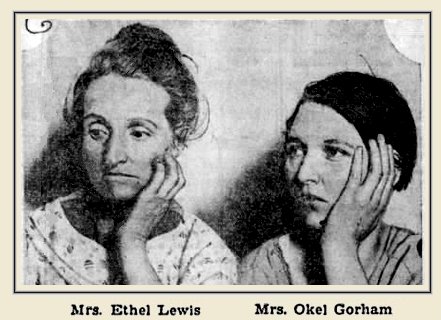
Ethel Lewis was a Michigan woman who became the central figure in a disturbing 1929 investigation involving the deaths of several infants and very young children. Contemporary newspaper reports described Lewis as living in the Eau Claire and Indian Lake areas of southwestern Michigan. She was investigated alongside her adult daughter, whose first name appeared in newspapers under several spellings, including Okel, Okal, Oakel and Opal Gorham.
The case is sometimes summarized by modern sources as the work of a serial killer, but the surviving historical record is complicated. Most of the allegations came from statements attributed to Lewis’s daughter during questioning. The daughter repeatedly changed portions of her account, gave conflicting totals for the number of children killed and was later found to be seriously mentally impaired. Lewis also reportedly made statements that investigators considered incriminating, although she initially denied responsibility.
The Death That Triggered the Investigation
The investigation began after the death of Clarence Wesley Gorham, the infant son of Okel and Herbert Gorham. Clarence died on February 10, 1929, at or near the Lewis family residence in Berrien County, Michigan. The child was approximately one year old.
Lewis reportedly claimed that Clarence had died from whooping cough. However, the undertaker who handled the child’s body noticed suspicious marks around his neck and contacted authorities. A coroner’s examination reportedly found evidence consistent with choking or strangulation rather than a natural death. Investigators began questioning Lewis and her daughter, and the inquiry quickly expanded to include earlier deaths in the family.
According to accounts published at the time, Okel Gorham accused her mother of poisoning Clarence by placing a harmful substance in the child’s milk and then strangling him. She claimed that she had been present during the killing. Lewis initially denied knowing anything about the death, but authorities said she later broke down during questioning and made the statement, “I didn’t know it would cause all this trouble.”
Allegations of Earlier Child Killings
During questioning, Gorham reportedly confessed that she and her mother had been involved in the deaths of several children. The number changed from one account to another. In some statements, she said that five children had been deliberately killed. In others, she claimed that seven or eight infant deaths were connected to Lewis and herself.
The alleged methods included poisoning milk and manually strangling the children. Gorham claimed that some of the victims were her own children and that others were children born to Lewis during an earlier marriage. She also alleged that one child had been transported approximately twelve miles in a baby carriage before being killed.
Investigators searched property associated with the family because of claims that some of the children had been secretly buried near a house, barn or tree. Early searches reportedly failed to uncover the suspected graves. Authorities also considered the possibility that Lewis and Gorham had harmed infants born to other women, but no reliable evidence establishing additional victims was publicly reported.
Known and Alleged Victims
- Clarence Wesley Gorham — Died February 10, 1929, in the Eau Claire area of Berrien County, Michigan. He was approximately one year old. His suspicious death prompted the investigation. Marks around his throat reportedly caused an undertaker and coroner to question the original claim that he had died from illness.
- Louise Jane Gorham — Reported to have died in February 1922 at approximately 18 months old. Historical accounts placed her death at a family residence in either Eau Claire or the nearby Indian Lake area of Michigan. Gorham later alleged that Louise had been strangled.
- Mary Jane Gorham — Reported to have died in November 1926 at approximately 18 months old. Her death was also associated with the family’s residences in southwestern Michigan. Gorham later claimed that Mary had been deliberately killed rather than dying naturally.
- Isabelle Gorham — Identified in newspaper reports as another child whose death was investigated. Surviving accounts do not provide a consistently verified exact date of death. She was alleged to have been one of the children strangled or poisoned.
- Two unnamed infant twin daughters — Gorham claimed that twin daughters born to Lewis during her earlier marriage to farmer Henry Ford had been killed. Their names and exact dates of death were not reliably established in the published reports.
- Two additional unnamed infants — Gorham also referred to two other infant children of Lewis but reportedly said she could not remember their names. Exact dates, causes and locations of death were never clearly verified.
Conflicting Confessions and Uncertain Evidence
The daughter’s statements were highly inconsistent. At different points she accused Lewis of committing the murders, admitted helping with some deaths and claimed that she had personally killed children. She also changed the alleged victim count several times. Prosecutors acknowledged that portions of her confession were disorganized and that it was difficult to determine exactly which children she was describing.
Some newspapers reported that Gorham said three of her own children and two of Lewis’s children had been murdered. Other reports stated that four children belonging to each woman had died. These contradictions made it difficult for authorities to separate confirmed deaths from accusations, rumors and possible delusions.
The husbands of the two women were also questioned. Wallace or William Lewis, identified as Ethel’s husband, denied knowing that any children had been murdered. Herbert Gorham, Okel’s husband, likewise denied involvement. Investigators reportedly concluded that neither man appeared to have participated in the alleged killings, although both were temporarily detained or questioned while the inquiry continued.
Mental Examinations
Because of the confused and contradictory statements, the court ordered mental examinations for both women. In March 1929, a two-physician sanity commission submitted its findings to the Berrien County Circuit Court.
The doctors reportedly concluded that Gorham was legally insane, suffered from delusions and had severe intellectual limitations. Lewis was described as legally sane but profoundly mentally impaired, with intellectual functioning compared in contemporary language to that of a young child. The terminology used in 1929 medical reports is now considered outdated and offensive, but it strongly influenced the legal handling of the case.
The commission recommended that both women be confined in state institutions, potentially for the remainder of their lives. The mental findings complicated the possibility of a conventional murder prosecution, particularly because the principal evidence consisted of statements made by Gorham while she was considered delusional and unreliable.
Charges and Legal Outcome
Lewis and Gorham were specifically accused in connection with the death of Clarence Wesley Gorham. Murder charges were considered, filed or temporarily pursued during the investigation, but contemporary reports indicated that some proceedings were delayed or withdrawn while the women’s mental condition was evaluated.
The surviving public record does not show that Ethel Lewis was convicted at a completed murder trial for all of the deaths attributed to her. Instead, the case appears to have ended primarily through institutional commitment following the mental examinations. This distinction is important because later summaries often present every alleged death as a confirmed murder committed by Lewis, while the historical evidence was far less certain.
Motive
No clear motive was established. Gorham reportedly claimed that Lewis killed the children because she disliked her daughter visiting the family home. At other times, she could provide no reason for the deaths. The allegations also arose in the context of frequent family arguments, poverty, unstable relationships and significant mental impairment.
There was no documented financial motive, insurance scheme or effort to conceal another major crime. The absence of a consistent explanation, combined with contradictory confessions, left investigators uncertain about why the children died and how many deaths were truly intentional.
Historical Assessment
Ethel Lewis is frequently classified as a serial killer because she was accused of participating in multiple child murders over a period of years. The allegations included repeated use of poisoning and strangulation, multiple victims from within the same family and an investigation that linked several previously unexplained infant deaths.
However, the case should be described cautiously. Clarence Wesley Gorham’s death produced physical evidence that raised strong suspicions of homicide, but many of the earlier accusations depended on the changing testimony of a woman later declared insane. Several supposed victims were unnamed, their graves were not located and exact dates of death could not be confirmed.
The 1929 investigation nevertheless revealed a tragic pattern of childhood deaths that had gone largely unquestioned until Clarence’s body displayed visible signs of violence. Whether every death attributed to Lewis was a murder may never be known. What remains clear is that the death of Clarence exposed years of alarming allegations and led authorities to remove both Lewis and her daughter from the community through long-term institutional confinement.