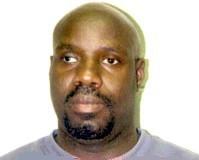
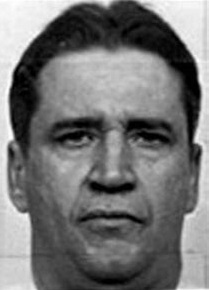
Stephen A. Nash: California’s Boastful “Thrill Killer”
Overview
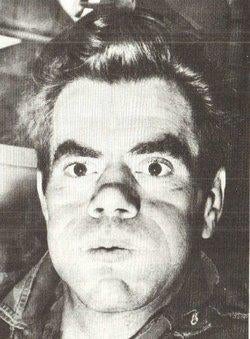
Stephen A. Nash was an American serial killer whose crimes terrorized several California communities during 1955 and 1956. A transient with a long criminal record, Nash drifted between cities, inexpensive hotels, temporary jobs and homeless encampments. His victims were men and boys whom he encountered in apartments, public places, industrial districts and waterfront areas. He attacked most of them with knives, although at least one confirmed victim was beaten with a metal pipe.
Nash claimed that he murdered eleven people, describing the killings with a disturbing mixture of pride, resentment and indifference. Investigators were able to confirm five homicides that matched details he provided. Six additional killings remained unverified because Nash refused to identify the victims or disclose enough information to locate their bodies. He was ultimately prosecuted and convicted for the murders of 27-year-old John William Berg and 10-year-old Lawrence “Larry” George Rice.
Early Life and Criminal History
Nash was born in New York in 1924 and was adopted during infancy by a couple living in the Bronx. Accounts of his youth describe him as repeatedly running away from home. As he grew older, he accumulated arrests and prison sentences for offenses including robbery, burglary and grand theft. His documented criminal history extended back to the 1940s.
In December 1951, Nash entered the United States Air Force. His military service was brief and troubled. He went absent without leave on more than one occasion, faced military disciplinary proceedings and was eventually discharged. By then, he had already spent substantial periods in correctional institutions. Between 1948 and 1954, he served approximately six years at San Quentin State Prison for robbery. He later spent several months in custody following a violent altercation.
Psychiatrists examined Nash before his murder prosecution, but the evaluations did not establish that he was legally insane. During his eventual trial, medical witnesses concluded that he understood the nature of his actions and knew that murder was prohibited by law. Nash himself openly admitted that he knew the killings could lead to his execution.
The Beginning of the Murders
Nash’s confirmed series began in late 1955. His movements made the investigation difficult because he had no permanent residence and traveled throughout California. He worked temporary jobs, stayed in low-cost hotels and associated with people whose disappearances might not immediately attract widespread attention.
His statements suggested that he chose victims opportunistically. Some were men he met while traveling or working, while others were approached in public areas. Nash frequently attempted to conceal his crimes by placing bodies in water, abandoning them in isolated locations or removing evidence that could connect him to the victim.
Confirmed Victims
- William Clarence Burns — December 1955 — Hayward area, Alameda County, California: Burns was a 23-year-old resident of Santa Cruz. Nash admitted encountering him in the hills near Hayward and beating him to death with a metal pipe. Nash removed Burns’s clothing and discarded it in a ravine along a mountain road. Burns’s body was later recovered from the waters of San Francisco Bay. Available accounts identify the killing as occurring in December 1955, although a precise date has not been firmly established.
- Robert T. Eche — August 18, 1956 — San Francisco, California: Eche was a young San Francisco draftsman employed by Pacific Gas and Electric Company. Nash stabbed him repeatedly, placed his body inside Eche’s automobile and drove the vehicle to Pier 52. He then sent the car and its occupant into San Francisco Bay. After Nash confessed, investigators followed his directions and recovered the submerged automobile with Eche’s body inside on December 9, 1956.
- Floyd Leroy Barnett — October 3, 1956 — Sacramento, California: Barnett was a transient and cannery worker who was killed in an area described at the time as a railroad or homeless encampment. Nash admitted stabbing Barnett during an encounter in Sacramento. Barnett’s body was later found with injuries consistent with Nash’s description of the attack.
- John William Berg — November 27, 1956 — Long Beach, California: Berg was a 27-year-old student beautician. He met Nash on a Long Beach street on November 26 and invited him to his apartment. Nash stayed there overnight. The following morning, Nash stabbed Berg once in the abdomen and repeatedly in the throat. He then washed himself, searched the apartment for money and left wearing clothing belonging to Berg. Nash was later convicted of Berg’s first-degree murder.
- Lawrence “Larry” George Rice — November 29, 1956 — beneath the Santa Monica Pier, California: Rice was 10 years old and was playing near Ocean Park Beach when Nash approached him. Nash bought the child soft drinks and hamburgers before walking with him along the beach. Beneath the Santa Monica Pier, Nash attacked Larry with a hunting knife, inflicting numerous wounds. The child was found shortly afterward but could not be saved. The brutality of the murder became the central focus of Nash’s prosecution and contributed heavily to the jury’s decision to impose the death penalty.
The Attack on Dennis Butler
On November 16, 1956, Nash met Dennis Butler in the Skid Row district of Los Angeles. The two visited bars and later went to Nash’s hotel room. An argument developed after Butler attempted to leave. Nash pursued him through the streets and stabbed him once in the abdomen with a hunting knife.
Nash forced or assisted the wounded Butler back toward the hotel. Once inside the lobby, Butler called for help. As a clerk contacted the police, Nash knocked Butler down and kicked him, breaking his collarbone, before fleeing. Butler survived and provided authorities with the name his attacker had used. His statement became an important lead in the search for Nash.
Police circulated Nash’s description and learned about his previous prison record. A warrant was issued for assault with a deadly weapon. Although investigators initially sought him for the Butler attack, the case soon developed into a far-reaching murder investigation.
The Murder of John William Berg
Ten days after attacking Butler, Nash encountered John Berg in Long Beach. According to Nash’s later statements, he accepted Berg’s invitation to enter his apartment because he needed somewhere to sleep. Nash remained there through the night.
On the morning of November 27, Nash attacked Berg with the inexpensive hunting knife he carried. He stabbed Berg in the abdomen and throat, killing him inside the apartment. Nash displayed calculated behavior after the murder. He cleaned himself, searched unsuccessfully for money and changed into one of Berg’s suits before leaving.
Berg’s killing demonstrated the pattern that investigators would later identify in Nash’s statements: a sudden encounter followed by extreme violence, theft or attempted theft and an effort to move away from the scene before the victim was discovered.
The Murder of Larry Rice
Two days after Berg’s murder, Nash saw Larry Rice alone near Ocean Park Beach. Larry was waiting for his father to return from work and was spending time along the shore. Nash gained the child’s trust by buying him food and drinks.
Nash led Larry beneath the Santa Monica Pier, where the two were partially concealed from public view. He then stabbed the child repeatedly. The attack involved wounds to Larry’s abdomen and back, as well as other injuries that prosecutors later used to establish torture and premeditation.
Nash left the area and returned by bus to Los Angeles. Larry was found beneath the pier, and the circumstances of his death immediately produced an intensive police investigation. Witnesses who had seen the boy with an adult provided descriptions that helped connect Nash to the crime.
Arrest and Confession
Later on November 29, 1956, police encountered Nash in Los Angeles while making an unrelated arrest. Officers checked his identity and discovered the outstanding warrant stemming from the attack on Dennis Butler. Nash was taken into custody, and investigators recovered a bloodstained hunting knife.
During questioning, Nash confessed to murdering Larry Rice. He also admitted killing John Berg and described several other homicides. His statements eventually expanded to a claim of eleven murders committed across California.
Nash provided enough information for authorities to confirm five victims. In the case of Robert Eche, Nash directed officers to the precise section of San Francisco Bay where he said he had pushed the victim’s car into the water. Divers subsequently located the submerged vehicle and Eche’s remains, giving investigators powerful evidence that Nash’s confession contained genuine knowledge of the crime.
At the same time, detectives remained cautious about his claim of eleven victims. Nash appeared to enjoy the attention and sometimes exaggerated his criminal ambitions. He refused to provide complete details about six alleged murders unless authorities or news organizations paid him. Because those victims could not be identified, investigators were unable to determine whether all of his additional claims were true.
Unconfirmed and Suspected Victims
- Unidentified Oakland-area man — Date unknown — Oakland area, California: Nash claimed that he killed a young man whose name he could not or would not provide. He said that he disposed of the victim’s body by throwing it over a cliff. Investigators could not conclusively connect the confession to an identified homicide.
- Paul C. Check — September 23, 1956 — Visalia, California: Check, a cook, was found stabbed or slashed to death in a Visalia hotel. Nash was investigated as a possible suspect because the crime occurred during his period of activity and resembled aspects of his confirmed attacks. The killing was not conclusively attributed to him.
- Danny Woods — July 1954 — Maine: Woods was a 12-year-old boy who disappeared in Maine and was later found dead in a river. Authorities explored whether Nash could have been involved after his California confessions became public. No conclusive evidence established that Nash killed Woods, and the case remains a suspected rather than confirmed connection.
- Six unidentified alleged victims — Dates and locations undisclosed: Nash insisted that his total number of murders was eleven. He withheld names, locations and other identifying facts while demanding money for additional information. Police could not verify these claims, leaving the true number of his victims uncertain.
Motive and Behavior
Nash offered several explanations for his crimes, none of which excused or fully explained his actions. He spoke about hatred, envy and resentment toward society. He suggested that he felt mistreated and believed he was entitled to retaliate against other people. He also described experiencing excitement and sexual gratification from violence and domination.
Psychiatrists who examined him concluded that the murders of Berg and Rice were deliberate and premeditated. According to testimony presented at trial, Nash had formed a plan to kill when he found vulnerable victims under circumstances in which he believed he could escape detection.
His conduct after arrest was marked by boasting and attempts to control investigators. He treated details of the crimes as information that could be sold. He spoke about the victims in dehumanizing terms and showed little evidence of remorse. At one point, he claimed that he had considered creating what he called a one-man murder operation capable of producing many victims in a single night.
Trial and Conviction
Nash was tried in Los Angeles in February 1957 for the murders of Lawrence Rice and John Berg, along with the attacks on Dennis Butler. Prosecutors presented his recorded confessions, physical evidence and testimony describing his movements before and after the crimes.
The prosecution argued that the murders were intentional acts involving torture and careful preparation. Nash initially entered pleas that included not guilty by reason of insanity, but medical experts concluded that he was legally sane. He acknowledged knowing that murder was against the law and punishable by death.
On February 27, 1957, the jury convicted Nash of two counts of first-degree murder. He was also convicted of assault with a deadly weapon and assault by means likely to cause great bodily injury for the attack on Butler. The jury fixed the punishment for both murders at death.
On April 1, 1957, Superior Court Judge H. Burton Noble formally sentenced Nash to die in California’s gas chamber. The judge described him as one of the most evil defendants ever to appear in his courtroom.
Appeal and Execution
Nash appealed his convictions and death sentences to the California Supreme Court. His attorneys challenged the legal test used to determine criminal insanity. On April 24, 1959, the court affirmed the judgment, concluding that the jury had properly found Nash legally responsible for his actions.
Governor Pat Brown declined to commute the death sentence. Nash was executed in the gas chamber at San Quentin State Prison on August 21, 1959. Larry Rice’s father was among those who witnessed the execution.
Nash was approximately 35 years old when he died. Reports from San Quentin described him as isolated and disliked even among other condemned prisoners because of his repeated boasting about the murders. No relative or friend claimed his body immediately after the execution.
Legacy and Unanswered Questions
Stephen A. Nash remains one of the most disturbing serial murderers active in California during the 1950s. His verified crimes crossed several cities and involved victims of widely different ages and circumstances. His transient lifestyle allowed him to move quickly between locations, complicating efforts to connect the deaths before his arrest.
The confirmed record establishes that Nash killed at least five people between December 1955 and November 1956. His conviction, however, involved only the murders of John Berg and Larry Rice. The recovery of Robert Eche’s submerged automobile demonstrated that Nash possessed accurate knowledge of crimes unknown to the general public, lending some credibility to his broader confessions.
Nevertheless, the full extent of his violence has never been established. Nash may have invented some of his alleged murders to gain attention, money or notoriety. He may also have taken the identities of additional victims to his grave. As a result, his accepted victim count is generally described as at least five confirmed murders, with as many as eleven claimed.