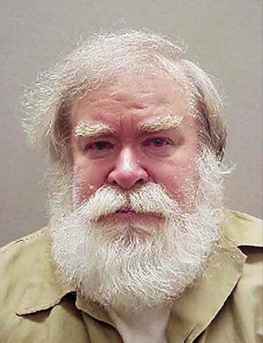
John Francis Wille: A Multistate Trail of Murder
Overview
John Francis Wille was a Louisiana-born drifter whose name became associated with a series of violent deaths across Louisiana, Florida and Alabama between 1980 and 1985. Investigators portrayed him as a mobile and unpredictable offender who selected vulnerable people, acquaintances and strangers encountered while traveling. The crimes attributed to him involved arson, beating, stabbing, strangulation, sexual violence, mutilation and the deliberate use of a vehicle as a weapon.
Wille was born on February 14, 1964, and grew up in the LaPlace area of Louisiana. He was only sixteen years old when authorities later alleged that he committed his first murder. By the summer of 1985, he was twenty-one and traveling through the Gulf Coast region with his girlfriend, Judith Walters, and her teenage daughter. What initially appeared to be a collection of unrelated deaths in different jurisdictions began to look like a connected series after Walters spoke with law enforcement officers in Florida.
Wille reportedly confessed to several killings while being questioned, although he later withdrew or disputed portions of those statements. He was ultimately convicted in separate proceedings connected to the deaths of Frank Powe and eight-year-old Nichole Michelle Lopatta. Other deaths were attributed to him through confessions, witness statements or investigative findings, but the strength and legal status of the evidence differed from case to case.
Known and Attributed Victims
- Ida Bodreaux, 78 — July 1980 — LaPlace, Louisiana: Bodreaux, whose surname has also appeared in records as Boudreaux, died after her home was deliberately set on fire. Wille was later linked to the fatal arson and reportedly described setting the residence ablaze. Available accounts differ on whether the fire occurred on July 12 or July 16, 1980, so a precise date of death cannot be stated with certainty.
- Nichole Michelle Lopatta, 8 — June 2, 1985 — St. John the Baptist Parish, Louisiana: Nichole disappeared from the Tres Vidas apartment complex in Terrytown on June 2. Prosecutors said she was taken north toward LaPlace, sexually assaulted and strangled in an isolated area near Frenier Road. Her body was discovered on June 6, 1985, in woods approximately eight miles north of LaPlace.
- Billy Phillips, approximately 25 — June 2, 1985 — Manchac area, Louisiana: Phillips was a hitchhiker and acquaintance who was traveling with Wille on the day Nichole disappeared. His body was recovered on June 6 beneath Interstate 55, about two miles from Nichole’s remains. He had suffered extensive violence, including multiple stab wounds and mutilation. Later legal challenges asserted that forensic evidence showed Phillips drowned, creating disputes about the exact sequence of events surrounding his death.
- Michael H. Foulk, 19 — June or July 1985 — near Fairhope, Alabama: Foulk was a taxi driver from the Pensacola, Florida, area. He disappeared after accepting a fare and was later found dead in a roadside ditch outside Fairhope, Alabama. Wille was linked to the killing during the expanding multistate investigation. Publicly available accounts do not establish a consistently verified date of death, although the case occurred during the summer of 1985.
- Frank Powe, 26 — July 15, 1985 — near Bagdad, Florida: Powe was hitchhiking when he encountered Wille and the women traveling with him. According to the prosecution’s evidence, Wille became angry after Powe made remarks toward Walters. Powe was beaten unconscious, placed in the rear of a vehicle and later deliberately run over. Wille pleaded guilty to Powe’s murder and received a life sentence with no possibility of parole for twenty-five years.
The Fatal Fire in LaPlace
The earliest death commonly attributed to Wille was that of Ida Bodreaux, an elderly woman living in the LaPlace area. Her home was destroyed by fire in July 1980, when Wille was sixteen. The incident initially appeared to be a residential fire, but investigators later treated it as an intentional killing after Wille reportedly admitted setting the blaze.
Arson is particularly destructive as evidence because fire can erase indications of how a victim was incapacitated, whether anyone else entered the residence and what motive may have existed. Bodreaux’s death remained geographically and chronologically separated from the killings that brought Wille to national attention five years later. Only after authorities began comparing Wille’s statements with unresolved cases did the elderly woman’s death become part of the broader investigation.
The Abduction of Nichole Lopatta
The most notorious case associated with Wille began on the afternoon of June 2, 1985. Nichole Michelle Lopatta was last seen at approximately 4:30 p.m. near the swimming pool of the Tres Vidas apartment complex in Terrytown, close to Gretna. Prosecutors maintained that Billy Phillips and the teenage daughter of Judith Walters approached Nichole and brought her to a Chevrolet Impala occupied by Wille and Walters.
The group then traveled away from the apartment complex and toward U.S. Highway 51 north of LaPlace. According to the prosecution and Wille’s recorded confession, Nichole was sexually assaulted by Phillips and Wille. The child was taken to a secluded location near Frenier Road, where she was beaten and strangled. The evidence presented at Wille’s trial depicted a prolonged ordeal in which Nichole was isolated from anyone who could help her and subjected to repeated acts of violence.
Nichole’s body remained undiscovered for four days. On June 6, searchers found her remains in a wooded area approximately eight miles north of LaPlace. The condition of her body demonstrated the severity of the assault and became central to the first-degree murder prosecution. The killing caused widespread fear and grief because of Nichole’s age, the apparent randomness of her abduction and the extreme cruelty involved.
The Death of Billy Phillips
Billy Phillips was not only connected to Nichole’s abduction but also became a homicide victim that same night. Phillips had been hitchhiking when Wille encountered him after entering Louisiana. He joined Wille, Walters and Walters’ daughter as they traveled into the New Orleans area. Prosecutors later described him as an active participant in the kidnapping and assault of Nichole.
After Nichole was killed, Phillips and Wille reportedly came into conflict. Wille’s statements described a violent confrontation in which Phillips was attacked and killed. Phillips suffered numerous injuries, and his body was mutilated. Reports stated that one or both of his hands had been severed and that his genital area had been damaged. His remains were discarded in water beneath Interstate 55 near Manchac.
Phillips’ body was found on June 6, the same day Nichole was discovered. Later attorneys challenging Wille’s conviction argued that Phillips had drowned rather than dying from the injuries described in Wille’s confession. They used that finding to question whether the recorded narrative accurately reflected what happened. Regardless of those later disputes, Phillips’ death was one of the central crimes linked to Wille during the 1985 investigation.
The Taxi Driver Found in Alabama
Michael H. Foulk was a nineteen-year-old taxi driver working in the Pensacola area. During the summer of 1985, Foulk disappeared while performing the ordinary duties of his job. His body was later discovered in a ditch near Fairhope, Alabama, across Mobile Bay from the Florida Panhandle.
Investigators connected Wille to Foulk’s death as they examined his movements across the Gulf Coast. The taxi may have provided Wille with transportation while he was moving between communities, and the young driver’s occupation made him vulnerable to a passenger who could direct him toward an isolated destination. Accounts of the case do not consistently identify the exact day Foulk was killed, and some records emphasize the date his body was recovered rather than a medically established date of death.
Foulk’s case demonstrated the difficulties faced by investigators when a mobile offender crossed state and county boundaries. A missing taxi driver in Florida and a body discovered in Alabama could initially be handled by different agencies without an obvious connection. Only after Wille became a suspect in several violent incidents did investigators begin reconstructing the route that may have placed him near Foulk.
The Murder of Frank Powe
On July 15, 1985, Frank Powe was hitchhiking near Bagdad, Florida. A state trooper reportedly encountered Powe and warned him about the dangers of accepting rides from strangers. Later that day, Powe entered a vehicle occupied by Wille, Walters and Walters’ daughter.
According to Walters’ account, Powe made comments or advances toward her that angered Wille. Wille assaulted him until he was unconscious and placed him in the back of the vehicle. Rather than seeking medical help or leaving the injured man beside the road, Wille drove to another location and used the vehicle to run over him deliberately.
Powe’s death became especially important because it resulted in a guilty plea. Wille was charged in Florida and admitted legal responsibility for the murder. He received a life sentence requiring him to serve at least twenty-five years before becoming eligible for parole. The conviction provided authorities with a firm legal foundation while prosecutors in Louisiana continued preparing the more complex case involving Nichole Lopatta.
The Florida Incident That Exposed the Case
Wille’s alleged series of killings began to unravel after a dispute at the Florida property where he and Walters were living. They had fallen behind on rent, and a confrontation developed with their landlord. Wille reportedly retaliated by setting fire to the landlord’s mobile home, killing several dogs inside.
Law enforcement officers responded to the dispute, and Walters began describing a succession of violent incidents involving Wille. Her statements included the killing of Frank Powe and provided investigators with information about crimes in several states. Authorities then compared the details with unresolved deaths, missing-person reports and unidentified bodies throughout the region.
Wille was taken into custody in Florida in August 1985. Louisiana investigators traveled there to question him. During a series of interviews, he made numerous statements about murders, sometimes confessing and later recanting. On August 27, he gave a recorded confession concerning the assault and murder of Nichole and the killing of Billy Phillips. Prosecutors later relied heavily on that recording.
Confessions and Questions About Reliability
Wille’s statements became both the foundation of the cases against him and the focus of decades of legal controversy. Investigators believed that details in his confessions connected him to multiple deaths. He was reported to have admitted involvement in five killings, while some crime databases have attributed six victims to him. Authorities also considered whether he could be responsible for additional unresolved cases along the Gulf Coast.
Wille later said that his confessions were false and had been obtained after prolonged interrogation, sleep deprivation and psychological pressure. His attorneys described him as a chronic liar who sometimes claimed responsibility for acts he had not committed. They argued that contradictions between his statements and physical evidence weakened the prosecution’s reconstruction of the Lopatta and Phillips killings.
Judith Walters and her daughter also later challenged the accuracy of statements attributed to them. The daughter, who had been fourteen during the original investigation, maintained years later that investigators had pressured her. These recantations did not erase the convictions, but they became significant elements of Wille’s post-conviction litigation.
Trial for Nichole Lopatta’s Murder
Wille and Walters were indicted in St. John the Baptist Parish on September 12, 1985. Wille’s trial began in December 1986. The prosecution presented his recorded confession, testimony concerning the group’s movements and evidence describing Nichole’s abduction, sexual assault and strangulation.
On December 6, 1986, the jury convicted Wille of first-degree murder. Two days later, jurors recommended a death sentence. The court imposed that sentence, and Wille was transferred to the Louisiana State Penitentiary at Angola. Walters was tried separately in January 1987, convicted and sentenced to life imprisonment.
The Louisiana Supreme Court reviewed Wille’s conviction and death sentence in 1990. The court conditionally affirmed the judgment but ordered additional proceedings concerning whether Wille’s trial attorney had operated under a conflict of interest. After further hearings, the conviction and sentence remained in place.
Later Appeals and Resentencing
Wille continued to challenge his conviction for decades. His attorneys argued that witnesses placing him in Florida had not been properly presented, that potentially useful physical evidence had not been tested and that the confessions were unreliable. They also questioned whether the state’s timeline allowed Wille to travel the required distance and commit the crimes in the manner described.
In 2014, Wille’s death sentence was vacated through an agreement that replaced it with life imprisonment. The resentencing removed him from death row but did not overturn the murder conviction. His attorneys continued pursuing claims that he had been wrongly convicted in the Lopatta case.
The later legal proceedings created an important distinction in accounts of Wille’s history. He was unquestionably convicted of Frank Powe’s murder and remained convicted of Nichole Lopatta’s murder, although he disputed responsibility for Nichole’s death. The other killings were linked to him through varying combinations of confession, witness testimony and circumstantial evidence rather than identical courtroom outcomes.
Uncertainty Surrounding the Reported Victim Count
John Francis Wille is frequently described as a serial killer with six victims, but publicly available accounts do not provide a single, consistently documented list of six identified people. Five named victims appear repeatedly in narratives about his crimes: Ida Bodreaux, Nichole Lopatta, Billy Phillips, Michael Foulk and Frank Powe.
Some summaries state that Wille confessed to five murders and was suspected of additional killings. Other databases assign him six victims and identify Louisiana, Florida, Alabama and Texas as states connected to his crimes. However, the name, date and circumstances of an alleged sixth victim are not reliably established in the available public record. For that reason, an unidentified or inadequately documented person should not be presented as a confirmed victim.
The uncertainty also reflects the chaotic nature of Wille’s confessions. He made broad claims about killings along the Gulf Coast, withdrew statements and offered accounts that were later challenged by forensic evidence or witnesses. Investigators suspected that some claims were truthful, some exaggerated and others potentially false. The result is a criminal history containing both established convictions and unresolved allegations.
A Violent Path Across the Gulf Coast
The crimes attributed to Wille were not limited to one method or one type of victim. An elderly woman died in a deliberately set fire. A child was abducted, sexually assaulted and strangled. An adult companion was stabbed and mutilated. A young taxi driver was found abandoned in another state. A hitchhiker was beaten and deliberately run over.
His mobility made the investigation more difficult. Wille moved between Louisiana and Florida and was connected to deaths in Alabama, while some accounts also mentioned possible crimes in Texas. Each jurisdiction initially saw only a portion of the pattern. The larger picture emerged only after investigators exchanged information and compared Walters’ statements with unresolved cases.
Wille remains imprisoned under life sentences. His case continues to be remembered both for the brutality of the deaths attributed to him and for the disputes surrounding his confessions and the Lopatta conviction. The verified record establishes a series of devastating crimes, but it also requires careful separation between murders proved in court, killings attributed through admissions and cases that remained suspicions rather than confirmed convictions.
The Victims Behind the Case
The history of John Francis Wille is ultimately the history of the people whose lives ended during his movements across the Gulf Coast. Ida Bodreaux was an elderly resident killed in the supposed security of her home. Nichole Lopatta was an eight-year-old child taken from her apartment complex. Billy Phillips entered the vehicle as a hitchhiker and was found dead days later. Michael Foulk was a teenage taxi driver performing his job. Frank Powe accepted a ride and was killed before the day was over.
The legal disputes surrounding Wille should not obscure the suffering caused by these deaths. Families were left with violent losses, investigators were forced to reconstruct events spread across several jurisdictions, and communities were confronted with the realization that seemingly isolated tragedies might have been connected. Although questions remain about the total number of victims and Wille’s responsibility in every attributed case, the documented crimes left a lasting trail of grief across Louisiana, Florida and Alabama.