Denver Prostitute Killer
Overview
The name "Denver Prostitute Killer" has been used for a disturbing series of murders involving young women and girls in Denver and the surrounding Colorado metropolitan area from the mid-1970s through the 1990s. The label suggests a single unidentified serial killer, but the historical record is considerably more complicated. Denver-area investigators eventually concluded that several serial predators may have been operating during the same period, sometimes selecting victims from the same neighborhoods and disposing of bodies in similar locations.
Many of the victims were young women associated with Denver's streets, particularly the East Colfax corridor. Some were involved in prostitution or drugs, while others were hitchhikers, students, runaways, or women simply traveling alone. Bodies were repeatedly discovered beside highways, in fields, ravines, parks, and isolated rural areas surrounding Denver. Interstate 70 and roads leading east of Denver appeared repeatedly in the investigations.
Strangulation was common, although some victims were beaten, shot, suffocated, or died from exposure after being assaulted. Several bodies were discovered nude or partially clothed, and some had apparently been deliberately positioned. These similarities convinced investigators that at least some of the killings were connected. However, later DNA testing demonstrated that cases once discussed as part of the same frightening pattern were actually committed by different men.
A City Facing More Than One Serial Killer
The most important fact about the Denver Prostitute Killer case is that there has never been conclusive proof that one person committed all of the murders associated with the name. A major review of Denver-area cold cases concluded that anywhere from four to six serial killers may have been operating around metropolitan Denver between 1975 and 1995. Investigators examined dozens of killings with overlapping characteristics.
The enormous geographic area complicated the investigation. A woman might disappear from Denver or Aurora but be discovered in Jefferson, Adams, Arapahoe, Douglas, Weld, or Larimer County. During the 1970s and 1980s, agencies did not have the computerized databases, instant information sharing, DNA databases, and forensic technology available to modern investigators. Cases handled by different departments could remain separated for years even when their similarities were striking.
The victims' circumstances also made the investigation more difficult. Women involved in prostitution, hitchhiking, drugs, or transient lifestyles sometimes disappeared without immediately generating a major investigation. In other cases, decomposition destroyed evidence before a body was discovered. Some victims remained unidentified for years.
Victims and Cases Examined in the Denver-Area Pattern
- Melanie Suzanne Cooley - May 2, 1975 - Coal Creek Canyon, Jefferson County: Eighteen-year-old Melanie "Suzi" Cooley disappeared after leaving Nederland High School on April 15, 1975. She was known to have been hitchhiking. Her body was discovered in Coal Creek Canyon on May 2. She had suffered repeated blows to the head. Her case was included among the Denver-area murders reviewed by investigators, although it has never been conclusively established that she was a victim of the offender described as the Denver Prostitute Killer.
- Kimberly Jean Grabin - August 18, 1979 - Interstate 70 and Gun Club Road, Arapahoe County: Seventeen-year-old Kimberly Grabin was found in a field near I-70 and Gun Club Road. Colorado authorities list August 18, 1979 as her date of death. She had been beaten and strangled. Witnesses reported seeing a light-colored Chevrolet Nova or Vega in the area, and one account placed a young woman in a vehicle with a man shortly before Kimberly was found. Her murder remains one of the most closely associated unsolved cases in the Denver-area body-dump series.
- Stephanie Ann Bauman - October 28, 1980 - County Road 173 near U.S. 36, Arapahoe County: Fifteen-year-old Stephanie Bauman was found in a roadside ditch on October 28, 1980. She had suffered injuries and had been left exposed during freezing weather. Her official cause of death was hypothermia. Reports concerning the wider serial-murder investigation noted that she had been found nude, circumstances that investigators compared with other murders of young women around Denver.
- Jeannie Marie Moore - August 30, 1981 - Genesee Park, Jefferson County: Eighteen-year-old Jeannie Moore disappeared while hitchhiking to work on August 25, 1981. Witnesses saw her entering an older red Ford. Five days later her body was discovered in Genesee Park south of Interstate 70. She had been killed by blows to the head. For decades her death was discussed among the larger group of Denver-area murders. In 2019, forensic genetic genealogy identified Donald Steven Perea as her killer. Perea had died in 2012. The solution of Moore's case provided important evidence that the larger cluster involved more than one offender.
- Tracy Lynn Wooden - August 12, 1985 - 2200 block of Blake Street, Denver: Sixteen-year-old Tracy Wooden disappeared after leaving a Denver hospital where she had received treatment for a knee injury. Her body was found several hours later in an alley in the 2200 block of Blake Street. She had been strangled. Her killing became another of the cases examined during efforts to understand the series of murders involving young women in metropolitan Denver.
- Donna Sue Wayne - July 14, 1986 - East 38th Avenue and North Picadilly Road, Aurora: Donna Wayne was 18 when she disappeared after going to an Aurora bar in June 1986. Her vehicle was later recovered, and her remains were discovered near East 38th Avenue and North Picadilly Road. Colorado's current cold-case record lists July 14, 1986 as her date of death. A witness had reported seeing a frightened young woman struggling with a man inside a vehicle. Decades later, investigators recovered important fingerprint and DNA evidence. In November 2025, prosecutors charged Richard "Ricky" Saathoff with first-degree murder and kidnapping in Wayne's death. Saathoff was already serving a life sentence for another murder. The filing of charges in Wayne's case is another indication that murders once considered potentially related to one unidentified serial offender may have had separate perpetrators.
- Rhonda Marie Fisher - April 1, 1987 - South Perry Park Road, Douglas County: Rhonda Fisher was found down an embankment along South Perry Park Road south of Sedalia. She had been sexually assaulted and strangled. Her murder remained unsolved for nearly four decades. In 2025, investigators obtained a DNA connection between evidence preserved in Fisher's case and evidence from murders committed by serial killer Vincent Darrell Groves. Authorities consequently identified Groves as Fisher's killer.
- Karolyn Walker - July 4, 1987 - East Colfax Avenue, Aurora: Eighteen-year-old Karolyn Walker was killed on July 4, 1987. Her body was discovered the following day in a ditch near the 21100 block of East Colfax Avenue. Investigators determined that she had been strangled and struck in the head. Walker's case became particularly important because the circumstances surrounding the disposal of her body resembled several other murders under investigation. Her homicide remains unsolved.
- Shannon Rose MacLean - April 29, 1988 - Jefferson County: Nineteen-year-old Shannon MacLean was hitchhiking in Denver with a friend when the two accepted a ride from an unknown man. After MacLean's friend was dropped off, MacLean remained in the vehicle. She was never seen alive again. Colorado records list April 29, 1988 as her date of death. Her remains were discovered months later near Highway 285 and Surrey Road in Jefferson County. Her murder remains unsolved.
- Jessica Lynn Caudill - April 13, 1990 - North Table Mountain near Highway 58, Jefferson County: Jessica Caudill was a teenage runaway who traveled extensively by accepting rides, including rides from truck drivers. Colorado's cold-case database records April 13, 1990 as her date of death. Hikers discovered her body in a ravine near Highway 58 the following day. She had been strangled. Her murder remains unsolved.
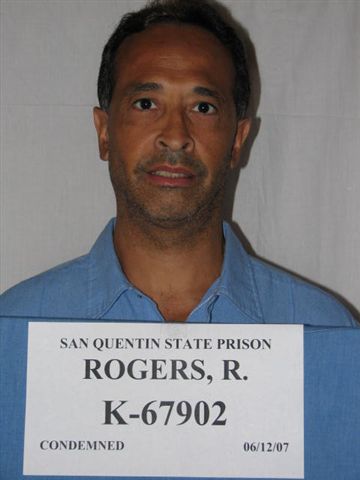
Billy Edwin Reid
Billy Edwin Reid became one of the most important suspects discussed in connection with the Denver Prostitute Killer mystery, but he should not be described as proven responsible for the entire series. Reid was conclusively prosecuted for two murders from 1989.
Lisa Kay Kelly, 33, had disappeared in 1988. Her badly decomposed body was found on March 24, 1989 in Clear Creek Canyon. For approximately 16 years investigators did not know her identity. A renewed examination of fingerprints finally identified the woman as Kelly.
Later that year, 28-year-old Lanell Williams disappeared from the Denver-Aurora area. Her strangled body was discovered on October 14, 1989 off U.S. Highway 6 west of Highway 58 near Golden. Investigators examining the two cases recognized similarities and submitted surviving evidence for modern forensic examination.
DNA evidence from the Williams investigation implicated Reid. Additional evidence helped prosecutors connect him with Kelly's murder as well. In 2008, a jury convicted Reid of murdering both women, and he received life sentences. Investigators have considered whether he killed other women during the Denver murder epidemic, but those additional killings have not been established in court.
Reid was also investigated in connection with the death of Queena Sanders, whose body was found in Denver on February 14, 1988. Investigators developed evidence they believed linked Reid to Sanders, but prosecutors determined that the available evidence was insufficient to prove the case beyond a reasonable doubt. He was therefore never convicted of her murder.
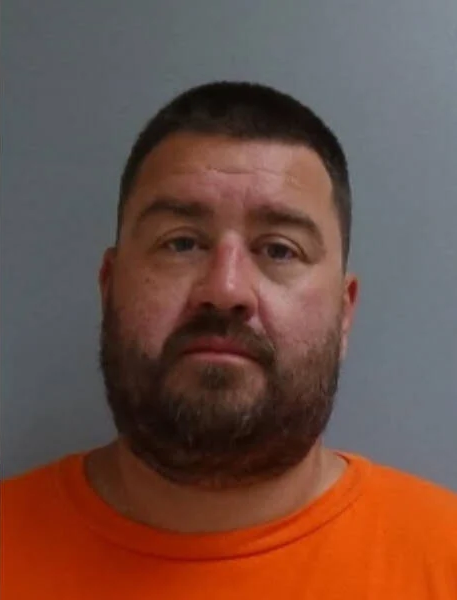
Vincent Darrell Groves
Another central figure was Vincent Darrell Groves. Unlike an unknown hypothetical "Prostitute Killer," Groves was a documented serial murderer whose crimes overlapped both geographically and chronologically with the Denver body-dump murders.
Groves had a history of violence against women and was convicted of murder in the early 1980s. After serving only part of his sentence, he was released and again began attacking women. He was later convicted of the murders of Diann Mancera and Juanita Lovato and received a life sentence.
Advances in DNA testing continued implicating Groves long after he died in prison in 1996. Investigators eventually connected him to additional women murdered during the late 1970s and 1980s. In 2025, DNA evidence also established his responsibility for Rhonda Fisher's 1987 murder. Authorities now believe Groves was responsible for at least a dozen homicides and possibly additional crimes.
Groves' known movements are particularly important to understanding the Denver Prostitute Killer mystery. Some similar murders happened while Groves was incarcerated, proving that he could not have been responsible for every killing in the larger pattern. His presence explains some of the murders, but it also demonstrates that another murderer, or several murderers, was operating at the same time.
Different Killers Hidden Within One Pattern
The eventual solutions of several cases changed investigators' understanding of the Denver murders. Jeannie Moore was linked through genetic genealogy to Donald Steven Perea. Rhonda Fisher was linked through DNA to Vincent Groves. Billy Edwin Reid was convicted of killing Lisa Kelly and Lanell Williams. Richard Saathoff was charged in 2025 with killing Donna Sue Wayne.
These developments strongly support the theory that the so-called Denver Prostitute Killer was never necessarily one man. Instead, Denver appears to have experienced an extraordinary period in which several violent offenders preyed on vulnerable women at approximately the same time. Their victims sometimes came from the same streets, disappeared under similar circumstances, and were left in the same types of isolated locations.
The Colfax Avenue Connection
East Colfax Avenue repeatedly appeared in the investigations. During the period when the murders occurred, sections of Colfax were associated with prostitution, bars, inexpensive motels, drugs, and a transient population. Predators could encounter women without having an obvious prior connection to them.
The highway system also offered offenders a means of quickly moving victims away from Denver. Interstate 70 runs through the metropolitan area toward open land east and west of the city. Other highways led toward rural portions of Adams, Arapahoe, Jefferson, Douglas, and Weld counties. A killer could pick someone up in a heavily populated part of Denver and leave her miles away in another jurisdiction.
This geography contributed to the investigative fragmentation. The police agency responsible for a disappearance was not necessarily the sheriff's department responsible for investigating the body. Years could pass before detectives recognized how many cases shared similar characteristics.
Modern Forensics Change the Investigation
DNA technology has transformed the Denver cases. Evidence collected decades ago, sometimes before investigators could have imagined modern genetic testing, has produced answers long after witnesses disappeared and suspects died. Genetic genealogy identified Donald Perea in Jeannie Moore's murder. DNA evidence helped establish Vincent Groves' responsibility for additional killings. DNA and fingerprints led to the 2025 charges against Richard Saathoff in Donna Wayne's death.
The continuing breakthroughs also demonstrate why investigators remain cautious about assigning unsolved victims to a single serial killer. Physical similarities between crimes can be compelling, but DNA has repeatedly shown that different offenders can select similar victims and use similar methods.
An Unfinished Case
The Denver Prostitute Killer remains best understood as a name attached to an unresolved chapter of Colorado criminal history rather than the confirmed identity of one murderer. Billy Edwin Reid and Vincent Groves were unquestionably killers, and both have been associated with murders that once appeared to belong to the larger pattern. Other cases have been attributed to still other offenders.
Yet murders including those of Kimberly Grabin, Karolyn Walker, Shannon MacLean, Jessica Caudill, and other women remain unresolved. Their cases preserve the central mystery: how many killers were operating around Denver during those two decades, which victims belonged to which offender, and whether additional murders can still be solved through preserved evidence.
What once appeared to be the trail of a single unidentified "Prostitute Killer" has increasingly become a story of multiple predators whose crimes overlapped across Denver and its surrounding counties. Each new forensic identification has separated another victim from the larger anonymous group and restored an individual name, offender, and history to a case that spent decades buried within one of Colorado's most complicated serial-murder investigations.