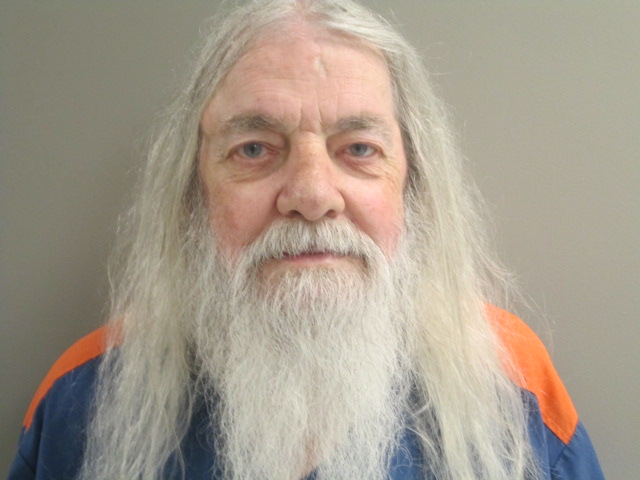
Larry Lee Ranes: The 1964 Interstate Murder Spree
Introduction
Larry Lee Ranes was an American murderer who confessed to killing five men during a brief but violent crime spree in the spring of 1964. Born on March 22, 1945, in Kalamazoo, Michigan, Ranes was only 19 years old when he was arrested. His crimes involved robbery, car theft, attacks on service-station employees and the murder of a motorist who had stopped to help him.
Ranes was convicted only of the murder of Michigan schoolteacher Gary Albert Smock. However, he also confessed to four additional killings in Michigan, Indiana, Nevada and Kentucky. Investigators connected him to the murder of Indiana gas-station attendant Charles E. Snyder and suspected that another victim was Air Force serviceman Vernon Llewellyn LaBenne. The identities of the men Ranes claimed to have killed in Nevada and Kentucky were never conclusively established.
Early Life and Family Background
Ranes grew up in Kalamazoo in a troubled household. His father reportedly drank heavily, behaved violently and encouraged Larry and his older brother, Danny Arthur Ranes, to fight and compete against one another. The father eventually abandoned the family and moved to Florida, where he worked at a gasoline station. Larry later developed a deep resentment toward his father and reportedly associated service stations with him.
As a teenager, Ranes became involved with an older woman who lived near his family. He spent considerable time with her and her children, forming an unusually intense attachment. By his late teens, however, his behavior had become increasingly unstable and violent.
Ranes entered the United States Army but encountered disciplinary problems. His military career ended after episodes of violence and confinement. After leaving the service, he drifted through several states and committed robberies to obtain money, food, transportation and alcohol.
The Beginning of the Killing Spree
The series of killings attributed to Ranes began in April 1964. His preferred targets were men working alone or motorists who could be isolated and robbed. Several of the crimes involved a .22-caliber firearm, and at least two victims were employees of gasoline stations.
Ranes later told authorities that robbery was the motive behind the murders. He took relatively small amounts of money and property, suggesting that the killings were not carefully planned for substantial financial gain. Instead, they appeared to be impulsive acts committed during a period of drifting, desperation and escalating violence.
Victims and Suspected Victims
- Vernon Llewellyn LaBenne – April 6, 1964 – Battle Creek, Michigan: LaBenne was a 20-year-old United States Air Force serviceman stationed in Michigan. While working part-time at a gasoline station near Battle Creek, he was robbed and shot. He was found critically wounded and remained in a coma before dying on April 6, 1964. LaBenne was reportedly preparing to be married the following day. Ranes was never prosecuted for the murder, but investigators believed LaBenne may have been the Michigan serviceman whom Ranes confessed to killing.
- Charles E. Snyder – May 30, 1964 – Elkhart, Indiana: Snyder, 33, was working alone as a service-station attendant when he was shot in the head with a .22-caliber firearm. Approximately $100 was reported missing from the station. His body was discovered during the early morning hours. Ranes later confessed to killing an Elkhart gas-station attendant, and the circumstances of Snyder’s death closely matched his account.
- Gary Albert Smock – May 30, 1964 – Kalamazoo County, Michigan: Smock, 30, was a married schoolteacher from Plymouth, Michigan. He encountered Ranes while Ranes was posing as a hitchhiker and offered him a ride. Ranes produced a gun, took control of the vehicle and forced Smock into the trunk. When Smock attempted to escape or made noise from inside the trunk, Ranes stopped the car, restrained him and shot him twice in the back of the head. Ranes stole approximately $3 and several personal possessions. Smock’s body was found in or near his abandoned vehicle later that day.
- Unidentified Nevada victim – Date unknown, spring 1964 – Las Vegas, Nevada: After his arrest, Ranes claimed that he had killed a man in Las Vegas during a robbery. He could not provide investigators with the victim’s name. No Nevada homicide was conclusively matched to his confession, and Ranes was never charged in connection with the alleged killing.
- Unidentified Kentucky victim – Date unknown, spring 1964 – Kentucky: Ranes also confessed to murdering a man in Kentucky. The precise city, date and identity of the victim were not established. Authorities were unable to independently confirm the killing or connect Ranes to a specific Kentucky homicide.
The Murder of Gary Albert Smock
Gary Smock’s murder became the central case against Ranes. Smock had been traveling through the Kalamazoo area on May 30, 1964, when he encountered the young hitchhiker. The teacher’s decision to help a stranger placed him alone inside a vehicle with an armed and increasingly unstable offender.
After entering the car, Ranes threatened Smock and forced him into the trunk. Ranes then drove away in Smock’s automobile. Smock remained alive inside the enclosed compartment and attempted to attract attention or escape. Angered by the noise, Ranes stopped the vehicle and removed him from the trunk.
Ranes tied or otherwise restrained Smock before shooting him twice in the back of the head with a .22-caliber weapon. He then searched the victim and vehicle, taking a few dollars and personal property. The murder was especially disturbing because the violence was grossly disproportionate to the small amount of money taken.
Smock’s wife reported him missing after he failed to return. His automobile was soon located abandoned along a road, and his body was discovered. Investigators recovered evidence showing that he had been restrained and shot at close range.
Connection to the Snyder Murder
On the same date that Smock was killed, Charles Snyder was murdered at a gasoline station in Elkhart, Indiana, approximately 60 miles from Kalamazoo. Snyder had been shot in the head with a .22-caliber weapon, and money had been removed from the business.
The close timing, similar firearm and robbery motive caused police in Michigan and Indiana to consider whether the crimes were connected. Smock’s automobile appeared to have been driven a substantial distance after it was refueled, making travel between the two crime scenes possible.
Following his arrest, Ranes admitted that he had robbed and killed an attendant at an Elkhart service station. Although some accounts rendered Snyder’s surname as “Snider,” contemporary victim records identify him as Charles E. Snyder. Ranes was not tried for Snyder’s death, but the confession and matching details led investigators to attribute the crime to him.
Confessions and Arrest
Ranes did not remain silent about the killings. In the days after Smock’s murder, he spoke to acquaintances about what he had done. He reportedly confessed to a former girlfriend or close female acquaintance, and the information eventually reached law enforcement.
Police arrested Ranes shortly before midnight on June 4, 1964, with the formal processing and questioning continuing into the early hours of June 5. He offered little resistance. During transportation to the police station and in subsequent questioning, he admitted killing Smock and claimed responsibility for four other murders.
Items belonging to Smock were found in Ranes’s possession and were identified by people who knew the victim. This physical evidence strengthened the confession and directly connected Ranes to Smock’s robbery and death.
Ranes described the other victims only vaguely. He said he had killed a service-station attendant in Elkhart, an Air Force serviceman in Michigan, a man in Las Vegas and a man in Kentucky. His inability or unwillingness to provide complete identifying information prevented authorities from conclusively verifying every confession.
Psychiatric Evaluation
After his arrest, Ranes underwent psychiatric examinations. Doctors examined his childhood, family relationships, military experiences and emotional condition. At least one evaluation described him as seriously mentally disturbed and concluded that the abuse and abandonment he experienced during childhood had contributed to his violent behavior.
Some examiners believed that Ranes had developed a subconscious hatred of gasoline stations because his father had worked at one after abandoning the family. That theory was used to explain why several of the murders Ranes confessed to involved service stations or employees working at them.
Ranes also described recurring thoughts of suicide. According to his statements, after committing robberies and murders he sometimes consumed food and alcohol and considered killing himself. He repeatedly failed to follow through. His later years in prison included additional reported suicide attempts and prolonged periods of self-destructive behavior.
Trial and Conviction
Ranes was prosecuted in Michigan for the first-degree murder of Gary Smock. His trial began on September 29, 1964. Prosecutors relied on his admissions, the victim’s property recovered from him and evidence documenting the abduction, robbery and execution-style shooting.
On October 8, 1964, a jury found Ranes guilty of first-degree murder. He was sentenced on October 23, 1964, to life imprisonment. The conviction ensured that he would remain confined even though the other four killings he described were never prosecuted.
Ranes later challenged the handling of his arrest and confession. His legal appeals raised questions about his right to counsel and the admissibility of statements made during the hours following his arrest. His case eventually reached the Michigan Supreme Court, but he remained imprisoned under a life sentence.
Relationship to Danny Ranes
Larry’s older brother, Danny Arthur Ranes, later became a serial murderer in his own right. Danny participated in a separate series of killings in Michigan in 1972. Despite being brothers from the same violent household, Larry and Danny did not commit murders together and were not accomplices in one another’s crimes.
The brothers’ separate murder cases made the Ranes family highly unusual. Both men were convicted of murder, but their offenses occurred years apart and involved different victims, motives and circumstances. Larry’s crimes centered primarily on robbery and transient encounters, while Danny’s later murders were sexually motivated and committed with an accomplice.
Life in Prison
During the early 1970s, Larry Ranes legally changed his name to Monk Steppenwolf. The name was inspired by Hermann Hesse’s novel “Steppenwolf.” Ranes later claimed that he wanted to separate himself from the Ranes surname, which had become associated with violence after both brothers were imprisoned for murder.
His prison life was marked by unusual behavior, manipulation and repeated disciplinary concerns. He reportedly attempted suicide by hanging and by ingesting dangerous substances. During another period, he refused food for several weeks and became severely emaciated.
Ranes educated himself while incarcerated, read extensively and became known for his ability to speak persuasively. He worked at various prison jobs, including sewing slippers and producing artwork. Prison accounts also described him as manipulative and capable of influencing other inmates.
In the late 1970s, prison officials reportedly uncovered a plot involving several inmates and a homemade crossbow designed by Ranes. The weapon was allegedly intended for use against another prisoner. The incident reinforced concerns that, despite his intellectual interests and controlled manner, he remained capable of participating in dangerous schemes.
Death
Larry Lee Ranes remained incarcerated for nearly six decades. He died on November 12, 2023, while imprisoned at the Saginaw Correctional Facility in Freeland, Michigan. He was 78 years old.
His death closed the life of a man whose confirmed conviction involved one victim but whose own confessions implicated him in five killings across four states. Gary Smock’s murder was proven in court, while the deaths of Charles Snyder and Vernon LaBenne were strongly associated with his admitted pattern of robbing and shooting men during the spring of 1964.
Legacy of the Case
The case of Larry Lee Ranes remains complicated because the number of murders attributed to him depends heavily on his confessions. He was legally convicted only of killing Gary Smock. The murder of Charles Snyder closely matched his admission, and investigators believed that Vernon LaBenne was probably the serviceman he claimed to have killed in Michigan. The alleged Nevada and Kentucky victims were never identified.
Ranes’s crimes demonstrated how quickly a mobile offender could cross jurisdictions and leave law-enforcement agencies struggling to connect similar murders. The attacks occurred before modern computerized crime databases, nationwide ballistic systems and rapid interstate information sharing. As a result, two of his claimed victims may never be conclusively identified.
His story is also remembered because of the independent crimes of his brother. Larry and Danny Ranes became a rare example of two siblings who separately developed into serial murderers without operating as a team. Their cases left a lasting and disturbing place in Michigan criminal history.