Odell Jackson and the Birmingham Axe-Murder Investigation
Overview
Odell Jackson was an Alabama murder defendant associated with the wave of axe attacks that frightened Birmingham and the surrounding Jefferson County communities during the early 1920s. He and his wife, Pearl Jackson, were portrayed by investigators and newspapers as central members of a supposed criminal organization that became known as the Alabama Axe Syndicate.
Jackson is frequently described as a serial killer. However, the surviving record is more complicated than that label suggests. Birmingham experienced numerous axe assaults between 1919 and 1924, but the attacks were not necessarily committed by one person or one organized group. Some appear to have been robberies, some may have involved unrelated offenders, and others may have been copycat crimes. Although Jackson was convicted of murder, it cannot be established with certainty that he personally committed every killing attributed to the alleged syndicate.
The Birmingham Axe-Murder Wave
Beginning in 1919, Birmingham was shaken by a succession of nighttime attacks in which victims were struck with axes, hatchets or similar blunt instruments. Historical accounts differ on the total number of cases. Some accounts connect approximately eighteen deaths and sixteen nonfatal assaults to the broader crime wave, while contemporary investigators claimed that confessions had helped them resolve dozens of crimes, including at least eight fatal attacks.
Many attacks occurred inside small neighborhood stores. A victim might be surprised while working alone, struck repeatedly and left near a counter or cash register while the attacker searched the building for money. Italian immigrant grocers were among those targeted, although the violence was not confined to one ethnic or social group.
Other cases were described as “alley murders.” In those attacks, men were allegedly enticed into isolated streets, alleys or vacant areas, where accomplices waited to rob and assault them. Police eventually argued that a connected group of men and women was responsible for both the store robberies and the attacks in secluded locations.
Odell and Pearl Jackson
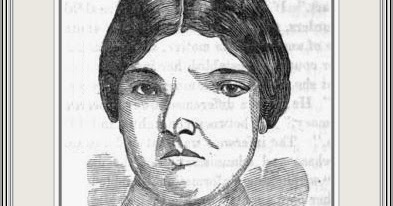
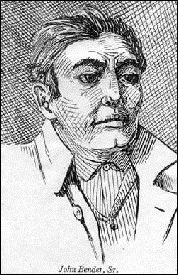
Odell Jackson and Pearl Jackson were a married African American couple living in the Birmingham area. Reliable information about Odell’s birth, childhood, education and employment is extremely limited. Most surviving descriptions of him were produced after his arrest and therefore concentrate almost entirely on the criminal allegations.
Authorities claimed that the Jacksons helped plan robberies, selected potential victims and worked with a shifting collection of associates. People identified in accounts of the investigation included Peyton Johnson, Mary Frances Sanders, Ed Jackson, Thomas Lee Gardner, Mack Brown, Sylvester Brown, Lillie Byrd, Fred Glover, John Reed and Frank Owens. Their exact roles differed from case to case, and not every person named was proved to have participated in every attack.
The expression “Alabama Axe Syndicate” can be misleading because it suggests a formally organized organization with a clear hierarchy. Much of that image came from sensational newspaper coverage and statements made by investigators. The available evidence instead points to a loosely defined collection of suspects accused of participating in robberies, assaults and murders.
The Murder of Robert Turper
The killing most directly associated with Odell and Pearl Jackson in surviving summaries is the murder of Robert Turper. Some records may contain variations or errors in the spelling of his surname, but “Robert Turper” is the name most commonly reproduced in accounts of the Jackson case.
Turper was described as a white man who was robbed and murdered in the Birmingham area on January 6, 1923. Prosecutors alleged that Odell and Pearl Jackson planned the crime and arranged for Turper to be brought to a secluded location. Mary Frances Sanders became an important witness and reportedly stated that the Jacksons intended to rob a white man on the night Turper was killed.
The precise sequence of the attack is not preserved consistently in accessible historical accounts. Nevertheless, prosecutors treated Sanders’s statements as evidence that the killing was planned rather than spontaneous. Her testimony connected the Jacksons to the intended robbery and became a major part of the case presented against them.
Known Victim Information
- Robert Turper — Died January 6, 1923, in the Birmingham area of Jefferson County, Alabama. He was reportedly lured to an isolated location and killed during a planned robbery. Odell and Pearl Jackson were implicated through the statements and testimony of Mary Frances Sanders. A more precise crime-scene address is not reliably established in the available record.
Historical reports alleged that Jackson and the other suspects were responsible for additional deaths. However, complete and dependable victim lists connecting each named victim specifically to Odell Jackson have not survived in readily available records. For that reason, unnamed victims or victims whose connection to Jackson cannot be verified should not be presented as his confirmed victims.
Mary Frances Sanders and the Break in the Case
Mary Frances Sanders played a central role in the investigation. Accounts state that she and Pearl Jackson were being held at a county facility when an argument developed between them. During the confrontation, Sanders threatened to reveal what she knew about Pearl and Odell Jackson’s alleged participation in the axe crimes.
Investigators learned of the accusation and questioned Sanders. She subsequently provided information about the Jacksons and other suspects. Her statements reportedly described planned robberies, the use of women to approach potential victims and the participation of accomplices who carried out the physical attacks.
Sanders’s cooperation gave police the narrative they needed to connect several previously separate crimes. Her evidence was especially important because physical evidence from the attacks was limited. Modern forensic methods such as DNA profiling did not exist, crime scenes were not always protected effectively, and the investigators had difficulty proving that the same weapon or offender was responsible for multiple assaults.
The Use of “Truth Serum”
One of the most controversial features of the case was the use of scopolamine during police questioning. At the time, the drug was promoted by some physicians as a possible “truth serum.” Investigators hoped that a person placed under its influence would become less capable of maintaining a lie and would reveal concealed information.
Several suspects in the Birmingham investigation were reportedly questioned after receiving the drug. Police announced that the resulting statements had connected the prisoners to numerous assaults and had helped clear up a large portion of the axe-murder wave.
Scopolamine does not reliably force a person to tell the truth. It can produce confusion, disorientation, memory problems and increased suggestibility. A drugged suspect may repeat information suggested by an interviewer, mix real memories with imagined events or make inconsistent statements. The use of the drug therefore creates serious doubts about the reliability and voluntariness of the confessions obtained during the investigation.
Arrests and Prosecution
The major breakthrough occurred in late 1923, and the investigation expanded during January 1924. Authorities detained several suspects and announced that they had solved a series of murders and assaults committed during the preceding years. Newspaper reports described five principal prisoners as having confessed to eight deadly attacks, although broader claims connected the alleged group to many more crimes.
Odell and Pearl Jackson were prosecuted for murder. The state relied heavily on witness testimony, alleged confessions and the theory that the couple had jointly planned robberies. The prosecution did not need to prove that both defendants personally delivered the fatal blows if it could establish that they knowingly participated in a plan that resulted in murder.
The racial and social circumstances surrounding the proceedings are important. The defendants were Black and were prosecuted in segregated Alabama during the 1920s. Newspaper coverage routinely used racist terminology, presented disputed police claims as established fact and encouraged the public to view the accused as members of a frightening criminal conspiracy. These conditions do not prove that the Jacksons were innocent, but they complicate any modern assessment of the fairness of the investigation and trial.
Conviction and Death Sentences
Odell and Pearl Jackson were convicted of murder and sentenced to death by hanging. Their executions were scheduled for June 19, 1925. Contemporary reports emphasized that they were expected to become the first husband and wife executed together on the same gallows in Alabama.
Preparations were made at the Jefferson County jail, and the state pardon authorities initially refused to grant relief. The case attracted substantial attention because Pearl Jackson would have been one of the few women executed in Alabama during that period.
The scheduled hanging did not ultimately take place. The death sentences were commuted to life imprisonment. Records indicate that the Jacksons remained alive after 1926, but dependable details about Odell Jackson’s later imprisonment and exact date of death are not readily available.
Questions About the Evidence
The case against Odell Jackson rested on evidence that would face close scrutiny in a modern courtroom. Statements obtained while suspects were under the influence of scopolamine would raise major questions about competency, voluntariness and suggestibility. The absence of modern forensic testing would also make it difficult to connect a particular defendant to a weapon or crime scene.
Witness testimony presented additional problems. Mary Frances Sanders may have possessed genuine knowledge of the crimes, but she was also a suspect attempting to improve her own position. Statements made by a cooperating accomplice can be valuable, yet they normally require independent corroboration because the witness may have a powerful motive to shift blame.
The large number of attacks attributed to the syndicate is another source of uncertainty. The crimes occurred across several years, involved different types of victims and were committed under varying circumstances. Some attacks may have been carried out by the defendants, while others could have been committed by unrelated robbers or copycat offenders who recognized that an axe was an effective weapon for creating fear and confusion.
Was Odell Jackson a Serial Killer?
Odell Jackson is commonly classified as a serial killer because investigators accused him and his associates of committing multiple murders over an extended period. Under a broad definition, a participant who knowingly helped plan several separate fatal robberies could be considered a serial murderer even if accomplices delivered the actual blows.
However, the historical evidence does not support a precise, verified personal victim count for Jackson. He was convicted in connection with the murder of Robert Turper, and authorities alleged that he participated in additional killings. Claims that he personally murdered eight or more identified people should be treated cautiously unless supported by individual case records.
It is therefore more accurate to describe Jackson as a convicted murderer and an alleged leader or participant in the group blamed for part of Birmingham’s axe-murder wave. The designation “serial killer” reflects the prosecution’s theory and later summaries of the case, but it should not be interpreted as proof that every Birmingham axe murder was committed by Jackson.
Historical Legacy
The Birmingham axe murders remain one of Alabama’s most disturbing and confusing crime episodes. The attacks created years of fear among shopkeepers, immigrant families, workers and residents who traveled through the city after dark. Merchants armed themselves, community groups organized protection, and police faced intense pressure to produce arrests.
Odell Jackson became one of the best-known names associated with the crimes because of his conviction, his marriage to a co-defendant and the dramatic plan to execute the couple together. Yet the record left behind is fragmented and shaped by sensational journalism, coercive interrogation practices, racial prejudice and investigative methods that were unreliable even by the standards of the period.
Jackson’s case illustrates the difficulty of separating verified history from claims made during a highly publicized criminal investigation. He was convicted of murder and accused of helping organize additional fatal robberies, but the identities and exact death dates of most victims specifically attributable to him remain uncertain. Robert Turper, killed on January 6, 1923, is the clearest named victim connected to the prosecution of Odell and Pearl Jackson.