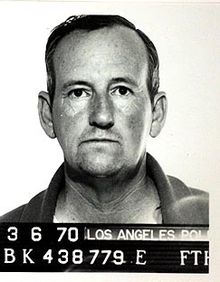
Clyde Carl Wilkerson: A Serial Killer Identified Through DNA
A Trail of Sexual Violence and Murder
Clyde Carl Wilkerson was an American serial killer and sexual predator whose crimes stretched from Southern California to Oklahoma. He murdered at least three people during a known period of violence between 1965 and 1975. His victims were attacked inside residences or abducted while going about their ordinary lives. The crimes involved sexual assault, strangulation, severe beatings and attempts to conceal or escape responsibility for the violence.
Wilkerson avoided prosecution for the murders for more than three decades. Evidence collected from the crime scenes remained preserved while forensic science gradually advanced. Investigators eventually used DNA recovered from that evidence to connect crimes that had previously appeared separated by geography and time. To obtain a comparison sample without alerting him, authorities collected envelopes that Wilkerson had licked and sealed. The saliva on the envelopes produced the genetic evidence that helped expose him.
Confirmed Victims
- Cheryl Burnett, 19 — June 6, 1965 — El Cajon, California: Burnett was attacked in her apartment, beaten with a bottle, sexually assaulted and strangled with a curtain cord. Her two-year-old son was asleep in another room during the killing.
- Louis Lafayette Mercer, 62 — June 20, 1965 — El Cajon, California: Mercer was attacked inside the apartment he shared with his wife, Lola. He was repeatedly struck in the head and upper body with a heavy object, reportedly a wrench, and died from massive injuries.
- Geraldine “Geri” Cornwell Martin, 28 — February 5, 1975 — Tulsa, Oklahoma: Martin disappeared after attending an evening class at Tulsa Junior College. She was sexually assaulted and strangled. Her body was later discovered concealed inside a vacant apartment at the Osage Hills apartment complex in North Tulsa.
The Murder of Cheryl Burnett
On June 6, 1965, nineteen-year-old Cheryl Burnett was found murdered inside her El Cajon apartment. Burnett was a young mother, and her two-year-old son was sleeping nearby while the attack occurred. The killer beat her with a bottle, sexually assaulted her and used a curtain cord to strangle her.
The intimate setting of the crime made the killing especially disturbing. Wilkerson had entered a place where Burnett should have been safe and attacked her while her child remained only a short distance away. Evidence collected from Burnett’s bed included biological material left by the attacker, but DNA profiling did not yet exist. Investigators preserved the evidence, unknowingly protecting the material that would identify her killer decades later.
The investigation initially became complicated by attention directed toward another possible suspect. Witness statements and suspicious behavior caused investigators to examine a local Catholic priest who knew Burnett. Without technology capable of scientifically identifying the person who left the biological evidence, detectives could not conclusively establish who had committed the murder. The case eventually became cold.
The Attack on Louis and Lola Mercer
Approximately two weeks after Burnett’s murder, another exceptionally violent crime occurred in El Cajon. Louis Mercer and his wife, Lola Mercer, had recently moved into an apartment on Chamber Street. During the nighttime attack, an intruder entered their residence and assaulted the couple in their bedroom.
Louis Mercer was beaten repeatedly with a heavy object. The blows were concentrated around his head and upper body and caused devastating trauma. Lola was also severely beaten and sexually assaulted. She survived, but the injuries caused permanent brain damage and left her unable to provide investigators with a complete account of the attack.
The circumstances contained similarities to the Burnett case. Both crimes involved residential entry, sexual violence and overwhelming brutality. Biological evidence was collected from the Mercer crime scene, but investigators again lacked the scientific tools necessary to identify the attacker. Although detectives considered whether the crimes were connected, the identity of the man responsible remained unknown.
Lola Mercer was not one of Wilkerson’s murder victims. She survived the assault despite its catastrophic physical and emotional consequences. She died years later, in 1979. The attack nevertheless demonstrated Wilkerson’s willingness to leave a victim either dead or so gravely injured that survival appeared unlikely.
The La Mesa Assault
In July 1965, Wilkerson committed another violent home invasion in nearby La Mesa, California. He entered the home of a nurse, sexually assaulted her and left her severely injured. Unlike the victims in the earlier El Cajon cases, the woman survived and was able to assist investigators.
A suspicious neighbor had recorded the license plate number of Wilkerson’s vehicle because prowlers had recently caused concern in the area. Police traced the license plate to Wilkerson, and the surviving victim identified him in a lineup. He was convicted for the assault and received a five-year prison sentence.
The conviction placed Wilkerson in custody, but authorities did not have sufficient evidence to charge him with the Burnett or Mercer murders. His identification in the La Mesa attack showed that he was operating in the same general area and during the same period as the two unsolved killings. The connection would become increasingly significant when investigators later reconstructed his movements and compared the characteristics of the crimes.
The Abduction and Murder of Geraldine Martin
Ten years after the California murders, Wilkerson committed another confirmed killing in Tulsa, Oklahoma. Geraldine “Geri” Cornwell Martin was a twenty-eight-year-old student at Tulsa Junior College who also worked in a Tulsa attorney’s office. Friends described her as lively and sociable, with plans for her education and future.
On the evening of February 5, 1975, Martin attended a night class at the college. She vanished after leaving the campus. Investigators later determined that she had been abducted from the college parking area. Her disappearance initiated a search, but no immediate evidence revealed where she had been taken or who was responsible.
Martin’s body was eventually discovered inside a vacant apartment at the Osage Hills complex in North Tulsa. Her remains had been concealed in a closet. She had been sexually assaulted and strangled. The location was abandoned, allowing the killer to hide her body away from residents who might otherwise have quickly discovered the crime.
Investigators collected and preserved biological evidence associated with Martin’s murder. As in the California cases, the evidence could not identify the attacker using the forensic methods available in 1975. Her murder remained unsolved for more than twenty-five years.
Crimes That Remained Cold
For decades, Wilkerson continued his life without being held accountable for the murders. The Burnett and Mercer investigations remained stored in police files in California, while Martin’s murder was maintained as a separate cold case in Oklahoma. The distance between the crime scenes made an immediate connection difficult.
Wilkerson also moved and worked in different areas, complicating attempts to create a complete record of his movements. Investigators later examined unsolved sexual assaults and murders committed in places where he had lived, traveled or worked. His confirmed conduct caused authorities to question whether other unidentified victims might exist, although additional murders have not been conclusively proven in court.
The known cases reveal a recognizable pattern. Wilkerson targeted women in vulnerable situations, used sexual violence as a central part of his attacks and relied on strangulation or severe blunt-force trauma. He entered private residences, attacked people with extreme force and left crime scenes containing biological evidence. At the time, he had little reason to believe that the evidence could identify him many years later.
Cold-Case Investigators Reopen the California Murders
By the late 1990s and early 2000s, DNA profiling had transformed homicide investigations. Evidence that once appeared incapable of producing a suspect could now generate a genetic profile unique to the person who left it. El Cajon investigators returned to the preserved material from the Burnett and Mercer crime scenes.
Laboratory examination revealed that usable biological evidence had survived for more than thirty years. DNA from the Burnett scene was compared with evidence from the Mercer attack, providing scientific support for the belief that the same offender had committed both crimes.
Investigators then focused on Wilkerson, whose previous conviction for the La Mesa assault placed him close to El Cajon during the same violent period. By then, he was living in Benton, Arkansas, and working as a truck driver. Detectives needed a DNA sample that could be compared with the California evidence.
The Licked Envelope That Exposed Him
Federal investigators obtained envelopes that Wilkerson had personally sealed at work. The adhesive portions contained saliva deposited when he licked them. A laboratory extracted DNA from the saliva and compared it with the genetic evidence preserved from the 1965 crime scenes.
The results connected Wilkerson to the attacks. The evidence that he had unknowingly left in Cheryl Burnett’s apartment and in the Mercer residence survived long enough to identify him. On October 29, 2002, federal agents and El Cajon detectives arrested the sixty-three-year-old Wilkerson at his Arkansas home.
The method used to identify him became a striking example of forensic persistence. Wilkerson had escaped prosecution when eyewitness testimony and traditional investigative methods failed to solve the murders. He was ultimately exposed by his own saliva on ordinary workplace correspondence.
California Conviction
Wilkerson was extradited to California to face prosecution for the decades-old crimes. The DNA evidence placed him at the scenes and contradicted any attempt to distance himself from the attacks. Faced with the scientific evidence, he entered guilty pleas related to the murder of Louis Mercer and the sexual assault of Lola Mercer.
In 2003, Wilkerson received a life sentence in California. Although the conviction formally centered on the Mercer case, DNA also linked him to Cheryl Burnett’s rape and murder. The forensic connection finally cleared the suspicion that had surrounded other individuals during the original investigation and established Wilkerson as the man responsible.
DNA Connects Wilkerson to Oklahoma
Once Wilkerson was identified in California, investigators elsewhere began comparing his DNA with evidence from unresolved crimes. Tulsa authorities tested material preserved from Geraldine Martin’s 1975 murder. The result linked Wilkerson to her sexual assault and killing.
The match revealed that his known homicidal violence had continued at least a decade after the California attacks. It also transformed Martin’s case from an unidentified cold-case murder into a prosecutable crime. Investigators could now place the same offender in two states and connect him to three murders involving sexual violence.
Wilkerson pleaded guilty in 2004 to first-degree murder in Martin’s death. A Tulsa County judge sentenced him to life imprisonment. The Oklahoma sentence was ordered to run concurrently with the life sentence already imposed in California.
A Possible Larger Victim Count
Wilkerson is generally recognized as the confirmed killer of Cheryl Burnett, Louis Mercer and Geraldine Martin. His demonstrated pattern, mobility and history of sexual assault caused investigators to consider whether he had attacked additional women across the country.
Authorities reviewed unsolved cases that occurred in locations connected to Wilkerson’s employment and travels. Investigators were particularly interested in crimes involving home intrusion, sexual assault, strangulation and severe beatings. His work as a truck driver gave him the ability to travel through numerous jurisdictions, potentially making it difficult for local agencies to recognize a broader pattern.
Suspicion alone, however, does not establish responsibility. Wilkerson was not convicted of every offense examined by investigators, and no responsible account should present unproven cases as confirmed murders. His verified record consists of three homicide victims and multiple women who survived violent sexual attacks.
His Final Years
Wilkerson spent his final years incarcerated in California. The passage of time that had once protected him ultimately worked against him because investigators preserved the physical evidence and waited for science to provide answers.
Clyde Carl Wilkerson died in prison on July 12, 2016, at the age of seventy-seven. His death ended any possibility of prosecuting him for additional crimes unless they had already been charged, but his DNA profile remained available for comparison with other unresolved cases.
Legacy of the Investigation
The Wilkerson investigation illustrates the importance of preserving crime-scene evidence, even when a case appears impossible to solve. Biological material collected in 1965 and 1975 retained the information needed to identify the killer decades later. Detectives, forensic scientists and prosecutors were able to use that evidence to reconstruct crimes committed before modern DNA analysis existed.
For the families of Cheryl Burnett, Louis Mercer and Geraldine Martin, the convictions came only after years of uncertainty. The eventual identification of Wilkerson could not restore the lives that were taken or erase the trauma inflicted on the surviving victims. It did, however, establish responsibility and prevent the murders from remaining permanently unresolved.
Wilkerson’s case also demonstrates how serial offenders can escape detection when their crimes cross jurisdictional boundaries. California investigators initially viewed the Burnett and Mercer attacks as local cases, while Tulsa authorities had no reason in 1975 to connect Martin’s murder to crimes committed ten years earlier and more than a thousand miles away. DNA ultimately supplied the connection that geography and time had concealed.