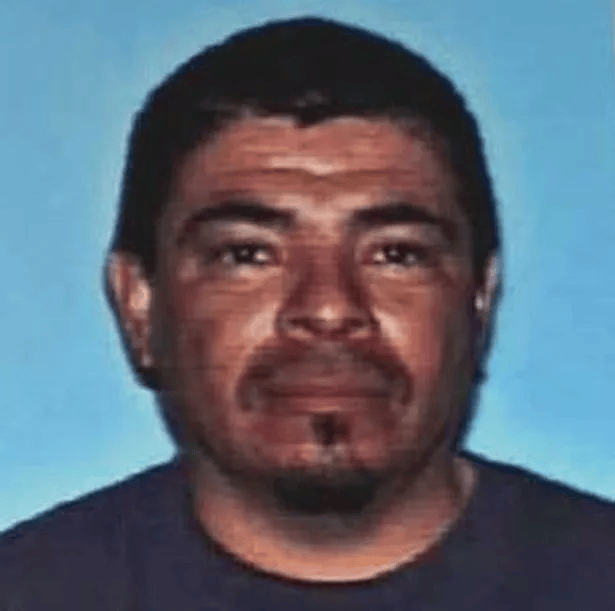
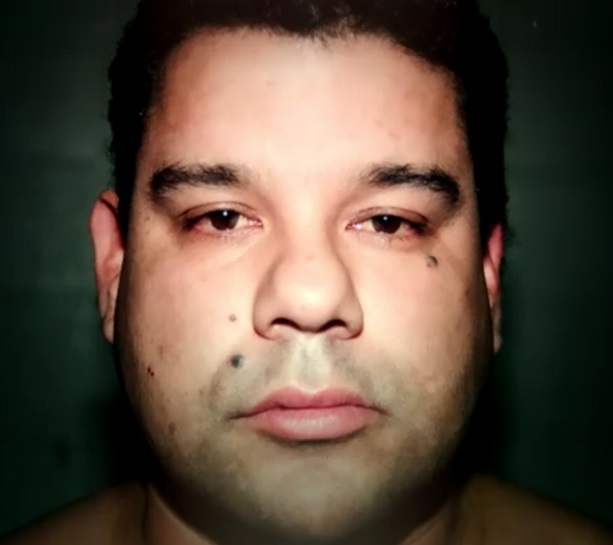
Robert Henry Nicolaus: The Father Who Murdered His Children and Later His Former Wife
Overview
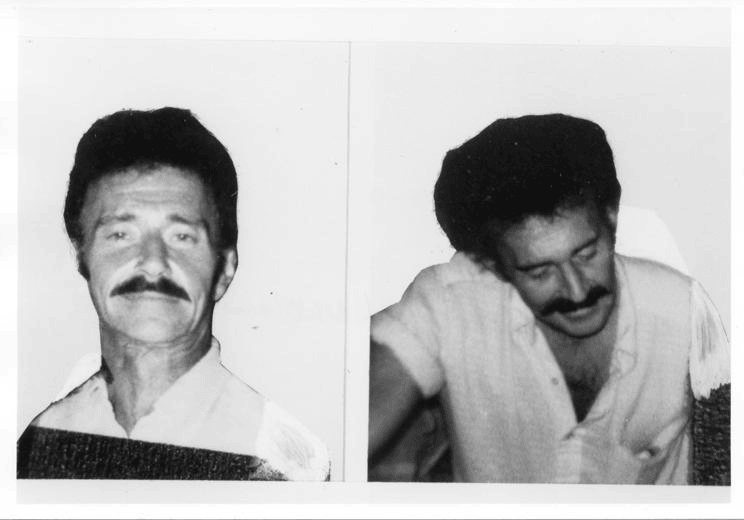
Robert Henry Nicolaus was a California murderer responsible for four killings committed more than two decades apart. His victims included his three young children, whom he shot to death together in May 1964, and his former wife, Charlyce “Lisa” Robinson, whom he murdered in Sacramento in February 1985. Because the crimes occurred during separate periods with a lengthy interval between them, Nicolaus has frequently been classified as a serial killer, although the first three murders were committed during a single incident.
The Nicolaus case became especially controversial because he was initially sentenced to death for murdering his children, only to have his convictions reduced to second-degree murder by the California Supreme Court. After serving approximately 13 years in prison, he was released on parole in 1977. Less than eight years later, he killed again, demonstrating the devastating consequences of his return to the community.
The Murders of His Three Children
On May 23, 1964, Nicolaus collected his children for what appeared to be an ordinary family outing. Donald and Roberta were his children from a previous relationship with Jean “Jeannie” Lara, while two-year-old Heidi was his daughter with his wife, Lisa Nicolaus. Nicolaus had been troubled by disputes involving his relationships, the custody and upbringing of his older children, and Lisa’s decision to leave him.
Nicolaus bought the children toys and candy before driving them to an isolated area near Rio Linda, north of Sacramento. He told the children that he had lost a key and instructed them to climb into the trunk of his automobile to search for it. Once all three children were inside, Nicolaus used a handgun to shoot each of them repeatedly in the head at extremely close range.
Heidi was shot four times. Roberta and Donald were each shot three times. The children’s bodies were left inside the trunk of the vehicle. Evidence from the case indicated that the shootings were intentional and methodical rather than the result of a sudden physical struggle.
After the murders, Nicolaus traveled toward the Lake Tahoe area with Lisa and her mother. His behavior reportedly became increasingly strange. He cried, spoke about dying and heaven, asked the women to sing religious hymns, and appeared physically weak. On the morning of May 24, he was transported to Barton Memorial Hospital near Lake Tahoe.
At the hospital, Nicolaus approached a nurse with a confession. He stated that he had killed his three children and described taking them for a ride, telling them to enter the trunk and shooting them. Police subsequently located the automobile and discovered the children’s bodies inside.
Verified Victims
- Heidi Marvelle Nicolaus, age 2 — Killed on May 23, 1964, near Rio Linda in Sacramento County, California. Heidi was shot four times in the head at close range and was found inside the trunk of her father’s automobile.
- Roberta Nicolaus, age 5 — Killed on May 23, 1964, near Rio Linda in Sacramento County, California. Roberta was shot three times in the head after being instructed to climb into the vehicle’s trunk.
- Donald Nicolaus, age 7 — Killed on May 23, 1964, near Rio Linda in Sacramento County, California. Donald was shot three times in the head and found in the trunk with his sisters.
- Charlyce “Lisa” Robinson — Killed on February 22, 1985, in Sacramento, California. Robinson was beaten and shot twice at close range in a parking area near Eleanor Street. She died while being transported to a hospital.
Trial for the Children’s Murders
Nicolaus was prosecuted on three counts of first-degree murder. His defense centered heavily on his psychological condition and whether he possessed the mental capacity to deliberate and premeditate the killings. Psychiatrists presented conflicting opinions regarding his mental state, emotional stability and ability to understand the nature of his actions.
A jury convicted Nicolaus of all three first-degree murders, found him legally sane and sentenced him to death. The California Supreme Court automatically reviewed the judgment. In February 1967, the court concluded that the evidence did not sufficiently support findings of first-degree murder under the diminished-capacity laws then in effect.
The court reduced all three convictions to second-degree murder. Nicolaus therefore escaped execution and received prison sentences for the reduced offenses. He remained incarcerated for approximately 13 years before being released on parole in 1977.
Life After His Release
Following his release, Nicolaus worked in several occupations, including positions as a warehouse worker, custodian and gardener. He maintained an interest in behavioral psychology and had studied psychological subjects while imprisoned. For several years, he apparently complied with the formal conditions of his parole and avoided new criminal convictions.
Beneath that appearance of stability, however, Nicolaus remained bitter toward his former wife, Charlyce “Lisa” Robinson. He believed she had mishandled money belonging to him and claimed that she owed him thousands of dollars. He also resented what he viewed as her failure to cooperate with his desire to have the three murdered children buried together.
Documents later discovered in Nicolaus’s apartment contained hostile descriptions of Robinson and her family. His writings revealed long-standing anger, resentment and an obsessive desire to confront or punish her. Those sentiments ultimately culminated in another fatal attack.
The Murder of Charlyce “Lisa” Robinson
At approximately 4:00 p.m. on February 22, 1985, witnesses saw Robinson sitting in a red Volkswagen near Eleanor Street in Sacramento. Nicolaus arrived in a turquoise Rambler, pulled into the area and blocked her automobile. He approached the Volkswagen while shouting words expressing anger and betrayal.
Nicolaus reached into the vehicle and began beating Robinson. He then returned to his Rambler, retrieved a handgun and shot her in the lower chest. After briefly walking away, he returned to where Robinson had fallen and fired a second shot at point-blank range, striking her through the buttock.
Robinson’s three-year-old son was in the back seat of her vehicle and witnessed the terrifying aftermath. Nicolaus drove away, but witnesses recorded identifying information about his car and provided police with its license-plate number. Moments later, Nicolaus returned, pulled alongside the wounded Robinson and looked at her before leaving again.
Robinson remained conscious when officers arrived. Despite severe injuries, she identified her attacker as Robert Nicolaus. She repeated and spelled his name and gave police information about where he lived. Her statement became a powerful dying declaration identifying Nicolaus as the person who had shot her.
Robinson died while being transported to the hospital. An autopsy found extensive facial injuries consistent with a beating and two gunshot wounds. The fatal bullet had entered her lower chest and severed her aorta, causing massive internal bleeding. Ballistics evidence showed that the fatal shot had been fired from a distance of only several inches.
Flight and Capture
Nicolaus immediately fled California. Investigators found his Rambler the following day in a public parking lot. The handgun used in the murder was visible inside the automobile and was seized as evidence. Police also searched his apartment and recovered writings that documented his hostility toward Robinson.
During his flight, Nicolaus traveled through several eastern states and made telephone calls from New York City. He contacted an acquaintance and asked what was known about Robinson’s death and whether anyone had been arrested. His movements and calls strengthened the prosecution’s argument that his flight demonstrated consciousness of guilt.
Nicolaus was placed on the FBI’s Ten Most Wanted Fugitives list as fugitive number 394. On July 20, 1985, a citizen in York, Pennsylvania, recognized his photograph on an identification notice displayed at a post office. FBI agents arrested him there approximately five months after Robinson’s murder.
At first, Nicolaus falsely identified himself as Pasco D’Antonoli. After admitting his true identity, he denied knowing anything about the murder. He claimed that he had left Sacramento before Robinson was killed and insisted that he had not handled a handgun since murdering his children in 1964. When investigators told him Robinson had named him before her death, he suggested she had been confused or had falsely accused him.
Second Murder Trial and Death Sentence
Nicolaus was returned to California and prosecuted for Robinson’s murder. Because the killing occurred in Sacramento County, but concerns existed about obtaining an impartial jury, the trial was transferred to Santa Clara County.
The evidence against him included eyewitness testimony, Robinson’s dying identification, the description and license number of his vehicle, the recovered murder weapon, his hostile writings, his interstate flight and the false identity he provided when arrested. His attorneys did not seriously dispute that he had attacked Robinson but argued that the evidence supported no more than second-degree murder.
The jury rejected that argument and convicted Nicolaus of first-degree murder. His three previous murder convictions were admitted as special circumstances that made him eligible for the death penalty. The jury sentenced him to death, and the California Supreme Court affirmed the conviction and sentence in 1991.
Death in Prison and Legacy
Robert Henry Nicolaus remained on California’s death row but was never executed. He died in prison on April 12, 2003. His death ended a case that had stretched across nearly four decades and involved two separate death sentences.
The murders remain a disturbing example of repeated family violence. Nicolaus first killed three defenseless children whom he was responsible for protecting. After receiving a reduced sentence and eventually being released, he murdered the former wife he had blamed for many of his grievances.
His history also generated lasting controversy concerning sentencing, parole and the evaluation of violent offenders. The most tragic consequences were borne by Heidi, Roberta, Donald and Charlyce Robinson, whose lives were taken by a man who repeatedly transformed personal resentment and obsession into deliberate lethal violence.