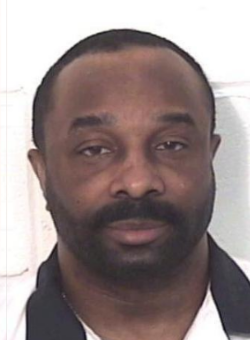
Joseph James DeAngelo: The Golden State Killer
Overview
Joseph James DeAngelo Jr. is an American serial killer, serial rapist, burglar, and former police officer whose crimes terrorized communities throughout California during the 1970s and 1980s. Over the course of his criminal career, different police departments knew the unidentified offender by several names, including the Visalia Ransacker, East Area Rapist, Original Night Stalker, and eventually the Golden State Killer. For decades investigators did not realize that crimes separated by hundreds of miles and investigated by numerous law-enforcement agencies were the work of the same man.
DeAngelo ultimately admitted responsibility for 13 murders and crimes against dozens of additional victims. Prosecutors described a criminal campaign involving nearly 50 rapes as well as burglaries, kidnappings, robberies, attempted murder, and false imprisonment. His confirmed criminal activity stretched from the mid-1970s until 1986, while some of the earliest burglaries associated with the broader series began several years before his first confirmed murder.
Police Officer and the Man Behind the Crimes
Joseph James DeAngelo Jr. was born on November 8, 1945, in Bath, New York. He served in the United States Navy during the Vietnam War and later studied police science and criminal justice in California. His background would become particularly disturbing after his identification because he was employed as a police officer during part of the same period in which communities were being terrorized by a mysterious burglar and sexual predator.
DeAngelo joined the Exeter Police Department in 1973. Exeter is located only a short distance from Visalia, where a prolific burglar soon became known as the Visalia Ransacker. In 1976 DeAngelo moved north and became an officer with the Auburn Police Department. His time in Auburn overlapped with the reign of the East Area Rapist in the Sacramento region.
His law-enforcement career ended in 1979 after he was caught shoplifting a hammer and a can of dog repellent from a store. He was convicted of misdemeanor shoplifting and dismissed from the Auburn Police Department. In retrospect, the items involved in the theft attracted considerable attention because investigators later learned that DeAngelo routinely carried tools, weapons, restraints, and other equipment while stalking neighborhoods and entering homes.
The Visalia Ransacker
Between 1974 and 1975, residents of Visalia were frightened by an unusually persistent burglar who entered and ransacked homes. More than 100 burglaries were attributed to the Visalia Ransacker. The intruder often spent considerable time inside residences, disturbing bedrooms and personal possessions while sometimes ignoring expensive objects in favor of coins, jewelry, photographs, or other small belongings.
The behavior suggested that burglary itself was not always the primary purpose. The offender prowled residential neighborhoods, watched homes, approached bedroom windows, and developed escape routes. Residents repeatedly reported suspicious men or evidence that someone had been watching their houses.
The crimes escalated dramatically on September 11, 1975. DeAngelo entered the Visalia home of 45-year-old Claude Snelling and attempted to abduct Snelling's 16-year-old daughter. Claude awakened, realized his daughter was being taken from the house, and confronted the masked intruder. DeAngelo shot Snelling twice and escaped. Snelling died from his injuries, becoming DeAngelo's first confirmed murder victim.
On December 10, 1975, Visalia police detective William McGowen encountered the suspected Ransacker while officers were conducting surveillance. McGowen confronted the prowler, who initially appeared to surrender before suddenly drawing a firearm and shooting at him. The shot struck McGowen's flashlight, allowing the attacker to escape. Decades later DeAngelo admitted that he had been the man who attempted to kill McGowen.
The East Area Rapist
After the Visalia series ended, another unidentified criminal began terrorizing communities around Sacramento. The first known sexual assault in the East Area Rapist series occurred in June 1976. Over the following years attacks were reported in Rancho Cordova, Carmichael, Citrus Heights, Sacramento, Orangevale, Davis, Stockton, Modesto, Concord, Danville, San Jose, Fremont, Walnut Creek, and other communities.
The offender frequently spent time watching his intended victims before entering their homes. Investigators believed he sometimes entered houses in advance to learn their layouts, unlock windows, or prepare escape routes. He usually attacked during the night and concealed his identity with a ski mask or other face covering.
DeAngelo often awakened victims with a flashlight and a weapon. Couples were restrained, and the male victim was sometimes ordered to lie face down while dishes or similar objects were placed on his back. DeAngelo threatened that if he heard the objects fall, he would kill everyone in the house. He then separated the female victim and sexually assaulted her. He frequently remained inside for an extended period, ransacking rooms, stealing small objects, and on some occasions eating food before leaving.
These methods created intense fear throughout Sacramento-area neighborhoods. Residents changed locks, acquired dogs and firearms, organized neighborhood watches, and altered their routines. Police received enormous numbers of tips but could not identify the offender.
The Murders of Brian and Katie Maggiore
On February 2, 1978, Brian Maggiore and his wife Katie were walking their dog through their Rancho Cordova neighborhood. Brian was 21 and serving in the United States Air Force, while Katie was 20. Investigators concluded that the couple encountered the man responsible for the East Area Rapist attacks.
The Maggiores apparently attempted to get away from him and ran through neighborhood yards. The gunman chased them and shot both at close range. Their murders represented a significant escalation in the East Area Rapist investigation. After DeAngelo was identified decades later, he admitted murdering Brian and Katie Maggiore.
The Original Night Stalker
By 1979 the attacks in Northern California had largely stopped, but a new series of exceptionally violent home invasions began in Southern California. Investigators initially treated the Southern California killer as a separate offender and eventually referred to him as the Original Night Stalker.
On October 1, 1979, a couple in Goleta survived an attempted attack after managing to escape and alert neighbors. On December 30, DeAngelo returned to Goleta and murdered Robert Offerman and Debra Alexandria Manning. The crime marked the beginning of a sequence of Southern California murders that would continue through 1981.
His Southern California attacks retained many characteristics of the earlier East Area Rapist crimes: nighttime entry into homes, restraints, sexual assault, ransacking, threats, theft, and careful efforts to avoid identification. The crucial difference was that DeAngelo increasingly murdered the people he attacked rather than leaving surviving witnesses.
Confirmed Murder Victims
The following are the 13 people DeAngelo admitted murdering. For several Orange County cases, court filings used the date on which the victims were discovered or an "on or about" range. Where the available record establishes only an overnight period, that distinction is noted rather than assigning a falsely precise time of death.
- Claude Snelling — September 11, 1975 — Visalia, Tulare County, California. Snelling, 45, was shot after confronting DeAngelo while DeAngelo was attempting to abduct Snelling's teenage daughter from the family's home.
- Katie Maggiore — February 2, 1978 — Rancho Cordova, Sacramento County, California. Katie, 20, was shot while she and her husband were walking their dog and attempting to escape their attacker.
- Brian Maggiore — February 2, 1978 — Rancho Cordova, Sacramento County, California. Brian, 21, an Air Force serviceman, was chased and shot along with his wife Katie.
- Debra Alexandria Manning — December 30, 1979 — Goleta, Santa Barbara County, California. Manning, 35, was attacked inside Robert Offerman's residence. DeAngelo sexually assaulted and murdered her during the home invasion.
- Robert Offerman — December 30, 1979 — Goleta, Santa Barbara County, California. Offerman, 44, was restrained and shot during the same attack in which Manning was killed. Evidence suggested that he had attempted to free himself and resist the attacker.
- Charlene Smith — March 13, 1980 — Ventura, Ventura County, California. DeAngelo entered the home Charlene shared with her husband, restrained them, sexually assaulted Charlene, and murdered both victims with a piece of firewood.
- Lyman Smith — March 13, 1980 — Ventura, Ventura County, California. Lyman, 43, was a lawyer and former deputy district attorney. He and Charlene were killed in their bedroom and discovered several days later by Lyman's young son.
- Patrice Harrington — Night of August 19, 1980, with the victims discovered August 21 — Dana Point, Orange County, California. Patrice, 28, was a pediatric trauma nurse and had been married to Keith for only about three months. DeAngelo restrained and sexually assaulted her before murdering the couple.
- Keith Harrington — Night of August 19, 1980, with the victims discovered August 21 — Dana Point, Orange County, California. Keith, 24, was a medical student. He and Patrice were attacked in their home in the gated Niguel Shores community and killed by blunt-force injuries.
- Manuela Witthuhn — February 6, 1981 — Irvine, Orange County, California. Witthuhn, 28, was alone because her husband was hospitalized. DeAngelo entered her residence during the night, restrained and sexually assaulted her, and then murdered her. Her mother discovered her the following morning.
- Cheri Domingo — July 27, 1981 — Goleta, Santa Barbara County, California. Domingo, 35, was staying at a home on Toltec Way with Gregory Sanchez when DeAngelo attacked. She was restrained, sexually assaulted, and murdered.
- Gregory Sanchez — July 27, 1981 — Goleta, Santa Barbara County, California. Sanchez, 27, apparently fought back against DeAngelo. He was shot but continued resisting before being killed with a blunt object. Domingo was murdered during the same attack.
- Janelle Cruz — Night of May 4-5, 1986 — Irvine, Orange County, California. Cruz, 18, was home while her family was away. A friend visited her during the evening of May 4 and left at about 11:00 p.m. DeAngelo entered sometime afterward, sexually assaulted and murdered her. A real estate agent discovered her body on May 5.
The Five-Year Disappearance
After the July 1981 murders of Cheri Domingo and Gregory Sanchez, the known attacks suddenly stopped. Nearly five years passed without another confirmed crime attributed to the offender. Investigators did not know whether the killer had died, been imprisoned for another crime, moved away, or simply decided to stop.
Then, in May 1986, 18-year-old Janelle Cruz was murdered in Irvine. Her killing displayed evidence linking it to the same predator responsible for the earlier Southern California crimes. After Cruz's death, the known Golden State Killer crime series ended. No later homicide or sexual assault has been conclusively established as another DeAngelo attack.
DNA Connects Crimes Across California
The enormous geographical range of the crimes helped DeAngelo avoid identification. Police departments in different counties often investigated their cases independently, and investigators working in the 1970s did not have modern computerized databases or DNA technology capable of revealing that distant crimes shared the same offender.
That began to change as forensic DNA testing developed. During the 1990s and early 2000s, DNA evidence connected murders in Orange County and Ventura County to one another and eventually linked them to sexual assaults committed by the East Area Rapist in Northern California. Investigators finally had scientific evidence that the rapist who had terrorized Sacramento-area communities and the murderer later called the Original Night Stalker were the same man.
Additional testing connected still more cases. The separate criminal identities slowly collapsed into a single offender. The unidentified man was increasingly referred to as the Golden State Killer, reflecting the enormous section of California affected by his crimes.
Investigative Genetic Genealogy Breaks the Case
The breakthrough came through investigative genetic genealogy. Investigators had preserved biological evidence containing the killer's DNA. In 2018 a specialized genetic profile was developed from crime-scene evidence and compared with profiles available through a public genetic genealogy database.
The search did not immediately produce the killer's name. Instead, it identified people who appeared to be distant biological relatives of the unknown offender. Investigators and genealogists then constructed extensive family trees, tracing marriages, births, deaths, geographic locations, ages, and family relationships until they developed a small group of men who could potentially fit the known facts.
Joseph DeAngelo emerged as an exceptionally strong candidate. His age fit the suspect descriptions. He had lived in areas associated with the crimes. His police employment coincided with both the Visalia and Sacramento crime periods. His military and law-enforcement experience was consistent with investigators' long-held belief that the offender possessed unusual knowledge of weapons, surveillance, and police procedures.
Investigators began watching DeAngelo at his Citrus Heights residence. On April 23, 2018, detectives recovered discarded material from his household trash after it had been placed out for collection. DNA obtained from the discarded material matched the genetic profile of the man responsible for multiple rapes and murders.
The Arrest of Joseph DeAngelo
On April 24, 2018, investigators arrested 72-year-old Joseph James DeAngelo outside his home in Citrus Heights. The arrest ended a hunt that had lasted more than four decades. A former police officer who had lived for years in a Sacramento suburb had finally been identified as one of California's most notorious unidentified predators.
The discovery also forced investigators to reexamine old assumptions. The mysterious Visalia burglar, the Sacramento-area serial rapist, and the Southern California murderer had not been unrelated criminals. They represented different stages in the criminal career of the same man.
Guilty Pleas and Admissions
On June 29, 2020, DeAngelo appeared in court and pleaded guilty to 13 counts of first-degree murder and 13 counts of kidnapping to commit robbery. As part of the agreement, he also admitted numerous crimes for which he could no longer be prosecuted because the statutes of limitations had expired.
Those admissions included rapes, burglaries, robberies, false imprisonment, kidnapping, and attempted murder. Prosecutors stated that DeAngelo admitted crimes against 87 individual victims at 53 separate crime scenes. His admissions finally gave many survivors official confirmation that the man who had attacked them decades earlier had been identified.
Sentencing
DeAngelo was sentenced on August 21, 2020. The court imposed 11 consecutive life sentences without the possibility of parole for the murders, an additional consecutive life term for kidnapping to commit robbery, and additional time for weapon enhancements. The sentence guarantees that DeAngelo will remain imprisoned for the rest of his life.
The sentencing followed several days of victim-impact statements in which survivors and relatives of those murdered described the lasting effects of his crimes. Many had lived for decades without knowing whether the man responsible was alive, dead, imprisoned, or living unnoticed among them.
A Criminal Case That Lasted Generations
The Joseph James DeAngelo investigation became one of the most significant cold-case breakthroughs in modern American criminal history. His ability to remain unidentified was aided by the era in which he operated, the wide geographical separation of his crimes, and the absence of modern forensic technology. The eventual identification of DeAngelo demonstrated how preserved DNA evidence and genetic genealogy could reopen cases that had remained unsolved for decades.
DeAngelo's crimes also left a far larger number of victims than the 13 people he murdered. Dozens of sexual-assault survivors lived with the consequences of his attacks, while spouses, children, parents, siblings, neighbors, and entire communities endured years of fear. Investigators continued pursuing the case across generations, with some detectives remaining involved long after retirement.
For more than forty years, the identities "Visalia Ransacker," "East Area Rapist," and "Original Night Stalker" represented faceless offenders who seemed to disappear whenever authorities came close to understanding them. In 2018 those identities were finally attached to Joseph James DeAngelo. His guilty pleas in 2020 formally established his responsibility for 13 murders and numerous other crimes, ending one of the longest and most notorious serial-crime investigations in California history.