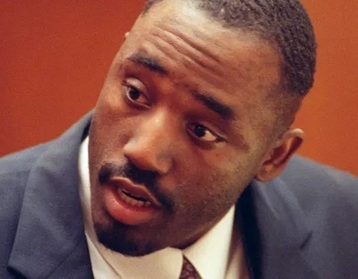
Richard Paul White: The Colorado Killer Who Buried His Victims
Introduction
Richard Paul White is an American serial killer whose crimes emerged from a horrifying investigation in Colorado during 2003. White murdered people he encountered through Denver’s street culture as well as a man who had once been his friend and co-worker. His offenses involved abduction, prolonged restraint, sexual assault, torture, strangulation and shooting. After killing two women inside his Denver residence, he concealed their bodies in the backyard, allowing ordinary life to continue around graves that remained hidden until his arrest.
White ultimately admitted responsibility for several murders and claimed that his actual victim count was higher than the number of killings prosecutors could prove. He pleaded guilty to murdering Annaletia Maria Gonzales, Victoria Lyn Turpin and Jason Reichardt. He also confessed to killing Torrey Marie Foster and later led investigators to her remains near the Colorado-New Mexico border. Although he claimed to have murdered additional women, searches did not produce enough evidence to confirm every confession.
Escalating Violence
White’s known murders occurred against a broader pattern of extreme violence toward women. Investigators learned that he had restrained, sexually assaulted and tortured several victims. Some survived, providing evidence of the cruelty he was capable of inflicting before his killings were discovered.
His attacks were not brief explosions of anger. In the murders of Gonzales and Turpin, White brought the women into a residence where he could control them without immediate interruption. He bound and terrorized them before strangling them. Their bodies were then buried behind the house, demonstrating both an effort to conceal the crimes and his confidence that the graves would remain undiscovered.
White later attempted to explain his behavior by describing anger, distrust and resentment toward women. Such statements did not account for the calculated decisions involved in selecting vulnerable victims, taking them to controlled locations, restraining them, committing prolonged assaults and hiding their remains.
The Murder of Torrey Marie Foster
Torrey Marie Foster was a 25-year-old mother of two who disappeared in January 2002. According to White’s confession, he encountered Foster near a bus stop in the Denver area and took her with him. He strangled her and transported her body to southern Colorado.
Rather than burying Foster near the Denver residence associated with his other crimes, White concealed her in an isolated area near Mesita in Costilla County. The location was close to the New Mexico border and far enough from Denver to make an accidental discovery unlikely.
For years, Foster’s family had no definitive explanation for her disappearance. In 2004, after negotiating with prosecutors, White accompanied authorities to the burial area. Skeletal remains were recovered and identified as Foster in August 2005. The identification confirmed that at least one of White’s additional confessions had been truthful.
The Murder of Annaletia Maria Gonzales
Annaletia Maria Gonzales, known to relatives as “Angel,” was 27 years old when White killed her in Denver during 2002. White encountered Gonzales along Colfax Avenue and brought her to the Park Hill residence where he was living.
Inside the property, White restrained Gonzales in the garage. He subjected her to a violent assault and strangled her with a belt. He then buried her body in the backyard instead of moving it to a distant location.
Gonzales remained missing until White’s arrest caused investigators to search the property. On September 11, 2003, officers excavating the yard discovered two sets of human remains. One was soon identified as Gonzales. An autopsy confirmed that she had died by strangulation.
The discovery transformed what had begun as an investigation into the shooting death of Jason Reichardt into a suspected serial-murder case. Gonzales had not simply vanished. Her killer had concealed her beneath the ground while continuing to occupy or maintain access to the property.
The Murder of Victoria Lyn Turpin
Victoria Lyn Turpin was 32 years old when she was murdered in Denver in 2002. Her death occurred during the same general period as the murder of Annaletia Gonzales. White brought Turpin to the Park Hill residence, where he restrained, sexually assaulted and tortured her.
White strangled Turpin and buried her in the backyard near Gonzales. The placement of the two bodies showed that the property had become more than the scene of separate violent encounters. It had become a controlled killing environment and a private burial ground.
When investigators recovered the second body in September 2003, they initially could not identify the woman. Forensic examination and investigative work later established that the remains belonged to Turpin. Her identification allowed authorities to formally connect another missing woman to White and to pursue a second murder charge involving the backyard graves.
The Murder of Jason Reichardt
Jason Reichardt was a 27-year-old Aurora resident who had worked with White at a printing company. Reichardt had reportedly helped White at a difficult point in his life and had shared a residence with him. Their prior friendship made Reichardt’s murder different from White’s attacks on women he encountered through Denver’s streets.
On September 8, 2003, Reichardt was found fatally shot inside his Aurora home. Investigators quickly focused on White, who was arrested shortly afterward. Evidence indicated that White had shot Reichardt in the head and taken property from the residence.
The Reichardt investigation broke the larger case open. While being questioned, White began discussing other killings. He claimed to have murdered multiple women and told investigators that two bodies were buried behind a Denver house where he had lived. Acting on that information, police searched the property and uncovered Gonzales and Turpin.
Confirmed and Admitted Victims
- Torrey Marie Foster, 25: Killed in January 2002 after being encountered in the Denver area. White confessed to strangling her and burying her near Mesita in Costilla County, Colorado. He led investigators to the burial site in 2004, and the recovered remains were identified as Foster in August 2005.
- Annaletia Maria Gonzales, 27: Murdered in Denver during 2002. White restrained and tortured her inside the garage of his Park Hill residence before strangling her with a belt. Her remains were recovered from the backyard on September 11, 2003.
- Victoria Lyn Turpin, 32: Murdered in Denver during 2002. White sexually assaulted, tortured and strangled her inside the Park Hill residence. Her body was buried in the backyard near Gonzales and recovered in September 2003.
- Jason Reichardt, 27: Fatally shot on September 8, 2003, in Aurora, Colorado. Reichardt was White’s former friend, roommate and co-worker. The investigation into his murder led to White’s arrest and the discovery of the two backyard graves.
Claims of Additional Murders
After his arrest, White claimed that he had killed more women than authorities could immediately connect to him. At different points, he spoke of five additional female victims and described burial locations in southern and eastern Colorado, including areas in Costilla and Otero counties.
Investigators conducted searches based on his statements, but several efforts failed to uncover remains. White’s information eventually led to Torrey Foster, proving that some of his claims were accurate. Other alleged victims, however, were never conclusively identified or recovered.
The uncertainty surrounding those confessions has complicated the final accounting of White’s crimes. Four victims are publicly associated with him through convictions, admissions and corroborating physical evidence, but his own statements raised the possibility that other women died at his hands. Without remains, reliable identifications or independent evidence, those additional claims could not be treated as confirmed murders.
The Backyard Investigation
The search of the Park Hill property became one of the defining moments of the case. White had lived at the Denver residence during 2002, and investigators arrived after he described burying women there. Excavation teams worked through the yard until they uncovered human remains.
Finding two victims buried at one residence provided powerful corroboration of White’s confession. The graves also revealed his method of concealment. He had not disposed of the women impulsively in separate public locations. He placed them close together on property he knew, apparently believing that the soil would keep his crimes hidden.
The condition of the remains required forensic specialists to establish identity and cause of death. Gonzales was identified first. Turpin’s identification took longer, leaving her temporarily classified as an unidentified homicide victim. Both deaths were eventually attributed to strangulation, consistent with White’s descriptions.
Plea Agreements and Sentencing
Prosecutors faced cases spread across multiple jurisdictions because Reichardt was killed in Aurora, while Gonzales and Turpin were murdered and buried in Denver. White also claimed that additional remains were located in other Colorado counties. The possibility of locating more victims became an important part of plea negotiations.
In September 2004, White pleaded guilty to first-degree murder for killing Jason Reichardt. He separately pleaded guilty to the first-degree murders of Annaletia Gonzales and Victoria Turpin. In exchange for the guilty pleas and his promise to assist authorities in searching for additional victims, prosecutors agreed not to seek the death penalty.
White received three life sentences without the possibility of parole for the murders. He was also sentenced to an additional 144 years for crimes involving sexual assault, kidnapping, torture and attacks on surviving victims. The cumulative punishment ensured that he would remain incarcerated permanently, regardless of any future change affecting one portion of his sentence.
Cooperation That Revealed Another Grave
As part of his agreement with authorities, White traveled with investigators to southern Colorado in 2004. He directed them to a remote location near Mesita, where search teams recovered skeletal remains. The recovery initially established only that another person had been buried there.
In August 2005, authorities announced that the remains belonged to Torrey Marie Foster. The identification gave Foster’s family an answer after years of uncertainty and strengthened the conclusion that White’s crimes extended beyond the two women found behind the Denver residence.
White’s cooperation did not erase the calculated nature of the burial. He had carried Foster far from Denver and hidden her in an isolated region where her remains might never have been found without his directions.
A Case Marked by Both Proof and Uncertainty
The confirmed evidence against Richard Paul White established a pattern of predatory and highly controlled violence. He targeted vulnerable women, brought them to places where he held the advantage, restrained and assaulted them, and used strangulation to kill them. In Reichardt’s case, he turned a firearm on a person who had previously trusted and assisted him.
The discovery of Gonzales and Turpin beneath a Denver backyard revealed the extent to which White had incorporated concealment into his crimes. The later recovery of Foster near Mesita demonstrated that he was also willing to transport a victim across Colorado to prevent discovery.
At the same time, his unverified claims left investigators with unresolved questions. White portrayed himself as responsible for more killings than authorities could prove, but a confession alone could not identify missing women or establish that every claimed murder occurred. The possibility of additional victims remains one of the most disturbing aspects of the case.
Legacy of the Crimes
Richard Paul White’s case illustrates how the investigation of one murder can expose a much larger pattern of violence. Jason Reichardt’s death led police to White, White’s statements led them to the backyard graves, and his later cooperation led authorities to Torrey Foster’s remains.
Behind the criminal proceedings were four people whose lives were reduced in early reporting to evidence, burial locations and court charges. Torrey Marie Foster was a mother whose children lived for years without knowing what had happened to her. Annaletia Maria Gonzales left behind a daughter and relatives who called her Angel. Victoria Lyn Turpin remained unidentified for a period after her body was recovered. Jason Reichardt was remembered by hundreds of friends and relatives who gathered after his death.
White avoided execution through his guilty pleas and cooperation, but he did not avoid permanent imprisonment. His three life sentences without parole, combined with an additional 144 years, reflected not only the murders that could be proved but also the sexual violence, captivity and torture surrounding his crimes. The full number of people he harmed may never be known.