Ellen Etheridge: The Bosque County Poisoner
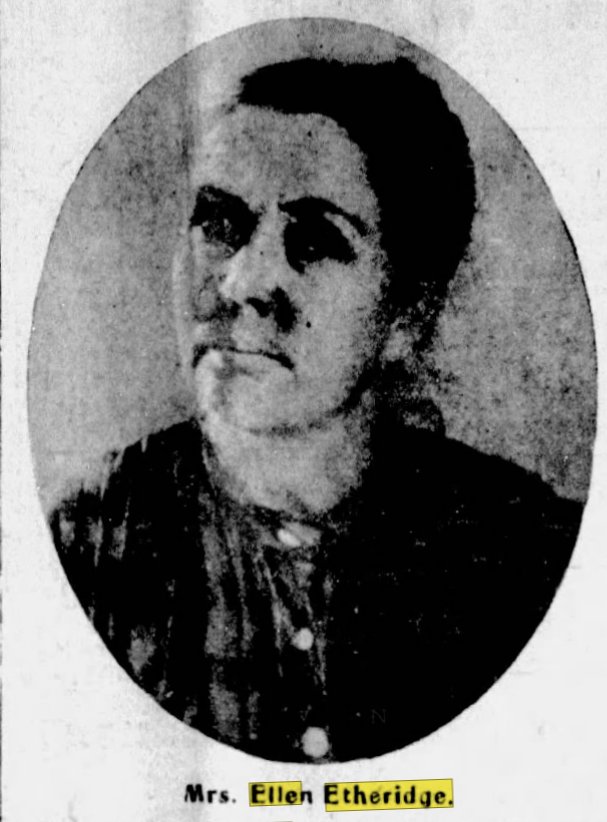
Ellen Etheridge, also identified in contemporary accounts as Ellen Walker West Etheridge, was a Texas murderer responsible for the deaths of four of her stepchildren in Bosque County in 1913. Her crimes occurred in two separate episodes several months apart, placing her among the early twentieth-century American women commonly classified as serial killers. Unlike killers who attacked strangers, Etheridge's victims were children living in her own household, and poisoning allowed the first deaths to initially appear to be the result of illness.
Marriage into the Etheridge Family
Before becoming Ellen Etheridge, she was known as Ellen Walker and had previously been married to a man named West. After being widowed, she eventually came to Bosque County, Texas, where she became acquainted with James D. "J.D." Etheridge, a widower and father of a large family. Contemporary newspaper reports described J.D. Etheridge as a Bosque County farmer. Ellen married him in early 1913 and assumed responsibility for a household containing numerous children.
Accounts published during the investigation later said that Etheridge became intensely jealous of the affection her husband showed his children. Prosecutors would ultimately identify that jealousy as the motive for the killings. According to authorities, she believed the children received attention and affection that she wanted for herself. Her response was not a single impulsive act. The deaths were separated by months, and investigators concluded that she deliberately poisoned children on more than one occasion.
The First Deaths in June 1913
The first two deaths occurred in June 1913. Two of the Etheridge children, later identified in Bosque County historical accounts as Beulah and Harrison Etheridge, became seriously ill and died. At the time there was no murder investigation. Their illnesses were initially attributed to natural causes or acute illness, and the children were buried without the type of toxicological examination that would later become central to the case.
After her later arrest, Etheridge confessed that the June deaths had not been natural. According to the confession reported by Bosque County authorities, she had administered concentrated lye to the children. Investigators considered exhuming the bodies after the later arsenic deaths, but contemporary reports indicate that officials ultimately decided not to disturb the June graves because they believed the evidence already developed in the October case was sufficient. As a result, the poisoning of the June victims rested heavily on Etheridge's confession and the subsequent criminal proceedings rather than a postmortem chemical analysis of their remains.
The October 2, 1913 Poisoning
On October 2, 1913, another crisis erupted inside the Etheridge household. Oscar Etheridge, Richard "Dick" Etheridge and their seven-year-old sister Pearl became violently ill after eating food at home. Contemporary accounts described the children developing severe symptoms within a short period. Oscar, reported as five years old, and Richard, reported as nine, died that day. Pearl also became dangerously sick but survived after receiving medical treatment.
The deaths of two more children from the same family immediately caused greater suspicion than the earlier June fatalities. The physician treating the children recognized that poisoning was a possibility, and Bosque County officials became involved. This time there would be an autopsy and chemical testing rather than an assumption that an ordinary childhood illness had caused the deaths.
Discovery of Arsenic
Investigators removed organs from the bodies of Oscar and Richard so they could be examined chemically. The material was sent to Baylor University, where analytical chemist Professor Samuel R. Spencer conducted testing. Arsenic was detected in the remains of the children. Authorities also searched the Etheridge residence and discovered a package containing a whitish substance among Ellen Etheridge's belongings. Testing showed that the substance contained arsenic.
Etheridge initially denied responsibility and offered changing explanations for the material discovered in her possession. At one point she described it as medicinal salts and also claimed that the package had originally belonged to her mother. Whatever explanation she gave, the discovery of arsenic in both the children's bodies and material connected to her transformed the deaths into a murder investigation.
Arrest and Confession
Etheridge was arrested in early October 1913 and confined in the Bosque County jail at Meridian. Investigators initially concentrated on the deaths of Oscar and Richard, but their attention soon returned to the two children who had died under unexplained circumstances during June.
On October 14, according to contemporary reporting of statements by Bosque County Attorney H. S. Dillard, Etheridge confessed to killing four of her stepchildren. She admitted responsibility for the June deaths as well as the October poisonings. The confession reportedly distinguished between the two episodes: concentrated lye was said to have been used against the first two children, while arsenic was used in October.
Authorities said Etheridge explained her actions in terms of jealousy toward the children. She resented what she perceived as the greater love and attention J.D. Etheridge gave them. Contemporary accounts portrayed the confession as an admission that the children had become rivals for her husband's affection. Whatever complexities existed in her personal history, the prosecution's case was ultimately based on physical evidence from the October deaths, her confession, the surviving child's illness and the suspicious earlier deaths.
Victims
- Beulah Etheridge - approximately 2 years old. Died in June 1913 in Bosque County, Texas. The exact day of her death is not consistently preserved in the surviving accounts consulted. Etheridge later confessed to killing her with concentrated lye. Beulah and Harrison were reportedly buried together.
- Harrison Etheridge - approximately 10 years old in Bosque County historical records, although some later accounts give a different age. Died in June 1913 in Bosque County, Texas. The surviving contemporary material confirms the death occurred during June but does not establish a reliable exact day. Etheridge confessed that concentrated lye was used in the June killings.
- Oscar J. Etheridge - reported as 5 years old in contemporary newspaper coverage. Died on October 2, 1913 at the Etheridge home in Bosque County, Texas. Oscar became severely ill after consuming food in the household. Chemical examination after his death revealed arsenic.
- Richard "Dick" Etheridge - approximately 9 years old. Died on October 2, 1913 in Bosque County, Texas. Richard was poisoned during the same incident that killed Oscar. Arsenic was subsequently detected during the investigation.
Pearl Etheridge Survives
Pearl Etheridge, approximately seven years old, was also poisoned during the October 2 episode. She ate or drank less of the contaminated food than her brothers and survived after emergency treatment. Her survival provided investigators with an important living connection to the circumstances immediately surrounding the deaths of Oscar and Richard. Etheridge was later prosecuted not only for four murders but also for an attempted killing.
The Case Goes to Court
By December 1913, Etheridge faced four murder indictments and another charge involving an attempted murder. Her court-appointed attorney attempted to establish that she was mentally incompetent and should not be considered fully responsible for her actions. Witnesses who had known her earlier in life described longstanding intellectual or mental difficulties, terminology that newspapers of the period expressed in language that would now be considered outdated.
The defense did not prevail. The first case tried involved the arsenic poisoning of young Oscar Etheridge. After approximately an hour of deliberation, the jury returned a guilty verdict. Once that verdict was announced, Etheridge's attorney entered guilty pleas in the remaining cases rather than continuing separate trials on every indictment.
Four Life Sentences
On December 23, 1913, the proceedings ended with extraordinarily severe punishment. Etheridge received a life sentence for each of the four murders. She was also given an additional five-year sentence for attempted murder. Contemporary reporting therefore described her total punishment as four life terms plus five years.
The outcome confirmed legally what investigators had pieced together during the previous two months: four children had died inside one family during two separate poisoning episodes, another child had survived poisoning, arsenic had been found in the bodies of the October victims, arsenic had been discovered among Etheridge's belongings, and Etheridge herself had confessed to all four deaths.
Life in the Texas Prison System
Etheridge entered the Texas prison system and eventually spent years at the Goree State Farm for Women near Huntsville. A newspaper account published in 1930 reported that she had already been imprisoned for approximately seventeen years and described her as having one of the longest sentences of any prisoner then confined by the state. By that time she was in her sixties.
The same report portrayed Etheridge as a trusted prisoner who was allowed considerably more freedom of movement than many inmates. She made lace that she could sell and reportedly continued to hope that she would someday receive a pardon. Reliable surviving accounts provide far more detail about her crimes and imprisonment than about the eventual circumstances of her death, and later secondary sources conflict about what ultimately happened to her. For that reason, claims about a specific release or death date should be treated cautiously unless supported by additional prison or vital records.
A Case Revealed by the Second Poisoning
The Ellen Etheridge case illustrates why poisoners could remain undetected in an era when sudden childhood deaths were more readily attributed to disease. The June deaths initially passed without a criminal investigation. Had the events stopped there, the true circumstances might never have been uncovered. The deaths of Oscar and Richard on October 2, combined with Pearl's near-fatal illness, finally created a pattern physicians and law-enforcement officers could not ignore.
Scientific testing became decisive. The discovery of arsenic in the boys' remains gave investigators physical evidence that the October deaths were homicides rather than unexplained illnesses. The package of arsenic found among Etheridge's possessions strengthened the case further, and her subsequent confession expanded the investigation backward to the children who had died months earlier.
Legacy of the Etheridge Murders
Ellen Etheridge is remembered as one of the lesser-known female serial killers of early twentieth-century America. Her crimes were confined to a single family and occurred during a relatively short period, yet they contained the elements associated with serial poisoning: access to vulnerable victims, an initially concealed method of killing, a cooling-off period between episodes and repeated attacks motivated by a personal grievance.
The greatest tragedy of the case remains the loss of Beulah, Harrison, Oscar and Richard Etheridge, four children whose deaths occurred inside the home where they should have been safest. Pearl's survival, the persistence of local physicians and law-enforcement officers, and the use of chemical analysis finally exposed what had happened. By the end of 1913, Ellen Etheridge had gone from a Bosque County farmer's wife to a confessed and convicted multiple murderer serving four life sentences in the Texas prison system.