Daniel Lee Siebert: A Multistate Serial Killer
Background and Escalation
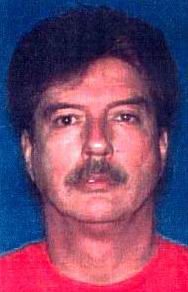
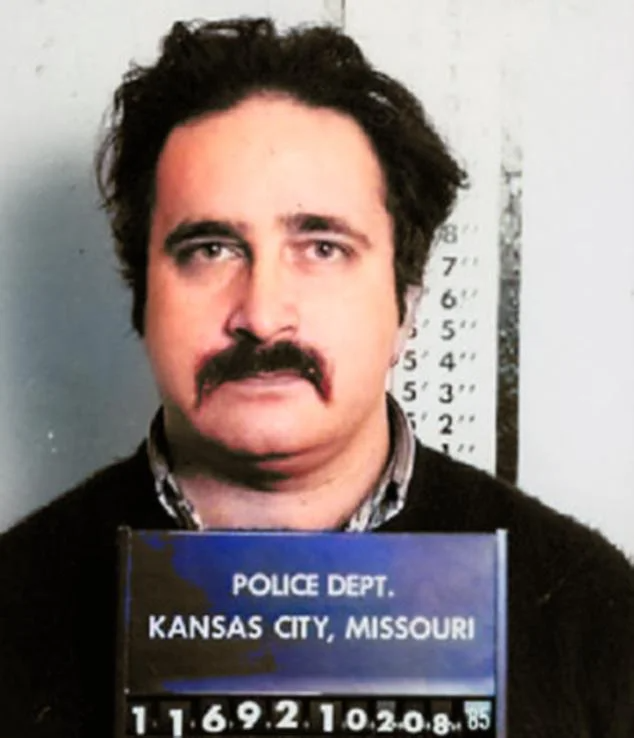
Daniel Lee Siebert was an American serial killer whose known crimes stretched from the late 1970s through 1986 and crossed several states, including Nevada, California, Alabama and New Jersey. Born on June 17, 1954, in Mattoon, Illinois, Siebert moved frequently, used aliases and concealed his history from the people around him. He was ultimately convicted of five murders in Alabama and acknowledged responsibility for additional killings. During questioning, he claimed that he had killed at least a dozen people, although investigators were never able to conclusively connect him to every death he described.
Siebert’s first confirmed homicide occurred in Las Vegas, Nevada, in 1979. The victim was a man with whom Siebert had been romantically involved. Siebert stabbed the man repeatedly during a violent confrontation and was convicted of voluntary manslaughter rather than murder. He received a ten-year prison sentence but was released after serving only part of it. The relatively short period of incarceration allowed him to resume traveling, forming new relationships and committing increasingly calculated acts of violence.
After leaving Nevada, Siebert lived in California. He worked as an artist and painter and sometimes presented himself as an art instructor. He could appear intelligent, creative and personable, qualities that helped him gain the confidence of potential victims. Beneath that outward appearance, however, he had a history of sudden violence and controlling behavior. He was wanted in San Francisco for an assault in which a woman survived being strangled, demonstrating a method he would repeatedly use in later murders.
The California Murders
While living in the Los Angeles area in 1985, Siebert encountered Gidget Castro and Nisie Gail McElrath. Both women were found strangled, and their cases were initially investigated amid a larger series of murders involving women in South Los Angeles. Some news coverage later associated Siebert with the nickname “Southside Slayer,” but investigators did not believe he was responsible for all of the killings attributed to that unidentified offender.
Gidget Castro, 28, was found on November 26, 1985, in an alley near the 4600 block of Washington Boulevard in Commerce, California. Her body had been partially undressed, and investigators determined that she had been strangled. Less than a month later, 23-year-old Nisie Gail McElrath was found dead in Los Angeles County. Authorities did not publicly establish a precise date on which McElrath was killed, but her body was recorded as having been found on December 19, 1985.
In 1987, while awaiting prosecution for murders in Alabama, Siebert confessed to killing Castro and McElrath. Investigators reported that he supplied details about the crimes that had not been publicly released and that they believed only the killer would have known. Although the admissions strengthened the cases against him, his Alabama capital prosecutions took priority, and the California cases did not result in separate completed murder trials.
Arrival in Talladega, Alabama
By early 1986, Siebert had arrived in Talladega, Alabama, where he used variations of the alias Daniel Spence or Danny Ray Spence. He offered to teach art without pay at programs associated with the Alabama Institute for the Deaf and Blind, apparently hoping that the volunteer position would eventually become permanent. His artistic ability and willingness to work with students gave him access to a community in which many people initially regarded him as helpful and trustworthy.
Siebert became romantically involved with 24-year-old Sherri Ann Weathers, a hearing-impaired student who lived at the Sunrise Apartments with her two young sons, five-year-old Chad and four-year-old Joseph, who was often called Joey. Sherri’s friend and neighbor, 33-year-old Linda Jarman, was also hearing-impaired and was acquainted with Siebert. The relationships placed him close to the four victims whose deaths would expose his identity and trigger a nationwide manhunt.
The Weathers Family and Linda Jarman Murders
On the evening of February 19, 1986, Siebert entered Sherri Weathers’s apartment using a key she had given him. Sherri and Linda Jarman were initially together in the apartment. Linda later returned to her own residence. According to Siebert’s subsequent confession, he strangled Sherri with a length of cloth as they moved toward her bedroom. He then awakened Chad and Joseph separately and killed each child by ligature strangulation.
Siebert also went to Linda Jarman’s nearby apartment. Prosecutors established that he strangled her and stole property from her residence, making the killing eligible for prosecution as a capital murder committed during a robbery. The victims were not immediately discovered. Friends and school personnel became concerned when Sherri and Linda failed to attend classes or make contact with anyone.
On February 24, 1986, a social worker and other concerned individuals entered Sherri’s apartment after learning that no one had seen the family for several days. They found the bodies of Sherri, Chad and Joseph. Linda Jarman was found dead in her neighboring apartment. Autopsies established that all four victims had died from asphyxiation caused by strangulation. The discovery devastated the close community connected to the Alabama Institute for the Deaf and Blind.
Evidence from the apartments began pointing toward the volunteer art instructor known as Daniel Spence. Shoe impressions recovered from Sherri’s residence were consistent with impressions found in Siebert’s apartment. Investigators also recovered a child’s pajama garment from his residence. Fingerprints revealed that “Daniel Spence” was actually Daniel Lee Siebert, a convicted killer with a record in Nevada and an outstanding assault case in California.
The Murder of Linda Faye Odum
Investigators soon learned that Siebert had also spent time with 32-year-old Linda Faye Odum, a Talladega-area cocktail waitress. On February 19, 1986, the same day as the Weathers and Jarman murders, Siebert ate lunch with Odum and her boyfriend at a neighboring apartment. When the boyfriend temporarily left, Odum and Siebert disappeared. Siebert later pretended to help search for her, concealing his involvement and attempting to divert suspicion.
Odum was reported missing on February 24. Her stolen automobile was eventually located, and Siebert’s fingerprints were connected to the vehicle. Her remains were discovered in a wooded area in March 1986. The precise day on which she died was not conclusively established in publicly available records, but the circumstances showed that she disappeared while in Siebert’s company on February 19. Siebert was later convicted of her murder and received a life sentence.
Flight Across the United States
After the Alabama killings, Siebert fled in a 1973 Buick. The vehicle was later found abandoned near Elizabethtown, Kentucky, after it developed two flat tires. Inside the car, investigators found a purse containing a receipt bearing Sherri Weathers’s name and a key that opened Siebert’s Talladega apartment. At a nearby abandoned campsite, police recovered photographs of Sherri, papers bearing Siebert’s aliases and documents listing the names of Sherri, Chad and Joseph.
Siebert continued moving through several states and assumed the identities of his victims. In March 1986, he identified himself to police in Atlantic City, New Jersey, using a Social Security card bearing Chad Weathers’s name. In June, he used a card bearing Joseph Weathers’s name during an encounter with law enforcement in Virginia. His use of the murdered children’s identities illustrated both his efforts to avoid capture and his disturbing lack of remorse.
The Murder of Beatrice McDougall
While hiding in Atlantic City, Siebert encountered 57-year-old Beatrice McDougall, who worked as a tour guide. McDougall was found murdered in Atlantic City on June 22, 1986. She had been strangled, matching the method used in the Talladega killings. Authorities charged Siebert in connection with her death after his arrest and examined his movements through New Jersey for links to other unsolved crimes.
The McDougall case demonstrated that Siebert had continued killing after fleeing Alabama. Investigators also examined a suspected homicide in Virginia and reviewed unsolved deaths in several other states. Not every suspected crime produced enough evidence for prosecution, and some of Siebert’s claims could not be independently verified. His constant movement and frequent use of false names made reconstructing his complete history exceptionally difficult.
Known and Attributed Victims
- Unidentified man — 1979, Las Vegas, Nevada: Siebert stabbed his male companion numerous times and was convicted of voluntary manslaughter. The victim’s name and exact date of death have not been consistently published in accessible case records.
- Gidget Castro, 28 — November 26, 1985, Commerce, California: Castro was found strangled in an alley near Washington Boulevard. Siebert later confessed and reportedly revealed nonpublic details of the crime.
- Nisie Gail McElrath, 23 — found December 19, 1985, Los Angeles County, California: McElrath was strangled. Authorities did not publicly establish her exact date of death, so December 19 represents the recorded discovery date. Siebert later admitted killing her.
- Sherri Ann Weathers, 24 — February 19, 1986, Talladega, Alabama: Siebert strangled his girlfriend inside her apartment after entering with a key she had given him.
- Chad Charles Weathers, 5 — February 19, 1986, Talladega, Alabama: Chad was awakened and strangled with a ligature inside the family apartment.
- Joseph “Joey” Weathers, 4 — February 19, 1986, Talladega, Alabama: Joseph was also awakened and killed by ligature strangulation. Siebert later traveled using a Social Security card bearing the child’s name.
- Linda Jarman, 33 — February 19, 1986, Talladega, Alabama: Jarman, Sherri’s hearing-impaired friend and neighbor, was strangled in her apartment. Property was stolen from her residence, and Siebert was convicted of capital murder during a robbery.
- Linda Faye Odum, 32 — disappeared February 19, 1986; remains found in March 1986, near Talladega, Alabama: Odum vanished after being left alone with Siebert. Her precise date of death was not conclusively established in public records. Siebert was convicted of her murder and sentenced to life imprisonment.
- Beatrice McDougall, 57 — June 22, 1986, Atlantic City, New Jersey: McDougall, a tour guide, was found strangled while Siebert was fleeing across the eastern United States. He was charged with her murder.
Other Suspected Victims
Siebert claimed during questioning that he had killed at least twelve people and possibly more. Investigators considered him in connection with additional deaths in Alabama, Virginia and other states through which he traveled. Among the cases examined was the death of Sheryl Evans in Calhoun County, Alabama, whose body was found during the same general period as the Talladega murders. Publicly available records do not show that Siebert was convicted of Evans’s death, and she should therefore be regarded as a suspected rather than conclusively established victim.
Authorities also investigated a reported killing in Virginia after Siebert left New Jersey. Because he used aliases, hitchhiked and moved through numerous jurisdictions, police faced major obstacles in verifying his statements. Some of his confessions may have referred to genuine unidentified victims, while other claims lacked enough detail or supporting evidence to establish a formal connection.
Capture
Siebert remained a fugitive for approximately six months. Investigators eventually learned that he had contacted a friend in Nevada. The friend cooperated with police, and authorities analyzed information from the telephone call, including the weather heard in the background, to narrow Siebert’s location to the area west of Nashville, Tennessee.
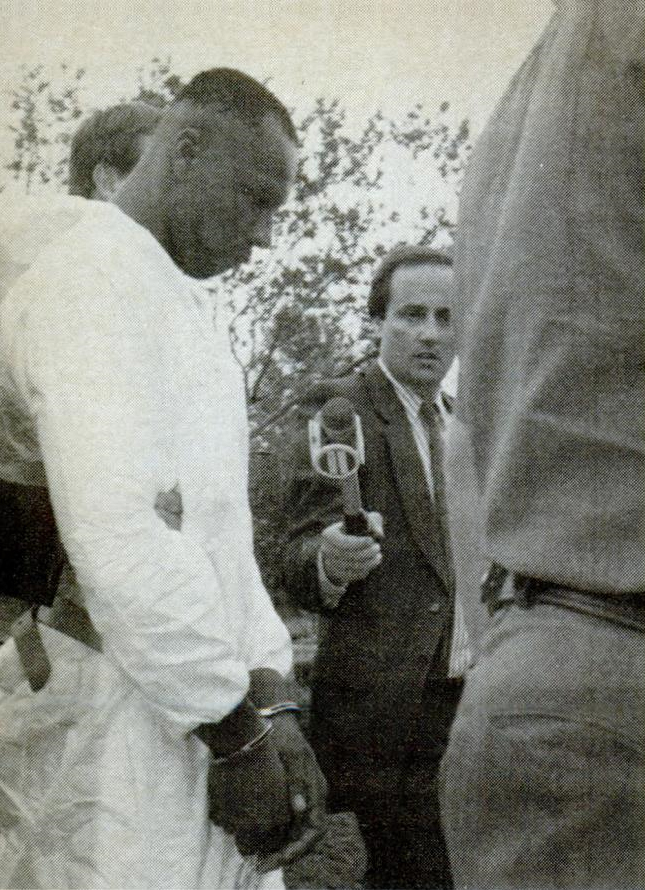
The call was traced to a public telephone near a restaurant in Hurricane Mills, Tennessee, where Siebert had found work. Officers arrested him when he returned to the restaurant on September 5, 1986. At the time of his capture, he possessed identification belonging to Joseph Weathers. Once returned to Alabama, Siebert made incriminating statements concerning the Weathers family and other victims.
Trials and Sentences
Siebert was prosecuted separately for the murder of Linda Jarman and for the killings of Sherri, Chad and Joseph Weathers. On March 19, 1987, a Talladega County jury convicted him of murdering Jarman during a robbery. He was sentenced to death on April 17, 1987.
Because extensive publicity made it difficult to select an impartial jury in Talladega County, the Weathers family case was transferred to Lee County. On June 18, 1987, Siebert was convicted of capital murder for killing two or more people as part of a single scheme or course of conduct. He received another death sentence on August 19, 1987. His convictions and sentences were upheld through years of state and federal appeals.
Siebert was additionally convicted of murdering Linda Odum and received a life sentence. Although he confessed to the California killings and faced accusations in New Jersey, the Alabama judgments ensured that he would remain confined on death row. Prosecutors and investigators continued comparing his travels with unsolved homicides, but the complete number of his victims was never determined.
Final Years and Death
Alabama scheduled Siebert’s execution for October 25, 2007. By that time, he was suffering from pancreatic cancer and other serious medical complications. Courts delayed the execution while legal arguments continued over Alabama’s lethal-injection procedures and whether executing a terminally ill prisoner would serve any meaningful purpose.
Daniel Lee Siebert died from complications of cancer at Holman Correctional Facility near Atmore, Alabama, on April 22, 2008. He was 53 years old. His death ended the possibility of further trials or interrogations that might have clarified his connection to additional unsolved murders.
Legacy of the Case
Siebert’s case remains notable for the wide geographic range of his crimes, his repeated use of false identities and his ability to enter communities by presenting himself as an artist, teacher or volunteer. His victims included adults and very young children, acquaintances and people he encountered while traveling. Strangulation became his most recognizable method, although his first confirmed killing involved repeated stabbing.
The Talladega investigation exposed him because evidence from several apartments, his abandoned vehicle, fingerprints and property belonging to the victims created a trail that his aliases could not erase. The convictions for the murders of Linda Jarman and the Weathers family firmly established Siebert as a serial killer. His confessions and suspected involvement in other deaths suggest a larger total, but the true extent of his violence remains unresolved.