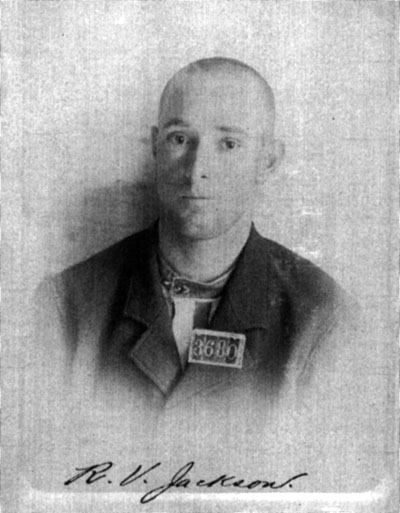
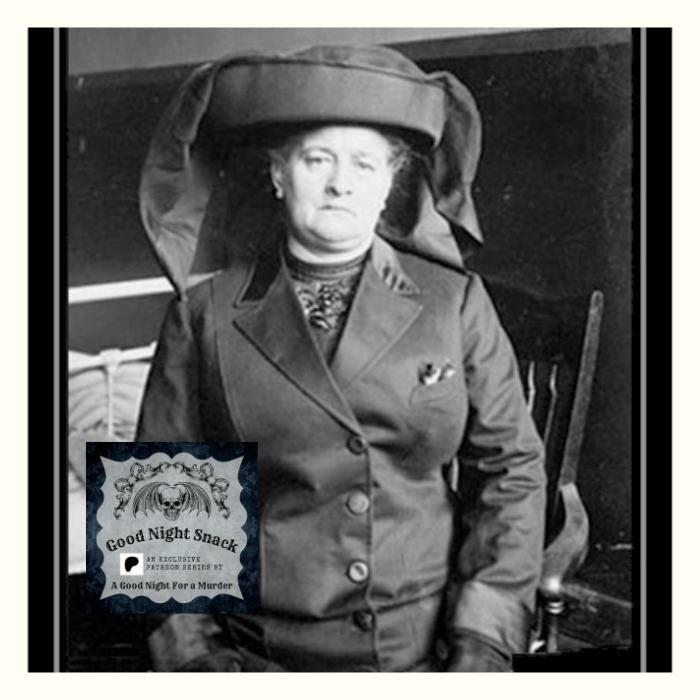
Ray Van Buren Jackson: Oregon’s Suspected “Angel of Death”
Ray Van Buren Jackson was an Oregon schoolteacher, convicted forger, embezzler and suspected serial killer whose name became connected to a disturbing series of deaths during the early twentieth century. Although Jackson was never convicted of murder, historians have identified him as a possible participant in at least six suspicious deaths and several additional unsolved killings.
The cases linked to Jackson occurred mainly in the isolated communities of Lake County and Harney County in central and eastern Oregon. Several victims were shot, poisoned or beaten beyond recognition. In multiple cases, Jackson was among the last people to see the victim alive, appeared at the crime scene, supplied important information to investigators or helped direct attention toward another suspect.
Because the evidence against Jackson is circumstantial and the cases were never prosecuted, he should be described as a suspected serial killer rather than a proven one. Much of the theory surrounding him was developed decades later through research into historical newspapers, court files and local records.
Early Life and Criminal History
Ray Van Buren Jackson was born in Missouri in approximately 1869 or 1870 and grew up in Oregon. His family eventually lived near Sodaville, a small community in Linn County. Jackson received an education and earned a teaching certificate, but his professional life was repeatedly interrupted by criminal activity.
Jackson was naturally left-handed. According to later accounts, his teachers forced him to learn to write with his right hand. As a result, he became skilled at writing with either hand and reportedly developed an unusual ability to imitate other people’s handwriting. That talent later became useful in his acts of forgery.
During the summer of 1895, Jackson witnessed the violent death of a favorite uncle in Oregon City. His uncle was driving a wagon when it collided with a train near Singer Hill. The horses were killed, and the train ran over the man’s head while Jackson watched. Historians examining Jackson’s life have suggested that this traumatic event may have contributed to his increasingly unstable and criminal behavior, although no psychological evaluation from the period exists.
At about the same time, authorities began seeking Jackson for forging financial vouchers. He fled and continued teaching under difficult circumstances before he was captured. In 1896, he entered the Oregon State Penitentiary on forgery charges. He was released in 1898 but returned to prison after participating in a robbery in Baker County.
By the time Jackson completed his prison sentences, he had acquired a criminal reputation across several parts of Oregon. He relocated to the remote settlement of Silver Lake, where fewer people knew about his past.
“Professor” Jackson in Silver Lake
Jackson became a schoolteacher in Silver Lake in approximately 1902. He taught children from the first through eighth grades and began calling himself “Professor Jackson,” even though he was not a university professor and never taught at the college level.
Former students remembered Jackson as a severe and frightening disciplinarian. He reportedly kept buggy whips in the classroom and struck older students with both the handles and the lashes. He carried a single-action Colt revolver and a baseball bat to school. In one incident, he allegedly threw a heavy glass inkwell at a student’s head.
One story described Jackson getting into a physical confrontation with a student. The following morning, he entered the classroom, placed a .45-caliber revolver on his desk and asked whether anyone wanted to continue the fight. No student accepted the challenge.
Despite his criminal record and violent reputation, Jackson remained employed as a teacher for several years. In 1908, he was elected superintendent of schools for Lake County. His educational career ended after he was accused of embezzling school district money. He resigned in 1911 and later became involved in ranching, retail businesses and homesteading.
Victims and Suspicious Deaths Connected to Jackson
- John Creed Conn — March 4, 1904 — Silver Lake, Lake County, Oregon: Conn was a prominent Silver Lake merchant who operated a store and a mule-team freight business. He disappeared while traveling to collect mail for his store. His body was discovered approximately seven weeks later on a sandy rise located on a nearby cattle ranch. Conn had been shot, and his face had been beaten so severely that it was nearly unrecognizable. Evidence indicated that his body had been stored elsewhere before being placed on the hill. Jackson ate breakfast with Conn on the morning of the disappearance and was reportedly the last known person to speak with him. Conn had also been investigating approximately $3,000 missing from a financial transaction. Shortly after Conn disappeared, Jackson purchased approximately $3,000 worth of cattle. Despite the suspicious circumstances, a coroner’s jury ruled Conn’s death a suicide.
- Zelma “Ethel” Martin — April 1, 1904 — Silver Lake, Lake County, Oregon: Martin was an 11-year-old student in Jackson’s classroom. She remained at the schoolhouse after the other children had left. After arriving home, she became violently ill and died approximately 30 minutes later. Her death was attributed to accidental strychnine poisoning because the poison was available nearby. Later researchers questioned that conclusion because strychnine has an extremely bitter taste and generally does not cause death within only a few minutes. One theory suggests that Martin may have consumed food containing another poison, possibly arsenic, while at the schoolhouse. It has also been suggested that she may have seen or learned something connected to Conn’s disappearance, but no direct evidence proves that Jackson poisoned her.
- Julius Wallende — December 27, 1907 — Near Silver Lake, Lake County, Oregon: Wallende was a young homesteader who had recently arrived in the Silver Lake area. He was shot to death, but his body was not immediately discovered. Investigators believed it had been concealed for approximately 11 weeks. Before the body was placed in a creek, the killer beat Wallende’s face until it was difficult to recognize. The body was positioned face-up in the water and allowed to freeze into the ice. Anonymous letters sent to newspapers provided information about the location of the body and later directed attention toward a possible suspect. The treatment of Wallende’s body closely resembled the staging and facial mutilation found in the Conn case. No one was convicted of Wallende’s murder, and Jackson’s direct involvement was never proven.
- Emma Dobkins — March 2, 1910 — Lane County, Oregon: Dobkins was a young woman reportedly connected socially or romantically to Jackson. Her official cause of death was recorded as angina pectoris, a term referring to chest pain associated with heart problems. Local residents, however, circulated conflicting stories about her death. Some claimed she had taken her own life following a troubled relationship with Jackson. Another possibility was that she died from complications while attempting to give birth to a child conceived during that relationship. The available records do not establish that Dobkins was murdered, but the uncertainty surrounding her death caused historians to include her among the suspicious fatalities associated with Jackson.
- Harold Bradley — December 29, 1925 — Lake County, Oregon: Bradley worked as a ranch hand for Lincoln “Link” Hutton. While Bradley and Hutton were preparing to work on a vehicle, Bradley was shot twice with a .30-30 rifle. Hutton’s wife, Leona, testified that after the first shot she heard Bradley shout words indicating that Hutton had shot him. Jackson lived nearby and later claimed that Hutton came to his home and confessed. Hutton was tried for the killing but was acquitted. Bradley’s wounds were reportedly survivable, yet he died after being left alone with Jackson for approximately an hour. There were also rumors that Jackson and Leona Hutton were having an affair. One theory proposes that Jackson may have intended to kill Hutton but mistakenly shot Bradley in poor lighting because the two men had similar builds. None of these theories was proven in court.
- Ira Bradley — May 1, 1930 — Near the Lake County and Harney County border, Oregon: Ira Bradley was Harold Bradley’s father. He was found beaten to death at his ranch. The killer used the butt of a revolver to strike his head and face repeatedly, leaving him almost unrecognizable. Evidence was planted at the home of another man, apparently to make that neighbor appear responsible. The intended suspect had a strong alibi because he was in town purchasing a new Ford automobile when the murder occurred. Jackson, who was also a neighbor, contacted authorities in Harney County even though the crime scene was actually inside Lake County. Officers removed the body before realizing that the case belonged to another jurisdiction. The resulting confusion damaged the investigation and caused valuable footprint evidence to be lost. The killer was never identified.
The Murder of John Creed Conn
The death of John Creed Conn is one of the most important cases connected to Jackson. Conn was a respected businessman whose financial affairs placed him in contact with many residents of Silver Lake. On the morning of March 4, 1904, he ate breakfast with Jackson before leaving to collect the mail.
Conn never returned. Search parties examined the surrounding countryside, but no body was initially located. Approximately seven weeks later, his remains appeared on a small hill known as the sandy knoll. The location had reportedly been searched before, leading investigators to believe that the body had been placed there after Conn’s death.
Conn had been shot with an old Colt .38 revolver taken from his own store. His face had also been beaten until recognition was extremely difficult. The apparent staging suggested that the killer wanted investigators to suspect someone connected to the ranch where the body was found.
Before his death, Conn had been trying to understand what had happened to approximately $3,000 connected to a loan. The money was never recovered, and his family later had to settle the debt through his estate. Jackson knew about the transaction and had experience forging signatures and financial documents.
Jackson’s purchase of roughly $3,000 worth of cattle shortly after Conn vanished added to the suspicion. However, investigators never established where Jackson obtained the money, and no surviving document conclusively connects him to Conn’s finances.
The Death of Ethel Martin
Ethel Martin died less than one month after Conn disappeared. She was only 11 years old and had remained behind at the Silver Lake schoolhouse with Jackson on the day of her death.
Martin became ill soon after returning home. Her death was blamed on strychnine, which was commonly used in rural areas to kill rodents and predatory animals. The accidental-poisoning explanation was accepted without a modern toxicological examination.
Later researchers questioned whether Martin could have voluntarily eaten enough strychnine to kill herself because the substance has an intensely bitter flavor. They also noted that the reported speed of her death did not fit the expected progression of strychnine poisoning.
A darker theory suggests that Martin encountered evidence relating to Conn’s murder while she was inside the schoolhouse. Under this theory, Jackson poisoned her to prevent her from revealing what she had seen. This remains speculation. No physical evidence survives to determine what substance killed Martin or whether anyone intentionally gave it to her.
Repeated Mutilation and Staging
Several of the deaths associated with Jackson shared unusual characteristics. Conn, Wallende and Ira Bradley all suffered severe injuries to the face. In each case, the damage made visual identification difficult and may have been intended to delay recognition of the victim.
Conn’s and Wallende’s bodies also appeared to have been stored before being placed where searchers would eventually find them. The bodies were arranged in conspicuous positions rather than simply concealed. The staging allowed the killer to influence how the scene would be interpreted and possibly direct suspicion toward innocent people.
Anonymous communications were another feature of the Wallende investigation. Letters supplied information to newspapers and helped direct searchers. Jackson was educated, could imitate handwriting and reportedly enjoyed inserting himself into investigations. However, no surviving handwriting comparison has conclusively identified him as the author.
Jackson’s Role as a Helpful Witness
Jackson repeatedly appeared as a witness, neighbor or informal assistant in cases involving violent death. He supplied statements to law enforcement, discussed cases with newspapers and offered explanations about the movements of victims and suspects.
In the Conn case, Jackson described his final conversation with the missing merchant. In the Harold Bradley case, he claimed that Hutton confessed to the shooting. After Ira Bradley was murdered, Jackson contacted authorities and helped initiate the response that ultimately crossed county lines and disrupted the preservation of the crime scene.
This pattern led later historians to compare Jackson to an “Angel of Death,” a person who appeared with extraordinary frequency around fatal events. His involvement may have resulted from living in a sparsely populated region where neighbors regularly assisted one another. However, the number of cases in which he occupied a central position has continued to generate suspicion.
Possible Connection to the Lava Lake Murders
Jackson has also been proposed as a possible participant in the Lava Lake murders, one of Oregon’s most famous unsolved cases. During the winter of 1923 and 1924, three fur trappers were murdered near Little Lava Lake in the Deschutes National Forest.
- Edward Nickols — approximately January 1924 — Little Lava Lake, Deschutes County, Oregon: Nickols, approximately 50 years old, was one of three trappers living in an isolated cabin. He was killed by gunfire and blunt-force injuries. His body was later placed beneath the frozen surface of Little Lava Lake.
- Roy Wilson — approximately January 1924 — Little Lava Lake, Deschutes County, Oregon: Wilson, approximately 35 years old, was murdered with his two companions. Evidence indicated that he had been shot and struck with a heavy object. His body was recovered from the lake after the winter ice began to melt.
- Dewey Morris — approximately January 1924 — Little Lava Lake, Deschutes County, Oregon: Morris, approximately 25 years old, was the youngest of the three trappers. Like Nickols and Wilson, he suffered gunshot and blunt-force injuries. His remains were concealed beneath the lake ice.
The three men were last known to be alive during January 1924. Their exact dates of death could not be established because their isolated camp was inaccessible for much of the winter. The bodies were discovered in April 1924.
Charles Kimzey, a violent fugitive who used several aliases, became the principal suspect. A witness reported seeing Kimzey traveling toward the area and saying that he planned to meet a partner near Cultus Lake, approximately six miles from Little Lava Lake.
Historian Melany Tupper later proposed that Jackson may have been the unidentified partner. Jackson’s movements, acquaintances and suspected involvement in other Oregon murders formed the basis of the theory. Nevertheless, no physical evidence places Jackson at the Lava Lake cabin, and the murders officially remain unsolved.
Behavior and Suspected Motives
Accounts of Jackson describe him as intelligent, manipulative, theatrical and comfortable with deception. He was an accomplished forger who could allegedly reproduce signatures and handwriting. His repeated embezzlement and financial crimes indicate a willingness to betray people who trusted him.
Money may have been a motive in the Conn case. Personal relationships may have played a role in the deaths of Emma Dobkins and Harold Bradley. Other killings may have been committed to silence witnesses, remove obstacles or satisfy a desire for control.
Jackson also appeared to enjoy public attention. He positioned himself as an informed witness and communicated readily with investigators and journalists. A killer who enjoyed manipulating an investigation could experience power by supplying information, directing suspicion and watching officials follow a false story.
The severe facial injuries inflicted on several victims may have served a practical purpose by delaying identification. They may also indicate intense anger or an attempt to symbolically erase the victim. Without confessions, forensic evidence or reliable psychological records, Jackson’s motives cannot be determined with certainty.
Why Jackson Was Never Charged
The suspected murders occurred in remote areas during a period when forensic science was limited. Crime scenes were often disturbed by neighbors, search parties and inexperienced officials. Bodies were moved before jurisdictional questions were resolved, and detailed autopsies were not always performed.
Many communities lacked trained homicide investigators. Evidence such as fingerprints, blood patterns, firearm markings and toxicology results was either unavailable or collected inconsistently. Communication between counties was slow, allowing patterns in separate cases to remain unnoticed.
Jackson also maintained positions of authority and respectability. As a teacher, school superintendent, businessman and rancher, he could present himself as a helpful community member. His education and confidence may have made officials more willing to accept his statements.
By the time researchers connected the cases, Jackson and nearly every important witness were dead. Physical evidence had disappeared, records were incomplete, and the suspected crime scenes had changed. As a result, the theory against Jackson can no longer be tested in a criminal trial.
Death of Ray Van Buren Jackson
Ray Van Buren Jackson died on February 1, 1938, at his home near Wagontire, Oregon. He was found in an upstairs room with a fatal gunshot wound to the chest. A .30-30 rifle was present, and the death was ruled a suicide.
According to accounts of the scene, Jackson positioned the rifle and used a stove poker to operate the trigger. Shooting oneself in the chest with a long rifle was an unusual method, but investigators accepted the evidence as indicating self-inflicted death.
The caliber was particularly notable because a .30-30 rifle had also been used in the shooting of Harold Bradley. No surviving evidence establishes that the same weapon was involved in both deaths.
Jackson was approximately 68 years old. He left no known confession and was never formally identified by law enforcement as the killer in any of the suspicious deaths associated with him.
Historical Assessment
Ray Van Buren Jackson occupies an uncertain position in Oregon criminal history. He may have been a manipulative criminal who repeatedly found himself near violent events, or he may have been a serial murderer who operated for decades without detection.
The strongest suspicions arise from the repeated patterns: financial irregularities, victims whose faces were destroyed, bodies that appeared to have been stored and staged, evidence planted against other people and Jackson’s frequent role as the last witness or helpful neighbor.
At the same time, no confession, eyewitness identification, verified murder weapon or surviving forensic evidence proves that Jackson killed any of the victims. Some deaths may have been natural, accidental or committed by unrelated offenders.
For that reason, responsible accounts distinguish between confirmed facts and historical theories. Jackson was unquestionably a convicted forger, robber and embezzler with a reputation for cruelty. His classification as a serial killer remains an informed but unproven conclusion based on circumstantial evidence gathered long after the deaths occurred.
Confirmed and Suspected Victim Count
Jackson had no legally confirmed murder victims because he was never convicted of homicide. Six suspicious deaths are most commonly associated with him: John Creed Conn, Zelma “Ethel” Martin, Julius Wallende, Emma Dobkins, Harold Bradley and Ira Bradley.
The three Lava Lake victims have also been proposed as possible additional victims if the theory that Jackson assisted Charles Kimzey is correct. Other unsolved deaths in eastern Oregon have occasionally been discussed in connection with Jackson, but the available evidence is too limited to identify them confidently as his victims.
Jackson’s true victim count, if he committed any murders, will probably never be known. The surviving record presents a pattern of violence and deception but not the level of proof required to resolve the cases conclusively.