Euzebe Vidrine: Louisiana’s Early Serial Killer
Background and Early Life
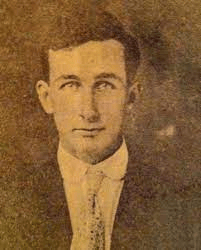
Euzebe Vidrine was born on July 12, 1898, in Ville Platte, Louisiana. He grew up in the rural, French-speaking community of Evangeline Parish and was initially regarded as a hardworking and generally well-behaved young man. He married a woman named Lillian and attempted to support himself through farming and other forms of manual labor.
People who knew Vidrine later claimed that his personality changed when he reached his early twenties. He reportedly became increasingly withdrawn, emotionally unstable and prone to periods of intense sadness. Members of his family described episodes in which he remained inside his home for days, brooding and weeping. Vidrine would later blame alcohol, emotional instability and an overpowering desire to kill for his crimes, although these explanations were based largely on his own statements and writings.
Between 1921 and 1924, Vidrine murdered five men in Louisiana and Texas. Several of his victims encountered him while he was traveling on foot and offered him transportation. Vidrine exploited their kindness, shooting them in isolated locations and stealing small amounts of money, watches, firearms or automobiles. He was convicted only of his final murder, but shortly before his execution he confessed to the other four killings in a written account of his life.
The Murder of Pierre Vidrine
Vidrine’s first known victim was approximately 70-year-old farmer Pierre Vidrine. Despite sharing a surname, the two men were reportedly not closely related. Pierre lived and worked near Ville Platte in Evangeline Parish.
The conflict began after several hogs disappeared from Pierre’s farm. Pierre reportedly told neighbors that he had seen Euzebe near the property around the time of the thefts. There had already been tension between the men because Euzebe’s dog had killed one of Pierre’s sheep. When Euzebe learned that Pierre suspected him of stealing the hogs, he became enraged and spent several days brooding over the accusation.
Historical accounts disagree on whether the murder occurred on April 23 or April 25, 1921. Vidrine armed himself with a loaded 12-gauge shotgun and went to the field where Pierre was plowing. He concealed himself behind a tree and waited until the farmer came within range. Vidrine then fired both barrels of the shotgun, killing Pierre in the field.
Vidrine returned home, hid the weapon and later joined the group of local men searching for the killer. His behavior raised suspicion because he appeared to know details about the crime that had not been publicly disclosed. He was arrested and prosecuted for Pierre’s murder, but he calmly maintained his innocence. The jury acquitted him, and the judge reportedly apologized for the suspicion and inconvenience caused by his arrest. Vidrine later admitted in his memoir that he had committed the murder.
The Murder of Charles Garbo
Later in 1921, crop failures and financial difficulties prompted Vidrine to leave Evangeline Parish in search of employment. While traveling near Lafayette, Louisiana, he encountered Charles Garbo, a 32-year-old driver of Italian ancestry.
Records conflict slightly on whether Garbo died on December 1 or December 2, 1921. Garbo saw Vidrine walking and stopped to offer him a ride. During the journey, Garbo pulled over in an isolated area to inspect a tire or place chains on it. As Garbo bent beside the automobile, Vidrine drew a .32-caliber pistol and shot him in the head at close range.
Vidrine searched Garbo’s clothing and stole approximately four dollars. He placed the body in the back seat, drove the automobile farther down the road and abandoned it in or near a ditch. He then walked toward Lafayette. Garbo’s willingness to help a traveler had placed him alone with a man who later described experiencing a sudden and uncontrollable desire to kill.
The Murder of John Roy
On December 3, 1921, the day after the Garbo killing according to most accounts, Vidrine encountered a man identified as John Roy. Historical reports sometimes described Roy as Mexican, although little reliable biographical information about him has survived.
Vidrine met Roy while attempting to travel toward Eunice, Louisiana. After learning that Vidrine did not have enough money for transportation, Roy offered him a ride. Approximately one mile outside Eunice, Vidrine asked Roy to stop so that he could smoke a cigarette.
The two men stood beside the road and began smoking. Vidrine suddenly pulled his pistol and shot Roy in the head. He searched the victim and stole a nickel and an inexpensive watch. Vidrine then walked to the Eunice train station and attempted to continue toward Alexandria. Because he lacked sufficient fare, he traveled only as far as Pine Prairie, where he stayed for several days with his father-in-law.
The watch taken from Roy would later become important evidence. After Vidrine was arrested in 1924, authorities reportedly identified a watch in his possession as the one Roy had been carrying when he was killed.
The Murder of Lee Duke
After leaving Pine Prairie, Vidrine traveled toward Orange, Texas, where he hoped to find employment. There he met Lee Herwin Duke, a 37-year-old worker or chauffeur who offered to drive him toward Beaumont. Duke’s death is recorded as December 13, 1921, although some narrative accounts describe the murder only as occurring in late December.
Vidrine used the same method he had employed against John Roy. During the trip, he asked Duke to stop and join him for a cigarette. Once they were beside the road in an isolated area between Orange and Beaumont, Vidrine drew a firearm and shot Duke in the head.
Vidrine robbed Duke of approximately 75 cents, a watch and a .38-caliber pistol. He then abandoned the body and returned to Louisiana. The small value of the stolen property demonstrated that robbery alone did not adequately explain the murder. Vidrine later admitted that killing produced a temporary feeling of relief or satisfaction.
An innocent man named Frank Smith was accused of murdering Duke. Smith denied knowing Duke but was convicted and sentenced to 15 years in the Texas State Penitentiary. Vidrine later wrote that he knew Smith had been imprisoned for a murder he had not committed. After Vidrine confessed, Texas authorities reopened the matter, and Smith was eventually pardoned.
The Murder of Robert Leo Wiggins
Vidrine did not commit another known murder for more than two years. His final victim was 27-year-old Robert Leo Wiggins, commonly called Leo Wiggins. Wiggins was the son of former Evangeline Parish Sheriff Robert Lee Wiggins and had recently constructed a home for himself and his wife.
On the evening of May 19, 1924, Wiggins was driving along the highway between Ville Platte and Mamou when he noticed a man walking beside the road. He stopped to offer the pedestrian a ride and discovered that the man was Vidrine, whom he had known since childhood.
As Vidrine appeared to enter the automobile, he drew a revolver and shot Wiggins in the chest. Wiggins remained alive and attempted to move or escape from the vehicle. Vidrine fired again, inflicting a fatal wound. He dragged Wiggins’s body behind a tree and attempted to steal the automobile, but the vehicle stalled before he could remove it from the area.
Vidrine fled on foot, returned home and changed out of the blue serge suit he had been wearing. He hid his revolver and later behaved calmly while speaking with townspeople discussing the discovery of Wiggins’s body. As he had after Pierre’s murder, Vidrine volunteered to join the posse searching for the killer.
This time, investigators used bloodhounds. The dogs followed a scent from the crime scene to a location where Vidrine had been seen and then continued to his home. Inside his bedroom, authorities found the blue suit and a loaded .38-caliber revolver. The ammunition was reportedly consistent with the bullets recovered during the investigation.
Victims
- Pierre Vidrine, approximately 70: Killed on April 23 or April 25, 1921, in a field near Ville Platte in Evangeline Parish, Louisiana. Historical sources disagree on the exact date. He was shot with both barrels of a 12-gauge shotgun while plowing his field.
- Charles Garbo, 32: Killed on December 1 or December 2, 1921, near Lafayette, Louisiana. Records differ by one day. He was shot in the head after stopping his automobile to inspect a tire or attach tire chains.
- John Roy: Killed on December 3, 1921, along a road between the Crowley area and Eunice, Louisiana. Vidrine shot him during a roadside cigarette break and stole a nickel and a watch.
- Lee Herwin Duke, 37: Died on December 13, 1921, between Orange and Beaumont, Texas. He was shot after offering Vidrine transportation and was robbed of 75 cents, a watch and a pistol.
- Robert Leo Wiggins, 27: Killed on May 19, 1924, along the Ville Platte-Mamou highway in Evangeline Parish, Louisiana. He was shot twice after stopping to offer Vidrine a ride.
Confession and Trial
Vidrine initially denied murdering Wiggins, but on May 21, 1924, authorities obtained a signed confession. In that statement, he admitted shooting Wiggins but claimed that he had been drinking and had mistaken him for an enemy. He also pleaded for mercy, arguing that his execution would devastate his mother.
Evidence soon connected Vidrine to earlier killings. The watch associated with John Roy was reportedly found among his possessions, while fingerprints or other physical evidence were said to connect him to Lee Duke’s murder in Texas. Vidrine initially continued denying responsibility for those crimes.
Vidrine went on trial for the murder of Wiggins in late June 1924. He was permitted to participate directly in his own defense and told jurors that alcohol, mental instability and an unexplained desire to kill had overwhelmed him. He expressed sorrow and asked the jury to spare his life.
The jury deliberated for approximately ten minutes before finding him guilty. Vidrine was sentenced to death by hanging. His attorneys argued that he was mentally ill and should be imprisoned rather than executed, but a court-appointed commission examined him and declared him legally sane.
The Written Confession
After receiving his death sentence, Vidrine asked for enough time to write an account of his life and crimes. He claimed that his story could warn others against alcohol, gambling, firearms and criminal behavior. The court allowed him a limited period in which to complete the manuscript.
While confined in the Evangeline Parish jail, Vidrine wrote a memoir confessing to all five murders. He admitted killing Pierre Vidrine despite having been acquitted, described the murders of Garbo, Roy and Duke, and acknowledged that Frank Smith had been wrongfully imprisoned for Duke’s death.
Vidrine portrayed himself as a man overcome by recurring homicidal impulses. He claimed that a desire to kill would suddenly take possession of him and that committing murder temporarily relieved the emotional pressure he felt. His statements did not excuse his conduct, but they provided an unusual first-person description of how he attempted to explain his repeated violence.
Execution
Euzebe Vidrine was hanged in Ville Platte on August 8, 1924. He was 26 years old and became the only person legally executed by hanging in Evangeline Parish. Thousands of spectators reportedly gathered around the jail and courthouse grounds.
Vidrine appeared unusually calm and seemed fascinated by the public attention surrounding his execution. As he was escorted to the gallows, he paused to pose for photographers. He insisted that they obtain satisfactory photographs before he continued toward the scaffold.
After the execution mask was placed over his head, Vidrine asked for permission to address the crowd. The mask was removed, and he delivered a lengthy final speech discussing his crimes, his family and the shame he had caused. He warned listeners against drinking, gambling and carrying firearms. He also requested additional photographs, including one showing him smiling with the noose around his neck.
The trap was released shortly after 12:40 p.m. Vidrine was officially pronounced dead at approximately 1:21 p.m. His body was placed in an open coffin inside the jail, where large numbers of people were permitted to view it.
Aftermath and Historical Significance
Vidrine’s confession ultimately helped establish that Frank Smith had been wrongfully convicted of killing Lee Duke. Texas officials investigated the confession, and Smith received a pardon after spending approximately two years imprisoned for a crime committed by Vidrine.
The publication of Vidrine’s memoir caused controversy. Some people believed the manuscript offered insight into his crimes and provided a warning against violence and alcohol abuse. Others argued that publishing and selling the words of a murderer transformed him into a public spectacle and risked glorifying his actions.
Euzebe Vidrine is remembered as one of Louisiana’s earliest documented serial killers. His crimes followed a recognizable pattern: he accepted assistance from men traveling by automobile, waited until they reached an isolated area, shot them and stole whatever property they possessed. The murders were separated by geography and, in the final case, by more than two years, making the complete series difficult for authorities to recognize until Vidrine confessed.
Although Vidrine attempted to blame alcohol and overpowering impulses, his actions also showed preparation and an awareness of wrongdoing. He carried loaded weapons, selected isolated locations, concealed evidence, joined searches for his victims’ killers and allowed another man to remain imprisoned for one of his crimes. His written confession, sensational trial and highly publicized execution made his case one of the most disturbing criminal episodes in the early history of Evangeline Parish.