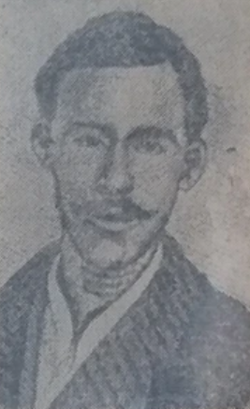
Wiley “Little” Harpe: Frontier Serial Killer and Outlaw
Who Was Wiley Harpe?
Wiley Harpe, commonly called “Little Harpe,” was an American frontier outlaw, highwayman, river pirate, and murderer who operated during the closing years of the eighteenth century. Historical accounts usually place his birth around 1770, although the details of his early life are uncertain. He was also known as William Harper and later used aliases including John Setton or John Sutton. Wiley traveled and committed most of his notorious crimes with Micajah “Big” Harpe. The two men have traditionally been called brothers, although some historians believe they were cousins. Together they became known as the Harpe Brothers and are frequently described as among the earliest documented serial killers in American history.
A Violent Partnership
Wiley and Micajah Harpe moved through the sparsely settled frontier regions of Tennessee, Kentucky, and Illinois during the late 1790s. Unlike ordinary highway robbers who generally killed to obtain money or property, the Harpes gained a reputation for murdering people even when there appeared to be little financial reason for doing so. Their victims included travelers, farmers, children, and infants. Contemporary information is incomplete, and later accounts often mixed documented events with frontier legend, so historians disagree about the exact number of people they killed. Estimates commonly range from about 28 documented or traditionally identified victims to 39 or more attributed victims.
The Harpes traveled along isolated roads where victims could disappear without immediate investigation. Several accounts describe bodies being mutilated or weighted before being thrown into rivers. Because law enforcement was limited on the frontier, news traveled slowly and local posses often had to pursue criminals themselves. These conditions allowed Wiley and Micajah to move across large areas while avoiding capture.
The Wilderness Road Murders
By late 1798, the Harpes were traveling north from Tennessee into Kentucky. Their route took them along the Wilderness Road, one of the major paths used by settlers entering Kentucky through the Cumberland Gap. During December 1798, they were blamed for several murders along this route. One victim was a peddler named Peyton. Two travelers from Maryland were also reportedly murdered. Another victim was a young Virginian generally identified in historical accounts as Stephen Langford, although some later versions call him Thomas Langford. The exact day of Langford’s death has not survived with sufficient certainty, but the killing occurred in December 1798.
Langford had encountered the Harpe party while traveling toward Kentucky. After his body was discovered, information supplied by people who had seen him with the Harpes helped authorities identify the fugitives. The Harpes were eventually captured and imprisoned in Kentucky. They escaped confinement in March 1799 and returned to a life of flight, robbery, and murder.
Murders Across Kentucky and Tennessee
After their escape, Wiley and Micajah Harpe moved through remote parts of Kentucky and Tennessee while authorities attempted to find them. Among the people attributed to the Harpes were men recorded as Stump, Edmonton, John Tully, Bradbury, Trowbridge, John Graves and Graves’s teenage son. Other victims were never identified. Historical accounts also describe the murder of an unidentified African American boy who was traveling to a mill and an unidentified young girl. The incomplete records of frontier communities make it impossible to establish exact death dates for many of these people, so exact dates should not be assigned to them without qualification.
The Murder of James Brasel
One of the best-dated killings attributed to the Harpes occurred on July 29, 1799. James Brasel was traveling with his brother Robert through what later became Morgan County, Tennessee. According to a historical account preserved by Morgan County researchers, the brothers encountered Wiley and Micajah along the road. The Harpes reportedly claimed that they themselves were searching for murderers before suddenly turning on James and Robert. Robert escaped, but James was captured. His hands and feet were bound, his throat was cut, and he was shot. His body was left beside the road and was later recovered by his family. The killing was reported soon afterward in the Knoxville Gazette, supporting July 29, 1799, as the date of death.
The Stegall Cabin Murders
The killings that brought Micajah Harpe’s career to an end occurred at the home of Moses Stegall in western Kentucky. On August 20, 1799, the Harpes were staying at the Stegall cabin, located about five miles east of what is now Dixon, Kentucky. Another traveler, Major William Love, was also staying there. During the night, the Harpes murdered Love. Historical accounts describe him as being struck in the head with an axe. Records from a later examining trial identify William Love, Mary Stegall, and the Stegalls’ infant son James as murder victims from the night of August 20, 1799.
The violence continued at the cabin. Mary Stegall and her infant son, James Stegall, were killed during the same episode. Accounts state that the child was murdered after he began crying and that Mary was killed when she reacted to the murder of her baby. The cabin was then burned. When Moses Stegall returned and discovered what had happened to his family, he joined the effort to pursue the Harpes. These murders were especially important because they helped produce the posse that finally caught Micajah.
Selected Victims and Verified or Historically Supported Dates
- Stephen Langford — December 1798, exact day uncertain — Wilderness Road area of Kentucky. Langford was a traveler from Virginia whose murder helped authorities identify and capture the Harpe party. Some later accounts give his first name as Thomas, but Kentucky historical material identifies him as Stephen.
- James Brasel — July 29, 1799 — near the future site of Morgan County, Tennessee, probably north of the Emory River near present-day Wartburg. He was traveling with his brother Robert when the Harpes captured and murdered him.
- Major William Love — August 20, 1799 — Stegall cabin, approximately five miles east of present-day Dixon, Kentucky. Love was another guest at the cabin and was murdered during the night.
- Mary Stegall — August 20-21, 1799 — Stegall cabin near present-day Dixon, Kentucky. She was the wife of Moses Stegall and was killed during the same episode in which William Love and her infant son were murdered. Contemporary legal material grouped the three murders as occurring on the night of August 20.
- James Stegall — August 20-21, 1799 — Stegall cabin near present-day Dixon, Kentucky. James was the infant son of Moses and Mary Stegall. Historical accounts describe him as approximately four months old.
Other Named Victims
Historical victim lists also associate the Harpes with Mr. Peyton, Mr. Johnson, John Graves, Graves’s thirteen-year-old son, John Tully, Trowbridge, Stump, Moses Doss, Gilmore, Hutchens, and several other named or unidentified people. Exact death dates for these individuals cannot be established confidently enough from surviving records to present them as verified dates. The uncertainty is important because much of what was eventually written about the Harpes came from recollections recorded decades after the murders.
The Death of Big Harpe
After the murders at the Stegall cabin, Moses Stegall joined a posse pursuing the fugitives. On August 24, 1799, the posse caught up with them in western Kentucky. Wiley escaped, but Micajah was wounded and captured. Accounts state that the enraged Moses Stegall killed Micajah and cut off his head. The head was later displayed near a crossroads as a warning to other criminals, giving the area the lasting name “Harpe’s Head.” Wiley Harpe was now alone and remained a fugitive.
Wiley Harpe After 1799
Wiley survived the destruction of the Harpes’ partnership and returned to organized outlaw activity. He became associated with the gang of Samuel Mason, a notorious river pirate and highwayman whose followers preyed upon travelers along the Mississippi River region and the Natchez Trace. Wiley concealed his identity under an alias, most commonly recorded as John Setton or John Sutton. This allowed him to continue operating after his name had become notorious in Kentucky and Tennessee.
In 1803, Samuel Mason was captured but escaped while being transported through Mississippi Territory. Mason was subsequently killed under circumstances that remain uncertain. Wiley Harpe and another outlaw, Peter Alston, who was using the name James May, obtained Mason’s severed head and attempted to collect a reward that had been offered for Mason. Their plan failed when Harpe was recognized as a wanted criminal. Wiley and Alston were arrested, escaped briefly, and were captured again.
Execution of Wiley Harpe
Wiley “Little” Harpe was ultimately convicted and sentenced to death. On February 8, 1804, Wiley Harpe and Peter Alston were hanged at Old Greenville in Jefferson County, Mississippi Territory, near present-day Fayette, Mississippi. After the executions, their heads were removed and displayed on stakes along the Natchez Trace as warnings to other outlaws. Wiley’s execution brought the surviving Harpe’s violent career to an end almost five years after Micajah had been killed in Kentucky.
Legacy
Wiley Harpe remains one of the most infamous criminals of the early American frontier. The exact number of murders committed personally by Wiley cannot be separated with certainty from those committed by Micajah because the men usually traveled and attacked victims together. Surviving documentation is also complicated by contradictory names, uncertain dates, oral traditions, and sensationalized nineteenth-century histories. What can be established is that the Harpes were blamed for a prolonged series of killings across Tennessee, Kentucky, and neighboring frontier regions during 1798 and 1799, and that Wiley continued his criminal career along the Natchez Trace until his capture and execution in 1804. Their combination of indiscriminate violence, constant movement, and attacks on victims apparently chosen without a consistent financial motive led later historians and criminologists to describe Wiley and Micajah Harpe as early American serial killers.