John William Hopkins: The Mohawk Valley Ripper
Background
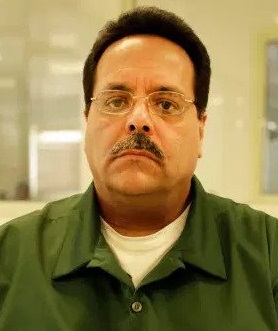
John William Hopkins was an American serial killer, kidnapper and sexual offender whose crimes took place in New York State’s Mohawk Valley region. Born on June 3, 1953, in Johnstown, New York, Hopkins became known as the “Mohawk Valley Ripper” and the “Johnstown Ripper.” Authorities connected him to the murders of at least three teenage or young-adult women between 1972 and 1978. He was convicted of two murders during his lifetime, while the third case was officially attributed to him many years later.
People who knew Hopkins described him as being unusually interested in knives. He reportedly carried several knives in separate sheaths and sometimes drove through college communities in a Chevrolet Nova while wearing a military-style coat and cowboy hat. According to later accounts, his clothing and behavior appeared intended to give strangers the impression that he was connected to law enforcement. This false appearance of authority may have made young women less suspicious of him.
Victims
- Joanne Palma Pecheone, 19 — January 12, 1972 — East Utica, New York: Pecheone was walking along a wooded path near South Park Drive when Hopkins attacked her. She was restrained with her own shoelaces, sexually assaulted and stabbed repeatedly. Her body was discovered near the path on the same day. Hopkins was not charged with her murder during his lifetime, but a later cold-case review led the Oneida County district attorney to identify him as her killer in 2011.
- Cecelia Genatiempo, 17 — Night of July 24–25, 1976 — Abducted in Gloversville and killed near Mohawk, New York: Genatiempo disappeared after being taken from the area of a doughnut shop in Gloversville. Hopkins drove her to an isolated section of railroad tracks near Mohawk, where she was sexually assaulted and stabbed. Her remains were concealed in a shallow grave and were found by hunters approximately three months later. Hopkins confessed to the crime after his 1979 arrest and was convicted of her murder.
- Sherrie Ann Carville, 17 — October 22, 1978 — Johnstown, New York: Carville disappeared after leaving a bar in Johnstown. Hopkins took her to property associated with his father, sexually assaulted her and stabbed her to death. Her remains were not discovered until approximately a year later. Another man was initially arrested after reportedly confessing, but the case against him was dismissed. Hopkins later confessed and was convicted of Carville’s murder.
The Murder of Joanne Pecheone
Joanne Pecheone was a 19-year-old student who was returning home through a wooded section of East Utica on January 12, 1972. Hopkins confronted her on the isolated path, restrained and gagged her, and cut through part of her clothing with a knife. He then sexually assaulted her and stabbed her multiple times.
A boy riding a snowmobile reportedly startled Hopkins as he was leaving the scene. Hopkins escaped into the surrounding woods, while the boy later discovered Pecheone’s body and alerted authorities. One of the first law-enforcement officers at the scene was Lieutenant Raymond Pecheone, who was Joanne’s uncle and was consequently removed from the investigation.
Despite witness descriptions and evidence gathered from the area, Hopkins was not identified as the killer at the time. The murder remained unresolved for almost four decades. During a cold-case review, investigators compared the attack with Hopkins’s later crimes and with the assault survived by his final known victim. The use of shoelaces as restraints, damage to the victims’ clothing, the knife attack, witness information and physical evidence from the scene led officials to conclude that Hopkins had killed Pecheone. The case was officially closed in 2011, although Hopkins had already died.
The Murder of Cecelia Genatiempo
Cecelia Genatiempo was 17 when she disappeared during the night of July 24 into July 25, 1976. Hopkins encountered her near a doughnut shop in Gloversville and forced or persuaded her into his vehicle. He then drove her away from the city to a secluded area beside railroad tracks near Mohawk.
At the isolated location, Hopkins sexually assaulted Genatiempo and stabbed her repeatedly. He buried her in a shallow grave in an attempt to prevent the crime from being discovered. Hunters found her decomposed remains approximately three months later. The condition of the remains and the remoteness of the burial site complicated the investigation.
After his arrest in 1979, Hopkins provided investigators with a confession describing his involvement in Genatiempo’s abduction, assault and murder. He also produced a diagram of the abduction area and a drawing of the knife used in the crime. Although he later attempted to withdraw his statements, the confession and supporting evidence were admitted in court. He was convicted of Genatiempo’s murder in 1980 and received a sentence of 25 years to life.
The Murder of Sherrie Ann Carville
Sherrie Ann Carville disappeared from Johnstown on October 22, 1978. Hopkins abducted the 17-year-old after she had been at a local bar and transported her to land connected to his family. There, he sexually assaulted and stabbed her. He left her body in a field rather than reporting or concealing it in a formal grave.
Carville’s remains were discovered approximately one year after her disappearance. Before Hopkins was charged, another man, Albert J. Baird, was arrested after allegedly admitting responsibility for the murder. Baird spent about six months in custody before the accusation against him was dismissed and he was cleared as a suspect.
Hopkins confessed to Carville’s killing during questioning following his 1979 arrest. He later denied responsibility and challenged the use of his statements, but a jury convicted him of her rape and murder in 1981. His conviction was upheld on appeal.
The Surviving Victim and Hopkins’s Arrest
Hopkins’s series of crimes ended after he abducted a 15-year-old girl from Northville on August 15, 1979. Because she survived and was a minor, her name was not publicly disclosed. Hopkins took her to his home in Johnstown, restrained her in the attic and repeatedly sexually assaulted her.
On August 16, Hopkins drove the teenager to a wooded area near Palatine. He attempted to silence her and stabbed her in the back, apparently intending to kill her. A logger working nearby unexpectedly approached the area and frightened Hopkins away before he could complete the attack. The injured girl reached the logger, received assistance and gave police information identifying Hopkins.
Police arrested Hopkins later that day. During interrogation, he confessed to the murders of Cecelia Genatiempo and Sherrie Ann Carville. His statements gave investigators information about the victims, crime scenes and weapons that helped prosecutors construct cases against him. He did not confess to Joanne Pecheone’s murder, which was connected to him through later investigative work.
Trials, Sentences and Death
Hopkins withdrew his confessions and claimed that investigators had forced him to make them. Courts rejected his arguments, and juries convicted him in separate proceedings. He received multiple sentences of 25 years to life for murder, kidnapping and the attempted murder of the surviving 15-year-old victim. His convictions were later upheld on appeal.
Hopkins remained in the New York prison system for the rest of his life. On March 11, 2000, he died by suicide at Great Meadow Correctional Facility in Comstock, New York. He was 46 years old. His death prevented prosecutors from charging him when the Pecheone investigation was formally closed in 2011.
Unresolved Questions
Investigators have considered the possibility that Hopkins attacked additional women during the years between his known murders. He traveled through college towns, carried knives and committed crimes separated by long periods of time. The 1974 murder of 17-year-old college student Katherine Kolodziej in Cobleskill has sometimes been discussed as a possible Hopkins crime. However, authorities have not established a conclusive connection between Hopkins and Kolodziej’s death, and she is not included among his confirmed victims.
The known cases show a repeated pattern: Hopkins targeted teenage or young-adult women, transported or followed them to isolated locations, sexually assaulted them and used a knife to kill or attempt to kill them. His identification in the Pecheone case demonstrated how similarities between separate crimes, witness recollections and preserved evidence can help investigators resolve a murder decades after it occurred.