Ronald Elliot Porter: California Serial Killer and Serial Rapist
Background
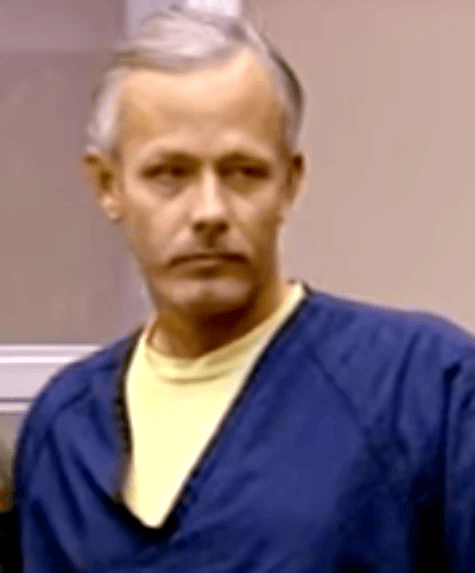
Ronald Elliot Porter was a California murderer and serial sexual predator whose known crimes occurred primarily between 1985 and 1988. Porter, an automobile mechanic who was approximately 41 years old when arrested, targeted women traveling along Interstate 8 east of San Diego. Many of the women were hitchhikers, transients, or otherwise isolated from immediate assistance.
Porter offered women rides in his silver Honda and initially presented himself as an ordinary motorist willing to help. Once he had driven a victim away from populated areas, however, he pulled onto remote roads near Buckman Springs and the mountains of eastern San Diego County. He then strangled or choked the woman until she became unconscious or incapable of resisting, sexually assaulted her, and abandoned her in the wilderness.
Several women survived Porter's attacks and later described an almost identical sequence of events. Their accounts established a recognizable pattern involving the same type of vehicle, the same highway corridor, similar secluded locations, and the same method of strangulation and sexual violence. Although Porter has frequently been associated with a much larger series of murders in San Diego County, he was convicted of killing only one identified woman, Sandra Cwik. Other deaths attributed to him in secondary accounts have not been conclusively established in court.
The Interstate 8 Attacks
Porter hunted for victims along Interstate 8, the major highway running east from San Diego through sparsely populated mountain and desert communities. Women who accepted rides from him were effectively trapped once he left the highway. The region surrounding Buckman Springs contained narrow side roads, rugged terrain, and isolated stretches where an unconscious or injured person could remain undiscovered for hours or days.
Porter commonly stopped his vehicle after reaching a secluded location and attacked without warning. Survivors said he placed his hands or arm around their throats and choked them. Some lost consciousness during the assault. Porter then sexually violated them and left them exposed in remote areas, apparently expecting that they would die or be unable to identify him.
The isolation of the crime scenes delayed the recognition that the attacks were connected. Different law-enforcement agencies handled incidents occurring within their respective jurisdictions, and some victims belonged to socially marginalized populations whose reports did not initially receive broad public attention. By the late 1980s, however, investigators recognized that numerous women had been attacked under remarkably similar circumstances.
The Murder of Sandra Cwik
Sandra Cwik was a 43-year-old woman originally from Florida who was living a transient lifestyle in Southern California. In July 1988, Cwik accepted a ride from Porter and was taken into the Buckman Springs area of eastern San Diego County. There, she was sexually assaulted and severely injured.
Cwik suffered extensive internal and external trauma and lost a substantial amount of blood. Investigators determined that she had not died immediately where the principal assault occurred. Bare footprints and a long trail of blood indicated that she had attempted to walk away and find help despite her critical injuries. She traveled for approximately a mile over rough ground before collapsing.
Her body was found in the Sheephead Mountain and Buckman Springs region after it had been exposed to summer heat for several days. Decomposition made determining the exact time of death difficult through conventional methods. Forensic entomologists therefore examined the insects and larvae present on her remains. By identifying the species and estimating their stage of development, specialists calculated when flies had first reached the body and established a probable period of death.
The resulting timeline was compared with Porter's employment records and known movements. Prosecutors argued that the evidence placed Porter in a position to abduct and assault Cwik during the period in which she was killed. The location and circumstances also closely matched the accounts provided by women who had survived his previous attacks.
Victims and Survivors
- Sandra Cwik, 43 — July 25, 1988 — Buckman Springs, San Diego County, California: Cwik was sexually assaulted and grievously injured in a remote mountain area. She attempted to walk for help but died from blood loss. Porter was convicted of her murder. Some records give only July 1988 as the verified period of her death, while July 25 is commonly recorded as the date of death.
- Betty Bass — 1988 — Interstate 8 and Buckman Springs area, San Diego County, California: Bass survived an attack attributed to Porter. She was among the women whose testimony and identification of Porter helped investigators connect the similar abductions, strangulations, and sexual assaults. Publicly available accounts do not consistently provide the exact date of her attack.
- Four additional surviving women — approximately 1985 through 1988 — Interstate 8 and Buckman Springs area, California: Five women in total testified during proceedings that Porter had picked them up while they were hitchhiking, driven them to secluded areas, choked them, and sexually assaulted them. Most of their names were withheld or were not consistently published.
The Attack That Led to Porter's Arrest
Porter's pattern began to unravel after a San Diego County sheriff's deputy saw a silver compact automobile emerging from a rural side road. The deputy became suspicious and turned onto the road to investigate. A woman was found lying unconscious with her clothing disturbed in a manner indicating that she had been strangled and sexually assaulted.
The deputy immediately broadcast a description of the vehicle. Police soon stopped Porter in his silver Honda. He was an automobile mechanic with a prior history of sexual misconduct, and both he and his vehicle resembled the descriptions supplied by other survivors. Multiple women subsequently identified him in photographic or physical lineups.
The discovery of a living victim shortly after Porter left the area was especially important. It provided investigators with a direct connection between the suspicious automobile, its driver, and a recently assaulted woman. Detectives reviewed earlier reports and found repeated references to a middle-aged man, a small silver car, hitchhikers traveling along Interstate 8, strangulation, and abandonment near Buckman Springs.
Building the Murder Case
Investigators possessed strong testimonial evidence connecting Porter to numerous kidnappings and sexual assaults, but proving that he had murdered Sandra Cwik was more difficult. There was no eyewitness who saw Porter attack her, and decomposition had damaged or destroyed some potential physical evidence.
Prosecutors built a circumstantial case from several independent elements. Cwik fit the profile of women Porter regularly approached. Her body was found in the same general area where survivors said he had taken them. The method of assault was consistent with the violence described by those women, and evidence developed through forensic entomology helped narrow the time of her death.
The surviving victims became essential witnesses. Their testimony showed that the assault on Cwik was not an isolated event but was consistent with Porter's established method. Each account reinforced the others: a ride offered along Interstate 8, transportation toward Buckman Springs, an unexpected choking attack, sexual assault, and abandonment in an isolated location.
Evidence concerning Porter's schedule and movements was compared with the estimated time of Cwik's death. Prosecutors argued that the combined forensic, geographic, behavioral, and testimonial evidence excluded a reasonable innocent explanation. The similarities were too specific and repeated too consistently to be dismissed as coincidence.
Trial, Conviction, and Sentence
Porter was prosecuted in San Diego County for the murder of Sandra Cwik and for crimes committed against surviving women. During the proceedings, five survivors testified about being picked up while hitchhiking, driven into the eastern county wilderness, strangled, and sexually assaulted.
The prosecution emphasized that Cwik's injuries and the remote location where she died corresponded closely with Porter's known assaults. The forensic-entomology evidence helped establish the period in which the fatal attack occurred, while work records and other circumstantial evidence were used to examine Porter's opportunity to commit the crime.
In 1992, Porter was convicted of murdering Sandra Cwik. He was also held responsible for a series of sexual assaults and related offenses. He received a life prison sentence, ensuring that the repeated attacks on vulnerable women along Interstate 8 would end.
Possible Connection to Donna Gentile
Porter has also been discussed as a possible suspect in the unsolved murder of Donna Marie Gentile, a 22-year-old woman whose body was found in eastern San Diego County in June 1985. Gentile's remains were discovered near Sunrise Highway, within the broader region where Porter later abandoned victims.
The geographic similarities and Porter's known pattern caused some investigators and later researchers to consider him as a potential suspect. However, Porter was never charged with Gentile's murder, and the available evidence has not conclusively established that he killed her. Other theories concerning her death have involved individuals connected to the San Diego law-enforcement community against whom she had made allegations.
- Donna Marie Gentile, 22 — June 23, 1985 — near Sunrise Highway, San Diego County, California: Gentile was found dead in a rural area east of San Diego. Porter has been identified as one possible suspect because of his later crimes in the same region, but her murder remains unsolved and should not be presented as a confirmed Porter victim.
Relationship to the San Diego Serial Murders
During the second half of the 1980s, San Diego County experienced a large number of murders involving women who were transient, involved in sex work, or struggling with substance dependence. Bodies were found in rural areas, near highways, on city streets, and inside trash containers. Authorities initially considered whether one offender might be responsible for many of the deaths.
Later investigations indicated that multiple offenders were operating in the region during overlapping periods. Porter was one of the identified predators, but the evidence did not connect him conclusively to every murder sometimes included in the broader San Diego series. Attributing all of those victims to him would therefore be inaccurate.
Some accounts describe Porter as responsible for as many as 14 deaths or suggest that nearly 20 women were killed or left for dead during his active period. The more firmly documented conclusion is that he repeatedly abducted and sexually assaulted women, that several survived, and that he was convicted of the murder of Sandra Cwik. The remaining alleged homicides were not individually proven against him.
Forensic Importance of the Case
The investigation of Sandra Cwik's murder became an important example of forensic entomology in an American criminal trial. In warm weather, insects can reach exposed human remains quickly. Different species arrive at predictable stages, lay eggs, and develop from larvae into mature insects according to temperature and environmental conditions.
By studying the insects collected from Cwik's body, specialists estimated how long her remains had been exposed. This did not identify Porter by itself, but it supplied a critical timeline that could be compared with witness statements, employment records, and Porter's known activities.
The case demonstrated how specialized scientific evidence could strengthen an otherwise circumstantial prosecution. The insects present at the scene became biological indicators of elapsed time, helping investigators reconstruct the final days of a victim who could no longer describe what had happened to her.
Assessment of Porter's Crimes
Ronald Elliot Porter exploited mobility, isolation, and the vulnerability of women who needed transportation. His vehicle served as both the means of approaching victims and the instrument for removing them from public view. Remote roads gave him privacy, while strangulation allowed him to incapacitate women without using a firearm.
His decision to abandon victims in mountainous terrain showed a willingness to leave them exposed to death from their injuries, the environment, or lack of medical care. The survival of several women appears to have resulted from chance, incomplete strangulation, or their ability to recover after Porter departed rather than from any deliberate mercy.
Porter's criminal history is sometimes obscured by exaggerated or poorly documented victim totals. The verified record remains grave: he was a repeat kidnapper, strangler, and sexual assailant who was legally convicted of murdering Sandra Cwik. Survivor testimony exposed his method, forensic science helped establish the murder timeline, and the combined evidence ultimately resulted in his imprisonment for life.