The Suitland Murders: An Unsolved Series of Killings in Maryland
Overview of the Suitland Murders
The Suitland murders were a series of killings involving five young Black women whose bodies were discovered in or near a wooded area in Suitland, Maryland, between December 1986 and January 1987. Suitland is an unincorporated community in Prince George's County located immediately southeast of Washington, D.C. Most of the victims lived within a relatively small section of southeast Washington, creating concern that the killer had deliberately selected women from the same neighborhoods.
Investigators believed the women had been attacked by the same person because of similarities in their ages, physical appearances, injuries and disposal locations. Several victims had been missing for weeks or months before their remains were recovered. Four bodies were found during a concentrated search of the woods surrounding the Bradbury Recreation Center in January 1987. Another possible victim had been discovered in the same general area one month earlier.
The exact dates of death could not be established for most of the women because their remains were badly decomposed when found. Contemporary investigators believed several had been killed shortly after disappearing, but those estimates were not precise enough to assign verified death dates. Their last-known dates and body-recovery dates are therefore distinguished below.
The Victims
- Pamela Maria Malcolm, 25 — Last seen October 21, 1986; body discovered January 12, 1987, near the Bradbury Recreation Center in Suitland, Maryland. Her exact date of death remains undetermined.
- Juanita Marie Walls, 26 — Last seen October 30, 1986; body discovered January 13, 1987, in the wooded Suitland search area near the Bradbury Recreation Center. Her exact date of death remains undetermined.
- Cynthia Lee Westbury, 22 — Last seen November 10, 1986; body discovered January 13, 1987, in woods near the Bradbury Recreation Center in Suitland. Her exact date of death remains undetermined.
- Dorothy Ann Miller, 20 — Body discovered December 13, 1986, in a wooded section of Suitland, Maryland. Her exact date of death remains undetermined. Although she had been sexually assaulted, her recorded cause of death was a drug overdose.
- Angela Maria Wilkerson, 22 — Reported missing after last being seen on or about January 5, 1987; body discovered January 14, 1987, near the other Suitland victims. Her exact date of death remains undetermined.
The Disappearance of Pamela Malcolm
Pamela Maria Malcolm lived in Suitland with her mother and worked for the United States Patent and Trademark Office. On the evening of October 21, 1986, she reportedly left home to purchase cigarettes. She lived less than a mile from the area where her body would later be found, but she never returned from the brief errand.
Malcolm remained missing for nearly three months. On January 12, 1987, employees near the Bradbury Recreation Center noticed articles of women's clothing hanging from or caught in vegetation near the facility. A closer examination of the surrounding bushes led to the discovery of Malcolm's body. Investigators determined that she had been sexually assaulted and fatally stabbed.
The discovery transformed what initially appeared to be an isolated homicide into a much larger investigation. Police secured the surrounding wooded property and organized an extensive search involving dozens of officers. That search would reveal that Malcolm had not been the only woman concealed in the area.
The Discoveries of Juanita Walls and Cynthia Westbury
On January 13, 1987, the day after Malcolm was found, approximately 75 officers searched roughly eight acres of wooded and brush-covered ground around the recreation center. During the operation, searchers located two additional sets of human remains. The victims were subsequently identified as Juanita Marie Walls and Cynthia Lee Westbury.
Walls had disappeared on October 30, 1986. She reportedly left her Washington, D.C., residence intending to attend a birthday gathering organized by relatives and friends. When she failed to arrive, her family became concerned and reported her missing. Her body remained concealed in the Suitland woods until the January search.
Westbury disappeared on November 10, 1986, after leaving her apartment to meet a friend. A witness later told investigators that Westbury may have been seen sitting in a gold-colored automobile near her home on the day she vanished. According to the account, the vehicle was driven by an unfamiliar man who appeared to be wearing a hat. The car reportedly left the area quickly, but the information did not lead police to an identified killer.
Both Walls and Westbury had been sexually assaulted and stabbed multiple times. Their bodies were severely decomposed, preventing the medical examiner from determining exact dates of death. Investigators nevertheless believed they were probably killed not long after they disappeared.
The Discovery of Angela Wilkerson
The search continued on January 14, 1987. Officers then discovered the body of Angela Maria Wilkerson near the locations where the other women had been found. Wilkerson had been reported missing after last being seen on or about January 5, only several days before her remains were recovered.
Wilkerson had suffered injuries resembling those found on Malcolm, Walls and Westbury. She had been sexually assaulted and stabbed, strengthening the conclusion that the women had been targeted by the same offender. Because Wilkerson had disappeared more recently, her case suggested that the killer remained active immediately before police uncovered the burial and dumping area.
The Possible Connection to Dorothy Ann Miller
Dorothy Ann Miller's body had been found in a wooded area of Suitland on December 13, 1986, approximately one month before the cluster of bodies was discovered near the recreation center. Miller had also been sexually assaulted, and her age and appearance were similar to those of the other women.
Her case contained one important difference. An autopsy concluded that Miller's immediate cause of death was a drug overdose rather than a stabbing. Investigators nevertheless considered her part of the series because of the sexual assault, the disposal location and the similarities between her and the other victims. Police theorized that the assailant may have assaulted Miller and abandoned her after she overdosed or became incapacitated.
Although Miller's body was the first one recovered, investigators later believed she may have been the fourth victim chronologically. Malcolm, Walls and Westbury had disappeared before Miller was discovered, and the advanced decomposition of their remains indicated that they had probably been dead for a considerable period.
Similarities Among the Women
The victims were young Black women between the ages of 20 and 26. Investigators described several as short, slender and dark-skinned, with relatively short hairstyles. Four of the five women lived in southeast Washington, D.C., within approximately a mile of one another. Pamela Malcolm was the only known victim who lived in Suitland itself.
The close geographic relationship between the women's homes suggested that the killer may have been familiar with their neighborhoods. Police considered the possibility that the offender encountered the women in southeast Washington before transporting them across the District of Columbia boundary into Prince George's County.
Investigators also explored whether the victims had known one another or visited the same businesses. Reports circulated that some may have frequented the same bar, but employees of the establishment disputed those claims. At least one victim was believed to have been involved in prostitution, causing detectives to examine people associated with the sex trade and individuals with histories of sexual offenses. No common relationship was conclusively established among all five women.
The Suitland Crime Scene
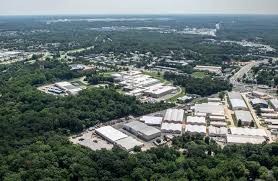
The wooded land near the Bradbury Recreation Center provided concealment while remaining close to heavily populated neighborhoods, major roads and Washington, D.C. The killer apparently knew that bodies could be placed in the brush without being immediately visible to recreation-center employees, neighborhood residents or passing motorists.
The conditions of the bodies indicated that the site had been used repeatedly over a period of months. The victims were not discovered together in one grave. They had been left at separate locations scattered through the wooded area, suggesting the offender returned more than once and may have regarded the property as a familiar or convenient disposal site.
The discovery of clothing before Malcolm's body was found raised the possibility that exposure caused by winter weather or movement in the vegetation finally revealed evidence that had previously been hidden. Once police conducted a systematic search, the scale of the crime became apparent.
The Investigation
Prince George's County police established a special task force to investigate the deaths. Officers interviewed relatives, friends, neighbors, business owners, bartenders, shopkeepers and people who had seen the victims shortly before their disappearances. Detectives also examined missing-person reports from Washington and Maryland in an attempt to determine whether additional women might be connected.
Investigators searched establishments in areas of Washington known for prostitution and drug activity. They questioned people previously arrested for sexual crimes and reviewed reports involving assaults, abductions and suspicious vehicles. Despite the large number of interviews, detectives struggled to identify a witness who had clearly seen any of the women with their killer.
The investigation generated fear throughout Suitland and southeast Washington. Members of the Guardian Angels began conducting neighborhood patrols. Relations between the volunteer group and police became strained when investigators complained that residents might be providing information to the patrol members rather than directly to detectives.
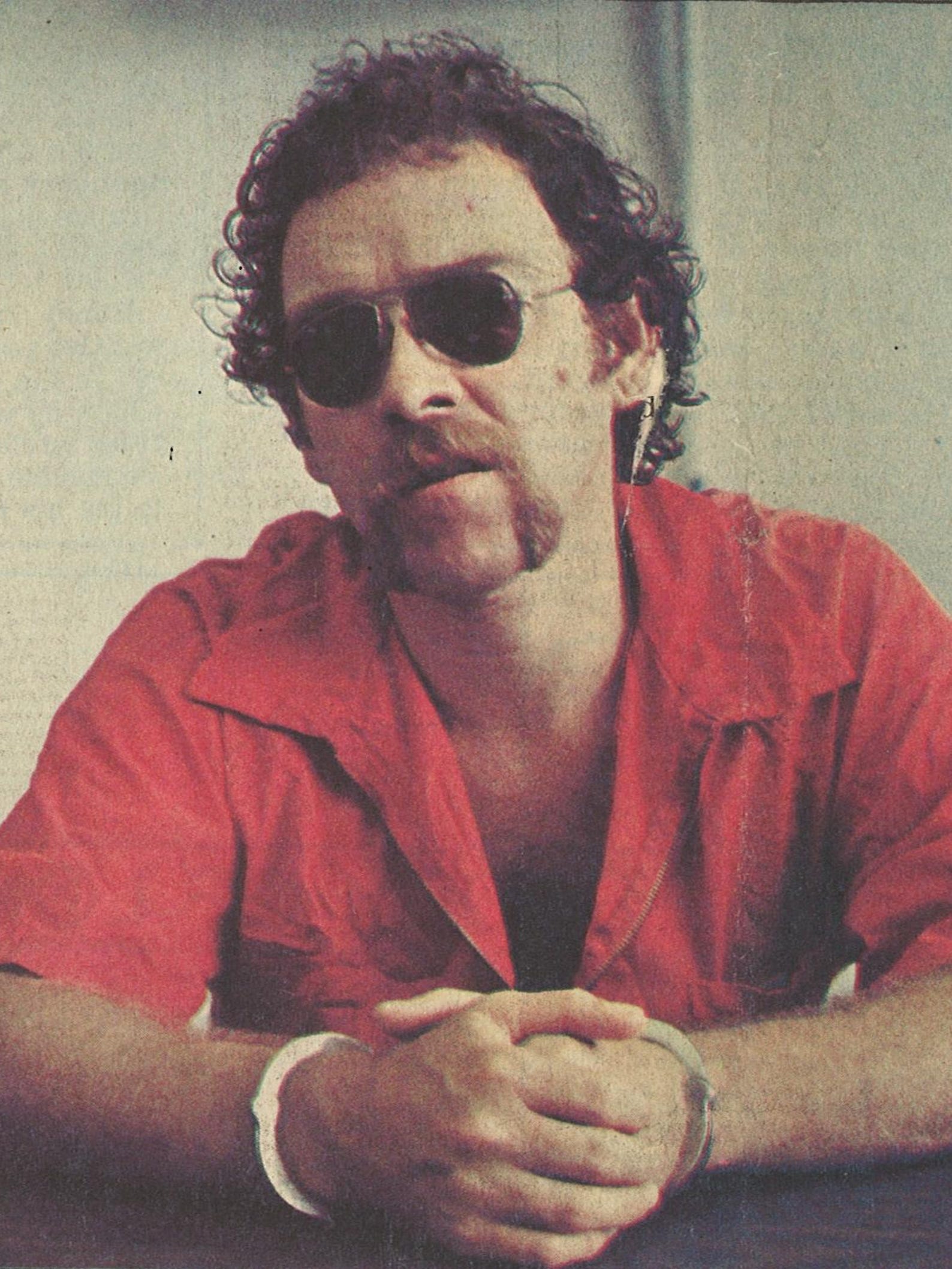
Alton Alonso Best
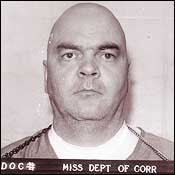
The most prominent suspect was Alton Alonso Best, a 30-year-old Washington resident. Best was arrested in connection with the January 1987 murder of 20-year-old nurse's aide Janice Elaine Morton. Morton's death was never officially included among the five Suitland cases, but the circumstances surrounding Best caused detectives to examine him closely.
Best eventually admitted killing Morton inside a van during the early morning hours of January 15, 1987. According to his confession, he had been drinking alcohol and using cocaine with Morton before they entered the vehicle. After she refused his demand for sex in exchange for drugs, Best assaulted, sodomized and strangled her with her bra. He pleaded guilty to second-degree murder and sodomy but consistently denied killing the Suitland women.
Investigators learned that Best had connections to at least three of the Suitland victims. He had reportedly lived approximately a mile from the wooded disposal area in 1984. He and at least one victim were associated with the same drug dealer, while another victim lived near his former wife and children. A witness also claimed to have seen one of the missing women inside Best's black van.
Best had previously faced armed-robbery and kidnapping allegations arising from a 1981 incident involving two women. The women said he forced them into a van at gunpoint, restrained them and indicated that he intended to take them to Maryland. They escaped while the vehicle was moving. Those charges were later dismissed after the parties reportedly reached an agreement.
The Examination of the Van
The van connected to Morton's murder belonged to Best's nephew, William Armah, who was a Washington police officer. Armah was placed on administrative leave as investigators examined the vehicle and his possible knowledge of events involving his uncle.
Blood was reportedly found inside the van, and Armah told investigators that he had helped Best clean bloodstains from its interior. Best maintained that the blood came from an injured friend. The vehicle was sent to a federal laboratory in Quantico, Virginia, for forensic testing.
Authorities ultimately announced that the testing had not produced physical evidence connecting the van to the Suitland victims. No blood, hair or other material was publicly identified as belonging to Malcolm, Walls, Westbury, Miller or Wilkerson. The lack of a forensic match prevented prosecutors from charging Best in the series.
Best's Conviction in the Morton Case
On June 10, 1987, Best pleaded guilty to the murder and sodomy of Janice Morton. Under a negotiated agreement, the original first-degree murder charge was reduced to second-degree murder, and an unrelated drug charge was dismissed. In August 1987, he received a prison sentence of 18 years and four months.
Best acknowledged that he regularly sought out vulnerable young women, offered them drugs and requested sexual favors. That admission, together with his connections to several victims and his familiarity with Suitland, kept him at the center of investigators' suspicions. Nevertheless, he never confessed to the Suitland murders, and the available circumstantial evidence was insufficient to prove that he committed them.
Why the Case Remains Unsolved
The investigation was hindered by the length of time between the disappearances and the recovery of the bodies. Decomposition destroyed or degraded evidence that might have revealed precise death dates, the locations where the assaults occurred or the identity of the killer. Forensic DNA testing was also far less advanced in 1987 than it became in later decades.
Police could not establish exactly how each woman encountered her attacker. There was no confirmed vehicle description common to every disappearance, no verified witness who saw the killer with all of the victims and no known personal connection linking the entire group. Although the recovery locations were similar, the bodies alone did not provide enough evidence to identify a particular offender.
The killings appeared to stop after Best was arrested for Morton's murder, which investigators considered suspicious. However, the end of a series does not by itself prove that an incarcerated suspect committed the earlier crimes. The actual killer could have died, moved away, been imprisoned for an unrelated offense or simply changed behavior.
Other Murders Considered for Possible Connections
Several additional killings in Washington during 1987 were examined for possible links. On April 15, the body of Donna Nichols was found in the District of Columbia. She had been beaten to death. On June 24, 21-year-old Cheryl Henderson was discovered in a wooded area near southeast Washington with her throat cut. The location was less than two miles from Suitland.
An unidentified woman's body was found in an abandoned housing complex on September 21, 1987. Another unidentified woman had been discovered in Washington earlier that year. Despite geographic proximity and similarities in victim characteristics, investigators did not establish a definitive connection between those cases and the five Suitland victims.
An attempted abduction was also reported in Suitland on April 10, 1987, while Best was incarcerated. A 25-year-old woman said a stranger attempted to pull her into a dark-colored van. The incident occurred approximately one block from Pamela Malcolm's former home. Police did not identify the attacker or prove that the attempt was related to the murders.
An Unidentified Killer
The Suitland murderer has never been conclusively identified. Alton Alonso Best remained the principal publicly known suspect, but he was never charged in any of the five canonical cases. The series must therefore be described as an unsolved set of murders committed by an unknown offender rather than crimes legally attributable to Best or any other named person.
The women were targeted during a short period extending from at least October 1986 through January 1987. Their bodies were concealed in the same general Maryland community, and four were found within three days of one another. The similarities strongly suggested a serial offender who moved between southeast Washington and neighboring Prince George's County.
Legacy of the Suitland Murders
The case left families without definitive answers about how the women were approached, where they were killed or why they were selected. The inability to determine exact death dates also meant that investigators could not reconstruct a reliable timeline of the killer's movements.
The Suitland murders remain a disturbing example of how a serial offender could exploit vulnerable women and the jurisdictional boundary between Washington, D.C., and suburban Maryland. Despite a large task force, extensive interviews and the investigation of a compelling suspect, no one has been prosecuted for the deaths of Pamela Malcolm, Juanita Walls, Cynthia Westbury, Dorothy Miller or Angela Wilkerson.
Until physical evidence identifies an offender or a credible confession is independently confirmed, the identity of the Suitland murderer remains unknown. The five victims continue to be remembered by name rather than merely as members of an unresolved series that frightened the Washington metropolitan area during the winter of 1986 and 1987.