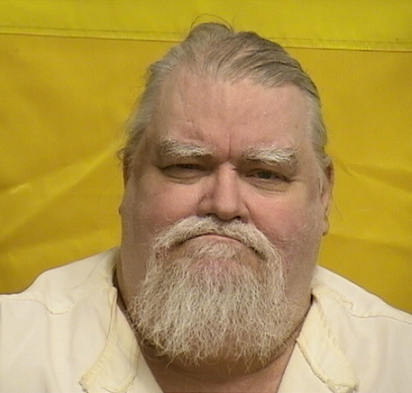
Calvin Jackson: The Park Plaza Hotel Killer
Overview
Between the spring of 1973 and the fall of 1974, a series of terrifying and brutal crimes unfolded on Manhattan's Upper West Side, preying on some of the city's most vulnerable residents. Calvin Jackson, a porter with a history of petty crime, murdered nine women, primarily targeting the elderly and solitary tenants of the Park Plaza Hotel, a single-room-occupancy building that had become a repository for those on the margins of society. For eighteen months, the deaths were largely overlooked, with several attributed to natural causes, a grim reflection of the victims' isolation.
Jackson’s method was ruthless. He would gain entry to the women's rooms to rob them, then suffocate or strangle them before violating their bodies. The string of murders was only identified as the work of one man after Jackson’s arrest for his final crime led to a shocking and detailed confession. His crimes exposed the harsh realities of life in New York City's welfare hotels and raised troubling questions about how the deaths of nine women could go unnoticed by authorities for so long. Convicted in 1976, Jackson was sentenced to life in prison, closing a chapter of fear that had gripped a neighborhood already struggling with crime and poverty.
Early Life and Criminal Beginnings
Calvin Jackson was born on March 5, 1948, in Buffalo, New York, into a life of poverty. Raised in a poor Black community, his early years were marked by hardship. As a teenager, he fell into drug addiction and dropped out of school after the tenth grade, quickly turning to a life of crime to support himself.
His formal criminal record began in October 1965, when he was arrested for robbery. Found guilty, he was sentenced to five years at the Elmira Correctional Facility. After being paroled in the late 1960s, Jackson relocated to New York City, where he met and married a woman named Valerie Coleman. However, his past and reported disciplinary problems made it difficult for him to secure steady employment. He drifted between odd jobs and continued to commit thefts in Manhattan to make ends meet.
This pattern of low-level crime resulted in several more short stints in jail. In 1970, he served 90 days for drug possession. Over the next few years, he was arrested three more times for similar offenses but received only minor sentences. In early 1972, Jackson and his wife moved into the Park Plaza Hotel on West 77th Street, a welfare hotel known for its transient population and high crime rate. For a time, it seemed Jackson might turn his life around. He reportedly overcame his drug addiction and took a job as a porter within the hotel, where he became a familiar face to the residents. Many who knew him during this period spoke of him in positive terms, unaware of the violence he would soon unleash.
The Murders
The series of killings began on April 10, 1973. Jackson used his knowledge of the Park Plaza Hotel to target residents who were single, vulnerable, and unlikely to be missed. His motive was robbery, but his attacks escalated to murder and post-mortem sexual assault.
The first victim was Theresa Jordan, 39, the youngest of the nine. Jackson broke into her room at the Park Plaza, smothered her with a pillow, and then stole her valuables. He sexually assaulted her body after she was dead.
Three months later, on July 19, 1973, Jackson murdered Kate Lewisohn, 65, in the same hotel. He entered her room, bound her, and smothered her with a pillow before robbing her and defiling her corpse.
After Lewisohn’s murder, there was a nine-month gap in the killings. The crime spree resumed with a terrifying frequency in the spring of 1974. On April 24, Mable Hartmeyer, 60, was found dead in her room at the Park Plaza. Jackson had strangled her, raped her corpse, and stolen money and other items. Initially, her death was attributed to arteriosclerosis, a sign of how easily these crimes were overlooked by authorities.
Just five days later, on April 29, Jackson killed Yeria Vishnefsky, 79. In a departure from his previous method, he stabbed her to death during the robbery of her hotel room.
On June 8, 1974, Winifred Miller, 47, became the next victim. Jackson returned to his method of smothering her with a pillow before sexually assaulting her body and robbing the room.
The violence continued on June 19 with the murder of Blanche Vincent, 71. Jackson strangled her on the hotel grounds, once again committing necrophilia. Her death was initially blamed on alcoholism.
On July 1, 1974, Martha Carpenter, 69, was strangled in her room at the Park Plaza. Jackson followed his now-established pattern of robbing her and sexually violating her remains.
The eighth victim was Eleanor Platt, 64, a resident of the hotel and a distinguished sculptor. She was found dead in her room on August 30, 1974. Jackson had smothered her and raped her corpse. Her death was at first considered "suspicious" but not immediately ruled a homicide.
The final murder occurred on September 12, 1974, and it was this crime that ultimately led to Jackson’s capture. He broke his pattern of killing within the Park Plaza Hotel and targeted Pauline Spanierman, 69, in her apartment in a nearby building. He smothered her with a pillow, violated her body, and stole several items, including her television.
The Victims
The nine women murdered by Calvin Jackson were largely solitary figures, living quiet lives in a hotel that offered little security or community. Their ages ranged from 39 to 79. Because their deaths were not initially connected, and due to their isolated lives, little was publicly recorded about most of them beyond the tragic circumstances of their final moments.
- Theresa Jordan, 39 — On April 10, 1973, she became the first and youngest victim, killed in her room at the Park Plaza Hotel.
- Kate Lewisohn, 65 — A resident of the Park Plaza, she was murdered in her room on July 19, 1973.
- Mable Hartmeyer, 60 — She was killed in her hotel room on April 24, 1974, her death tragically misidentified at first as being from natural causes.
- Yeria Vishnefsky, 79 — The oldest of the victims, she was brutally stabbed to death in her room on April 29, 1974.
- Winifred Miller, 47 — She lost her life in her room at the Park Plaza on June 8, 1974.
- Blanche Vincent, 71 — Murdered on June 19, 1974, her death was also initially overlooked as being non-violent.
- Martha Carpenter, 69 — She was killed in her hotel room on July 1, 1974, another victim in a brutal summer of violence.
- Eleanor Platt, 64 — Murdered on August 30, 1974, she was a respected sculptor known for her portrait busts of prominent figures, including government officials and judges. A Guggenheim Fellow, her work is included in the collections of the Metropolitan Museum of Art and the National Portrait Gallery.
- Pauline Spanierman, 69 — The final victim, she was killed in her nearby apartment on September 12, 1974. Her murder outside the hotel broke the killer's pattern and led directly to his arrest.
Investigation and Capture
For eighteen months, the New York Police Department did not connect the deaths. The victims were among a population whose passing often went unremarked. Several of the deaths were initially ruled to be from natural causes or accidents, such as alcoholism, and the bodies were buried without suspicion of foul play. The sheer vulnerability of the elderly women in a welfare hotel provided a ready explanation for their deaths, and investigators did not look hard enough to find the truth.
The breakthrough came with the murder of Pauline Spanierman on September 12, 1974. A maid discovered her body that morning and called the police. During the investigation, a witness reported seeing a young Black man carrying a television down a fire escape from the building in the early morning hours. Acting on this lead, detectives began a canvass of the area. They located the stolen television in a room that was being temporarily occupied by Calvin Jackson.
When police discovered that the 26-year-old Jackson was also employed as a porter at the Park Plaza Hotel, where eight of the other unexplained deaths had occurred, they knew they had their prime suspect. Jackson was arrested that same day.
In custody, Jackson quickly confessed, not only to the murder of Pauline Spanierman but to a total of nine homicides. He provided a chilling, 182-page confession, complete with audio recordings, that detailed his crimes. He recounted how he would sometimes linger in his victims' apartments for an hour or more after killing them, eating food from their refrigerators to ensure they were dead. He was explicit that he only raped the women after they had died.
Police were initially skeptical of the full confession, as many of the crime scenes had shown no signs of forced entry or struggle. To verify his claims, authorities had to exhume the bodies of several victims to search for evidence of homicide, though the results were reportedly inconclusive due to decomposition. However, Jackson's detailed knowledge of the victims and the crime scenes ultimately convinced investigators. The public admission that a serial killer had been operating undetected for so long caused outrage, leading to a rally of several hundred residents outside a local police precinct to protest the NYPD's perceived negligence.
Trial and Sentence
Despite his detailed confession, Calvin Jackson, on the advice of his lawyer, recanted his statement at the end of 1974 and pleaded insanity. He underwent two psychiatric examinations and was declared insane. However, the prosecutor's office challenged this finding. In 1975, a third court-ordered exam was conducted at Bellevue Hospital, which determined that Jackson was sane and competent to stand trial.
The trial began in early 1976 and lasted six weeks. The prosecution's case was built around Jackson's extensive confession, which was read aloud to the jury and supplemented by over three hours of audio recordings. Jackson testified that he committed the crimes to support his drug habit. When asked by a prosecutor why the robberies necessitated murder and necrophilia, he offered a chillingly simple explanation: "Well, I guess I kind of broke wild there, you know?"
On May 25, 1976, the jury found Calvin Jackson guilty of nine counts of murder and approximately 40 other charges, including rape, burglary, and theft. On July 6, 1976, he was sentenced to four concurrent life sentences with the possibility of parole. Throughout the verdict and sentencing, Jackson reportedly showed no emotion.
Aftermath and Legacy
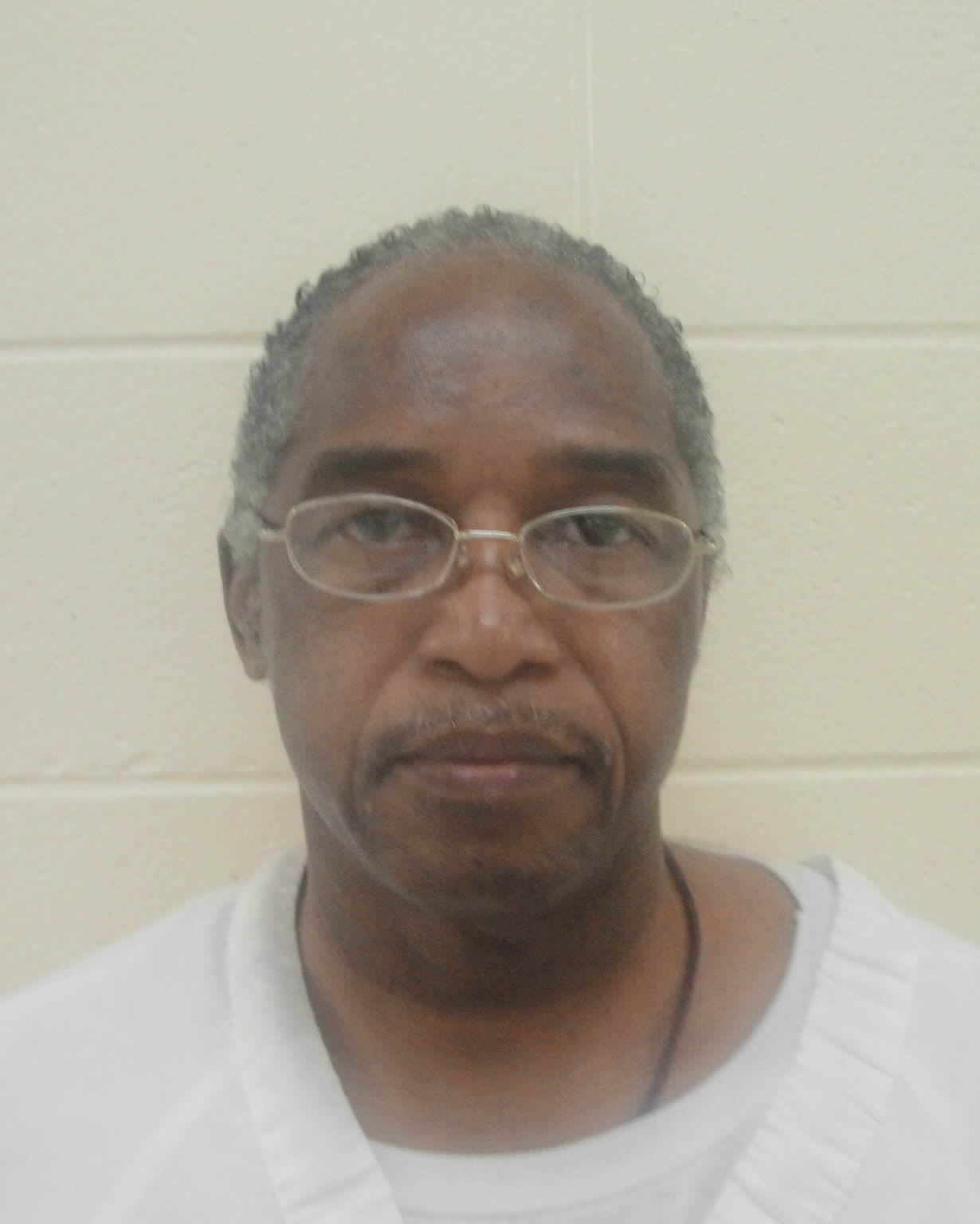
Calvin Jackson was incarcerated in the New York State prison system, serving his time in various facilities. He became eligible for parole in September 1999 but was denied. As of 2021, at the age of 72, he was still imprisoned at the Sullivan Correctional Facility. His repeated denials of parole suggest he will likely spend the remainder of his life behind bars.
The Calvin Jackson case stands as a disturbing indictment of the societal indifference shown to the poor and elderly in 1970s New York City. The fact that a serial killer could murder nine women over a year and a half without authorities even realizing the crimes were connected speaks volumes about the victims' isolation. They were residents of a welfare hotel, a place of last resort, and their deaths were initially dismissed as the inevitable consequence of age, poverty, and difficult lives.
The case highlighted the deplorable and dangerous conditions within the city's welfare hotel system, where crime was rampant and residents were left with little protection. The public outcry following Jackson's arrest forced a brief but necessary focus on a forgotten population, revealing a world of vulnerability that existed in the shadows of one of the world's wealthiest cities. While Calvin Jackson was brought to justice, the memory of his victims serves as a somber reminder of a time when the lives of the city's most defenseless citizens were tragically undervalued.