Oba Chandler
Overview
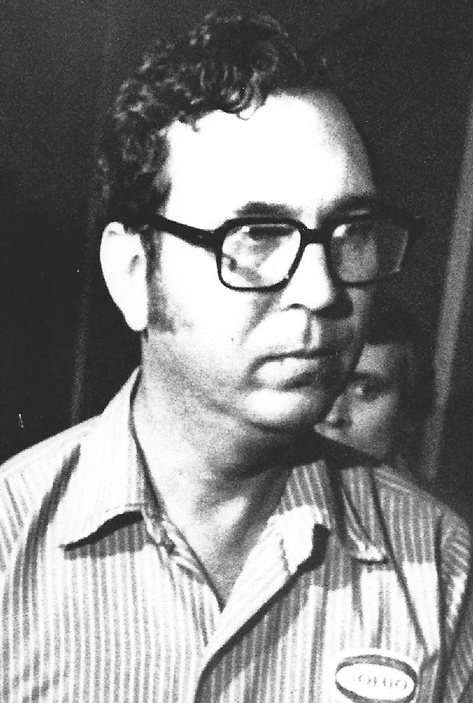
Oba Chandler was a Florida murderer and sexual predator whose crimes became associated with one of the most notorious homicide investigations in the history of the Tampa Bay area. Chandler was convicted of murdering Joan "Jo" Rogers and her teenage daughters, Michelle and Christe Rogers, during their 1989 vacation in Florida. More than two decades later, improved DNA testing posthumously connected him to the 1990 rape and murder of 20-year-old Ivelisse Berrios-Beguerisse in South Florida. The additional DNA identification established that Chandler had killed in separate incidents more than a year apart.
Chandler was born on October 11, 1946, in Cincinnati, Ohio. By adulthood he had accumulated a lengthy criminal history that included burglary, robbery and other offenses. He eventually moved to Florida, where he worked in the aluminum-siding business and owned a powerboat. His ability to present himself as friendly and helpful became a significant feature of the crimes later attributed to him. Investigators concluded that he could gain a stranger's confidence before placing the person in a situation where escape or outside assistance was difficult.
The Rogers Family Vacation
Joan Rogers, 36, and her daughters Michelle, 17, and Christe, 14, lived with their family on a dairy farm in Ohio. In May 1989, the three left Ohio for a Florida vacation. It was a major trip for the mother and daughters, taking them through the Orlando area and eventually to Tampa. On June 1, 1989, they checked into a Days Inn in Tampa.
During the afternoon of June 1, the Rogers women encountered Chandler near a Tampa convenience store or gas station while seeking directions. Chandler acknowledged at his later trial that he met the family and gave them directions. He wrote those directions on a brochure that the women kept. That apparently ordinary encounter became one of the most important pieces of the eventual murder investigation.
Evidence indicated that Chandler offered the women an opportunity to take a boat ride on Tampa Bay. Photographs taken by the Rogers family during their final hours included a sunset over the water. The women left their motel and traveled to a boat ramp along the Courtney Campbell Causeway. Their automobile was subsequently found there.
The Murders on Tampa Bay
Jo, Michelle and Christe disappeared during the night of June 1, 1989. Investigators concluded that the women boarded Chandler's boat and were taken onto Tampa Bay. What followed could not be reconstructed in every detail because there were no surviving witnesses, but physical evidence demonstrated that the women had been restrained. Their hands and ankles were bound, ropes were placed around their necks, and heavy concrete blocks were attached to the ropes. Duct tape was also used. The condition in which the victims were discovered led prosecutors to argue that Chandler's attack had a sexual motive.
The women were killed during the period beginning June 1 and extending into the early hours of June 2. Marine telephone records later proved especially damaging to Chandler. Calls to his residence were placed from his boat during the relevant period, including calls during the early morning hours of June 2. Those records helped establish that Chandler was on the water when the Rogers family disappeared.
On June 4, 1989, the bodies of the three women surfaced at different locations in Tampa Bay. Christe was recovered in the vicinity of the Sunshine Skyway, while the other bodies were found farther north. The medical examiner determined that the deaths were caused by drowning or asphyxiation associated with the ropes around their necks. Investigators believed the use of concrete blocks had been intended to keep the victims beneath the water and prevent their discovery.
Murder Victims
- Joan "Jo" Rogers, 36 — Killed during the night of June 1-2, 1989, after disappearing from the Tampa area while vacationing with her daughters. Her body was recovered from Tampa Bay on June 4, 1989. She had been bound and weighted with a concrete block.
- Michelle Rogers, 17 — Killed during the night of June 1-2, 1989, in Tampa Bay, Florida. Michelle disappeared with her mother and younger sister after leaving their Tampa motel for a boat excursion. Her body was recovered from Tampa Bay on June 4, 1989.
- Christe Rogers, 14 — Killed during the night of June 1-2, 1989, in Tampa Bay, Florida. She was the youngest of the three Rogers victims. Her body was discovered near the Sunshine Skyway area on June 4, 1989.
- Ivelisse Berrios-Beguerisse, 20 — Murdered on November 27, 1990, in Coral Springs, Florida. The newlywed woman disappeared after leaving her job at Sawgrass Mills. Her body was found in a Coral Springs neighborhood shortly after midnight. DNA evidence preserved from the case was matched to Chandler in 2014.
The Madeira Beach Rape
A crucial break in understanding the Rogers murders came from another woman who survived an encounter with Chandler. On May 15, 1989, only a little more than two weeks before the Rogers family disappeared, Chandler took Canadian tourist Judy Blair onto his boat after meeting her while she was vacationing in Florida. Chandler had presented himself as friendly and offered a boating excursion.
Blair's friend had originally been expected to participate but ultimately did not accompany them. Chandler took Blair onto the water and later raped her. Blair survived and reported the assault. She subsequently identified Chandler. Prosecutors were permitted to introduce evidence concerning Blair's attack during Chandler's murder trial because of striking similarities between the incident and the circumstances surrounding the Rogers family.
Both cases involved female tourists who encountered Chandler by chance, Chandler offering assistance or gaining their confidence, an invitation onto his blue-and-white boat, an excursion during the evening, the Tampa Bay area and a sexual element. The incidents occurred within approximately eighteen days of one another. Unlike Jo, Michelle and Christe Rogers, Blair survived and was able to describe Chandler and his behavior to investigators and eventually to a jury.
The Handwriting Clue
For years, investigators struggled to identify the man who had approached the Rogers family. One of their best clues was the handwritten set of directions Chandler had placed on the brochure before the women disappeared. Jo Rogers had also made notes associated with the boat and the man they had encountered.
Police eventually took the unusual step of displaying samples of the unidentified man's handwriting on large public billboards. The strategy worked. A former neighbor of Chandler recognized the writing and contacted authorities. Investigators obtained examples of Chandler's handwriting from business records and found significant similarities.
The brochure provided additional evidence. A palm print was connected to Chandler, further strengthening the case. Investigators also established that Chandler owned a blue-and-white Bayliner powerboat at the time of the murders and lived on a canal that provided access to Tampa Bay.
Marine Telephone Evidence
Another major development came from telephone records. Investigators discovered that calls had been placed from Chandler's boat to his home on both the night associated with Judy Blair's rape and during the period surrounding the Rogers murders. Records for June 2, 1989, showed several collect calls from the vessel during the hours immediately following the family's disappearance.
One marine telephone toll record identified the caller by a variation of Chandler's first name. The records provided prosecutors with evidence placing Chandler on his boat at the critical time. Combined with the handwriting, palm print, witness testimony, Chandler's ownership of the boat and his admitted encounter with the Rogers family, the telephone evidence helped prosecutors construct a powerful circumstantial case.
Arrest and Trial
Oba Chandler was arrested on September 24, 1992. On November 10, 1992, a Pinellas County grand jury indicted him on three counts of first-degree murder for the deaths of Joan, Michelle and Christe Rogers.
His murder trial began in September 1994. Chandler took the witness stand and admitted meeting members of the Rogers family on June 1, 1989, but insisted the encounter ended after he gave them directions. He denied taking the women onto his boat and denied killing them.
Prosecutors presented the handwriting evidence, physical evidence from the brochure, marine telephone records and testimony regarding Chandler's boat. Judy Blair also testified about the sexual assault she had survived shortly before the murders. Prosecutors argued that the Blair attack demonstrated Chandler's method of approaching female tourists, winning their confidence and taking them onto his boat before turning violent.
On September 29, 1994, the jury found Chandler guilty of all three first-degree murders. The following day, the jury unanimously recommended that he receive the death penalty for each killing. On November 4, 1994, the trial judge imposed three death sentences.
The Murder of Ivelisse Berrios-Beguerisse
Although Chandler's most famous crimes were the Rogers murders, investigators eventually established that they were not his only killings. On November 27, 1990, approximately seventeen months after the Tampa Bay murders, 20-year-old Ivelisse Berrios-Beguerisse was murdered in Broward County.
Berrios-Beguerisse was a newlywed who worked at a sporting-goods store at Sawgrass Mills. When she failed to return home, her husband went to the shopping center and discovered her vehicle still in the parking area. Its tires had been slashed. Investigators came to believe that the disabled automobile may have provided Chandler with an opportunity to approach her while appearing to be a helpful stranger.
Only hours after she disappeared, two men returning from a fishing trip discovered Berrios-Beguerisse's body beside a road in what was then a relatively undeveloped area of Coral Springs. She had been sexually assaulted and killed by asphyxiation or strangulation. Investigators recovered biological evidence, but forensic technology available in 1990 could not identify her attacker.
The evidence was preserved for more than two decades. Cold-case detectives eventually submitted it for modern DNA analysis. In February 2014, authorities announced that DNA recovered from the Berrios-Beguerisse investigation matched Oba Chandler. Chandler had already been executed, but police considered the DNA identification sufficient to solve and close the homicide.
Possible Additional Crimes
Chandler's history and the length of time he remained unidentified caused investigators to consider whether he might have committed additional attacks. His documented criminal conduct included violent robberies and sexual offenses, and investigators examined other unsolved disappearances and killings for possible connections. However, not every case investigated in connection with Chandler has been conclusively attributed to him.
The confirmed record therefore distinguishes between the three Rogers murders for which Chandler was convicted and the murder of Ivelisse Berrios-Beguerisse, which was attributed to him through DNA evidence after his death. Claims connecting him to other missing or murdered women remain speculative unless supported by independent forensic or investigative evidence.
Appeals and Execution
Chandler continued to deny murdering the Rogers family and pursued numerous appeals following his convictions. The Florida Supreme Court affirmed his convictions and death sentences in 1997, and subsequent efforts to overturn the judgments were unsuccessful.
On October 10, 2011, Florida Governor Rick Scott signed Chandler's death warrant. His execution was scheduled for November 15, 2011. Chandler continued seeking judicial relief during the final weeks of his life, including attempts to obtain a stay of execution, but those efforts failed.
Oba Chandler was executed by lethal injection at Florida State Prison on November 15, 2011, at the age of 65. He had spent approximately seventeen years under sentence of death for the murders of Jo, Michelle and Christe Rogers. Three years after his execution, the DNA identification in the Berrios-Beguerisse case added a fourth confirmed murder victim to the record of his crimes.
Legacy of the Investigation
The Rogers investigation became notable not only because of the shocking circumstances of the murders, but also because of the investigative techniques that eventually identified Chandler. The public display of an unknown suspect's handwriting on billboards was an unusual strategy, yet it produced the tip that directed authorities toward him. Investigators then combined handwriting comparison, palm-print evidence, witness testimony, boat ownership records and marine telephone records to build the case.
The later identification of Chandler in the Berrios-Beguerisse murder demonstrated a different kind of investigative persistence. Biological evidence collected in 1990 was preserved until advances in forensic DNA technology allowed detectives to obtain a useful profile and compare it with Chandler's known DNA. The result connected two violent episodes separated by hundreds of miles and more than a year.
Oba Chandler's known homicide record consists of four women: Joan Rogers, Michelle Rogers, Christe Rogers and Ivelisse Berrios-Beguerisse. Three of the murders resulted in convictions during Chandler's lifetime, while the fourth was solved through DNA testing after his execution. Together, the cases revealed a predator who used an appearance of helpfulness and normalcy to approach women before isolating and attacking them.